Syndication Simplified: How to Make Your Articles Go Further

Article syndication is a powerful tool for increasing your brand's visibility without creating extra content. By republishing your articles on third-party websites, you can reach a wider audience and establish your brand as an authority in your field. This strategy not only helps increase brand awareness, but also drives more traffic to your website and boosts your SEO performance.
Here’s a quick rundown on why article syndication matters:
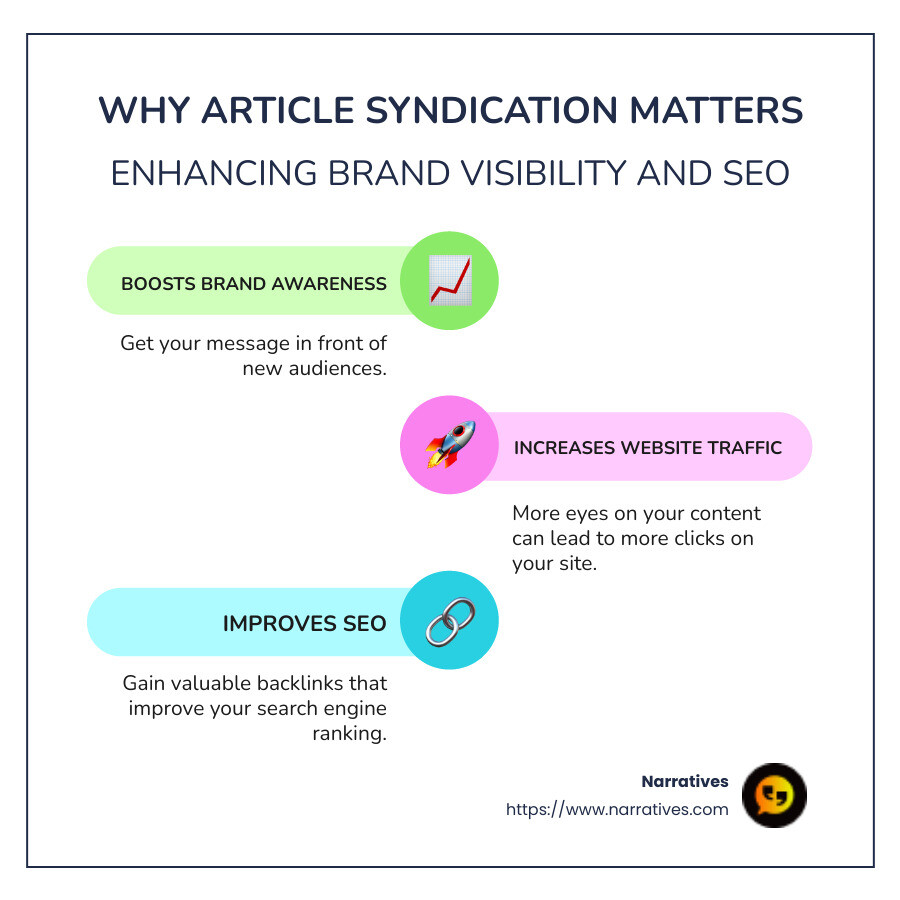
- Boosts Brand Awareness: Get your message in front of new audiences.
- Increases Website Traffic: More eyes on your content can lead to more clicks on your site.
- Improves SEO: Gain valuable backlinks that improve your search engine ranking.
For non-profit marketing teams and advocacy-driven organizations, article syndication can transform your storytelling efforts. It allows you to amplify initiatives with limited resources, helping you make an emotional connection with a broader public.
In the following sections, we'll dive deeper into how content syndication works and how you can leverage it effectively to lift your storytelling.
Article syndication definitions:
Understanding Article Syndication
What is Article Syndication?
Article syndication involves republishing your content on third-party websites. This strategy is about sharing your articles with a broader audience without the need to create new content from scratch.
Imagine you wrote a compelling article about your non-profit’s latest initiative. Instead of letting it sit only on your blog, you can republish it on other platforms. This not only widens your reach but also positions your brand as an authority in your field.
To make sure your original content gets the credit it deserves and to avoid any SEO pitfalls, it's crucial to use canonical links. These links tell search engines which version of the content is the original. For example, if your article appears on a partner's site, the canonical link should point back to your original article. This way, search engines know where to direct traffic and which version to prioritize in search results.
Benefits of Article Syndication
The benefits of content syndication are numerous and impactful:
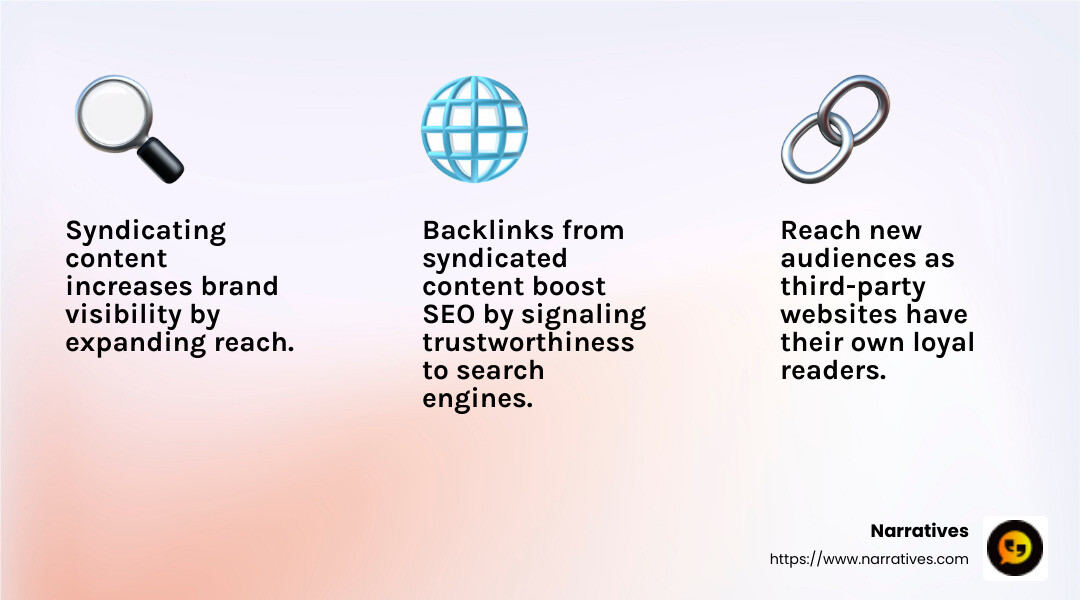
Brand Visibility: By sharing your content across various platforms, you increase your brand's presence. More people will recognize and remember your organization.
Audience Reach: Syndicating your articles allows you to tap into new audiences. Third-party websites often have their own loyal readers, giving your content exposure to people who might not have found it otherwise.
Backlinks: One of the key advantages is gaining backlinks. These are links from other websites that point back to yours. Backlinks are crucial for SEO because they signal to search engines that your site is trustworthy. This can help improve your search engine rankings, making it easier for people to find your original content.
By leveraging article syndication, you not only improve your brand's visibility but also improve your online presence. This approach is particularly beneficial for non-profits and advocacy groups that aim to spread their message far and wide with limited resources.
In the next section, we'll explore how to syndicate your articles effectively, ensuring you make the most of this powerful tool.
How to Syndicate Your Articles Effectively
Free Syndication Methods
Free syndication is a cost-effective way to share your content with a wider audience. Here are some strategies to consider:
Republish Content on Bigger Platforms: Platforms like Medium and LinkedIn allow you to republish your articles for free. This is a great way to reach new readers without spending a dime. When republishing, ensure you include a canonical link back to your original article to maintain SEO integrity.
Guest Post on Niche Publications: Identify niche publications that align with your content and audience. Reach out to them with a proposal to guest post. This not only helps you tap into their existing readership but also builds valuable partnerships. Make sure your guest post links back to your website to drive traffic and improve your SEO.
Use Community Forums: Engage with community-specific forums like Reddit or Facebook groups. Share your content in a way that adds value to the community. As Allen Brouwer and Cathryn Lavery suggest, tailor your posts to each group to avoid coming off as spammy. This can be a manual process but is effective in building genuine connections.
Paid Syndication Platforms
If you have a budget for content promotion, paid syndication platforms can offer significant advantages:
Outbrain and Taboola: These platforms work on a pay-per-click model, similar to PPC campaigns. They place your content as recommended articles on high-traffic websites like CNN or BBC. While these links are seen as "sponsored content" and don't carry SEO authority, they can drive substantial traffic to your site.
Sponsored Content: Investing in sponsored content allows you to collaborate directly with major publishers. This gives you access to their large audience base, which can significantly boost your brand visibility. However, this option is typically more suitable for organizations with larger budgets.
Native Advertising Services: These services, like those offered by Taboola and Outbrain, display your content headlines and images on third-party websites. They direct readers back to your original article, increasing your website traffic and potential lead generation.

Both free and paid syndication methods have their place in a comprehensive content strategy. Free methods are ideal for those with limited budgets but require more manual effort and strategic partnerships. Paid platforms, on the other hand, offer quicker exposure but require financial investment.
In the following section, we will discuss the best practices to ensure your syndicated content maintains its quality and boosts your SEO performance.
Best Practices for Article Syndication
Avoiding Duplicate Content Issues
When it comes to article syndication, one major concern is duplicate content. Google doesn't penalize duplicate content directly, but it can confuse search engines, impacting your SEO performance. To avoid these issues, follow these key practices:
Use Canonical Tags: A canonical tag is a piece of HTML code that tells search engines which version of a page is the "original." When syndicating your content, ensure the third-party site includes this tag pointing back to your original article. This helps Google recognize your site as the primary source, preserving your SEO integrity.
Seek NoIndex Meta Tags: If a syndication partner is unable to use canonical tags, ask them to apply a NoIndex meta tag. This tells search engines not to index the syndicated version, reducing the risk of duplicate content issues.
Link Back to the Original: Always ensure that syndicated articles include a clear link back to your original content. This not only credits your work but also helps consolidate link signals to your site, enhancing SEO.
Follow Google Recommendations: Google advises making it clear to both readers and search engines that an article is syndicated. This can be achieved by including a statement like, "This article originally appeared in Narratives [Original publication + Link]."
Choosing the Right Syndication Partners
Selecting the right partners is crucial for effective article syndication. Here’s what to consider:
Audience Overlap: Choose partners whose audience aligns with your target demographic. This ensures that your content reaches potential readers who are genuinely interested in your message.
Authority and Reputation: Partner with reputable publications that have a strong domain authority. Syndicating on high-authority sites can boost your credibility and expand your reach.
Editorial Guidelines: Ensure your syndication partners have clear editorial standards. This helps maintain the quality and integrity of your content, avoiding any association with low-quality or spammy sites.
Check for Canonical Links: Before agreeing to syndicate your content, confirm that the partner site is willing to include canonical links back to your original article. This is vital for maintaining your SEO benefits.
By following these best practices, you can maximize the benefits of article syndication while minimizing potential risks. In the next section, we will answer frequently asked questions about article syndication to further clarify this powerful strategy.
Frequently Asked Questions about Article Syndication
What is the difference between syndication and guest posting?
Article syndication and guest posting are often confused, but they are quite different.
Article Syndication: This involves republishing the same piece of content on multiple third-party websites. It’s like giving your content a second home. The original article is acknowledged, often with a line such as, "This article originally appeared in [Original publication + Link]." This helps maintain credit and directs traffic back to your site.
Guest Posting: Unlike syndication, guest posting requires creating new, original content for another site. You write specifically for their audience, and the content is unique to them. It's a way to reach new readers and build relationships, but it doesn’t involve republishing existing content.
How does article syndication impact SEO?
Syndication can have both positive and negative effects on SEO, depending on how it's handled.
Positive Impact: When done right, syndication can boost your site's SEO by generating valuable backlinks. Each link from a reputable site acts as a vote of confidence, potentially improving your search rankings.
Risks of Duplicate Content: Google doesn’t penalize duplicate content directly but can get confused about which version to rank. To avoid this, ensure syndicated articles include a canonical tag pointing to your original content. This tells search engines which version to prioritize, preserving your SEO benefits.
Traffic and Visibility: Syndication increases your content's visibility, potentially driving more traffic to your site. This can lead to higher engagement rates and improve your site's authority over time.
Can syndicated content harm my brand?
Syndicated content can be beneficial, but there are risks if not managed properly.
Loss of Control: Once your content is syndicated, you may lose some control over how it's presented. This can be mitigated by choosing reputable partners and setting clear guidelines.
Brand Dilution: If your content appears on low-quality sites, it might harm your brand’s reputation. Always vet syndication partners to ensure they align with your brand values.
SEO Confusion: Without proper canonical tags or noindex instructions, search engines might struggle to identify the original source, potentially affecting your site's rankings. Always ensure these technical aspects are covered.
By understanding these nuances, you can leverage article syndication effectively, enhancing your brand and boosting your SEO. Next, we'll dig into more strategies to make your articles go further.
Conclusion
At Narratives, we believe in the power of storytelling to amplify voices and drive change. Article syndication plays a vital role in this mission, especially for non-profits and purpose-driven organizations. By sharing impactful stories across multiple platforms, we help underrepresented voices reach wider audiences, inspiring action and fostering community connections.
Storytelling and Non-Profit Partnerships
Storytelling is at the heart of what we do. It's more than just sharing information; it's about creating emotional connections and building trust. For non-profits, this means sharing the real-life impact of their work, which can inspire support and drive engagement. Through strategic partnerships, we ensure that these stories are not just heard but felt.
Our approach to article syndication ensures that these powerful narratives are shared far and wide. By republishing content on reputable platforms, we increase visibility and attract new supporters. This not only helps non-profits grow their reach but also strengthens their credibility.
How Narratives Can Help
Working with Narratives means having a partner dedicated to elevating your mission. Our expertise in digital storytelling and content syndication can help your organization reach its goals. Whether you're looking to increase brand awareness or drive donations, our custom strategies are designed to make your stories go further.
Explore the opportunities with Narratives and find how we can help you tell your story. Together, we can create a lasting impact, one story at a time.


.avif)