Video Storytelling Secrets: Best Practices for Engaging Content

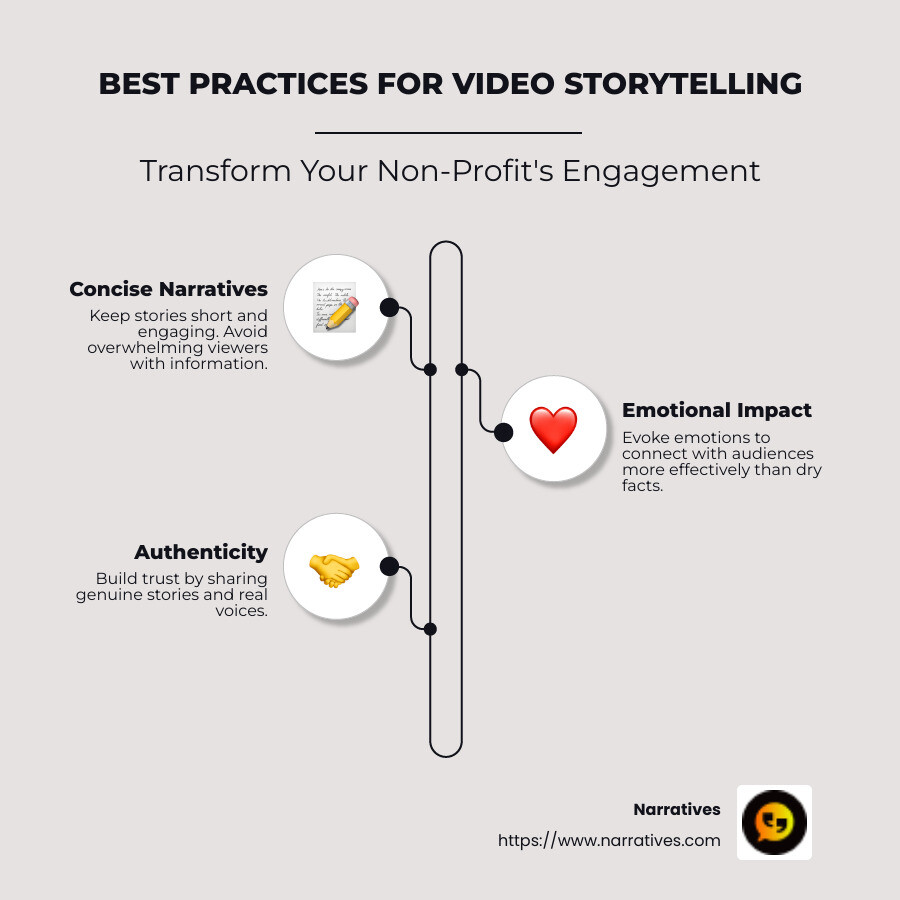
Best practices for video storytelling can fundamentally transform how non-profit organizations communicate their mission and engage audiences. Here's a quick overview of what to keep in mind:
- Focus on concise narratives: Avoid overwhelming viewers with information. Engage them with relatable stories.
- Harness emotional impact: Create connections by evoking emotions. This is often more effective than dry facts.
- Maintain authenticity: Share genuine stories and real voices to build trust and integrity.
Storytelling has always been an important tool for brands, but video amplifies its power. Video storytelling is a must for any organization looking to engage audiences effectively. It's not about conveying every detail; rather, the magic lies in showing rather than telling, using visuals to narrate compelling stories.
With the move towards inbound marketing strategies, organizations must adapt to storytelling techniques that emotionally resonate with viewers. Video empowers brands to build stronger connections with their audience, setting the stage for meaningful engagement and measurable impact.
The visual medium allows non-profits to vividly portray their missions, highlight challenges, and exhibit their community impact. Whether through short-form content for quick engagement or longer narratives for in-depth exploration, the potential for storytelling through video is vast.
Understanding how to craft stories that capture attention and inspire action will be crucial. Let's dig into these best practices to open up the full potential of your narrative.
Best practices for video storytelling terms at a glance:
Best Practices for Video Storytelling
Crafting a Compelling Narrative
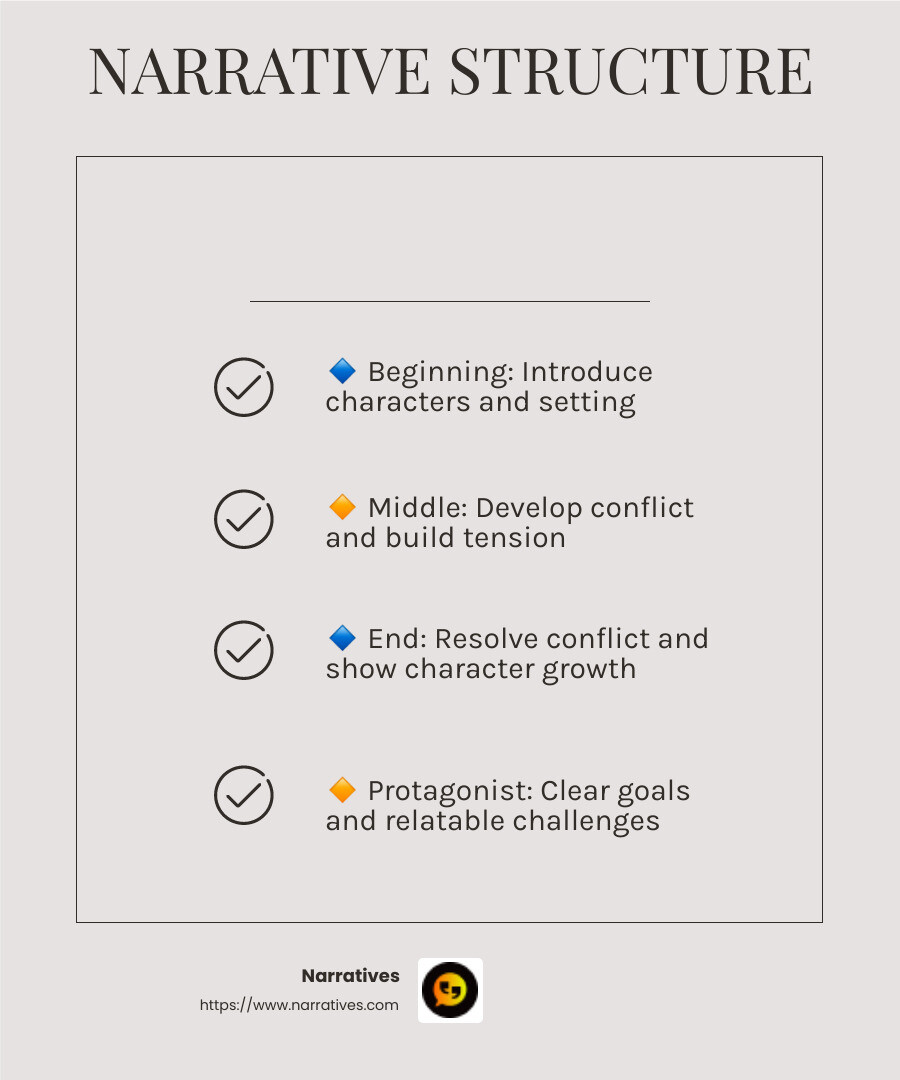
To create a compelling narrative, start with a strong story arc. This includes a clear beginning, middle, and end. Introduce a protagonist with a clear goal, and set up obstacles that add tension and conflict. This structure keeps viewers engaged and invested in the outcome.
Character development is crucial. Audiences connect more deeply with stories when they can relate to the characters. Highlight their motivations, challenges, and changes. This makes the narrative more engaging and memorable.
Building Emotional Connections
Building emotional connections is key to effective storytelling. When viewers feel something, they are more likely to remember and share the story. Use empathy to make your audience care about the characters and their journey.
Relatability is important. Show real-life situations that resonate with your audience's experiences. This helps them see themselves in the story, fostering a deeper connection.
Use visuals and music to improve the emotional impact. A well-chosen soundtrack can amplify feelings of joy, sadness, or hope, making the story more powerful.
Ensuring Authenticity
Authenticity is the backbone of trust. Share genuine stories with real voices to create an honest connection with your audience. Avoid overly polished or scripted content that can feel artificial.
Highlight true stories and experiences. This not only builds credibility but also shows your organization's values and mission in action. Authentic stories are more likely to inspire and motivate viewers.
Incorporate diverse perspectives to reflect the real world. This inclusivity adds depth and richness to your storytelling, making it more relatable to a wider audience.
By focusing on narrative structure, emotional connection, and authenticity, you can create video content that captivates and engages. These best practices for video storytelling will help you craft stories that are not just seen, but felt and remembered.
Non-Profit Video Partnerships
Elevating Underrepresented Voices
Non-profit organizations have a unique opportunity to lift underrepresented voices through video storytelling. By collaborating with diverse communities, they can shine a light on stories that often go unheard. This inclusivity not only enriches the narrative but also fosters a sense of belonging and representation.
Narratives, a content agency dedicated to humanizing news, exemplifies this approach. They work with non-profits to create content that highlights the struggles and triumphs of the communities they serve. By doing so, they help amplify the voices of those who are often marginalized, encouraging empathy and understanding among viewers.
Partnering with organizations like PARS Equality Center, which supports Persian-speaking immigrants, showcases the power of storytelling in building community. These partnerships focus on shared goals, such as promoting cultural integration and providing legal assistance, which can have a profound impact on the individuals and families involved.
Inspiring Action through Storytelling
A well-crafted video not only tells a story but also inspires action. This is where the power of a strong call-to-action (CTA) comes into play. By clearly communicating how viewers can get involved or support a cause, non-profits can drive meaningful engagement and generate tangible results.
For example, a video highlighting the work of a community organization might end with a CTA encouraging viewers to donate, volunteer, or share the story on social media. This not only boosts viewer engagement but also extends the reach of the message, attracting more supporters to the cause.
Videos that focus on real stories and genuine emotions can motivate viewers to act. When audiences see the direct impact of their contributions, they are more likely to feel connected to the cause and continue their support. This creates a cycle of engagement and impact that benefits both the community and the non-profit organization.
By leveraging the power of video storytelling, non-profits can lift diverse voices and inspire action, creating a ripple effect of positive change.
Technical Aspects of Video Storytelling
Creating a compelling video story isn't just about the narrative. The technical aspects play a crucial role in keeping your audience engaged. Let’s dive into the essentials of visual quality, sound design, and editing techniques.
Visual Quality
High-resolution is key. A video with clear, crisp images captures attention and keeps viewers watching. Aim for resolutions like 1080p or higher to ensure every detail is visible. People are more likely to engage with content that looks professional and polished.
Lighting is another vital component. Proper lighting can make your video look more professional and visually appealing. Natural light is great, but when that's not an option, use soft, diffused lighting to avoid harsh shadows.
An example of effective lighting can be seen in the Cave of Forgotten Dreams documentary, where lighting was used to improve the storytelling of ancient cave paintings.
Sound Design
Clear audio is as important as visual quality. No matter how stunning your video looks, if the sound is poor, viewers will quickly lose interest. Use a good microphone and eliminate background noise to ensure sound clarity.
Music selection can lift the emotional tone of your story. Choose music that complements the narrative without overpowering it. The right soundtrack can evoke emotions and improve the storytelling experience.
Editing Techniques
Editing brings your story to life. Pacing is crucial; it dictates the rhythm of your video. A well-paced video keeps the audience engaged, while poor pacing can make even the most exciting story feel dull.
Transitions help maintain flow between scenes. Use them wisely to ensure smooth storytelling. However, avoid overusing flashy transitions, as they can distract from the narrative.
Incorporating these technical elements effectively can transform your video storytelling, making it more engaging and impactful. High-quality visuals, clear sound, and thoughtful editing are the backbone of a successful video story.
Frequently Asked Questions about Video Storytelling
How can video storytelling benefit non-profits?
Video storytelling can be a powerful tool for non-profits. It helps lift underrepresented voices and share diverse stories that might not otherwise be heard. By collaborating with organizations that promote environmental sustainability or social justice, non-profits can reach broader audiences and foster community impact.
A great example is how Defy Ventures uses storytelling to highlight their mission of ending recidivism through entrepreneurship. By sharing real stories from participants, they connect with viewers on a personal level, inspiring action and support for their cause.
What are the key elements of a successful video story?
A successful video story hinges on several key elements:
Compelling Narrative: Start with a strong story arc and well-developed characters. A clear beginning, middle, and end will guide your audience through the narrative.
Emotional Connection: Use empathy and relatability to connect with your audience. Stories that evoke emotions are more memorable and impactful.
Authenticity: Genuine stories with real voices resonate more with viewers. Authenticity builds trust and encourages engagement.
Technical Quality: High-resolution visuals, clear audio, and thoughtful editing are essential. These elements ensure your story is presented in the best possible light.
How do you measure the impact of video storytelling?
To measure the impact of video storytelling, consider the following metrics:
Engagement: Look at likes, shares, and comments. These interactions indicate how well your video resonates with viewers.
View Count: The number of views can show the reach of your video, but it's not the only metric to consider.
Watch Time: This metric reveals how much of your video people are watching. A high watch time suggests that viewers find your content engaging.
Conversion Rates: If your video includes a call-to-action, track how many viewers take the desired action, such as signing up for a newsletter or making a donation.
By analyzing these metrics, you can assess the effectiveness of your video storytelling and make informed decisions for future content.
Conclusion
Video storytelling is a powerful tool that can transform how non-profits communicate their mission and impact. At Narratives, we believe in the profound effect that storytelling can have in elevating underrepresented voices and inspiring action.
By focusing on compelling narratives, non-profits can create emotional connections with their audience. These stories not only inform but also engage viewers, encouraging them to become part of the solution. As Lewis Carroll wisely noted, "No, no! The trips first, explanations take such a dreadful time." This highlights the importance of leading with the story to capture attention and foster understanding.
Authenticity is crucial. Genuine stories told by real voices resonate deeply, building trust and fostering a sense of community. Non-profits like Defy Ventures exemplify this by sharing the real experiences of their participants, which not only raises awareness but also mobilizes support for their cause.
The impact of video storytelling extends beyond immediate engagement. It can lead to long-term success by increasing visibility and building a loyal supporter base. By measuring metrics such as engagement, view count, and conversion rates, non-profits can refine their storytelling strategies to maximize their impact.
Incorporating these best practices into your video storytelling approach can significantly improve your non-profit's ability to connect with audiences and drive meaningful change. For more insights on how to partner with us and lift your storytelling efforts, learn more about our services.
By embracing the art of storytelling, non-profits can open up new opportunities for growth and success, ultimately making the world a better place through the power of shared stories.

.avif)