Storytelling Secrets: Communicate and Connect

Communicating through storytelling is a powerful technique that can captivate audiences, evoke emotions, and create meaningful connections. When you harness the power of stories, you’re not just sharing information; you're crafting engaging experiences that resonate emotionally. This makes storytelling an essential tool for anyone aiming to amplify their message effectively.
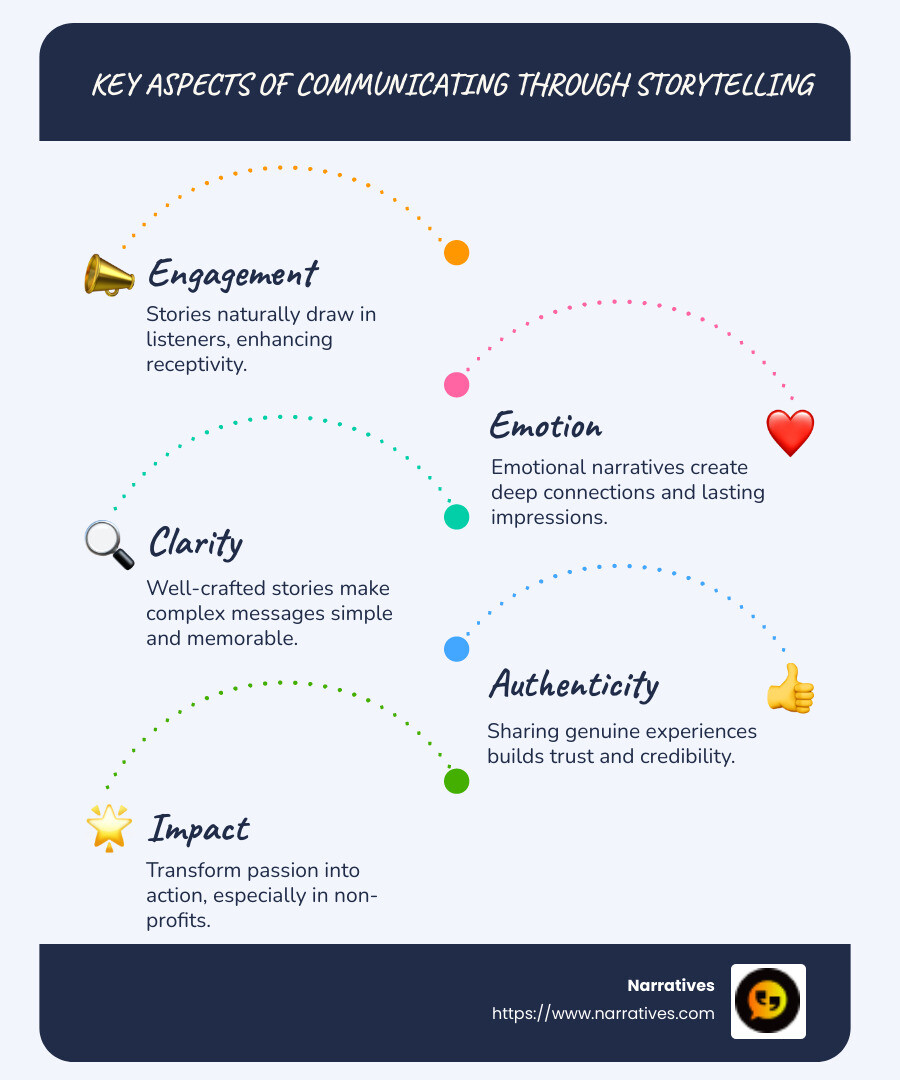
Key aspects of communicating through storytelling:
- Engagement: Stories naturally draw in listeners, making them more receptive to your message.
- Emotion: Emotional narratives can deepen connections and leave lasting impressions.
- Clarity: Well-crafted stories help convey complex messages simply and memorably.
- Authenticity: Sharing genuine, personal experiences builds trust and credibility.
Storytelling is more than just a communication method—it's an art. When done right, it makes facts and data come alive, turning them into narratives that people care about. As Carmine Gallo aptly puts it, "Leaders don’t move mountains with mountains of data. They do it by giving audiences a piece of their heart."
For non-profits and cause-driven organizations, this approach can translate passion into impact, driving both donations and community growth. By applying storytelling in your communication strategy, you can connect with your audience on a human level and inspire meaningful change.
In the following sections, we will explore the profound impact storytelling can have, especially in the field of advocacy and social justice. We’ll also dig into practical techniques to lift your storytelling skills, enhancing both personal and organizational communication.
Communicating through storytelling terms to know:
The Power of Storytelling in Communication
Storytelling holds a unique power in communication. It's not just about sharing information; it's about creating an emotional message that resonates deeply with your audience. When you tell a story, you invite listeners into a world where they can see, feel, and experience the message you want to convey.
Stories are emotional vehicles. They allow us to connect on a deeper level, tapping into feelings that pure data can't reach. Whether it's joy, sadness, or excitement, a well-told story can evoke these emotions, making your message memorable.
Inspire Action
A compelling story doesn't just engage; it inspires action. When people feel emotionally connected, they're more likely to take the steps you want them to. This is why leaders and change-makers often use stories to rally support or drive initiatives. They know that facts alone may inform, but stories inspire.
Audience Engagement
Engagement is key in any communication. Stories naturally draw people in, making them active participants rather than passive listeners. By weaving narratives that are relatable and authentic, you can keep your audience hooked from start to finish. This engagement is crucial, especially in today's world where attention is a precious commodity.
In the next section, we will dig into the techniques that make storytelling effective, helping you craft narratives that not only engage but also leave a lasting impact.
Communicating through Storytelling
Narrative Crafting
Crafting a narrative is like building a bridge between you and your audience. It's about choosing the right words, pacing, and structure to convey your message effectively. A well-crafted story has a clear beginning, middle, and end, guiding the audience on a journey that feels both natural and compelling.
Start with a hook that grabs attention. This could be an intriguing fact, a surprising statement, or a relatable scenario. Then, build your story with vivid details and relatable characters. This helps your audience visualize and emotionally connect with your narrative. Finally, wrap it up with a resolution that reinforces your message and leaves a lasting impression.
Personal Account
Incorporating personal accounts into your storytelling adds authenticity. Sharing your own experiences makes your story not just a narrative, but a genuine part of who you are. This authenticity can build trust and rapport with your audience, making your message even more impactful.
For instance, when leaders share personal stories of failure and growth, it humanizes them. It shows that they, too, have faced challenges and learned from them. This vulnerability can be a powerful tool in connecting with others and encouraging them to open up as well.
Emotional Impact
Emotions are at the heart of every great story. They transform a simple message into a memorable experience. By tapping into emotions, you create a bond with your audience that goes beyond words.
Consider the quote by Carmine Gallo:
"Leaders don’t move mountains with mountains of data. They do it by giving audiences a piece of their heart."
This captures the essence of emotional storytelling. It's not just about what you say, but how you make others feel. Whether it's joy, sadness, or hope, these emotions drive engagement and inspire action.
In the next section, we will explore techniques for effective storytelling, focusing on knowing your audience, maintaining authenticity, and delivering a clear message.
Techniques for Effective Storytelling
Storytelling isn't just about sharing events; it's about connecting with your audience on a deeper level. Here are some key techniques to make your storytelling more effective:
Know Your Audience
Understanding your audience is crucial. What are their interests, concerns, and needs? Tailor your story to resonate with them. If your audience is a group of young professionals, use language and examples they can relate to. For a more mature audience, perhaps a different approach would be more effective.
Think of your audience as the hero of your story. This helps you create a narrative that speaks directly to them, making your message more impactful.
Authenticity
Authenticity is the backbone of great storytelling. Share real experiences and genuine emotions. When you are true to yourself, your audience can sense it, and it builds trust.
People are drawn to stories that feel real. When sharing a personal story, don't shy away from showing vulnerability. This openness can make your message more relatable and powerful.
Clear Message
Every story should have a clear purpose. What do you want your audience to take away from your story? Having a clear message ensures that your audience knows what action to take or what lesson to learn.
Avoid cluttering your story with unnecessary details. Focus on the core message and make sure every part of your story supports it. A clear message sticks with your audience long after the story ends.
Practice
Storytelling is a skill that improves with practice. The more you tell stories, the better you get at it. Practice helps you refine your delivery, pacing, and emotional impact.
Try telling your story to a friend or mentor and ask for feedback. Practicing in a safe environment helps build confidence and allows you to fine-tune your narrative.
By knowing your audience, being authentic, delivering a clear message, and practicing your craft, you can become a more effective storyteller. These techniques will help you create stories that not only communicate but also connect on a deeper level.
Next, we will explore how storytelling plays a vital role in non-profit and purpose-driven organizations, emphasizing social impact and community-driven initiatives.
Storytelling in Non-Profit and Purpose-Driven Organizations
Storytelling is a powerful tool for non-profits and purpose-driven organizations. It allows them to create a social impact, engage communities, and amplify underrepresented voices.
Social Impact
Non-profits often work towards meaningful goals, like fighting poverty or promoting education. Communicating through storytelling helps these organizations highlight their missions and achievements in a relatable way. By sharing stories of real people and real change, they can inspire others to join their cause.
For instance, a non-profit focused on clean water might tell the story of a village transformed by access to a new well. This narrative not only showcases the impact but also connects emotionally with potential donors and volunteers.
Community-Driven
Stories in non-profits are often community-driven. They focus on the people who benefit from the organization's work. By highlighting these personal accounts, non-profits can foster a sense of community and belonging among their supporters.
Consider how Pars Equality Center, a non-profit supporting Persian-speaking immigrants, uses stories to illustrate their initiatives. They share narratives of individuals overcoming challenges and finding a new sense of home. This approach not only informs but also strengthens community ties.
Underrepresented Voices
Non-profits have a unique opportunity to give a platform to underrepresented voices. By sharing these stories, they bring attention to issues that might otherwise go unnoticed. This can lead to greater awareness and action from the broader public.
For example, Narratives, a content agency, collaborates with non-profits to create content that highlights the struggles and triumphs of marginalized communities. They focus on human connection, making these stories not only informative but also deeply moving.
Storytelling in non-profits isn't just about raising awareness. It's about creating a dialogue, building relationships, and driving change. Through compelling narratives, these organizations can effectively communicate their mission and connect with people on a personal level.
Next, we'll dive into some frequently asked questions about communicating through storytelling, exploring its role in the workplace and beyond.
Frequently Asked Questions about Communicating through Storytelling
How can storytelling improve communication in the workplace?
Storytelling can transform workplace communication by making messages more engaging and relatable. Instead of a dry presentation filled with data, a story can illustrate a point with emotion and context. This approach helps in persuading colleagues, motivating teams, and fostering a collaborative environment.
For example, a manager might share a story about overcoming a project challenge to inspire their team. This narrative not only conveys the lesson learned but also builds a sense of camaraderie and shared purpose.
What are some examples of business storytelling?
In business, storytelling is used in various ways:
Brand Narratives: Companies like Apple use stories to communicate their brand values and vision. They often focus on innovation and customer experience, making their products more than just gadgets.
Customer Testimonials: Sharing customer experiences can highlight the benefits of a product or service. These stories provide social proof and build trust with potential clients.
Leadership Stories: Leaders often use personal anecdotes to connect with employees. By sharing their journey, they can inspire and motivate their teams towards a common goal.
Why is storytelling important for non-profits?
For non-profits, storytelling is crucial because it humanizes their mission and creates emotional connections with supporters. By telling stories of individuals who benefit from their work, non-profits can showcase the impact of their efforts in a tangible way.
Take, for instance, a non-profit working to provide educational resources to underprivileged children. By sharing the story of a child whose life was changed by their programs, they can evoke empathy and encourage donations.
Moreover, storytelling helps non-profits to amplify the voices of those they serve, bringing attention to important social issues. This not only raises awareness but also mobilizes action from the community and beyond.
In the next section, we'll explore how Narratives leverages digital storytelling and partnerships to improve their impact in the non-profit sector.
Conclusion
Narratives is redefining how non-profits communicate their mission through digital storytelling. By focusing on underrepresented voices, we help purpose-driven organizations share their stories in a way that inspires action, builds trust, and increases visibility.
Our approach is simple yet powerful. We create high-quality, emotionally resonant video and multimedia content that captures the essence of a non-profit's mission. This isn't just about telling a story; it's about crafting a narrative that moves people to care and act.
Non-profit partnerships are at the heart of what we do. We collaborate closely with organizations to understand their unique challenges and goals. This partnership allows us to tailor our storytelling strategies to fit their needs, ensuring their message reaches the right audience.
Through these partnerships, we lift the stories of communities and individuals who might otherwise go unheard. By amplifying these voices, we not only help non-profits achieve their goals but also contribute to a more empathetic and connected world.
Want to see how digital storytelling can transform your organization's impact? Explore our services and find the power of storytelling with Narratives.


.avif)