Unlocking the Secrets of Compelling Storytelling

Compelling storytelling techniques are at the heart of impactful communication. Whether you're a non-profit trying to amplify an important message or a brand aiming to connect more deeply with your audience, storytelling is your most powerful tool. Here's a quick snapshot:
- Structure: Every story thrives on a well-designed framework. Think of your narrative as a three-act play: setup, confrontation, and resolution.
- Characters: Bring your story to life with relatable, multi-dimensional characters who reflect the complexities and struggles of real life.
- Conflict: Introduce challenges and obstacles. Let your characters grow through adversity.
- Theme: Ensure your story explores significant themes, resonating emotionally and intellectually with your audience.
Narrative is more than just words—it's the bridge that connects you to your audience. It's about weaving a mix of emotions, experiences, and lessons that leave a lasting impact. In a world awash with data and noise, it's the stories we remember. They engage our empathy, make us pause, and spur us into action.
For non-profits and socially-conscious brands, this narrative connection is vital. It's how you show the world who you are, why your mission matters, and how individuals can join you in making a difference. Effective storytelling doesn't just inform; it transforms and inspires change.
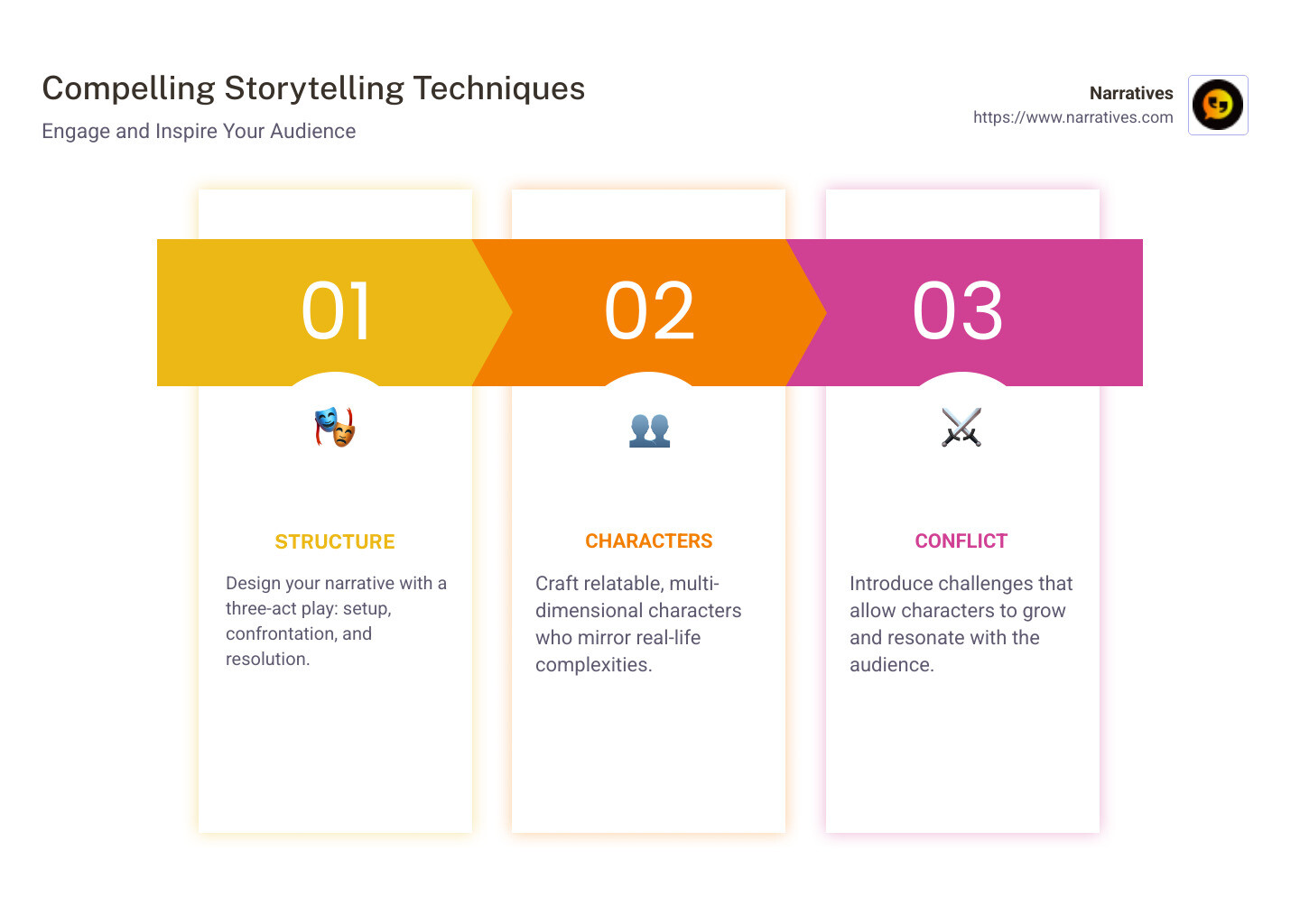
Simple guide to Compelling storytelling techniques:
Understanding Compelling Storytelling Techniques
Storytelling is more than just telling tales; it's about engaging your audience with compelling narratives that resonate and inspire. Let's explore some key techniques that can transform your storytelling into an unforgettable experience.
Key Storytelling Techniques
Backstory
A well-crafted backstory provides depth to your characters or setting. It helps the audience understand motivations and conflicts. However, be cautious not to overload your audience with too much detail, as this can slow down the narrative.Foreshadowing
This technique involves dropping subtle hints about future events. It keeps the audience engaged, as they try to piece together the clues. Think of it as a breadcrumb trail leading to a satisfying climax.Vulnerability and Authenticity
Great storytellers accept vulnerability. By sharing genuine emotions and experiences, they create a bond of trust with the audience. Authenticity makes stories relatable and powerful.Empathy
Understanding and expressing the emotions of your characters and audience is crucial. Empathy allows storytellers to craft narratives that resonate on a deeper level, making the audience feel seen and understood.Adaptability
A skilled storyteller knows how to adjust their narrative to suit different audiences and contexts. Whether it's changing the tone or pace, adaptability ensures the story remains engaging and relevant.
Audience Engagement
Engaging your audience is about more than just telling a good story. It's about making them feel a part of the narrative. Here are some strategies to improve engagement:
Interactive Elements: Encourage audience participation through questions or interactive storytelling elements. This makes the experience more immersive.
Visuals and Imagery: Use vivid imagery and metaphors to paint a picture in the audience's mind. Visuals can help simplify complex ideas and keep the audience's attention.
Emotional Connection: Tap into universal emotions and experiences. When the audience sees themselves in the story, they become more invested in the outcome.

Incorporating these techniques can lift your storytelling, making it not just compelling but also transformative. The goal is to create a narrative that not only informs but also inspires and drives action. As you craft your stories, consider the impact you want to leave on your audience—because, in the end, it's the stories that linger in our hearts and minds.
8 Classic Storytelling Techniques for Engaging Presentations
Crafting an engaging presentation is about more than just conveying information. It's about weaving a compelling storytelling technique into your narrative. Let's explore eight classic techniques that can lift your presentations from ordinary to extraordinary.
1. Monomyth
Also known as the hero's journey, the monomyth is a universal story structure. It involves a hero who starts on an trip, faces a crisis, and returns transformed. This technique is perfect for taking your audience on a journey of findy and change. Think of stories like Star Wars or The Lion King, where the hero returns with newfound wisdom.
2. Mountain
The mountain technique is about building tension and drama. Unlike the monomyth, it doesn't always end happily. It involves a series of challenges leading to a climactic conclusion. This is ideal for presentations where you want to show how you overcame obstacles to reach a significant achievement.
3. Nested Loops
Nested loops involve layering stories within stories. The core message is placed at the center, surrounded by supporting narratives. This technique is useful for deepening understanding and adding layers to your message. It’s like peeling an onion, revealing insights layer by layer.
4. Sparklines
Sparklines contrast the current state with a desired future. They highlight the gap between "what is" and "what could be," creating a compelling call to action. This technique is effective in motivational presentations, encouraging your audience to envision a better future.
5. In Media Res
Starting in the middle of the action, or in media res, grabs attention immediately. This technique throws the audience straight into the heart of the story, later filling in the backstory. It's great for hooking your audience right from the start.
6. Converging Ideas
Converging ideas bring together different narrative threads into a coherent whole. This technique creates 'aha' moments by linking seemingly unrelated concepts. It's perfect for presentations that aim to synthesize diverse ideas into a unified vision.
7. False Start
A false start subverts expectations by beginning with one narrative direction and then shifting unexpectedly. This surprise element keeps the audience engaged and curious about what will happen next. It's a powerful way to add intrigue and maintain interest.
8. Petal Structure
The petal structure involves telling multiple stories around a central theme. Each story is a petal that contributes to the overall message. This technique is effective for exploring complex topics from different perspectives, providing a comprehensive view.
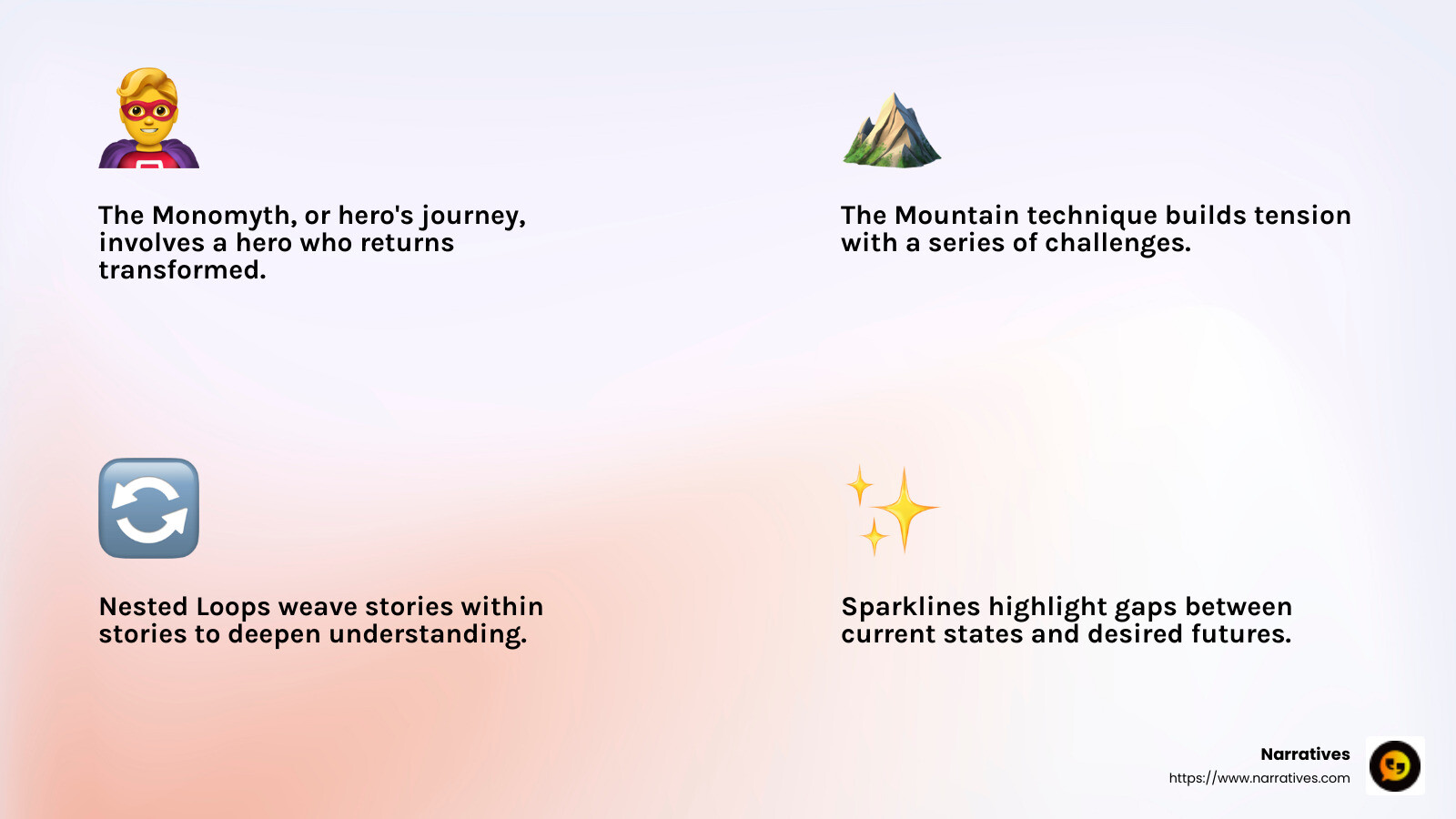
These storytelling techniques can transform your presentations into captivating narratives. By integrating these methods, you not only inform but also engage, inspire, and motivate your audience. As you prepare your next presentation, consider which technique aligns best with your message and audience, and watch your storytelling come alive.
The Science Behind Storytelling
When you hear a good story, it's not just your imagination that's engaged—it's your brain chemistry. Compelling storytelling techniques can trigger the release of certain chemicals in the brain, making stories not just interesting, but impactful.
Cortisol: The Attention Keeper
Cortisol is often called the "stress hormone." But in storytelling, it plays a different role. When a story has conflict or tension, cortisol levels rise, keeping us focused and engaged. This is why cliffhangers and suspenseful plots keep us on the edge of our seats. They make us want to know what happens next, ensuring that we pay attention.
Dopamine: The Feel-Good Factor
Dopamine is known as the "feel-good" neurotransmitter. It’s released when a story is exciting or rewarding, helping us to remember and enjoy the narrative. This is why stories with happy endings or satisfying resolutions leave us feeling uplifted and satisfied. Dopamine not only makes stories enjoyable, but it also helps us retain the information.
Oxytocin: The Empathy Engine
Oxytocin is often referred to as the "love hormone" because it fosters feelings of connection and empathy. When a story involves personal struggles or emotional moments, oxytocin levels rise. This makes us feel closer to the characters and more empathetic to their experiences. It's why stories of triumph over adversity or acts of kindness can bring us to tears and inspire us to act.
Emotional Impact: The Heart of the Story
The combination of these chemicals creates a powerful emotional impact. A well-told story doesn't just inform; it resonates. It makes us feel. This emotional engagement is what makes storytelling such a powerful tool for communication. It helps us connect with others, understand different perspectives, and remember the message long after the story is over.
By understanding the science behind storytelling, we can craft narratives that not only capture attention but also inspire action and foster deep connections. Stories are more than just words—they're experiences that engage our brains and touch our hearts.
Compelling Storytelling Techniques for Non-Profits
In non-profits, storytelling is more than just a tool—it's a bridge to connect with communities and drive social impact. Compelling storytelling techniques can transform abstract missions into tangible, relatable narratives that inspire action and foster emotional resonance.
Social Impact: The Power of Stories
Stories have the unique ability to highlight the real-world impact of non-profit work. They bring statistics and data to life by showing how initiatives change lives. For instance, Pars Equality Center uses storytelling to showcase their efforts in empowering Persian-speaking immigrants. Through personal narratives, they illustrate how their services make a meaningful difference in the community.
Community-Driven Storytelling: Voices from Within
Community-driven storytelling involves sharing stories directly from those affected by or involved in the non-profit's mission. This approach not only amplifies underrepresented voices but also builds trust and authenticity. By featuring personal experiences, non-profits humanize their work and create a deeper connection with their audience. This method was effectively used by Narratives, a content agency that collaborates with non-profits to highlight community stories and foster human connection.
Emotional Resonance: Making Stories Stick
Emotional resonance is key to making stories memorable and impactful. By tapping into emotions like empathy and compassion, stories can motivate audiences to take action. The release of oxytocin, as discussed in the previous section, improves feelings of empathy, making the audience more likely to support the cause. For example, sharing a story about overcoming adversity can inspire donations or volunteerism, as it connects the audience emotionally to the mission.
By leveraging these storytelling techniques, non-profits can craft narratives that not only inform but also engage and inspire their audience. These stories become powerful catalysts for change, driving visibility and support for their causes.
Frequently Asked Questions about Compelling Storytelling Techniques
What makes a story compelling?
A compelling story is one that resonates deeply with its audience. To achieve this, the story must be audience-specific—custom to the interests and experiences of those who will hear it. This means understanding what your audience cares about and crafting your narrative to align with those interests.
Contextualizing your story is also crucial. Providing background and setting the scene helps the audience understand the environment and circumstances surrounding the narrative. This makes the story more relatable and easier to follow.
Finally, humanizing the story by focusing on personal experiences and emotions can create a strong connection with the audience. When a story features real people and their challenges, it becomes more engaging and memorable.
How can storytelling drive change?
Storytelling has the power to drive change by influencing behavior and inspiring action. When a story is told well, it can motivate people to think differently, make decisions, and take steps towards change.
For example, a story about a community overcoming a significant challenge can inspire others to take similar actions. By highlighting successful outcomes and the steps taken to achieve them, stories can serve as powerful examples for others to follow.
In addition, storytelling can help build trust. When stories are authentic and transparent, they foster trust between the storyteller and the audience. This trust can lead to stronger relationships and a greater willingness to support and participate in initiatives.
Why is storytelling important for non-profits?
For non-profits, storytelling is a critical tool for increasing visibility and showcasing their work. Impact stories—narratives that highlight the positive changes brought about by the organization's efforts—can demonstrate the tangible effects of their initiatives.
Moreover, storytelling is a means to amplify underrepresented voices. By sharing stories from individuals and communities that are often overlooked, non-profits can bring attention to important issues and foster a sense of inclusion and representation.
Incorporating these storytelling techniques enables non-profits to create narratives that not only inform but also engage and inspire their audience, driving support and action for their causes.
Conclusion
In the changing world of digital storytelling, Narratives stands out as a guide for non-profits and purpose-driven organizations. We specialize in creating emotionally resonant content that lifts underrepresented voices. Our mission is to help non-profits share their impact stories in a way that not only inspires action but also builds trust and increases visibility.
Digital storytelling is more than just a buzzword; it's a powerful tool for change. By using compelling storytelling techniques, we can craft narratives that resonate on a deep emotional level. This connection is crucial for non-profits looking to engage their audience and drive meaningful social impact.
Partnerships with non-profits are at the heart of what we do. We believe in the power of community-driven storytelling to highlight the incredible work these organizations do every day. By sharing these stories, we can help bring about real change in communities around the world.
To learn more about how we can help your organization harness the power of storytelling, click here to explore our services.
In summary, storytelling is an essential strategy for non-profits seeking to amplify their voices and drive change. At Narratives, we are committed to being your digital storytelling partner, helping you share your stories and make a lasting impact.


.avif)