Storytelling Secrets: Building Bridges with Your Audience

Connect with storytelling to build strong and lasting bridges with your audience. In today's digital world, stories stand out as a powerful tool for connection. They don't just tell facts; they weave emotions and values into a shared narrative. This power lies in the emotional connection stories create, making them memorable and impactful.
Storytelling has been with us since the beginning of time, serving as a vessel for shared experiences and lessons. It's about more than just entertaining—it's about engaging at a deeper level, sparking emotions, and inspiring change. A compelling story can captivate focus, foster trust, and inspire action.
For non-profits and mission-driven organizations, storytelling is essential. It lifts impactful work, amplifying causes and missions that matter. It's about authentic voices and meaningful connections.
What makes storytelling so powerful? Here's why:
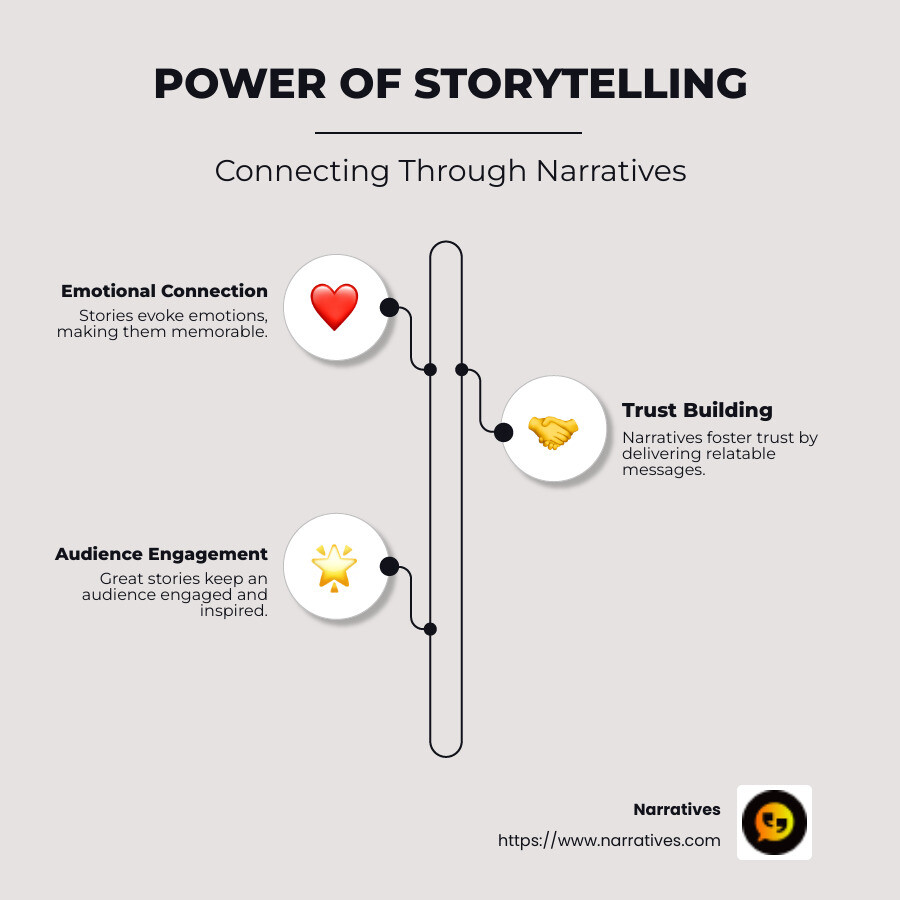
- Emotional Connection: Stories evoke emotions that facts and figures simply can't.
- Trust Building: People are more likely to trust a message when delivered as a story.
- Engagement: A great story keeps an audience hooked and wanting more.
Crafting these connections through storytelling is both an art and a skill. The more you master this, the more you can resonate with your audience.
Basic Connect with storytelling glossary:
The Science of Storytelling
Why do stories stick with us? It's not just because they're entertaining. There’s a science behind it involving our brain chemistry. When we hear a story, our brains release special chemicals that make us feel and remember more deeply.
Cortisol: The Attention Keeper
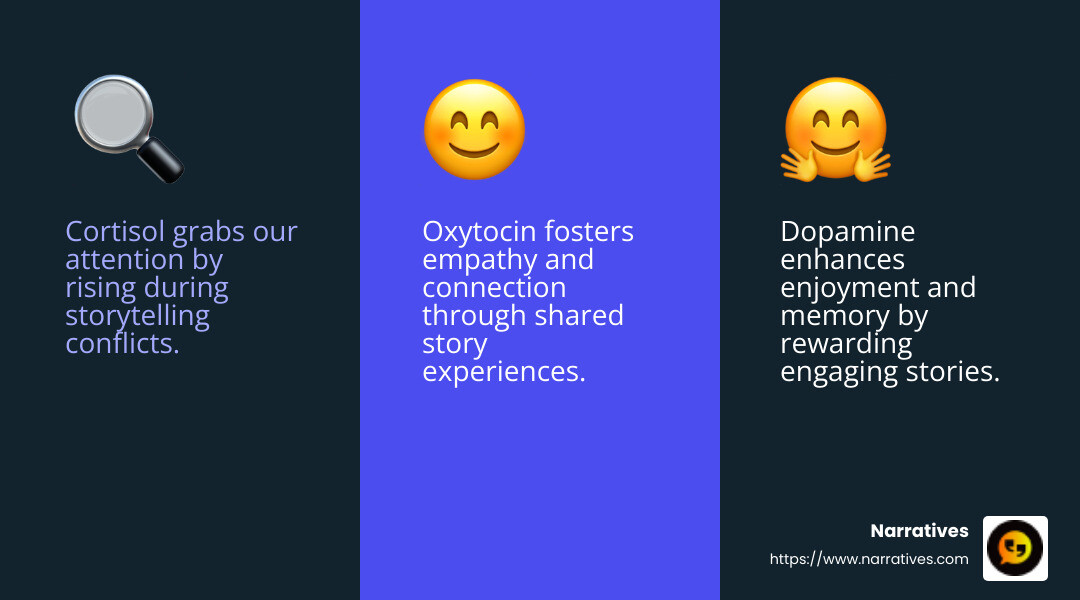
Cortisol is a hormone that helps us focus. When a story presents a challenge or conflict, cortisol levels rise, grabbing our attention. This keeps us engaged, eager to find out what happens next. It's like the brain's internal alarm clock, keeping us alert and invested in the outcome.
Dopamine: The Feel-Good Factor
Dopamine plays a crucial role in storytelling. It’s released when we experience something pleasurable or exciting. In stories, dopamine is triggered by moments of suspense or resolution, making the experience enjoyable. This not only improves our emotional response but also aids in memory retention. We remember stories better because they make us feel good.
Oxytocin: The Empathy Builder
Oxytocin is often called the "love hormone." It's released when we feel connected to others. In storytelling, oxytocin fosters empathy, allowing us to relate to characters and their experiences. This connection is what makes a story resonate on a personal level. When we empathize with a story, we’re more likely to trust and engage with its message.
These chemicals work together to make storytelling a powerful tool. They help us connect, and feel. By understanding this science, you can harness storytelling to build stronger connections with your audience.
In the next section, we'll explore techniques and tips for connecting with storytelling, focusing on emotional stakes and relatability.
Connect with Storytelling: Techniques and Tips
Emotional Stakes in Storytelling
Stories are not just about events—they're about emotions. To connect with storytelling, you need to dive deep into the emotional stakes. Think of emotional stakes as the heartbeat of your story. They are what make your audience care.
When telling a story, ask yourself: What’s at risk for the characters? What are they feeling? The more you explore these questions, the more your audience will connect emotionally. This connection is what makes stories memorable and impactful.
Relatability and Connection
Relatability is the bridge between the storyteller and the audience. To make your story relatable, focus on shared values and experiences. When your audience sees themselves in your story, they're more likely to engage and feel connected.
Here are some techniques to improve relatability:
- Use Personal Anecdotes: Share stories from your own life. This vulnerability invites your audience in and fosters empathy.
- Highlight Universal Themes: Focus on themes like love, loss, or hope—emotions everyone understands.
- Create Characters with Depth: Ensure your characters have desires and flaws. This makes them feel real and relatable.
Community building is another powerful aspect of storytelling. By sharing stories that reflect shared values, you create a sense of belonging. This is especially important in non-profit and community-driven storytelling, where the goal is often to inspire collective action.
By focusing on emotional stakes and relatability, you create stories that resonate deeply. They become more than just tales; they become experiences that bind us together. In the next section, we'll explore how storytelling plays a crucial role in non-profit and purpose-driven work.
Storytelling in Non-Profit and Purpose-Driven Work
Elevating Underrepresented Voices
In the field of non-profit and purpose-driven work, storytelling is a powerful tool for social impact. It shines a light on underrepresented voices, giving them a platform to be heard. This is crucial for organizations like Pars Equality Center, which supports Persian-speaking immigrants. By sharing their stories, they highlight the struggles and triumphs of these communities, fostering understanding and empathy.
Community-driven storytelling is at the heart of this process. It involves crafting narratives that reflect the experiences and values of the community. This not only raises awareness but also inspires action. People are more likely to support a cause when they understand the personal stories behind it.
For non-profits, producing high-quality content is essential. It ensures that the stories told are authentic and impactful. Organizations like Narratives work with underrepresented storytellers to create compelling content that resonates with audiences. This approach not only lifts voices but also encourages others to engage and support the cause.
Building Trust and Credibility
Trust is the foundation of any successful relationship, and storytelling can be a powerful tool for trust-building. By sharing genuine stories, non-profits can build credibility with their audience. When people see the real impact of a non-profit's work, they're more likely to trust and support it.
For instance, Narratives collaborates with non-profits to highlight their community work, showing both the challenges and successes. This transparency builds credibility, as audiences appreciate honesty and authenticity.
In addition, storytelling can demonstrate the tangible outcomes of a non-profit's efforts. By showcasing real-life examples and success stories, organizations can prove their effectiveness. This not only builds trust but also encourages continued support from donors and volunteers.
In summary, storytelling in non-profit work is about more than just sharing stories. It's about elevating voices, inspiring action, and building trust. These elements are crucial for creating lasting social impact and fostering community engagement.
Frequently Asked Questions about Storytelling
How does storytelling connect us?
Storytelling connects us by fostering empathy and creating a sense of shared experiences. When we hear a story, our brains release chemicals like dopamine and oxytocin, which help us feel emotions and bond with the storyteller. This connection is not just emotional; it's also chemical.
Stories allow us to step into someone else's shoes, experiencing their joys, struggles, and triumphs as if they were our own. This shared journey builds a bridge between the storyteller and the audience, making us feel seen, heard, and understood.
Why is storytelling important for non-profits?
For non-profits, storytelling is a vital tool for conveying impact stories and increasing visibility. By sharing the real-life experiences of those they serve, organizations can highlight the difference they make in communities. These stories are more than just narratives; they are powerful testimonials of change and hope.
Through storytelling, non-profits can reach a wider audience, raising awareness about their cause and attracting support. When people understand the human impact of a non-profit's work, they are more likely to donate, volunteer, or spread the word. Stories make the mission tangible and relatable, turning abstract goals into concrete actions.
What makes a story resonate with an audience?
A story resonates with an audience when it has strong emotional stakes and is relatable. Emotional stakes give the story depth and meaning, making us care about the outcome. Whether it's overcoming adversity or achieving a dream, these stakes keep us engaged and invested.
Relatability is equally important. When a story reflects universal themes or shared values, it becomes more accessible to a wider audience. We see parts of ourselves in the characters or situations, which makes the story memorable and impactful.
A resonant story combines emotional depth with relatable elements, creating a lasting impression that inspires and connects people.
Conclusion
At Narratives, we believe in the transformative power of storytelling. As your digital storytelling partner, we specialize in crafting high-quality, emotionally resonant content that lifts underrepresented voices. Our mission is to help non-profits and purpose-driven organizations share their impact stories in ways that inspire action, build trust, and increase visibility.
Storytelling is more than just sharing facts—it's about creating connections. By focusing on community-driven narratives, we help organizations foster empathy and understanding. This approach not only highlights the incredible work being done but also brings people together around shared values and common goals.
We understand that stories are the universal language that binds us all. Whether it's a tale of triumph over adversity or a journey of personal growth, stories have the power to inspire and empower. They are the bridges that connect us, reminding us of our shared humanity and the potential for positive change.
Through our partnership with non-profits, we aim to amplify their voices and broaden their reach. By telling compelling stories, we help organizations engage with their audiences on a deeper level, creating lasting impressions that lead to meaningful support.
If you're ready to harness the power of storytelling to make a difference, connect with us at Narratives. Together, we can create stories that not only resonate but also drive change. Let's build bridges with your audience and inspire action through the art of storytelling.


.avif)