The Great Debate: Content Syndication vs. Aggregation

Content syndication & aggregation are key strategies for any organization looking to amplify their storytelling efforts in the digital age. If you focus on social impact or advocacy, understanding these two concepts can help you extend your message and make a greater impact.
Here’s a quick breakdown to differentiate the two:
Content Syndication: Think of this as "sharing." You're spreading your content across various platforms, making sure it reaches a broader audience. By doing so, you can improve your brand’s visibility and attract new followers.
Content Aggregation: This is more about "collecting." You gather content from multiple sources to present it in one place, giving your audience a unified view or experience.
Both strategies serve specific purposes and require a thoughtful approach to maximize their potential in digital storytelling. Whether you're a non-profit marketer or working with social-driven brands, these tools help turn complex missions into compelling narratives that resonate.
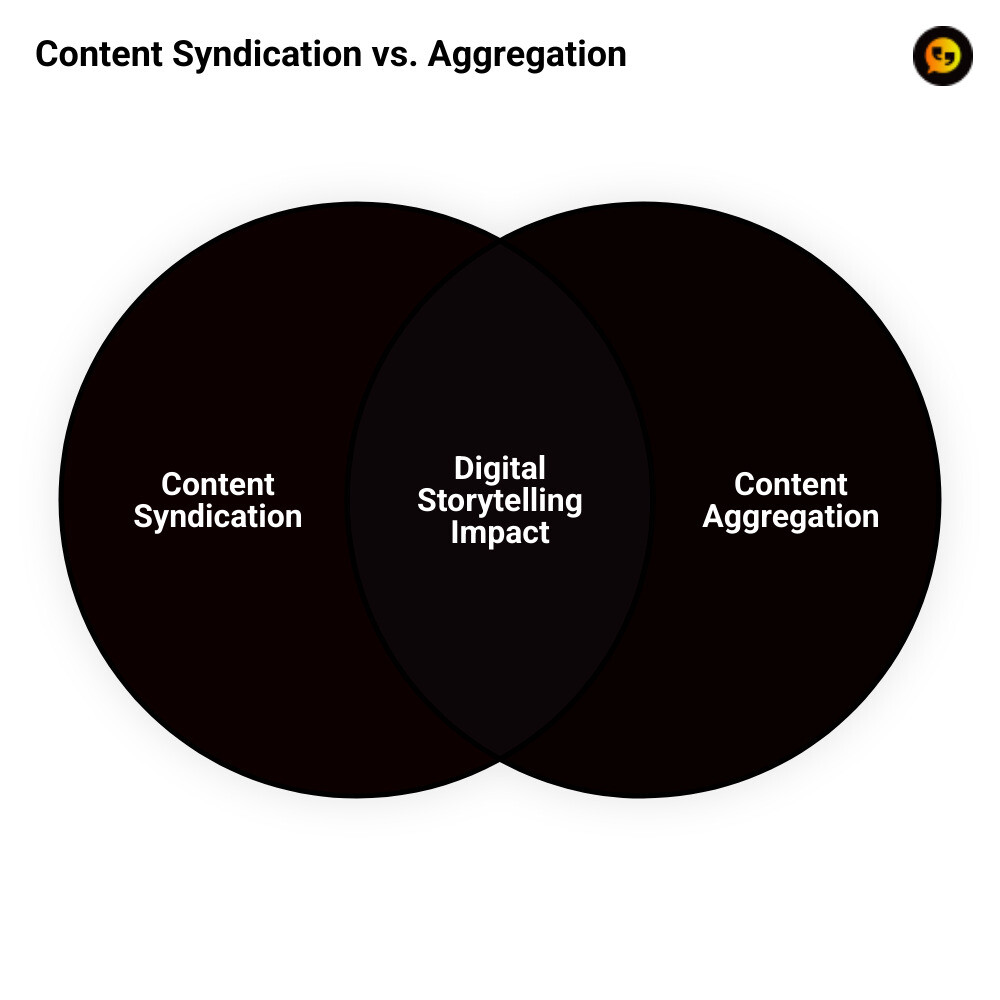
Easy content syndication & aggregation word list:
Understanding Content Syndication & Aggregation
What is Content Syndication?
Content syndication is all about sharing your content across multiple platforms to reach a larger audience. It involves re-publishing your original content on different websites, often with a link back to your site. This method helps your content appear on more sites, thus expanding your reach beyond your primary audience.
Imagine you wrote a compelling article about a community project. By syndicating this article, it could appear on various community-focused websites, amplifying your message and bringing more visitors back to your site. This is especially useful for non-profits and organizations aiming to boost their visibility and establish themselves as thought leaders in their field.
A key component of syndication is web feeds, such as RSS feeds. These feeds allow your content to be easily distributed and updated across different platforms, ensuring that your audience always has access to your latest content.

What is Content Aggregation?
On the flip side, content aggregation focuses on collecting content from various sources and presenting it in a single, organized location. Think of it as curating a library of information, where you gather articles, videos, and other media from across the web to provide a comprehensive resource for your audience.
For example, a non-profit organization might aggregate news articles, research papers, and blog posts related to their cause into a single resource center on their website. This helps their audience access a wealth of information in one place, making it easier to stay informed and engaged with the topic.
Aggregation is often automated, using tools that collect and organize content based on specific keywords or topics. This not only saves time but also ensures that the content is consistently updated. By centralizing information, aggregation aids in data management and provides valuable insights into market trends and consumer interests.
Both content syndication & aggregation are powerful strategies in the digital storytelling field, each serving a unique purpose. While syndication boosts your content's reach, aggregation enriches your audience's experience by providing a well-organized repository of information.
Benefits and Challenges of Content Syndication
Benefits of Syndication
Audience Growth and Brand Visibility
Content syndication is a powerful tool for expanding your audience and boosting brand visibility. By sharing your content across multiple platforms, you can reach new audiences who may not have finded your content otherwise. For instance, if you're a non-profit organization, having your stories about community impact shared on various high-traffic websites can significantly increase your exposure.
Expert Establishment
Syndication also helps in establishing your organization as an expert in your field. When your content appears on reputable sites, it improves your credibility and positions you as a thought leader. This is crucial for non-profits and companies looking to build trust and authority within their industry.
Challenges of Syndication
Traffic Diversion
While syndication can drive traffic to your site, there's a risk of traffic diversion. When your content is available on other platforms, some readers might engage with it there instead of visiting your original site. This can dilute your direct traffic and potentially impact your site's analytics.
Content Value and Duplicate Content
A significant challenge with content syndication is maintaining the value of your content. When the same piece appears across multiple sites, it can lead to content duplication issues. Search engines might not know which version to prioritize, potentially affecting your SEO rankings. It's important to ensure that syndicated content includes proper links back to your site and that it's clear where the original content resides.

Content syndication is a balancing act. It offers substantial benefits in terms of audience reach and brand visibility, but it also requires careful management to avoid potential pitfalls like traffic diversion and duplicate content issues.
Benefits and Challenges of Content Aggregation
Benefits of Aggregation
Streamlined Data Collection
Content aggregation simplifies the process of gathering information from diverse sources. Instead of manually searching for relevant content, aggregation tools collect and organize data into a single, accessible location. This not only saves time but also ensures that you have a comprehensive view of the topic.
Performance Insights and Market Understanding
Aggregated content can provide valuable insights into market performance and consumer behavior. By analyzing trends across different sources, businesses can identify what resonates with their audience. This helps in making informed decisions and crafting strategies that align with consumer interests.
Improved Content Presentation
When content is aggregated, it can be presented in a more structured and cohesive manner. This improves the user experience, making it easier for audiences to find and engage with the information they need. A well-organized content feed can boost user satisfaction and encourage repeat visits.
Challenges of Aggregation
Data Accuracy
One of the main challenges in content aggregation is ensuring data accuracy. Aggregators must verify that the information collected is reliable and up-to-date. Inaccurate data can lead to misinformation, which can damage credibility and trust with your audience.
Content Sourcing
Finding diverse and high-quality content sources is essential for effective aggregation. Relying too heavily on a few sources can limit the variety and richness of the content. It's important to include a wide range of perspectives to provide a balanced view.
Technology Requirements
Implementing content aggregation requires robust technology solutions. Tools like natural language processing (NLP) and machine learning are often used to automate the process. However, these technologies can be complex and require ongoing management to ensure they function correctly.
Content aggregation can be a powerful tool for gaining insights and enhancing content delivery, but it requires careful handling to maintain accuracy and diversity. As we explore further, understanding how these elements apply to video content can open new avenues for content distribution.
Content Syndication & Aggregation in Video Content
Video Content Syndication
Expanding Audiences through Partnerships
Video content syndication is like having a megaphone for your videos. It allows creators to partner with publishers who can republish their content across multiple platforms. This approach can significantly expand your audience reach. By collaborating with high-profile platforms, your content can appear on websites you might not have access to on your own. This means more eyes on your videos and greater brand visibility.
Seamless Content Integration
One of the key aspects of video content syndication is how the content is integrated into different platforms. When you syndicate, your video is not just shared as a link; it's embedded into the host site’s content, giving it a more native feel. This can improve user engagement as the content is presented in a way that aligns with the host site’s style and audience expectations.
Video Content Aggregation
Collecting Content for Streaming Platforms
Video content aggregation involves gathering diverse video content and organizing it for distribution. Streaming platforms, such as smart TV apps, are prime examples of where aggregation comes into play. These platforms collect videos from various sources, package them, and present them to viewers in a single, cohesive interface.
Role of Distribution Aggregators
Distribution aggregators are the unsung heroes in video content aggregation. They handle the technical side of getting your videos onto multiple streaming platforms. This includes ensuring the content meets platform specifications, managing the licensing, and even tracking performance metrics like views and engagement. By using aggregators, content creators can focus on producing quality videos while leaving the complex distribution tasks to the experts.
Content Distribution in the OTT Era
Over-the-top (OTT) streaming services have revolutionized how audiences consume video content. With OTT, viewers can access a wide range of content without traditional broadcasting limitations. This shift has made content aggregation even more critical. By collecting and distributing content efficiently, aggregators help ensure that audiences have access to a variety of programming options, enhancing the overall viewing experience.
The interplay between content syndication & aggregation in video content is essential for reaching broader audiences and optimizing distribution. As we dig deeper, understanding these dynamics can open up new opportunities in the changing landscape of video programming.
Frequently Asked Questions about Content Syndication & Aggregation
What is the difference between syndication and aggregation?
Content syndication and content aggregation might sound similar, but they serve different purposes.
Syndication involves re-publishing your content on other platforms to reach a larger audience. Think of it as sharing your content with a wider circle, like when a newspaper article is published in multiple papers. This approach helps expand your reach and drive traffic back to your original site.
Aggregation, on the other hand, focuses on collecting content from various sources to present it in one location. It's like creating a buffet where content from different places is gathered and served together. Aggregation helps users access a wide range of information in one spot, making it easier to consume and compare.
How does content syndication drive traffic?
Content syndication can be a powerful tool to increase your website's traffic. When you syndicate your content, it gets published on other sites, often with a link back to your original post. This link acts as a bridge, directing readers from the host site to your own. As your content appears on more platforms, you tap into their audiences, which can lead to more visitors finding and visiting your site.
Moreover, syndication can improve your site's search engine optimization (SEO). As your content spreads across the web, search engines notice the backlinks, which can boost your site's authority and visibility in search results. It's like having more roads leading back to your digital doorstep.
What tools can help with content aggregation?
Several tools can simplify the process of content aggregation, allowing you to gather and organize content efficiently.
RSS Feeds: An oldie but a goodie, RSS feeds automatically pull in new content from subscribed sources, presenting it in one place for easy access.
AI-Powered Tools: Advanced tools use artificial intelligence to search, filter, and collect content based on specific criteria like keywords or trends. These tools can provide a curated list of content custom to your interests.
Web Applications: Many web apps offer aggregation services, connecting with other applications through APIs to gather content. These apps can streamline the process of collecting and organizing content, making it easier to manage large volumes of information.
By leveraging these tools, you can efficiently aggregate content, ensuring you have a comprehensive view of the topics and trends that matter most to you.
Conclusion
At Narratives, we believe in the power of stories to transform communities and inspire action. Our mission is to amplify the voices of non-profits and purpose-driven organizations through digital storytelling. By combining content syndication & aggregation, we help our partners reach broader audiences and create lasting impacts.
Non-profit partnerships are at the heart of what we do. We work closely with organizations to craft narratives that not only highlight their achievements but also connect emotionally with their audience. Through our storytelling strategy, we aim to build trust and increase visibility for causes that matter.
Our approach to storytelling is unique. We focus on creating high-quality, emotionally resonant multimedia content that lifts underrepresented voices. By leveraging content syndication, we ensure these stories reach as many people as possible, driving engagement and support for our partners.
Meanwhile, content aggregation helps us present a comprehensive view of the impactful work being done by these organizations. By gathering content from various sources, we provide our audience with a rich mix of stories that inform and inspire.
Join us on this journey to make a difference. Learn more about how Narratives can help your organization share its story and amplify its impact. Together, we can create a world where every story is heard and every voice matters.


.avif)