Ecommerce Syndication Unlocked: A Guide to Success

Content syndication ecommerce is a crucial strategy for disseminating your online product content across multiple platforms to expand reach and boost sales. By leveraging this approach, businesses can effectively increase brand visibility, drive traffic, and improve consumer engagement.
In today's digital landscape, e-commerce businesses have a vast opportunity to lift their brand through content syndication and digital storytelling. Imagine reaching potential customers not just on your website but across various platforms like Amazon, eBay, and Walmart. Syndication helps your product descriptions, images, and brand story to be seen by a diverse audience, amplifying your mission and driving measurable results.
The essence of successful content syndication lies in maintaining consistency while tailoring your narrative to fit the unique demands of each platform. Effective syndication also combines storytelling with strategic distribution, ensuring that consumers recognize and trust your brand wherever they encounter it.
Whether you're a non-profit marketing lead or part of a social impact organization, understanding how to harness content syndication can open up new levels of community engagement and advocacy.

Find more about content syndication ecommerce:
Understanding Content Syndication in Ecommerce
Benefits of Content Syndication
Content syndication in ecommerce is like giving your brand a megaphone. By republishing web content across various platforms, you can reach a broader audience and improve your brand's visibility. This process is essential for driving more traffic and ultimately boosting sales.
Brand awareness is one of the key benefits. The more places your content appears, the more people will recognize your brand. When your content is consistently visible, it keeps your brand top of mind for potential customers. This can lead to increased website traffic as curious readers click through to learn more about your offerings.
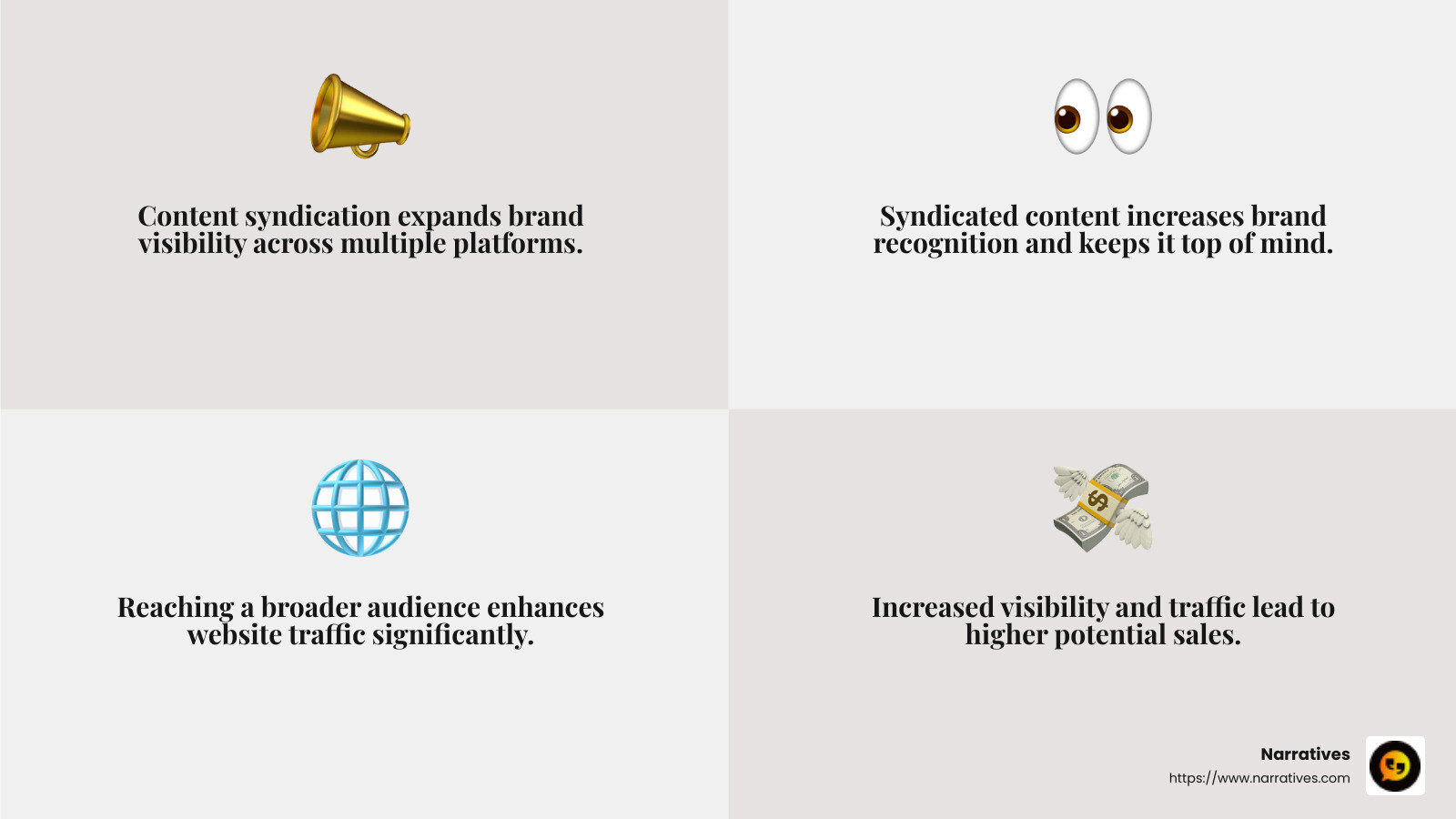
Another significant advantage is the potential for sales increase. As more people become aware of your brand and visit your site, the likelihood of conversions grows. This expanded reach means more eyes on your products, which can translate into more purchases.
Free vs. Paid Syndication
When it comes to content syndication, businesses have two main options: free platforms and paid services.
Free platforms like Medium and LinkedIn allow you to republish your content without any cost. These platforms can host entire articles, helping you reach audiences who might not visit your website directly. Industry-specific blogs can also be a great avenue for free syndication, especially if your content aligns well with their audience's interests.
On the other hand, paid services offer more targeted distribution. Services like Taboola and Outbrain use native advertising to place your content in front of users who are more likely to be interested. These platforms often operate on a pay-per-click model, meaning you pay only when someone clicks on your link.
Each option has its advantages. Free platforms are cost-effective and can still reach a wide audience. Paid services, while requiring a budget, offer more precision in targeting and can lead to higher engagement rates.
Choosing the right syndication strategy depends on your goals and resources. Whether free or paid, the ultimate aim is to ensure your content reaches the right people, drives traffic, and maximizes your brand's potential.
Product Content Syndication Essentials
When it comes to content syndication ecommerce, understanding the essentials is key to success. Let's explore two major components: the role of PIM in syndication and how to effectively syndicate to marketplaces like Amazon, eBay, and Walmart.
Role of PIM in Syndication
Product Information Management (PIM) plays a crucial role in product content syndication. Think of PIM as the backbone of your digital shelf strategy. It centralizes all your product data, making it easier to manage and update across multiple channels.
Centralized Data: With a PIM system, you have a single source of truth for all your product information. This means no more scrambling to find the latest product details or worrying about inconsistencies across platforms.
Automated Updates: One of the biggest advantages of using PIM is the ability to automate updates. When you change a product detail in your PIM, it automatically syncs across all your sales channels. This saves time and ensures that your customers always see the most accurate information.
Compliance: Marketplaces like Amazon, eBay, and Walmart have specific requirements for product listings. A PIM system helps ensure compliance by formatting your product data correctly for each platform. This minimizes the risk of errors and helps maintain your brand's reputation.
Syndication to Marketplaces
Syndicating product content to major marketplaces is a game-changer for expanding your reach. Here's how to do it effectively:
Amazon: As the world's largest online retailer, Amazon offers incredible exposure. To succeed here, ensure your product listings are optimized with high-quality images, detailed descriptions, and relevant keywords. A PIM system can help streamline this process by automatically updating and formatting your content to meet Amazon's standards.
eBay: Known for its auction-style listings, eBay is another powerful platform for product syndication. Focus on clear, concise product information and competitive pricing. Using a PIM ensures that your listings are consistent and up-to-date, which can improve your credibility with buyers.
Walmart: As a growing force in ecommerce, Walmart requires precise product data for listings. A PIM system helps you comply with Walmart's unique requirements, ensuring your products are visible and attractive to shoppers.
By leveraging a PIM system and understanding the nuances of each marketplace, your brand can achieve omnichannel consistency and maximize its presence on the digital shelf. This approach not only boosts your visibility but also builds trust with consumers by providing accurate and reliable product information.
Creating a Successful Syndication Strategy
Crafting a winning content syndication ecommerce strategy involves several key steps. Let's break it down:
Set Clear Goals
Before you start syndicating, define what success looks like for your brand. Are you aiming to increase website traffic, boost sales, or improve brand awareness? Clear goals will guide your strategy and help you measure success later.
Develop Engaging Content
Content is king, even in syndication. Your content should be engaging and custom to your target audience. Use compelling visuals and clear, concise language to capture attention. The more engaging your content, the more likely it is to be shared and drive traffic back to your site.
Identify Target Partners
Choosing the right partners is crucial for effective syndication. Look for partners that align with your brand values and have a similar target audience. Whether you're collaborating with blogs, media outlets, or ecommerce platforms, alignment ensures your content reaches the right eyes.
Track Performance
Once your content is out there, it's time to track its performance. Use analytics tools to monitor web traffic, social media engagement, and sales conversions. This data will help you understand what's working and what needs improvement.
Evaluate ROI
Assess the return on investment (ROI) of your syndication efforts. Compare the costs (time, money, resources) with the benefits (increased traffic, sales, brand visibility). A positive ROI indicates that your strategy is paying off.
Consider SEO Impact
Syndication can impact your SEO positively if done correctly. Ensure that your syndicated content is properly attributed to avoid duplicate content penalties from search engines. Use the "rel=canonical" tag to indicate the original source of your content and build valuable backlinks to your site.
By setting clear goals, creating engaging content, and choosing the right partners, you can craft a successful syndication strategy. Keep an eye on performance metrics and SEO impacts to refine your approach and ensure long-term success.

Frequently Asked Questions about Content Syndication Ecommerce
Can syndicating my content hurt my website's SEO?
Syndicating content can be a double-edged sword for SEO. If done incorrectly, it might lead to duplicate content issues. Google's algorithm frowns upon duplicate content because it can confuse search engines about which page to index. However, when you use the "rel=canonical" tag, you tell search engines that your site is the original source. This helps avoid penalties and ensures you get credit for the content. Additionally, syndication can boost your SEO by providing valuable backlinks from reputable sites, driving more traffic to your website.
How do I ensure that my syndicated content is properly attributed to me?
Proper attribution is crucial in content syndication. Always choose reputable partners who respect content ownership. Before syndicating, provide clear attribution information and links to the original content. This not only helps maintain your site's authority but also prevents issues of content duplication. If you find your content on another site without attribution, it could be plagiarism, not syndication. Make sure to communicate with your partners about the importance of linking back to your original content.
What is the difference between product content syndication and product data syndication?
In ecommerce, understanding the difference between product content and product data is essential. Product content syndication involves distributing rich media like images, videos, and descriptions that tell the product's story. This type of content helps engage customers and improves their shopping experience. On the other hand, product data syndication focuses on distributing technical information like specifications, prices, and availability to different channels. While both are crucial, product content syndication aims to enrich the shopping experience, whereas product data syndication ensures accurate product information is consistently available across various platforms.
Conclusion
At Narratives, we believe in the power of content syndication ecommerce to amplify the voices of non-profits and purpose-driven organizations. Our mission is to transform how these organizations share their stories, ensuring they reach a wider audience and inspire meaningful action.
Non-profit Partnerships
Partnering with non-profits is at the heart of what we do. By providing high-quality, emotionally resonant multimedia content, we help these organizations showcase their impact. This not only builds trust but also increases their visibility in the digital landscape. Whether it's through videos, articles, or social media, our goal is to make sure these important stories are seen and heard.
Social Impact Storytelling
Our focus on social impact storytelling sets us apart. We don't just create content; we craft narratives that resonate with audiences on a deeper level. By highlighting underrepresented voices and the real-world effects of non-profit initiatives, we aim to foster a sense of community and drive social change.
In today's competitive digital environment, content syndication ecommerce is more than just a strategy—it's a necessity. It allows non-profits to maintain a consistent brand presence across multiple platforms, ensuring their message is not only heard but also understood.
For us, success is measured by the stories we tell and the change they inspire. If you're ready to lift your organization's storytelling and expand your reach, learn more about how Narratives can help.
Together, let's open up the full potential of your stories and drive the impact you envision.


.avif)