Storytelling Reinvented: Innovative Methods for Engaging Narratives

Creative storytelling methods are changing how we connect with audiences by weaving narratives that resonate on an emotional level. This evolution in storytelling engages, inspires, and motivates action, making it especially powerful for brands and nonprofits seeking to amplify their messages.
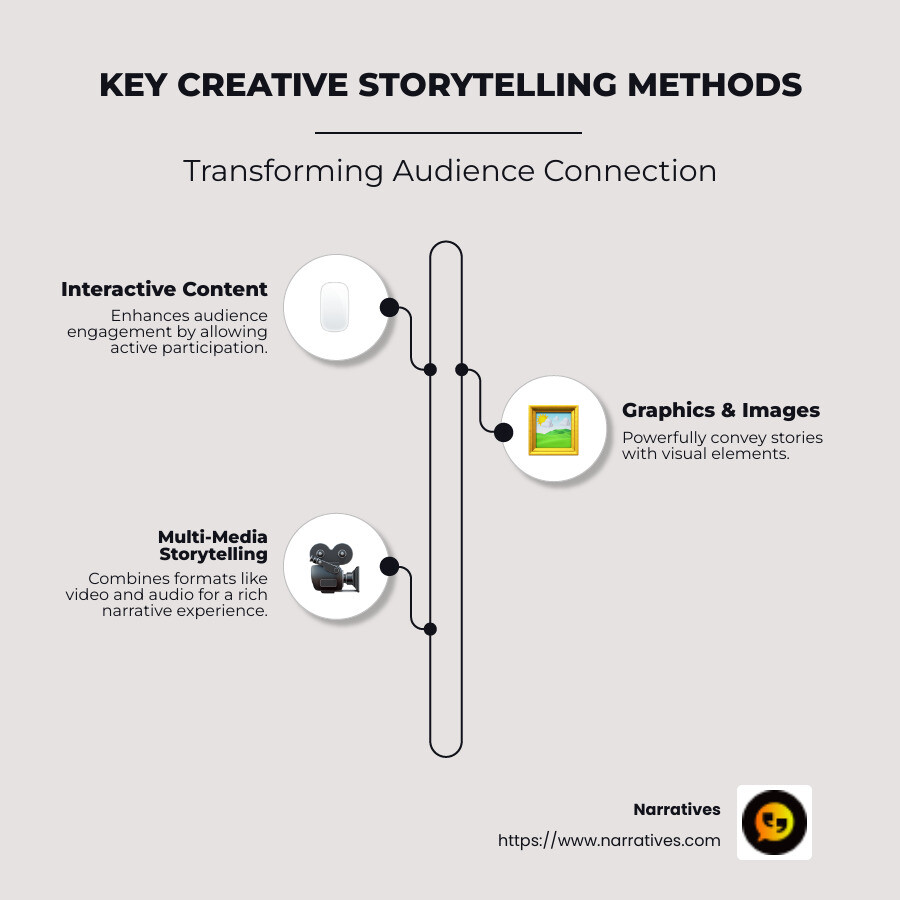
Key creative storytelling methods include:
- Interactive content: Engages the audience actively, enhancing connection and enjoyment.
- Graphics and images: Convey stories powerfully through visual elements.
- Multi-media storytelling: Merges different formats, such as video and audio, for a rich narrative experience.
Storytelling has the unique ability to strike emotional chords. It captures attention, evokes feelings, and leads to deeper audience engagement. For organizations championing social causes, effective storytelling is more than just crafting a message—it's about sparking change and fostering understanding.
Nonprofits, advocacy groups, and brands invested in DEI and social justice can harness these storytelling methods to create authentic, compelling content that not only informs but inspires community action. As you explore these techniques, consider how your story can leave a lasting impact on your audience, driving both awareness and support.
Creative Storytelling Methods
In today's digital world, storytelling has evolved beyond traditional narratives to include creative storytelling methods that captivate and engage audiences in new and exciting ways. By leveraging interactive content, graphics, and infographics, storytellers can create immersive experiences that resonate deeply with viewers.
Interactive Content
Interactive storytelling is a game-changer. It transforms passive audiences into active participants. This method includes formats like "choose your own trip" stories, where audiences make decisions that alter the narrative's direction. Video games are prime examples of this, allowing players to shape their own experiences and outcomes. This level of engagement fosters a personal connection to the story, making it more memorable and impactful.
Interactive content isn't just for entertainment. It's an effective tool for education and marketing as well. For instance, brands can create interactive quizzes or surveys that guide users through a narrative journey, subtly embedding their message or values within the experience. This approach not only boosts engagement but also improves retention of the information being shared.
Graphics and Images
Visual storytelling through graphics and images is a timeless method. A single image can convey complex emotions and narratives without uttering a word. From ancient cave paintings to modern digital art, visuals have always been a powerful medium for storytelling.
In today's digital landscape, graphics are more than just decorative elements. They are strategic tools for communication. Cleverly designed visuals can encapsulate an entire story or message in a compact form, making them ideal for social media platforms where attention spans are short. Brands often use visuals to evoke specific emotions, aligning their imagery with their core message to create a cohesive narrative.
Infographics
Infographics are another powerful storytelling tool, especially when dealing with complex data or concepts. They transform raw data into visually appealing and easily digestible formats. By combining graphics, text, and data, infographics can tell a compelling story that is both informative and engaging.
For example, nonprofits might use infographics to illustrate the impact of their work, showcasing statistics on community improvement or environmental conservation. This not only informs the audience but also appeals to their emotions, encouraging support and action.
Incorporating these creative storytelling methods into your communication strategy can significantly improve the way your narrative is received. Whether you're a brand looking to connect with consumers or a nonprofit aiming to inspire change, these techniques offer innovative ways to engage and motivate your audience. As you explore these methods, the most effective stories are those that not only inform but also inspire action and foster a deeper understanding of the world around us.
Classic Storytelling Techniques
Classic storytelling techniques have stood the test of time because they resonate deeply with audiences. These methods tap into universal themes and structures that make stories memorable and impactful. Let's explore some of these timeless techniques: monomyth, nested loops, in media res, and false start.
Monomyth
Also known as the hero's journey, the monomyth is a narrative structure that appears in myths and stories worldwide. It follows a hero who starts on an trip, faces and overcomes a crisis, and returns home transformed, often bringing back wisdom or a reward for their community.
This structure is prevalent in popular culture, from The Lion King to Star Wars. The monomyth is powerful in presentations, as it allows you to take your audience on a journey. It demonstrates the value of taking risks and highlights the lessons learned along the way. By framing your message within this structure, you can make your narrative more engaging and relatable.
Nested Loops
Nested loops involve layering multiple narratives within each other. Think of it as a story within a story. This technique is effective for elaborating on a central theme or message. The outer stories provide context and depth, while the innermost story delivers the core message.
For instance, a speaker might start with a personal anecdote about a mentor who taught them a valuable lesson. The mentor's story then becomes the focal point, with the initial anecdote providing context and closure. This layered approach keeps audiences engaged by gradually revealing insights and connections.
In Media Res
Starting a story "in media res" means beginning in the middle of the action. This technique immediately grabs the audience's attention by plunging them into a pivotal moment. The backstory and context are revealed as the narrative unfolds, maintaining suspense and interest.
Using this technique in presentations can be highly effective. By starting with a dramatic or intriguing moment, you hook your audience from the outset. As you fill in the details, you maintain their curiosity and engagement.
False Start
A false start subverts audience expectations by initially leading them in one direction, only to shift the narrative unexpectedly. This surprise element can heighten interest and curiosity, making the story more memorable.
In a presentation, a false start might involve beginning with a seemingly straightforward story that takes an unexpected turn. This technique keeps the audience on their toes, encouraging them to stay attentive and engaged as they anticipate the story's true direction.
These classic storytelling techniques offer tried-and-true methods for crafting compelling narratives. Whether you're presenting to a group or writing a story, these structures can help you connect with your audience on a deeper level. They provide a framework for sharing experiences, insights, and lessons in a way that captivates and resonates.
Unconventional Storytelling Formats
In storytelling, sometimes breaking away from the norm can lead to more engaging and memorable experiences. Let's dig into some creative storytelling methods that defy traditional structures: vignette, slice of life, epistolary, and choose your own path.
Vignette
A vignette is like a snapshot—a brief, evocative scene that captures a moment, feeling, or impression. It doesn't follow a traditional plot structure or resolve conflicts. Instead, it immerses the audience in a sensory experience or a fleeting emotion.
Vignettes are powerful for their ability to convey depth and atmosphere without the need for a full narrative arc. They can be likened to a painting or a photograph, where the focus is on the details and emotions of a single moment. This format is excellent for exploring complex themes in a way that feels intimate and immediate.
Slice of Life
Slice of life stories offer a window into everyday experiences, capturing mundane yet meaningful moments. These narratives often feel like a series of observations or journal entries, presenting life as it is, without embellishment or dramatic arcs.
This format mirrors real life, where not every story has a neat resolution or a clear beginning and end. Slice of life stories are relatable because they reflect the small, often overlooked aspects of human existence. They invite the audience to find beauty and significance in the ordinary.
Epistolary
An epistolary story unfolds through letters, diary entries, emails, or other forms of communication. This method creates a sense of intimacy and immediacy, as readers gain direct access to the characters' thoughts and feelings.
Epistolary narratives can build suspense and engagement by revealing information gradually, as characters communicate and react to unfolding events. This format allows for multiple perspectives and voices, adding depth to the story. Notable examples include Dracula by Bram Stoker and The Perks of Being a Wallflower by Stephen Chbosky.
Choose Your Own Path
Remember those childhood books where you could decide the protagonist's next move? The "choose your own path" format brings that interactive experience to storytelling, allowing audiences to influence the narrative's direction.
This method is particularly engaging because it transforms readers from passive observers into active participants. It adds layers of complexity and excitement, as each choice leads to different outcomes. This format has found new life in interactive media and video games, where players' decisions shape the story's course.
These unconventional storytelling formats offer fresh ways to engage audiences by breaking away from traditional narrative structures. Whether you're exploring emotions through a vignette, capturing life's nuances with a slice of life, delving into characters' minds via an epistolary format, or inviting readers to choose their own path, these methods open up new possibilities for storytelling creativity.
Storytelling with Movement and Multimedia
In the dynamic landscape of storytelling, the integration of movement and multimedia is redefining how narratives are crafted and experienced. This approach not only improves engagement but also broadens the scope of storytelling by incorporating various forms of media and interaction.
Transmedia Storytelling
Transmedia storytelling involves telling a single story or story experience across multiple platforms and formats. Each medium contributes a distinct piece to the narrative puzzle, creating a richer and more immersive experience for the audience. This method allows storytellers to expand their universe, offering different entry points and perspectives.
For example, a story might begin in a novel, continue through a series of webisodes, and culminate in a video game. Each platform adds depth and layers to the overarching narrative. This technique not only engages audiences across different media but also encourages them to explore the story world more thoroughly.
Multi-Media
The use of multi-media in storytelling leverages various forms of content—such as text, audio, images, animation, and video—to create a cohesive narrative experience. This approach caters to different learning styles and preferences, making stories more accessible and engaging.
For instance, a documentary might combine interviews, archival footage, and animated sequences to tell a comprehensive story. By weaving together different types of media, storytellers can convey complex ideas and emotions more effectively. Multi-media storytelling is particularly powerful in educational contexts, where it can simplify complex topics and improve understanding.
Interactivity
Interactivity transforms storytelling from a one-way communication into a dialogue between the creator and the audience. By allowing audiences to interact with the story, this method increases engagement and investment in the narrative.
Interactive storytelling can take many forms, from "choose your own trip" stories to immersive virtual reality experiences. Video games are a prime example, where players' decisions and actions directly influence the story's direction and outcome. This level of participation creates a personalized experience, making the narrative feel more relevant and impactful.
Incorporating movement and multimedia into storytelling not only enriches the narrative but also empowers audiences to engage with stories in new and meaningful ways. These creative storytelling methods are paving the way for more dynamic and interactive narratives, inviting audiences to become co-creators in the storytelling process.
Frequently Asked Questions about Creative Storytelling Methods
What are some examples of creative storytelling methods?
Interactive content has revolutionized storytelling by allowing audiences to participate directly in the narrative. This method transforms the audience from passive listeners to active participants. A notable example is the "choose your own path" format, where readers or viewers make decisions that affect the story's outcome. This approach is common in video games and interactive films, where each choice leads to a unique storyline.
For instance, Netflix's "Bandersnatch" is a popular example of this format. Viewers make choices that determine the protagonist's fate, creating an engaging and personalized experience. This method not only captivates the audience's attention but also improves their emotional investment in the story.
How can storytelling be used in presentations?
In presentations, storytelling can be a powerful tool to engage and persuade audiences. The monomyth, or hero's journey, is a classic technique that can be adapted for presentations. This structure involves taking the audience on a journey, starting with a challenge or problem, followed by a series of obstacles, and concluding with a resolution or newfound insight. This method is effective for demonstrating growth or change, making it ideal for motivational speeches or educational talks.
Another technique is the use of sparklines, which contrasts the current state with an ideal future. This method highlights the gap between "what is" and "what could be," sparking inspiration and motivating change. By weaving these storytelling techniques into presentations, speakers can create a compelling narrative that resonates with their audience.
Why is storytelling important for non-profits?
For non-profits, storytelling is crucial in building an emotional connection with their audience. Community-driven storytelling is particularly effective, as it centers on real stories from the communities they serve. By sharing personal experiences and challenges, non-profits can humanize their cause, making it relatable and urgent.
These stories not only raise awareness but also inspire action and support. For example, a non-profit might share a story about an individual whose life was transformed by their work, illustrating the impact of donations and volunteer efforts. By leveraging storytelling, non-profits can foster empathy and drive meaningful engagement, ultimately strengthening their mission and community impact.
Conclusion
Storytelling is not just an art—it's a powerful tool for creating change. At Narratives, we believe in the transformative power of community-driven storytelling to make a real social impact. Our mission is to lift underrepresented voices by crafting high-quality, emotionally resonant content that inspires action and builds trust.
Narratives works closely with non-profits and purpose-driven organizations to share their impact stories in ways that resonate deeply with their audiences. By focusing on real stories from the communities we aim to support, we help these organizations humanize their causes. This approach not only raises awareness but also encourages tangible support and engagement from the public.
Storytelling for non-profits is about more than just sharing facts; it's about creating an emotional connection that motivates people to act. When we share stories of individuals whose lives have been changed through community efforts, we illustrate the true impact of donations and volunteerism. This fosters a sense of empathy and urgency, driving meaningful engagement and support.
Through innovative storytelling methods, Narratives aims to be the go-to digital partner for organizations looking to amplify their social impact. By leveraging the power of stories, we can create a world where every voice is heard and every community thrives.
To learn more about how Narratives can help your organization tell its story, visit our service page. Let's make a difference together.


.png)