Crafting Narratives: The Power of Creative Video Storytelling

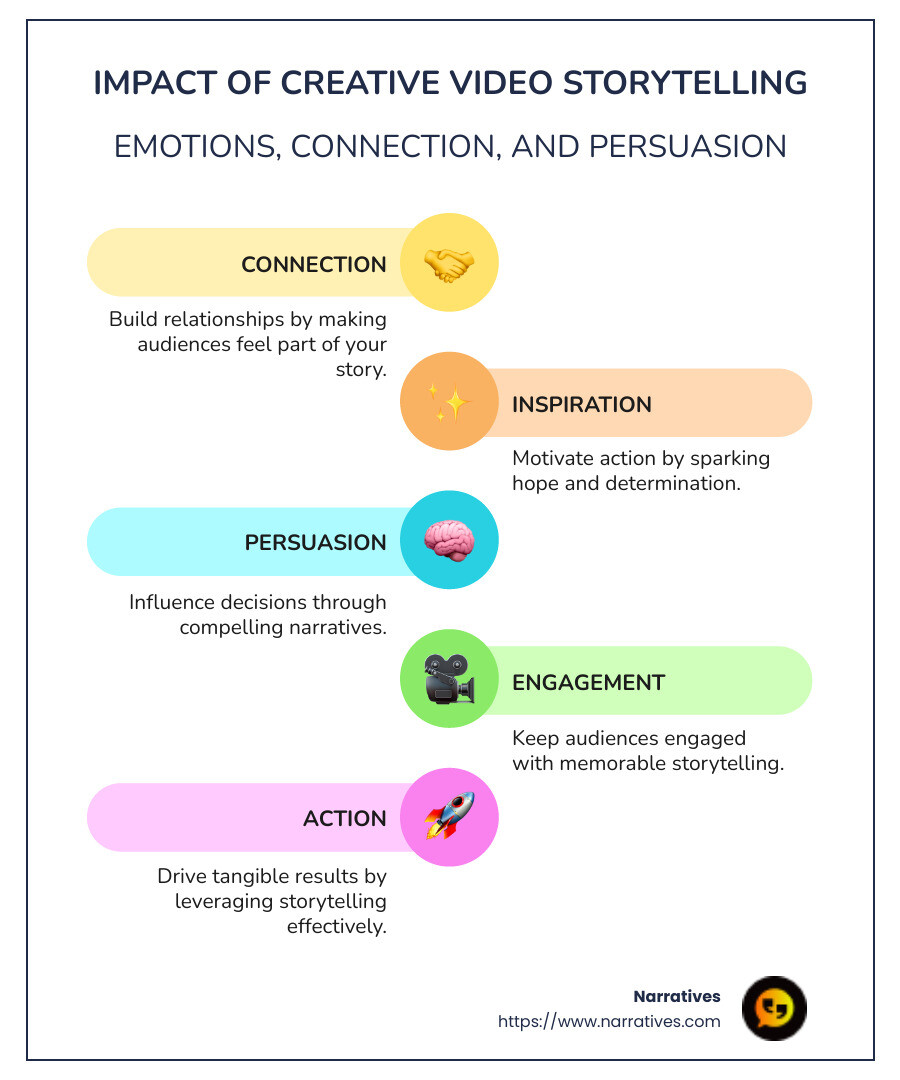
Creative video storytelling isn't just about crafting beautiful visuals—it's about telling stories that connect, inspire, and persuade. For non-profits and mission-driven organizations, telling a story effectively is essential to amplify their message and reach their goals. Here's a quick breakdown of why it matters:
- Connection: Build relationships with your audience by making them feel part of your story.
- Inspire: Motivate action by sparking hope and determination in your viewers.
- Persuade: Influence your audience's decisions through compelling narratives.
In today's digital world, it's crucial to convey messages in a way that's both engaging and memorable. Creative video storytelling can bridge this gap, making complex ideas easier to grasp and emotionally resonant. As professionals seeking to advocate for causes that matter, leveraging the power of video storytelling is key to elevating your mission and achieving tangible results.
Creative video storytelling basics:
Understanding Creative Video Storytelling
Creative video storytelling combines visuals and narratives to create a powerful way to share messages and connect with audiences. It's more than just making a video—it's about crafting a story that resonates on an emotional level.
Visual Storytelling
Visual storytelling uses images, graphics, and videos to tell a story. It's a way to make complex ideas simple and engaging. By using visuals, you can quickly grab attention and convey messages without needing a lot of words.
- Graphics: Infographics, charts, and illustrations make complicated topics easier to understand.
- Photos: Real images help add authenticity and emotion to your story.
Video Storytelling
Video storytelling takes visual storytelling a step further by adding motion, sound, and time. It's a dynamic way to bring stories to life, making them more immersive and engaging.
- Structure: A clear beginning, middle, and end guide viewers through your story. Think of it as a journey.
- Characters: Even in short videos, having relatable characters can make your story more personal and memorable.
Narrative and Emotions
A strong narrative is the backbone of any great story. It gives your video direction and purpose. But what makes a narrative truly impactful is its ability to evoke emotions.
- Emotion: Whether it's happiness, sadness, or inspiration, emotions make your story stick in viewers' minds. A study by the Harvard Business Review shows that emotionally connected customers can be up to 52% more valuable than merely satisfied ones.

Bringing It All Together
By combining visuals, video, narrative, and emotion, you create a powerful tool for communication. Creative video storytelling is not just about information—it's about connection. It's about making your audience feel something and inspiring them to take action.
This approach is especially effective for non-profits and mission-driven organizations, where the goal is to lift voices and inspire change. By tapping into the power of video storytelling, you can amplify your message and create a lasting impact.
Essential Elements of Creative Video Storytelling
When crafting a creative video storytelling piece, several key elements come together to form a compelling narrative. These elements ensure that your story not only captures attention but also resonates deeply with your audience.
Clear Message
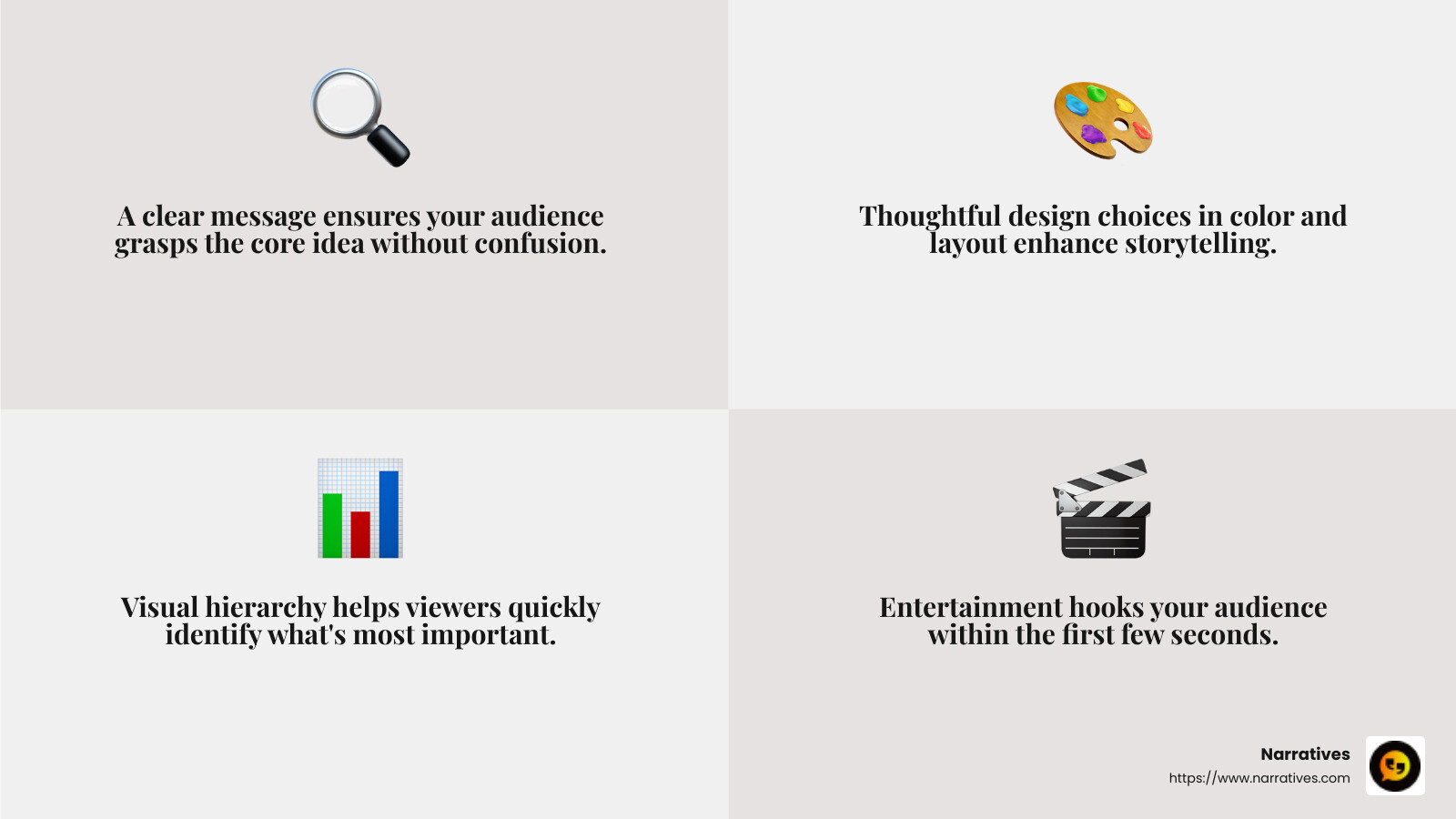
The foundation of any great story is a clear message. Your audience should understand the core idea or takeaway without confusion. This clarity helps in conveying your story's purpose and ensures that viewers walk away with the intended impression.
Design
Good design improves storytelling without overshadowing it. This includes thoughtful choices in color, layout, and composition. For instance, a well-designed video will guide the viewer's eye to the most important parts of the story, ensuring that nothing distracts from the message.
Visual Hierarchy
Visual hierarchy is crucial in directing attention. It involves arranging elements in a way that highlights their importance. In video storytelling, this could mean using larger text for key points or focusing the camera on the main subject. A clear hierarchy helps viewers quickly grasp what's most important.
Entertainment
In the field of video storytelling, entertainment is key. You have only a few seconds to hook your audience, so make it count. Whether it's through humor, suspense, or emotional appeal, your video should captivate viewers from the start. An engaged audience is more likely to remember your message.
Clear Subject
Every story needs a clear subject—a focal point that anchors the narrative. This could be a character, a product, or an idea. The subject should be easily identifiable so that viewers can connect with it and understand the story being told.
By incorporating these essential elements, your creative video storytelling efforts will be more effective, ensuring that your message is not only seen but also felt and remembered.
Let's explore the best practices that can lift your video storytelling to new heights.
10 Best Practices for Creative Video Storytelling
To create truly engaging creative video storytelling, follow best practices that ensure your story is compelling and memorable. Here's a guide to help you craft stories that resonate with your audience.
1. Know Your "Why"
Begin with a clear purpose. Ask yourself, "What do I want my viewers to take away?" Whether it's promoting a cause or sharing an experience, knowing your "why" shapes your entire narrative. It acts as your guiding light, ensuring every element of your video contributes to your core message.
2. Captivate from the Start
You have just a few seconds to hook your audience. Start with a bang—use a striking image, a provocative question, or a bit of humor. This initial impact is crucial in keeping viewers interested and eager to see more.
3. Show, Don’t Tell
Video is a visual medium, so let your visuals do the talking. Instead of explaining everything, show it. Use high-quality visuals and diverse shots to convey your message. A well-placed visual can be more powerful than words.
4. Craft a Compelling Script
Even short videos benefit from a structured script. It ensures your message is clear and avoids unnecessary rambling. Map out key points and the flow of your video to keep your audience engaged and informed.
5. Structure and Emotion
A great story has structure and emotion. Develop a narrative arc that includes a beginning, middle, and end. Introduce characters and challenges to create emotional connections. This structure helps in building a story that resonates.
6. Keep It Short
Attention spans are short, so make every second count. Focus on delivering your message concisely. A shorter video with a clear message is often more impactful than a longer, drawn-out one.
7. Editing
Good editing improves your story. Trim unnecessary parts and ensure smooth transitions. Editing is where your story takes shape, so pay attention to details that improve the narrative flow and maintain viewer engagement.
8. Platform Optimization
Different platforms have different requirements. Optimize your video for each platform by adjusting length, resolution, and format. Tailoring your content ensures it looks and performs best wherever it's viewed.
9. Call to Action
End with a strong call to action. Whether it's subscribing, sharing, or taking a specific action, guide your viewers on what to do next. A clear call to action can significantly increase viewer engagement and conversion.
10. Authenticity
Finally, be authentic. Audiences appreciate genuine stories. Authentic storytelling builds trust and connection, making your message more relatable and impactful.
By integrating these best practices, your creative video storytelling will not only capture attention but also leave a lasting impression. Let's now explore how these techniques can make a significant impact, especially in the field of non-profits.
Impact of Creative Video Storytelling on Non-Profits
Creative video storytelling is a game-changer for non-profits. It has the power to drive social impact, amplify community voices, and inspire action. Let's explore how this happens.
Social Impact
Non-profits often tackle complex social issues. Through creative video storytelling, these organizations can break down these topics into engaging narratives. A well-told story can highlight the urgency of a cause and make it relatable. For example, charity: water uses emotional stories to show the importance of clean water access, sparking empathy and support from viewers.
Community-Driven Storytelling
At the heart of impactful storytelling is the community it represents. Non-profits can use video to allow community members to share their own stories. This approach not only gives a voice to those often unheard but also builds a deeper connection with the audience. Ford's Fiesta Movement is a great example where real people shared their experiences, making the campaign authentic and relatable.
Lift Voices
Creative video storytelling can lift marginalized voices. By featuring personal stories, non-profits can highlight the challenges and triumphs of individuals. This not only raises awareness but also fosters understanding and compassion. For instance, Narratives works with underrepresented storytellers to humanize news and build empathy.
Inspire Action
A powerful story can move people to act. Whether it's donating, volunteering, or spreading the word, video storytelling can motivate viewers to get involved. The key is to evoke emotions that lead to action. Videos that showcase real-life impacts and solutions are particularly effective in driving change.
Creative video storytelling is a vital tool for non-profits. It not only tells compelling stories but also creates real-world impact by lifting voices and inspiring action. Let's now address some common questions about creating engaging video content.
Frequently Asked Questions about Creative Video Storytelling
How can I create a video script without experience in writing?
Creating a video script might seem daunting, but it's all about organizing your thoughts clearly. Start by outlining the key points you want to convey. Break these down into bullet points for each section of your video.
If writing feels challenging, try recording yourself talking through these points. You can transcribe this later to create a conversational script. Authenticity is key, so let your personality shine through.
What are some creative ways to tell a story in a short video?
Short videos need to capture attention quickly. Here are some creative techniques:
- Use time-lapses: This can show a process or event unfolding over time, adding a dynamic element to your story.
- Incorporate animation or motion graphics: These can simplify complex ideas and make your video more engaging.
- Leverage user-generated content: Encourage your audience to share their stories related to your theme. This builds community and adds authenticity.
How do brands tell visual stories?
Brands use visual storytelling to connect with their audience on an emotional level. Here’s how they do it:
- Clear Message: They start with a clear message that aligns with their values and resonates with their audience.
- Design and Visual Hierarchy: Brands use design elements to guide the viewer’s attention. This ensures the most important parts of the story stand out.
- Authenticity: Real stories from real people make a brand relatable. For example, Ford's Fiesta Movement involved real people sharing their experiences, making the campaign feel genuine.
By employing these techniques, brands create compelling narratives that not only entertain but also build trust and loyalty with their audience.
Conclusion
Creative video storytelling is more than just a trend—it's a powerful tool that non-profits can use to lift their narratives and connect with audiences on a deeper level. At Narratives, we believe that digital storytelling has the potential to transform how non-profits share their impact, inspire action, and build lasting trust with their supporters.
Our mission is to amplify the voices of underrepresented communities through high-quality, emotionally resonant content. By partnering with purpose-driven organizations, we help craft stories that not only capture hearts but also improve visibility and drive meaningful change.
In an age where attention is fleeting, the ability to tell a compelling story is invaluable. Video storytelling allows non-profits to showcase their work in a way that is both engaging and memorable. By focusing on authentic narratives and real stories, we can help these organizations stand out and make a lasting impression.
For non-profits looking to harness the power of storytelling, the key lies in authenticity and purpose. By focusing on clear messages and emotional connections, they can foster trust and build strong relationships with their audience.
Ready to lift your storytelling? Learn more about how Narratives can help your organization shine. Together, we can create stories that not only inform but also inspire action and change.

.avif)