Digital Marketing for Nonprofits: Making Your Cause Click

Digital marketing for non-profits is a game changer in today's hyper-connected world. If you're wondering why it's important, here's the quick take: it allows organizations to amplify their mission, connect with a global audience, and drive meaningful engagement—all on a limited budget.
- Reach a wider audience: Use platforms like social media and email to connect with supporters everywhere.
- Boost brand awareness: Share your mission's story through compelling content and clear messaging.
- Encourage donations and support: Easier and more engaging donation processes improve donor relationships.
- Analyze and optimize: Monitor metrics like email open rates and website visits to refine strategies.
For values-driven professionals at nonprofits, mastering digital marketing means open uping new avenues to tell impactful stories and foster community growth.
"Nonprofits need to spend more than for-profits on marketing, not less." - John Suart
The best part? A strategic approach to digital marketing lets nonprofits operate efficiently while keeping their focus on their main goal: making a positive impact.
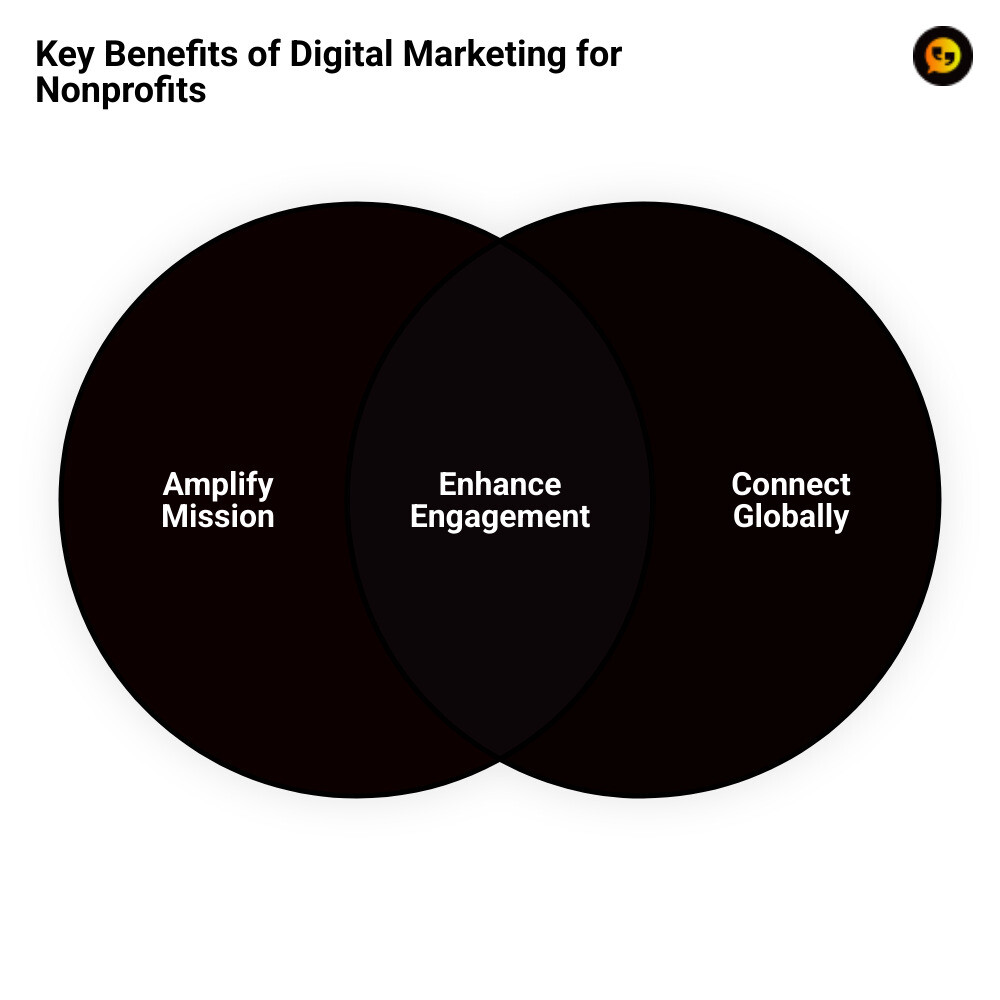
Why Digital Marketing is Essential for Nonprofits
Digital marketing is a crucial tool for nonprofits aiming to expand their reach and impact. Let's break down why it's so essential:
Engagement
Engagement is key to building lasting relationships with supporters. Social media platforms, for instance, allow nonprofits to interact with their audience in real-time. This interaction is not just about broadcasting messages; it's about creating a two-way conversation that fosters a sense of community.
Social Media: Platforms like Facebook and Instagram enable nonprofits to share updates, success stories, and urgent calls to action. By engaging with comments and messages, nonprofits can build a loyal following.
Email Campaigns: Personalized and segmented email campaigns can significantly boost engagement. For example, sending custom thank-you notes to recent donors or updates on specific projects can make supporters feel valued and involved.

Brand Awareness
Building brand awareness is about making sure your nonprofit is recognizable and memorable. A strong online presence ensures that when potential supporters think of your cause, they think of your organization.
Consistent Branding: Use consistent colors, fonts, and messaging across all platforms. This creates a cohesive image that supporters will recognize and trust.
Storytelling: Share compelling stories that highlight your mission and impact. This not only boosts awareness but also inspires action. As Narratives notes, storytelling is a powerful way to humanize your cause and connect emotionally with your audience.
Online Presence
A robust online presence is non-negotiable for nonprofits today. It ensures that your organization is visible and accessible to those who want to support your mission.
Website Optimization: A well-designed, mobile-friendly website is crucial. It serves as the central hub for all your digital marketing efforts. Ensure your site is easy to steer and includes clear calls to action, like donation buttons or volunteer sign-ups.
Search Engine Optimization (SEO): Optimize your website content with relevant keywords to improve search rankings. This makes it easier for potential supporters to find you when searching for related causes. For example, if you run an animal rescue, ensure your site appears when someone searches for "animal rescue in Georgia."
Digital marketing for non-profits is not just about reaching more people—it's about creating meaningful connections that drive your mission forward. By focusing on engagement, brand awareness, and a strong online presence, nonprofits can amplify their impact and foster a supportive community.
Next, we'll dive into how to craft a digital marketing strategy that aligns with your nonprofit's goals and values.
Crafting a Digital Marketing Strategy for Nonprofits
Creating a digital marketing strategy for your nonprofit involves setting clear goals, understanding your audience, and using SMART goals to guide your efforts. Let's break it down:
Goal Setting
Every successful marketing strategy starts with a clear goal. Ask yourself: What do we want to achieve? This question will help you focus on what's truly important for your organization.
Define Your Objectives: Are you looking to increase donations, raise awareness, or recruit more volunteers? Be specific about what you want to accomplish.
Prioritize: Not all goals are equally important. Focus on those that align most closely with your mission and have the potential to make the biggest impact.
Audience Segmentation
Once your goals are set, it's time to identify and understand your audience. Knowing who you're talking to is crucial for effective communication.
Segment Your Audience: Group your supporters based on characteristics like donation history, event attendance, or volunteer involvement. This allows you to tailor your messages to specific groups.
Personalize Your Outreach: Use the information from your segmentation to craft personalized messages. For example, send updates on specific projects to donors who have shown interest in those areas.
SMART Goals
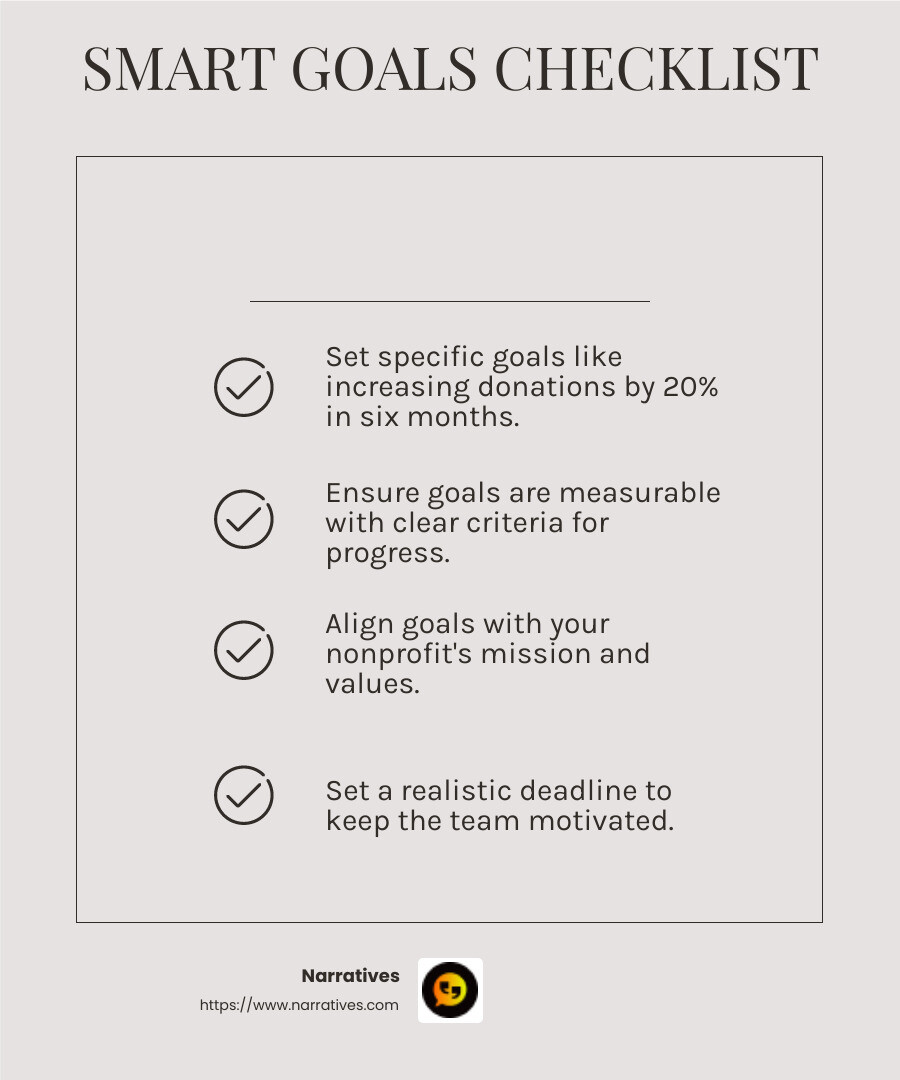
Using SMART goals ensures that your objectives are clear and achievable. Here's what SMART stands for:
Specific: Clearly define what you want to accomplish. Instead of saying "increase donations," aim for "increase donations by 20% in six months."
Measurable: Set criteria for measuring progress. This could be the number of new donors or the total amount of donations received.
Attainable: Ensure your goals are realistic. While ambition is good, setting unattainable goals can demotivate your team.
Relevant: Your goals should align with your mission. They should contribute to your nonprofit's overall purpose and values.
Time-based: Set a deadline for achieving your goals. This keeps your team focused and motivated.
Incorporating these elements into your digital marketing strategy will help your nonprofit stay focused and effective. With clear goals, a deep understanding of your audience, and SMART objectives, you can drive your mission forward and make a lasting impact.
Next, we'll explore six powerful digital marketing strategies to help your nonprofit thrive.
Six Powerful Digital Marketing Strategies for Nonprofits
Nonprofits have a golden opportunity to expand their reach and impact. Let's explore six strategies that can lift your nonprofit's digital presence.
1. Google Ad Grants
Google Ad Grants offers nonprofits up to $10,000 per month in free advertising on Google search results. This is a game-changer for reaching a wider audience without spending a dime. To qualify, your nonprofit must be registered with TechSoup and Google for Nonprofits. Once approved, you can create ads targeting keywords relevant to your cause, ensuring your message appears at the top of search results.
2. Video Marketing
Video is a powerful tool for storytelling. It evokes emotion and can make your cause resonate deeply with viewers. Nonprofits should focus on creating compelling videos that highlight their mission and impact. Don't worry about big budgets—many resources can help you produce high-quality videos affordably. A well-told story can inspire action and drive donations.
3. Social Media Promotion
Social media platforms like Facebook, Instagram, and Twitter are vital for reaching and engaging with your audience. Allocate a budget for social media promotion to boost your visibility. Facebook, for instance, allows nonprofits to add a "Donate Now" button on their pages, making it easier for supporters to contribute directly. Keep your content engaging and relevant to capture attention and encourage shares.
4. Email Marketing
Email marketing remains one of the most effective ways to engage supporters. Crafting personalized emails with compelling subject lines can increase open rates and donations. In fact, 33% of donors are inspired to give when they receive email marketing content. With an average ROI of $40 for every $1 spent, email marketing is a cost-effective strategy for nonprofits.
5. Influencer Partnerships
Collaborating with influencers who align with your cause can amplify your message. Influencers have dedicated followers who trust their recommendations. By partnering with them, you can reach new audiences and build credibility. Consider reaching out to influencers who are passionate about your cause and can genuinely advocate for it.
6. Website Optimization
Your website is the digital face of your nonprofit. Ensure it's optimized for user experience and search engines. Use relevant keywords to improve your search rankings and make it easy for visitors to steer your site. A well-optimized website can boost online donations and volunteer sign-ups, helping you achieve your goals more effectively.
These strategies provide a solid foundation for expanding your nonprofit's digital footprint. By leveraging these tools, you can increase brand awareness, engage more supporters, and drive meaningful change.
Next, we'll discuss how to evaluate your digital marketing strategy to ensure it's delivering the results you need.
Evaluating Your Nonprofit Digital Marketing Strategy
Once you've implemented your digital marketing for non-profits strategies, it's crucial to evaluate their effectiveness. This step ensures you're on the right path and helps identify areas for improvement.
Metrics Analysis
Start by collecting data on key metrics. This includes email open and click-through rates, website traffic, and social media engagement. These numbers give you insight into how well your campaigns are performing. For example, if your email open rate is below industry standards, you might need to improve your subject lines or sending times.
Campaign conversion rate is another important metric. It tells you how many people took the desired action, like donating or signing up for a newsletter, after interacting with your campaign. A low conversion rate might indicate a disconnect between your message and the audience's needs.
Donor Retention
Donor retention is vital for long-term success. It costs less to retain an existing donor than to acquire a new one. Track how many of your donors give again after their initial donation. If the retention rate is low, consider implementing a donor appreciation program or sending personalized thank-you messages.
According to the research, segmenting your audience and personalizing communication can significantly improve retention rates. For instance, sending custom updates to donors about how their contributions are making an impact can strengthen their connection to your cause.
Campaign Conversion
To analyze your campaign conversion, compare the number of conversions to the total number of visitors or recipients. This helps you assess the effectiveness of your calls to action. If your conversion rate is below expectations, review your messaging and consider A/B testing different approaches to see what resonates best with your audience.
By regularly evaluating these metrics, you can refine your strategies to better meet your goals. This ongoing process of analysis and adjustment ensures that your nonprofit's digital marketing efforts are as impactful as possible.
Next, we'll address some common questions about digital marketing for nonprofits, such as how to use social media effectively and the role of storytelling in your marketing efforts.
Frequently Asked Questions about Digital Marketing for Nonprofits
How can nonprofits use social media effectively?
Social media is a powerful tool for nonprofits. It's not just about posting updates; it's about building relationships and engaging with your audience.
Start with a Strategy: Define your goals. Whether it's raising awareness or recruiting volunteers, having clear objectives will guide your content.
Choose the Right Platforms: Not every platform will suit your needs. For instance, Instagram is great for visual storytelling, while LinkedIn is ideal for professional connections.
Engage Regularly: Social media is a two-way street. Respond to comments, ask questions, and encourage discussions. This builds a community around your cause.
Use Visuals: Posts with images or videos get more engagement. Share photos of events, infographics, or short videos to capture attention.
Track Your Performance: Use analytics tools to see what works and what doesn't. Adjust your strategy based on these insights.
What is the role of storytelling in nonprofit marketing?
Storytelling is at the heart of nonprofit marketing. It humanizes your mission and connects emotionally with your audience.
Share Real Stories: Highlight real people or communities impacted by your work. This makes your mission relatable and tangible.
Use a Narrative Arc: Like any good story, your content should have a beginning, middle, and end. Introduce a problem, show how your nonprofit is addressing it, and highlight the positive outcomes.
Incorporate Testimonials: Let those you help tell their stories in their own words. Testimonials add authenticity and credibility.
Create Emotional Appeals: Stories that evoke emotions are more likely to inspire action. Whether it's joy, hope, or urgency, tap into feelings to motivate your audience.
How do nonprofits measure digital marketing success?
Measuring success in digital marketing for non-profits involves tracking various metrics to ensure your efforts are effective.
Key Performance Indicators (KPIs): Focus on metrics like website traffic, social media engagement, and email open rates. These indicators show how well you're reaching and engaging your audience.
Conversion Rates: Look at how many people take the desired action, such as donating or signing up for a newsletter. This tells you if your messaging resonates with your audience.
Donor Retention Rates: Track how many donors continue to give over time. High retention rates indicate strong relationships and effective communication.
Return on Investment (ROI): Calculate the ROI of your campaigns by comparing the cost of your efforts to the funds raised or other goals achieved.
Regularly analyzing these metrics helps refine your strategies, ensuring your nonprofit's digital marketing is as effective as possible.
Next, we'll conclude with insights on how Narratives can help you leverage storytelling and community-driven impact in your digital marketing efforts.
Conclusion
In digital marketing for non-profits, storytelling is your secret weapon. It's not just about sharing facts or figures—it's about connecting with people on a human level. When you tell compelling stories, you invite your audience to become part of your mission. This is where Narratives comes in.
Narratives specializes in elevating underrepresented voices through high-quality, emotionally resonant video and multimedia content. We help nonprofits like yours share their impact stories in a way that inspires action, builds trust, and increases visibility. By focusing on community-driven impact, we create content that not only informs but also moves people to get involved.
Why Storytelling Matters
Emotional Connection: Stories evoke emotions, which can inspire people to support your cause. They make your mission relatable and urgent.
Authenticity and Transparency: Sharing real stories from the communities you serve builds trust. It shows the real-world impact of your work.
Engagement and Action: When people are emotionally invested, they're more likely to take action, whether that's donating, volunteering, or spreading the word.
How Narratives Can Help
By partnering with Narratives, your nonprofit can harness the power of storytelling to amplify your message. We focus on creating content that resonates with your audience, ensuring your digital marketing efforts are effective and impactful.
Ready to take your storytelling to the next level? Learn more about how Narratives can support your nonprofit's digital marketing efforts.
In conclusion, leveraging storytelling in your digital marketing strategy can transform the way your nonprofit engages with its community. It's about more than just clicks—it's about making your cause truly click with the people who matter most.


.avif)