Pixels and Plots: Mastering Digital Storytelling Solutions

Digital storytelling solutions are revolutionizing how stories are told and experienced. In today’s digital age, the power of multimedia content is harnessed to craft narratives that captivate audiences and inspire action.
- What is digital storytelling? It combines traditional storytelling with multimedia tools, allowing creators to produce engaging visual and audio experiences.
- Why is it important? Stories told through digital media can reach wider audiences, create emotional connections, and drive meaningful impact.
- How can these solutions help? They simplify content creation, improve storytelling, and amplify missions, especially for non-profits and purpose-driven organizations.
Digital storytelling isn’t just about adapting the old ways to new platforms. It's about amplifying your mission and creating authentic connections through rich, immersive experiences. For social impact organizations, it’s an opportunity to lift their stories and reach those who matter most.
Digital storytelling marries the arts of storytelling and technology, making it possible to visualize and experience narratives in an unprecedented way. Whether you're a non-profit leader, a marketer, or a storyteller at heart, these solutions offer a toolkit to transform missions into memorable stories that resonate.
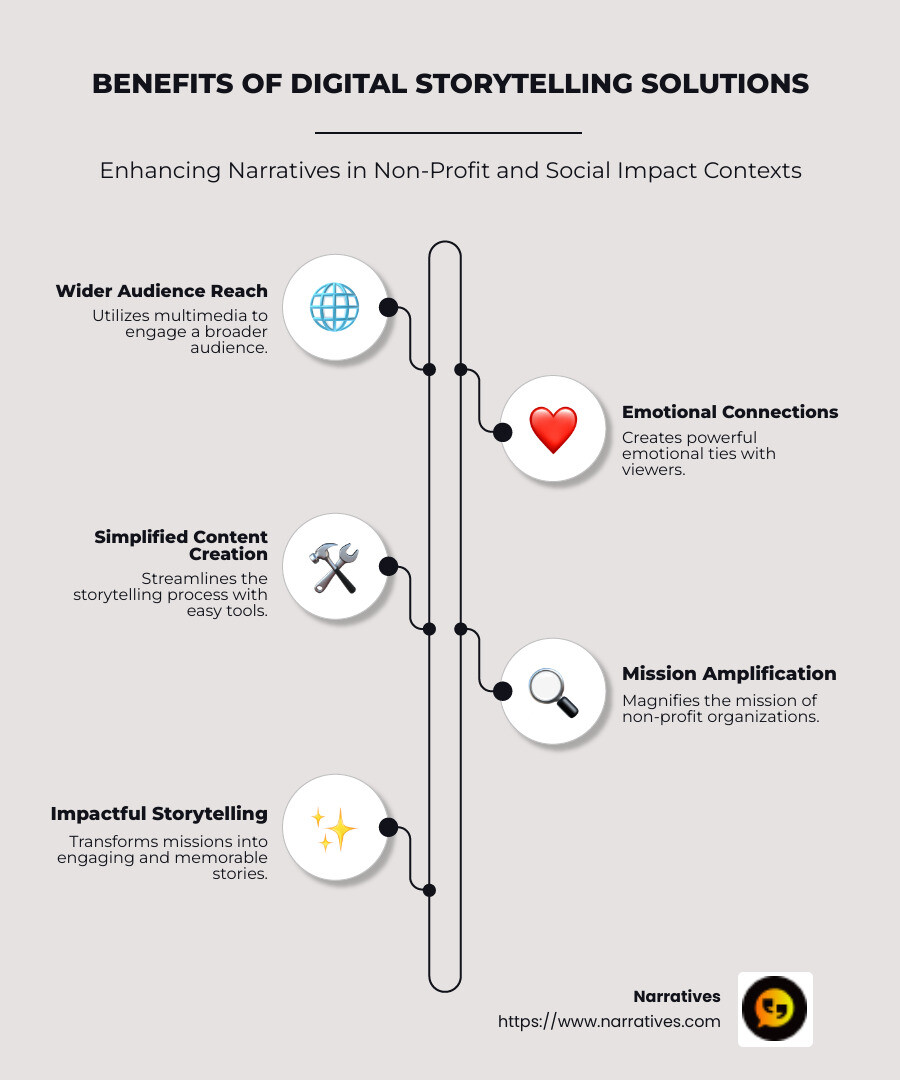
Simple Digital storytelling solutions glossary:
Understanding Digital Storytelling Solutions
Digital storytelling solutions are all about blending creativity with technology. They use multimedia tools to craft stories that are both engaging and impactful. At their core, these solutions are about using various digital elements—like images, videos, and sound—to improve the storytelling experience.
Multimedia Tools
Multimedia tools are the backbone of digital storytelling. They allow creators to layer different types of content to create rich narratives. For example, Canva offers beautiful templates and easy-to-use features that help in designing eye-catching visuals. Adobe Spark is perfect for creating short, visual stories, while StoryMap JS and Timeline JS allow for interactive, location-based storytelling.
These tools make it easier to visualize data, create infographics, and incorporate interactive elements. This not only makes the story more engaging but also helps in conveying complex information in a simple way.
Storytelling Techniques
The techniques used in digital storytelling are as important as the tools themselves. Here are a few key techniques:
Emotional Content: Stories that evoke emotions are more likely to be remembered. Using personal anecdotes or testimonials can create a strong emotional connection with the audience.
Universal Concepts: Themes that are universally relatable, like love, struggle, and triumph, can resonate with a wide audience.
Pacing: The speed at which a story unfolds can affect its impact. Well-paced stories keep the audience engaged and interested.
Successful digital storytelling combines these techniques with multimedia tools to create a compelling narrative. This approach can lead to a deeper understanding and a more profound emotional response from the audience.

Incorporating these solutions into your storytelling strategy can transform how your message is received. Whether you're sharing a brand story or a nonprofit mission, digital storytelling solutions offer a powerful way to engage and inspire your audience.
Top Free Digital Storytelling Tools
When it comes to crafting compelling digital stories, having the right tools can make all the difference. Let's explore some top free digital storytelling solutions that can lift your narrative game.
Canva
Canva is a powerhouse for creating visually stunning content. With its drag-and-drop features and a plethora of templates, even beginners can feel like seasoned designers. Whether you're crafting social media posts, infographics, or presentations, Canva helps you create a cohesive brand look with ease.
- Key Features: Customizable templates, easy-to-use interface, and a vast library of fonts and graphics.
- Best For: Visual storytelling, social media content, and branding.
Adobe Spark
For those who love visual stories, Adobe Spark is a go-to tool. It's perfect for short, linear narratives that rely heavily on visuals. While it doesn't support interactive content, Spark's gallery of ready-to-use images can bring any story to life.
- Key Features: Beautiful fonts, magazine-style design, and fluid movements.
- Best For: Short visual projects and newsletters.
StoryMap JS
If your story involves geographic elements, StoryMap JS is an excellent choice. This tool allows you to layer information—like text, images, and videos—on top of a map, making it ideal for location-based storytelling.
- Key Features: Interactive maps, multimedia layering.
- Best For: Geographic storytelling and event series.
Timeline JS
For chronological storytelling, Timeline JS is a fantastic option. By using a simple Google spreadsheet, you can create interactive timelines that incorporate videos, images, and audio files.
- Key Features: Interactive timelines, multimedia integration.
- Best For: Historical narratives and project timelines.
Piktochart
When it comes to data visualization, Piktochart shines. It offers dynamic templates that allow you to craft unique infographics and tell a story with your data.
- Key Features: Data import, customizable templates.
- Best For: Infographics and data-driven stories.
These tools empower creators to weave rich, multimedia narratives that captivate audiences. Whether you're a novice or a seasoned storyteller, leveraging these free resources can help you craft stories that resonate and inspire.
Strategies for Effective Digital Storytelling
Creating a compelling digital story involves more than just tools. It requires a blend of emotional content, personal perspectives, universal concepts, and well-paced narratives. Let's explore these key strategies to lift your storytelling.
Emotional Content
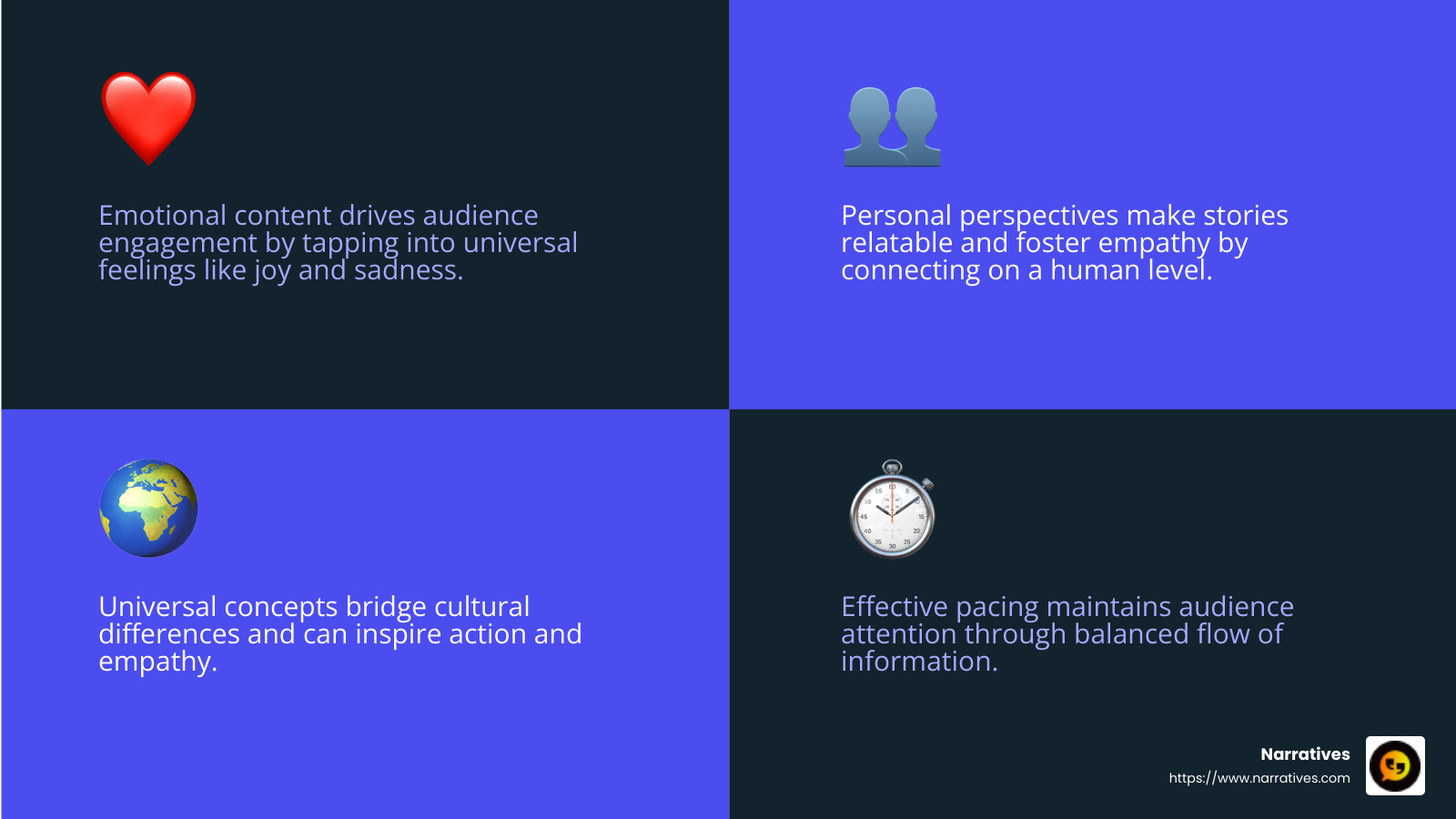
Emotional content is the backbone of any engaging story. It's what makes your audience care. To achieve this, tap into fundamental truths and feelings that resonate universally. Whether it's joy, sadness, or triumph, emotions drive engagement. For example, a nonprofit could share a heartfelt story of a person who benefited from their services, creating a strong emotional bond with their audience.
Personal Perspectives
Starting with a personal perspective can make complex issues more relatable. It helps to draw in your audience by connecting on a human level. Begin with a personal anecdote before expanding to the larger message. This method not only fosters empathy but also makes the broader story more accessible. For instance, a healthcare provider might share a personal story of a patient overcoming challenges, then broaden the narrative to discuss health initiatives.
Universal Concepts
Universal concepts are themes or experiences that everyone can relate to. These concepts bridge cultural and personal differences, making your story more inclusive. Highlighting universal experiences—like love, loss, or courage—can inspire action and empathy. For instance, a business marketing campaign could focus on the universal desire for connection, using stories of community and collaboration.
Pacing
Pacing is crucial in maintaining your audience's attention. A well-paced story has a clear beginning, middle, and end. It balances the flow of information, ensuring that the audience stays engaged without feeling overwhelmed. This involves careful editing and timing of visuals, sound, and narration. Consider how you can use pacing to build suspense or highlight key moments in your story. For example, a personal branding video might start with a slow introduction, build up excitement with dynamic visuals, and conclude with a strong call to action.
By integrating these strategies, you can craft digital stories that not only capture attention but also leave a lasting impact. Whether for education, marketing, or personal expression, these elements are essential for effective storytelling.
Practical Applications of Digital Storytelling
Digital storytelling solutions are changing how we communicate across various fields. Let's explore how they are being used in education, business marketing, nonprofits, personal branding, and healthcare.
Education
In classrooms, digital storytelling is more than just a teaching tool—it's a way to make learning come alive. Teachers use digital storytelling to simplify complex topics and engage students in a creative process. For instance, students might use apps like Toontastic to create animated stories that demonstrate their understanding of historical events or scientific concepts. This approach not only improves engagement but also encourages critical thinking and creativity.
Business Marketing
Businesses are leveraging storytelling to connect with customers on an emotional level. By sharing brand stories and customer success tales, companies can stand out in a crowded market. For example, a brand might use Adobe Spark to craft visually compelling stories that highlight product benefits and customer testimonials, building loyalty and enhancing brand identity. These stories create an emotional connection that can lead to increased customer retention.
Nonprofits
Nonprofits use digital storytelling to humanize their causes and inspire action. By sharing personal stories of those they help, nonprofits can engage donors and supporters emotionally. A nonprofit might use WeVideo to create impactful videos that showcase their work and its impact on real people, thus inspiring empathy and encouraging donations. This storytelling approach builds trust and credibility, making the cause more relatable to the public.
Personal Branding
For influencers and content creators, storytelling is key to building a personal brand. By sharing authentic stories through social media or blogs, they can connect with their audience on a deeper level. Tools like Canva can help create visually appealing content that reflects personal values and experiences. This authenticity fosters trust and builds a loyal community, helping creators stand out in a crowded digital space.
Healthcare
In healthcare, storytelling is used to educate and support patients. By sharing personal narratives, healthcare providers can make medical information more accessible and relatable. For instance, a clinic might share patient stories on their website, highlighting successful treatments and preventive measures. This approach not only educates but also fosters a sense of community and support among patients and caregivers.
Digital storytelling solutions provide powerful ways to communicate and connect across different sectors. From engaging students to building brand loyalty, these tools enable us to tell stories that resonate and inspire action.
Frequently Asked Questions about Digital Storytelling Solutions
What are digital storytelling solutions?
Digital storytelling solutions are tools and methods used to craft and share stories through digital mediums. They combine multimedia elements like images, videos, sounds, and text to create engaging narratives. These solutions help storytellers convey messages more effectively by adding layers of emotion and context. Whether it's a simple slideshow or an interactive video, digital storytelling solutions make it possible to communicate complex ideas in a more relatable and memorable way.
How can digital storytelling benefit nonprofits?
Nonprofits can greatly benefit from using digital storytelling. By sharing emotional and personal stories, they can connect with audiences on a deeper level. For example, a nonprofit organization might use digital storytelling to highlight the impact of their work on individuals and communities. This approach not only raises awareness but also fosters empathy and encourages donations. By humanizing their cause, nonprofits can build trust and inspire action among their supporters.
What tools are best for creating digital stories?
There are several tools available that make creating digital stories easier and more effective:
Adobe Spark: Ideal for crafting visually appealing stories with images and text. It's great for creating social media content and short videos.
Canva: Known for its user-friendly design interface, Canva is perfect for creating engaging graphics and presentations.
StoryMap JS: This tool helps in telling stories through maps, making it ideal for location-based narratives.
Timeline JS: Perfect for creating interactive timelines, this tool is useful for historical or sequential storytelling.
Piktochart: A great choice for infographics and visual storytelling, allowing users to present data in an engaging way.
These tools cater to different storytelling needs and help bring stories to life in a digital format.
Conclusion
Narratives stands out as a guide for nonprofits and purpose-driven organizations seeking to amplify their impact. Our focus on social impact and community-driven storytelling allows us to lift underrepresented voices through powerful digital storytelling solutions. These solutions are not just about creating content; they're about crafting stories that resonate deeply, inspire action, and foster genuine connections.
By partnering with us, organizations can transform their narratives into compelling multimedia experiences that capture the heart and mind. This approach not only improves visibility but also builds trust and encourages community engagement. Our mission is to ensure that every story told through our platform not only informs but also inspires change.
For nonprofits looking to share their impact stories effectively, our media services are designed to deliver high-quality, emotionally engaging content. We believe in the power of storytelling to drive social change and are committed to helping organizations connect with their audiences in meaningful ways.
Digital storytelling is more than a tool—it's a bridge between people and causes, turning empathy into action and stories into movements. Join us in this journey to make every voice heard and every story count.

.avif)