Mastering the Art: Effective Storytelling Strategies

Effective storytelling strategies are the secret weapon for any organization eager to amplify its message. At its core, storytelling isn't just about telling tales—it's a powerful tool that ignites emotions and fosters connections. Here’s a quick snapshot:
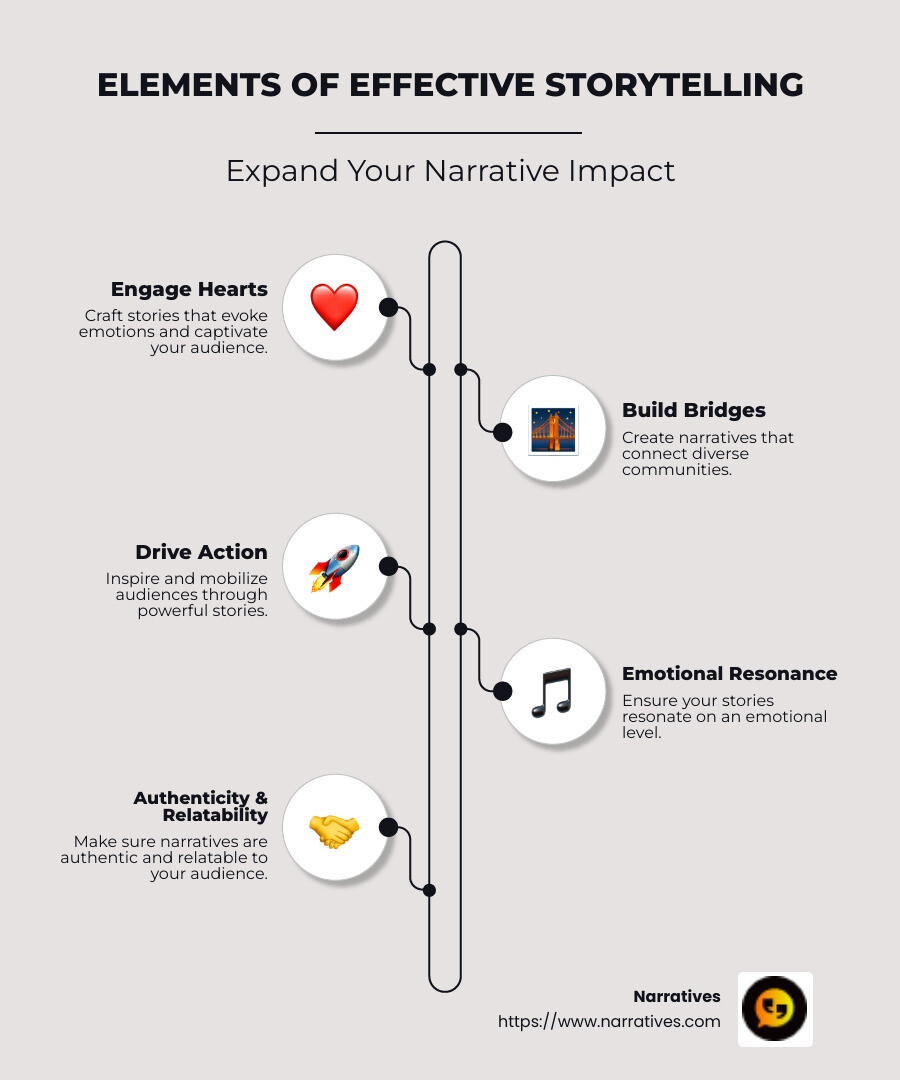
- Engage Hearts: Craft stories that evoke emotions.
- Build Bridges: Narratives that connect diverse communities.
- Drive Action: Stories that inspire and mobilize audiences.
Why focus on storytelling? Well, it's simple. Stories shape how we perceive the world and influence decisions. From a non-profit marketing lead finding it tough to convey their mission, to agencies striving for impactful storytelling, all can benefit from embracing this age-old art. Storytelling taps into shared human experiences, allowing organizations to bridge gaps and create connections that resonate on emotional and intellectual levels. Nick Westergaard highlights storytelling as a fundamental leadership tool, adaptable to various aims—be it to inspire, resolve, or drive change.
In today's noisy world, where digital soundbites often drown deeper narratives, mastering storytelling ensures your message not only reaches but impacts your audience. Preparing the ground for a successful storytelling strategy begins here.
Effective storytelling strategies terms made easy:
Understanding Your Audience
To master the art of storytelling, the first step is to understand your audience. This involves a few key elements: audience analysis, empathy, and engagement.
Audience Analysis
Before crafting a story, take time to know who you're talking to. Different groups have different needs, interests, and preferences. Conducting an audience analysis helps you tailor your message effectively. Consider these steps:
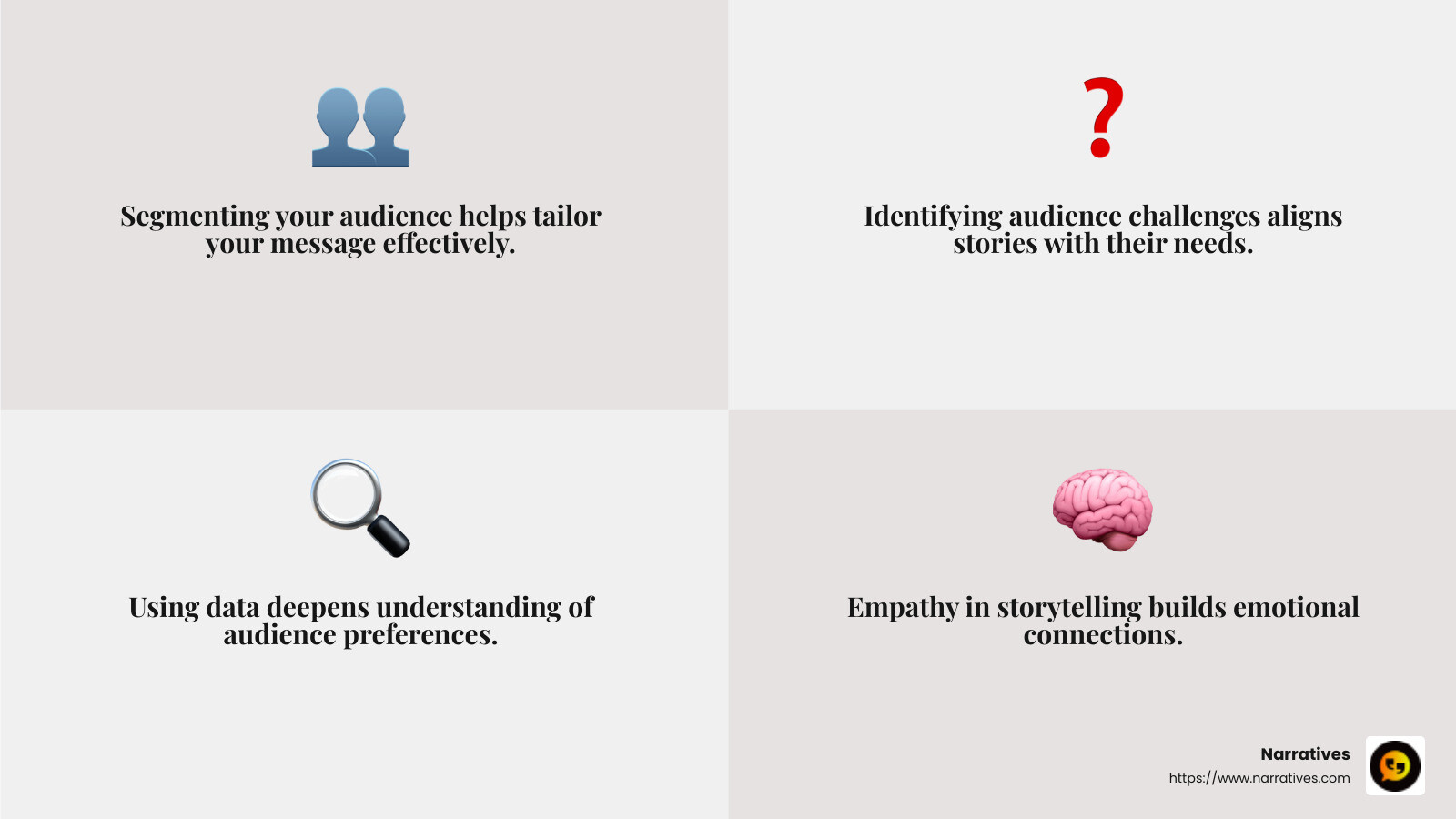
- Segment Your Audience: Not everyone is the same. Break down your audience into groups based on demographics, interests, or behaviors.
- Ask the Right Questions: What are their challenges? What do they care about? Understanding these helps align your story with their needs.
- Use Data Wisely: Leverage any available data to dive deeper into audience preferences. This can include surveys, feedback, or even social media insights.
Empathy
Empathy is crucial in storytelling. It’s about stepping into your audience’s shoes and seeing the world from their perspective. Research shows that employees who perceive their leaders as empathetic report better morale and are more engaged at work. This principle extends beyond leadership and into storytelling.
- Connect Emotionally: Use stories that mirror your audience’s experiences and emotions. This creates a bond and makes your story relatable.
- Listen Actively: Engage with your audience by listening to their feedback and adjusting your stories accordingly.
Engagement
Engaging your audience means keeping them interested and involved throughout your story. Here are some tips:
- Interactive Elements: Use multimedia content to make your story more dynamic. This could include videos, graphics, or even interactive polls.
- Ask for Participation: Encourage your audience to share their own stories or thoughts related to the topic.
- Be Authentic: Authenticity breeds trust. Share genuine stories or experiences that resonate with your audience.
By understanding your audience through analysis, empathy, and engagement, your storytelling efforts will be more impactful and meaningful. This foundation allows you to craft compelling narratives that truly resonate, setting the stage for the next step in effective storytelling strategies.
Crafting Compelling Narratives
Crafting a narrative that captivates is an art. To achieve this, focus on three key elements: emotional resonance, authenticity, and relatability. These elements help transform a simple story into a powerful tool for connection and change.
Emotional Resonance
Emotion is the heart of any compelling story. When you tap into emotions, you create a connection that goes beyond words. According to Harvard Business Review, a clear and compelling story can harness organizational energy and drive change. Here's how to build emotional resonance:
- Use Powerful Imagery: Paint vivid pictures with words. Describe scenes that evoke feelings and draw your audience into the story.
- Highlight Universal Themes: Love, fear, hope, and triumph are emotions everyone understands. Use these themes to connect with your audience on a deeper level.
- Create Tension and Release: Build suspense and then provide resolution. This keeps your audience engaged and emotionally invested in the outcome.
Authenticity
Authenticity is about being real and genuine. In a world full of polished and scripted content, genuine stories stand out. Authentic storytelling builds trust and credibility. Here’s how to ensure authenticity in your narratives:
- Be Honest: Share real experiences, even if they involve mistakes or failures. This vulnerability can make your story more relatable and trustworthy.
- Stay True to Your Values: Align your stories with your core values and mission. This consistency reinforces your authenticity.
- Use a Genuine Voice: Write as you speak. Avoid jargon and be approachable, making your story feel personal and direct.
Relatability
For a story to stick, your audience must see themselves in it. Relatability bridges the gap between storyteller and listener. Here are ways to make your narratives relatable:
- Know Your Audience: Tailor your story to the experiences and interests of your audience. This involves using language and examples they understand.
- Highlight Shared Experiences: Focus on common challenges or experiences your audience faces. This creates a sense of community and shared understanding.
- Invite Audience Reflection: Encourage your audience to think about how your story relates to their own lives. This personal connection improves relatability.
By focusing on emotional resonance, authenticity, and relatability, you can craft narratives that not only engage but also inspire action. These elements form the backbone of effective storytelling strategies, paving the way for impactful communication.
Next, we’ll explore how to leverage these strategies using digital platforms to reach and engage a wider audience.
Effective Storytelling Strategies
Storytelling is not just about words. It's about creating an experience. To do this effectively, you need to consider visual storytelling, multimedia content, and narrative structure. These elements work together to make your story more engaging and memorable.
Visual Storytelling
Visuals can speak louder than words. They help your audience see what you're saying. Here’s how to use visual storytelling effectively:
- Use Strong Images: Choose images that improve your narrative. They should be clear and relevant to your story's message.
Create Infographics: Infographics can simplify complex information. They make data easy to understand and visually appealing.
Incorporate Video: Videos can bring stories to life. They combine visuals and sound, making your story more dynamic and engaging.
Multimedia Content
Multimedia content adds layers to your storytelling. It combines different types of media to enrich the experience. Here’s how to make the most of multimedia:
- Mix Media Types: Use a combination of text, images, audio, and video. This variety keeps your audience engaged and caters to different learning styles.
- Interactive Elements: Add interactive features like quizzes or polls. They involve your audience and make the story more participatory.
- Narrative Podcasts: Podcasts are a powerful way to tell stories. They allow for deep storytelling without visual distractions.
Narrative Structure
A well-structured narrative is crucial for clarity and engagement. It guides your audience through your story smoothly. Here’s how to build an effective narrative structure:
- Start Strong: Capture attention with a compelling hook. This could be a surprising fact, a question, or a striking image.
- Follow a Clear Path: Use a beginning, middle, and end. This classic structure helps your audience follow along easily.
- Include a Call to Action: End with a clear takeaway or action step. This encourages your audience to engage further with your story.
By focusing on these effective storytelling strategies, you can create stories that are not only engaging but also impactful. Next, we’ll see how these strategies can be amplified through digital platforms, reaching more people and making a bigger impact.
Leveraging Digital Platforms
The reach of your story is only as good as the platforms you use. By leveraging social media, video content, and a strong online presence, you can ensure your story reaches the right audience and resonates deeply.
Social Media
Social media platforms are powerful tools for storytellers. They offer unique opportunities to connect and engage with your audience in real-time.
- Choose the Right Platforms: Each social media platform has its own strengths. For instance, Instagram is great for visual storytelling, while Twitter excels in concise, impactful messaging.
- Engage with Your Audience: Social media is a two-way street. Respond to comments, ask questions, and create polls to foster interaction.
- Consistency is Key: Regular posting keeps your audience engaged. Develop a content calendar to maintain a steady flow of stories.
Video Content
Video is a dynamic way to tell your story. It combines visuals, sound, and movement to create a more immersive experience.
- Short and Sweet: Attention spans are short. Keep videos concise to maintain interest and deliver your message effectively.
- Live Streaming: Live videos create a sense of immediacy. They allow real-time interaction, making your audience feel part of the story.
- Storyboarding: Plan your video content with a storyboard. This ensures a clear narrative flow and helps you stay focused on your message.
Online Presence
A strong online presence acts as the backbone of your storytelling efforts. It ensures your stories are accessible and shareable.
- Optimize Your Website: Your website should be user-friendly and mobile-optimized. This makes it easy for visitors to explore your stories.
- SEO Strategies: Use search engine optimization to increase your visibility. This helps more people find and engage with your content.
- Email Newsletters: Regular newsletters keep your audience informed and connected. They are a direct way to share new stories and updates.
By effectively leveraging digital platforms, you can amplify your storytelling impact, reaching wider audiences and fostering deeper connections. Next, we’ll explore how to measure the success of your storytelling efforts and understand their impact.
Measuring Impact and Success
Once you've shared your story across digital platforms, it's crucial to measure its impact. Understanding how your story performs helps refine your effective storytelling strategies and ensures you're reaching your goals.
Metrics
Metrics are your storytelling compass. They provide concrete data on how your stories are performing.
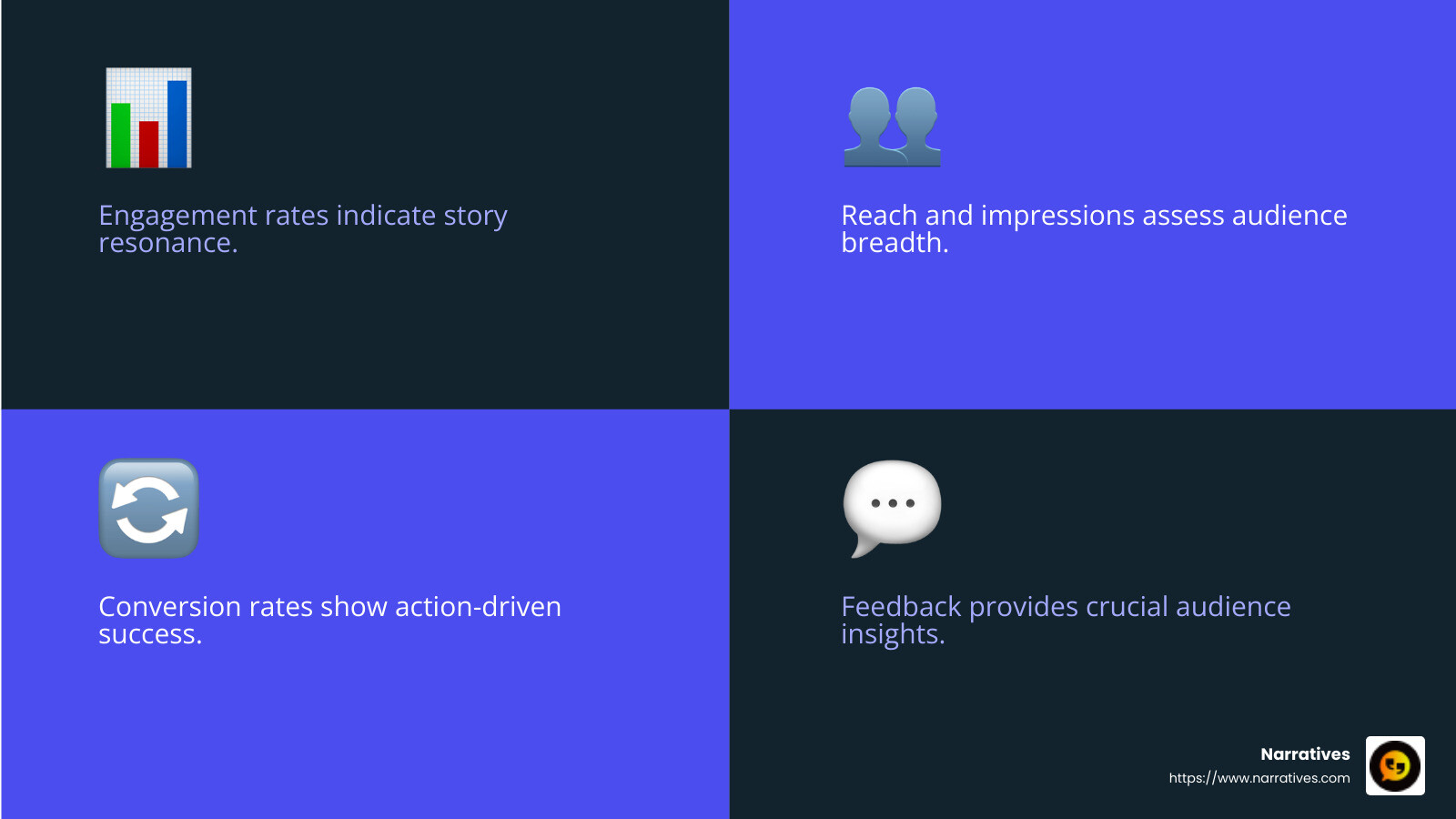
- Engagement Rates: Track likes, shares, comments, and retweets. High engagement indicates your story resonates with your audience.
- Reach and Impressions: These metrics show how many people saw your content. They help you assess the breadth of your storytelling efforts.
- Conversion Rates: If your story aims to drive action, such as signing up for a newsletter or making a donation, conversion rates are key indicators of success.
Feedback
Feedback is a goldmine for storytellers. It offers insights into how your audience perceives your stories.
- Surveys and Polls: Use these tools to gather direct feedback from your audience. Ask what they liked or what could be improved.
- Comments and Reviews: Monitor comments on social media and reviews on your website. They provide unfiltered opinions on your storytelling.
- Focus Groups: Conduct small group discussions to dive deeper into audience perceptions and gather qualitative feedback.
Storytelling ROI
Return on Investment (ROI) in storytelling isn't just about monetary gain. It's about the value your story brings to your organization.
- Brand Awareness: A successful story increases recognition and familiarity with your brand or cause.
- Audience Growth: Track the growth of your followers or subscribers. A growing audience signifies successful storytelling.
- Mission Impact: For non-profits, storytelling ROI can be measured by the impact on your mission. This might include increased donations, volunteer sign-ups, or awareness of your cause.
Measuring the success of your storytelling efforts is essential for continuous improvement. By analyzing metrics, gathering feedback, and assessing ROI, you can refine your strategies and ensure your stories make a meaningful impact. Up next, we'll address some frequently asked questions about storytelling to further improve your understanding.
Frequently Asked Questions about Storytelling
How can storytelling benefit non-profits?
Storytelling is a powerful tool for non-profits. It can help convey your mission in a way that resonates emotionally with your audience. When you share stories of real people impacted by your work, you create a connection that statistics alone can't achieve.
For example, organizations like Defy Ventures effectively use storytelling to illustrate their impact. By sharing stories of individuals who turned their lives around through entrepreneurship, they highlight the success of their programs and engage supporters.
Key Benefits for Non-Profits:
- Emotional Connection: Stories evoke emotions, making your mission feel personal and urgent.
- Increased Engagement: Compelling narratives can boost engagement on social media and other channels.
- Stronger Support: When people connect with your story, they're more likely to donate, volunteer, or spread the word.
What are key elements of a successful story?
A successful story is more than just a sequence of events. It should be engaging, relatable, and memorable.
Key Elements:
- Emotional Resonance: Tap into the emotions of your audience. This creates a lasting impact.
- Authenticity: Be genuine. Authentic stories build trust and credibility.
- Relatability: Ensure your audience can see themselves or their values in the story.
According to Harvard Business Review, stories that include these elements are more likely to persuade and inspire action.
How do you measure storytelling success?
Measuring the success of storytelling involves looking at both quantitative and qualitative data.
Key Metrics:
- Engagement Rates: Likes, shares, and comments indicate how well your story is resonating.
- Conversion Rates: For stories aimed at driving action, track the number of people who take the desired steps, such as donations or sign-ups.
Qualitative Feedback:
- Surveys and Polls: These tools can provide direct insights into how your audience perceives your stories.
- Focus Groups: Conduct discussions to gather in-depth feedback and refine your storytelling approach.
By combining metrics with feedback, you can gauge the effectiveness of your stories and make informed adjustments to improve their impact.
Up next, we'll conclude by exploring how storytelling can create a lasting community impact, especially for non-profits.
Conclusion
In non-profits, effective storytelling strategies are not just beneficial—they're transformative. Through storytelling, non-profits can highlight their community impact, build trust, and inspire action. At Narratives, we believe that every story has the power to change the world, especially when it comes from the heart of the communities we aim to uplift.
Narratives is committed to elevating underrepresented voices and helping non-profits craft stories that resonate. By focusing on emotionally engaging and authentic narratives, we help organizations connect deeply with their audience. This connection is crucial for driving support and fostering long-term relationships.
Community Impact Through Storytelling
Amplifying Voices: By sharing stories from the communities they serve, non-profits can highlight real-life challenges and triumphs. This not only raises awareness but also humanizes the issues at hand.
Building Empathy and Understanding: When people hear personal stories, they are more likely to empathize and understand the complex realities faced by others. This empathy is a powerful catalyst for change.
Driving Action: Compelling stories motivate people to act, whether by volunteering, donating, or advocating for a cause. When a story touches someone's heart, it can inspire them to make a difference.
At Narratives, we partner with non-profits to create content that doesn't just tell a story but also inspires action. By leveraging digital platforms and multimedia content, we ensure these stories reach a wide audience, maximizing their impact.
Ready to share your story and amplify your community's voice? Learn more about how Narratives can help you. Together, we can craft narratives that not only inform but also inspire and create lasting change.


.avif)