The Art of Connection: Building Emotionally Resonant Content

Emotionally resonant content is the secret ingredient to capturing your audience's heart and driving genuine connection. Here's what makes it powerful:
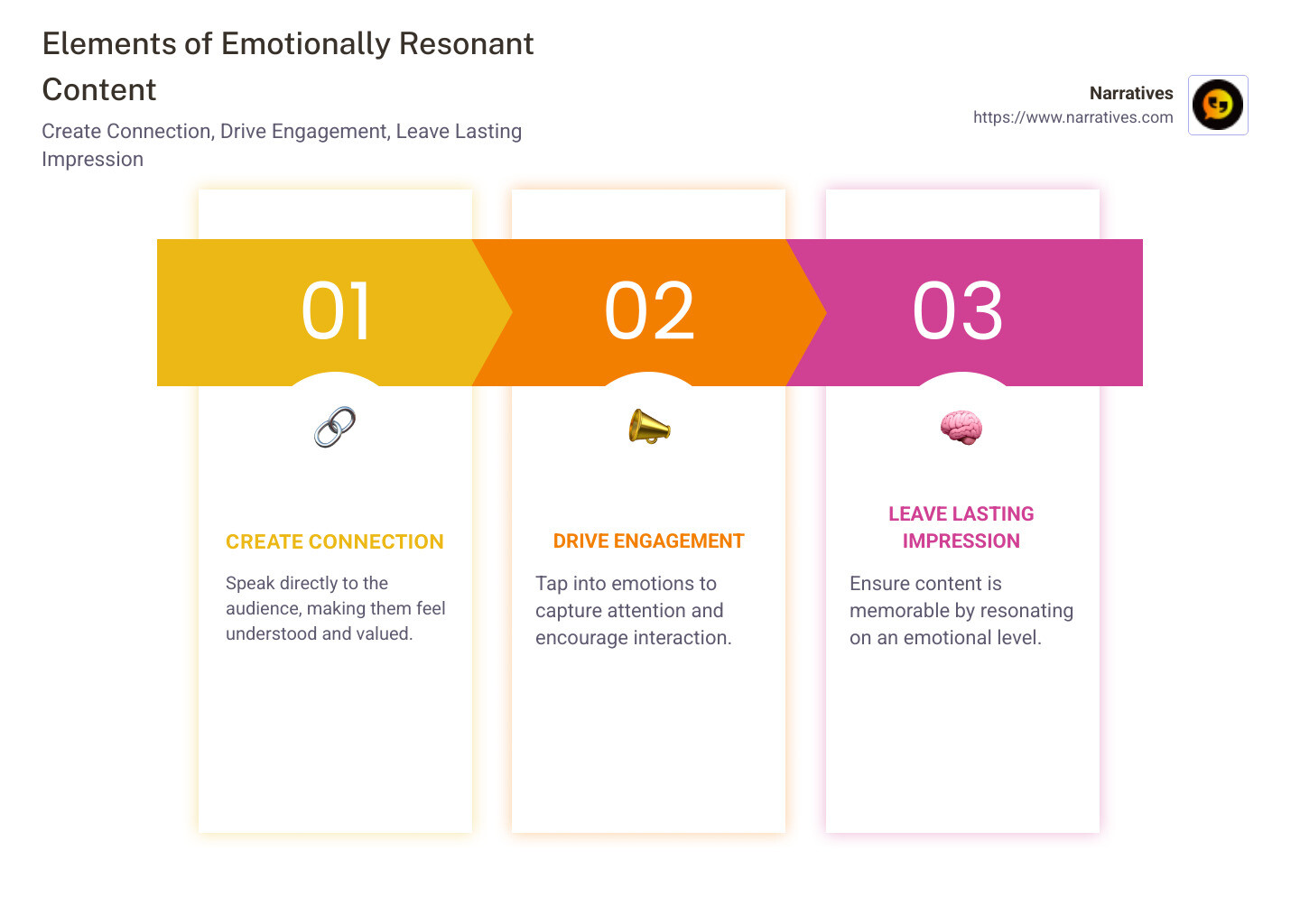
- It helps create a connection. Emotionally resonant content speaks directly to the audience, making them feel understood and valued. This mutual understanding fosters a stronger relationship between the content creator and the audience.
- It captures attention and drives engagement. By tapping into emotions, content creators can hold their audience's attention longer and encourage them to engage with the material, whether through comments, shares, or other interactions.
- It leaves a lasting impression. Content that resonates on an emotional level is more memorable, ensuring that your audience remembers your message long after they encounter it.
In a world buzzing with endless information, breaking through the noise is a challenge. Emotionally resonant content isn’t just about what you say; it’s about how you make people feel. When you speak to your audience’s emotions, you create more than content—you create connections.
Imagine an ad that makes you feel joy, nostalgia, or empathy. These reactions aren't accidental. They're the result of carefully crafted messages that consider the audience's feelings and experiences. This approach is especially crucial for non-profits and social impact organizations focused on advocacy, DEI, or environmental justice. They often operate with limited resources and need their messages to leave a significant impact—a feat made possible through emotionally resonant content.
Emotion fuels connection. And in turn, connection builds trust, loyalty, and ultimately a community around your mission and initiatives.
Understanding Emotionally Resonant Content
Emotionally resonant content is all about creating a connection that goes beyond words. It’s about touching the hearts of your audience and making them feel something genuine. This connection can transform casual observers into engaged participants and loyal supporters.
Emotional Resonance: The Core of Connection
At the heart of emotionally resonant content is the concept of emotional resonance. But what does this mean? In simple terms, it's about aligning your message with the emotions and values of your audience. When your content reflects their feelings, hopes, or struggles, it strikes a chord, making it more relatable and impactful.
For instance, consider the Always #LikeAGirl campaign. It wasn't just an ad; it was a powerful narrative that made viewers reflect on gender stereotypes and their impact. This emotional connection led to widespread conversation and engagement, demonstrating the power of emotional resonance.
Driving Audience Engagement
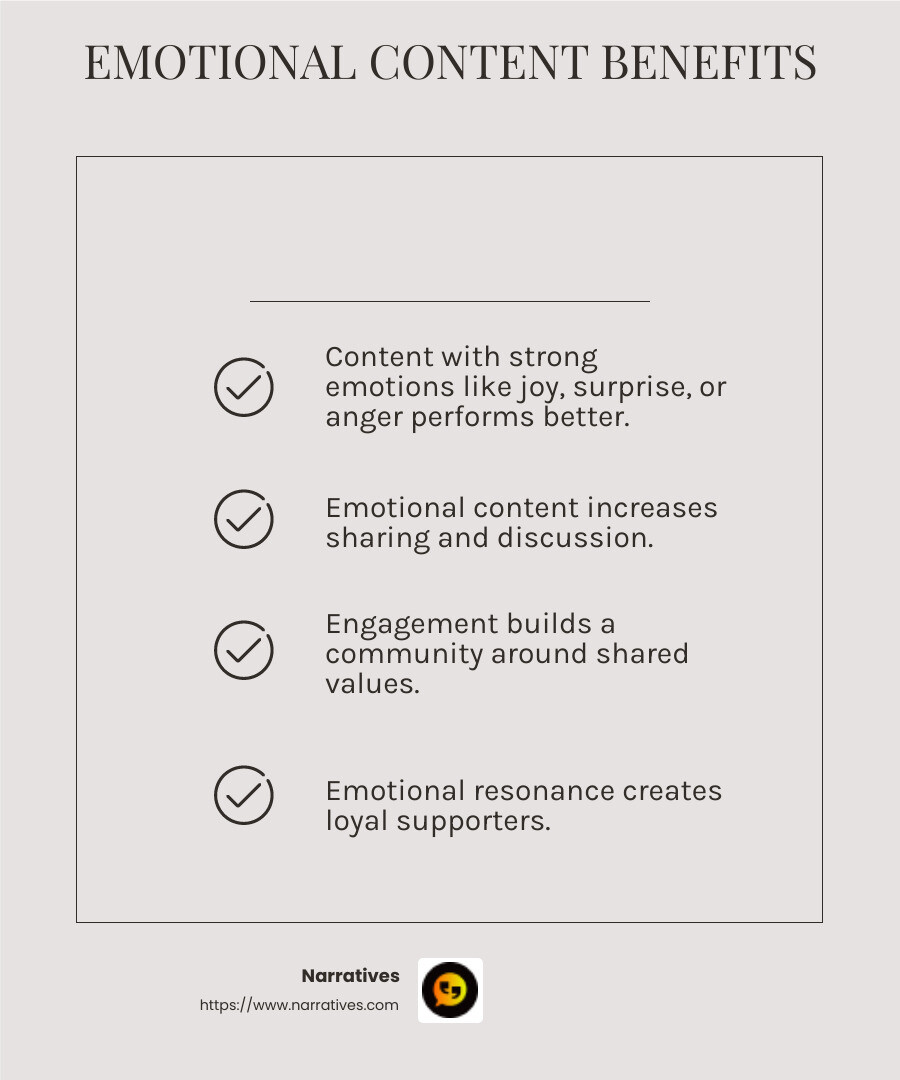
Emotionally resonant content does more than just connect—it drives audience engagement. When people feel emotionally involved, they are more likely to interact with the content. This could mean sharing it with friends, commenting their thoughts, or even taking action based on the message.
Research shows that content triggering strong emotions like happiness, awe, or even anger tends to perform better on social media. These emotions prompt people to react, discuss, and share, amplifying the reach of the content. Engagement isn't just about numbers; it's about creating a dialogue and building a community around shared emotions and values.
The Impact of Relatable Content
Content that resonates emotionally leaves a lasting impact. It’s memorable because it reflects real human experiences and emotions. This is why storytelling is a powerful tool in creating emotionally resonant content. Stories allow audiences to see themselves in the narrative, making the content not just a message, but a shared experience.
By understanding and using the power of emotional resonance, content creators can craft messages that not only capture attention but also foster genuine connections and drive meaningful engagement. In the next section, we'll explore strategies for creating emotionally resonant content, focusing on storytelling, personalization, and impactful visuals.
Strategies for Creating Emotionally Resonant Content
Creating emotionally resonant content is an art that involves weaving together storytelling, personalization, and impactful visuals. These elements work in harmony to engage your audience on a deeper level, making your content memorable and meaningful.
Storytelling: Crafting a Narrative
Storytelling is at the heart of emotionally resonant content. A good story captures attention and stirs emotions, allowing audiences to connect with the message on a personal level. Consider the Always #LikeAGirl campaign, which used storytelling to challenge gender stereotypes and inspire change. The narrative not only engaged viewers but also encouraged them to reflect on their own experiences.
To craft a compelling story:
- Start with a relatable character or situation. This makes it easy for your audience to see themselves in the story.
- Build a journey. Take your audience on a journey with a beginning, middle, and end. This structure keeps them engaged and invested.
- Include a conflict or challenge. This adds tension and interest, making the resolution more satisfying.
Personalization: Speaking Directly to Your Audience
Personalization makes your content feel like it’s speaking directly to each individual. It’s about understanding your audience’s needs, emotions, and experiences, and tailoring your message to align with them.
Use these tactics to personalize your content:
- Create detailed user personas. These help you understand your audience’s demographics, interests, and pain points.
- Use data and analytics. Tools like Google Analytics can reveal trends and preferences, allowing you to fine-tune your content to meet audience expectations.
- Engage directly. Conduct surveys or interviews to gather insights directly from your audience. This not only informs your content strategy but also shows your audience that you value their input.
Impactful Visuals: Enhancing Emotional Connection
Impactful visuals amplify the emotional tone of your content, making it more engaging and memorable. Visual storytelling can convey complex emotions and messages quickly and effectively.
To create visually compelling content:
- Select emotion-evoking visuals. Choose images or videos that align with the emotional tone of your message. For example, use warm colors to evoke comfort or cool tones for calmness.
- Use visual storytelling. Infographics and videos can tell a story on their own, enhancing the narrative without relying solely on text.
- Maintain emotional consistency. Ensure that visuals and text work together to reinforce the emotional themes of your content.
By integrating storytelling, personalization, and impactful visuals, you can create content that not only resonates with your audience but also inspires them to engage and connect on a deeper level. In the next section, we'll explore the role of emotion in content marketing and how it influences consumer behavior.
The Role of Emotion in Content Marketing
Understanding the role of emotion in content marketing is crucial for creating connections that last. Emotions are powerful drivers of consumer behavior. They influence how people perceive brands, make decisions, and take action.
Emotional Triggers: The Heartbeat of Engagement
Emotional triggers are specific stimuli that evoke emotions, prompting consumers to engage with content. These triggers tap into basic human emotions like happiness, fear, anger, or surprise, making content more relatable and memorable.
Consider the impact of happiness in marketing. Content that evokes joy is more likely to be shared, increasing its reach. For instance, a heartwarming video can make viewers smile and feel good, prompting them to share it with friends and family.
Fear, on the other hand, can create urgency. For example, limited-time offers often capitalize on the fear of missing out (FOMO), pushing consumers to act quickly.
Here's a quick look at how different emotional triggers can influence engagement:
| Emotion | Effect on Consumer Behavior |
|---|---|
| Happiness | Increases shareability and positive brand perception |
| Fear | Creates urgency and prompts immediate action |
| Surprise | Captures attention and increases curiosity |
| Sadness | Evokes empathy and deeper emotional connection |
Consumer Behavior: The Emotional Connection
Emotions don't just influence what consumers buy; they affect how they feel about a brand. When a brand connects emotionally, it builds trust and loyalty.
Take the example of Gillette's "Perfect Isn't Pretty" campaign. By showcasing athletes' struggles and triumphs, Gillette tapped into emotions of perseverance and pride. This not only resonated with viewers but also strengthened their connection to the brand.
Research shows that emotionally connected consumers are:
- More loyal. They are more likely to stick with a brand, even if competitors offer better prices.
- More valuable. They tend to spend more and recommend the brand to others.
- More engaged. They interact more with the brand's content, increasing its visibility and impact.
In summary, understanding and leveraging emotional triggers can significantly improve the effectiveness of content marketing. By creating emotionally resonant content, brands can influence consumer behavior, fostering deeper connections and driving business success.
In the next section, we'll dive into case studies of successful emotional content, examining campaigns like Always #LikeAGirl and P&G's "Thank You, Mom."
Case Studies of Successful Emotional Content
Always #LikeAGirl
The Always #LikeAGirl campaign is a prime example of emotionally resonant content that sparked a global conversation. The campaign video asked participants to demonstrate actions like running, fighting, and throwing a ball "like a girl." The responses highlighted the stark contrast between children's and adults' perceptions, revealing deep-seated stereotypes.
This campaign tapped into emotions of anger, sadness, and inspiration. It challenged societal norms and encouraged viewers to rethink what it means to do something "like a girl." The emotional impact was profound, leading to widespread sharing on social media platforms like Facebook and YouTube. The campaign not only increased brand awareness but also positioned Always as a champion of gender equality.
Gillette's "Perfect Isn't Pretty"
Gillette's "Perfect Isn't Pretty" campaign focused on the emotional journeys of athletes preparing for the Olympics. By showcasing their struggles, sacrifices, and triumphs, the campaign resonated deeply with viewers. It highlighted qualities like dedication, resilience, and perseverance.
This emotional narrative aligned Gillette with the values of hard work and determination. Viewers felt a connection with the athletes' stories, enhancing their perception of the brand. The campaign effectively used emotional triggers to foster a sense of pride and admiration, driving engagement and strengthening brand loyalty.
P&G "Thank You, Mom"
Procter & Gamble's "Thank You, Mom" campaign celebrated the pivotal role of mothers in the lives of athletes. Released during the Rio Olympics, the ads portrayed the emotional support and strength mothers provide, emphasizing themes of family and resilience.
This campaign struck a chord with audiences by evoking emotions of gratitude and love. It reinforced P&G's image as a brand that honors family values. The emotional storytelling not only resonated with viewers but also lifted P&G's brand perception, leading to increased customer engagement and loyalty.
These case studies demonstrate the power of emotionally resonant content in creating meaningful connections with audiences. By tapping into fundamental human emotions, brands like Always, Gillette, and P&G have successfully engaged consumers, driving both emotional and business outcomes.
Frequently Asked Questions about Emotionally Resonant Content
What is Emotionally Resonant Content?
Emotionally resonant content is all about creating a connection. It taps into the emotions of the audience, making them feel understood and engaged. This type of content goes beyond just delivering information; it tells stories that evoke feelings, whether it's happiness, sadness, or inspiration.
Consider the Always #LikeAGirl campaign. It didn't just talk about gender equality; it made people feel the importance of the issue by challenging stereotypes. This is the essence of emotionally resonant content—it moves people and makes them think.
How Does Emotional Marketing Affect User Engagement?
Emotional marketing is a game-changer for user engagement. When content resonates emotionally, it becomes more memorable and shareable. People are more likely to engage with content that makes them feel something.
Emotional triggers are key here. For example, happiness can lead to sharing, while sadness might prompt a donation or action. The emotions stirred by content like Gillette's "Perfect Isn't Pretty" campaign, which highlighted athletes' struggles, can lead to increased brand loyalty and interaction.
Studies show that content with strong emotional appeal often results in higher engagement rates. This means more likes, shares, and comments, which can significantly boost a brand's visibility and connection with its audience.
Examples of Successful Emotional Marketing Campaigns
Successful campaigns often use emotional content marketing to leave a lasting impact. Let's look at some examples:
Always #LikeAGirl: This campaign went viral because it connected with viewers on a personal level. By addressing stereotypes, it sparked conversations and inspired change, enhancing Always's brand image.
Gillette's "Perfect Isn't Pretty": This campaign resonated by showcasing the hard work of Olympic athletes. It used emotional storytelling to align the brand with values like dedication and perseverance, increasing viewer engagement.
P&G "Thank You, Mom": During the Olympics, P&G highlighted the role of mothers in athletes' lives. This emotional appeal to family and gratitude strengthened P&G's brand loyalty and customer connection.
These campaigns illustrate how emotionally resonant content can drive not just emotional, but also business success. By engaging the audience's emotions, brands can create a deeper connection and inspire action.
Conclusion
At Narratives, we believe in the transformative power of storytelling, especially for non-profits and purpose-driven organizations. Our mission is to lift underrepresented voices through emotionally resonant content that not only tells a story but also inspires action and change.
Non-profit storytelling is more than just sharing facts and figures; it's about connecting with people on a human level. When a non-profit shares its impact through stories that evoke emotions, it builds trust and fosters a deeper connection with its audience. This is crucial for increasing visibility and encouraging support.
Consider the impact of campaigns like P&G's "Thank You, Mom", which used the emotional bond between mothers and their children to create a heartfelt narrative that resonated worldwide. Such stories are not just memorable; they inspire action and build lasting relationships.
Emotionally resonant content creates a bridge between the storyteller and the audience. It allows non-profits to showcase their work in a way that is both engaging and impactful. By focusing on genuine human experiences, these stories can drive social change and bring communities together.
As we continue to partner with non-profits, our aim is to help them share their unique stories in a way that touches hearts and motivates action. Through high-quality video and multimedia content, we strive to make the voices of those who are often unheard, heard loud and clear.
Join us in this journey of meaningful storytelling and see how we can help your organization make a difference.


.avif)