Emotional Impact: Strategies for Resonant Content Creation

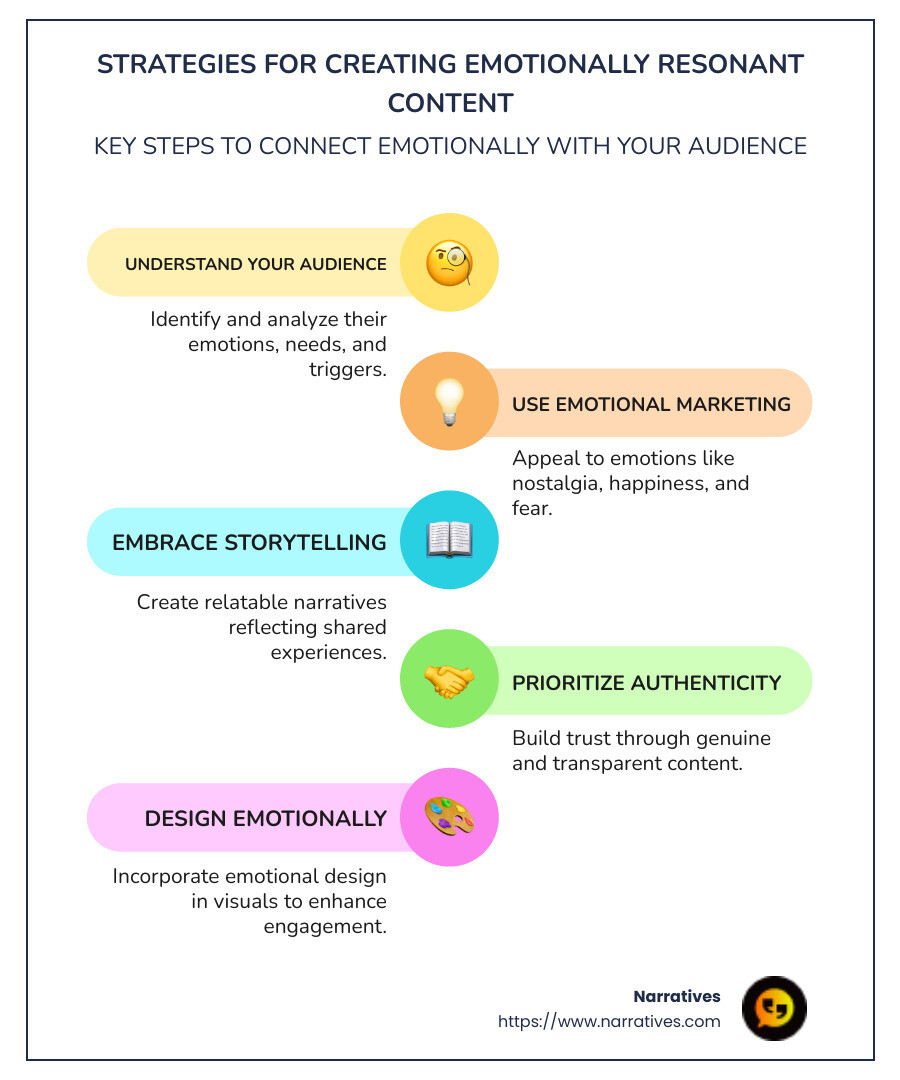
Emotionally resonant content is key to building deep connections with your audience. Whether through storytelling, emotional marketing, or simply understanding your audience’s needs, there are numerous strategies to create content that truly resonates. Here's a quick overview to get you started:
Understand Your Audience: Know who they are and what makes them tick.
Use Emotional Marketing: Appeal to feelings like nostalgia, happiness, or even fear.
Accept Storytelling: Connect through relatable narratives that reflect shared experiences.
Prioritize Authenticity: Maintain trust by being genuine and transparent.
Creating emotionally resonant content is a powerful tool for non-profits, social enterprises, and mission-driven brands aiming to amplify their message. By connecting through emotion, you can engage more deeply with supporters, sparking both awareness and action. In today's content-saturated world, leveraging the power of emotion not only sets you apart but also forges lasting bonds with your audience, driving meaningful change and impact.
Emotionally resonant content basics:
Understanding Emotionally Resonant Content
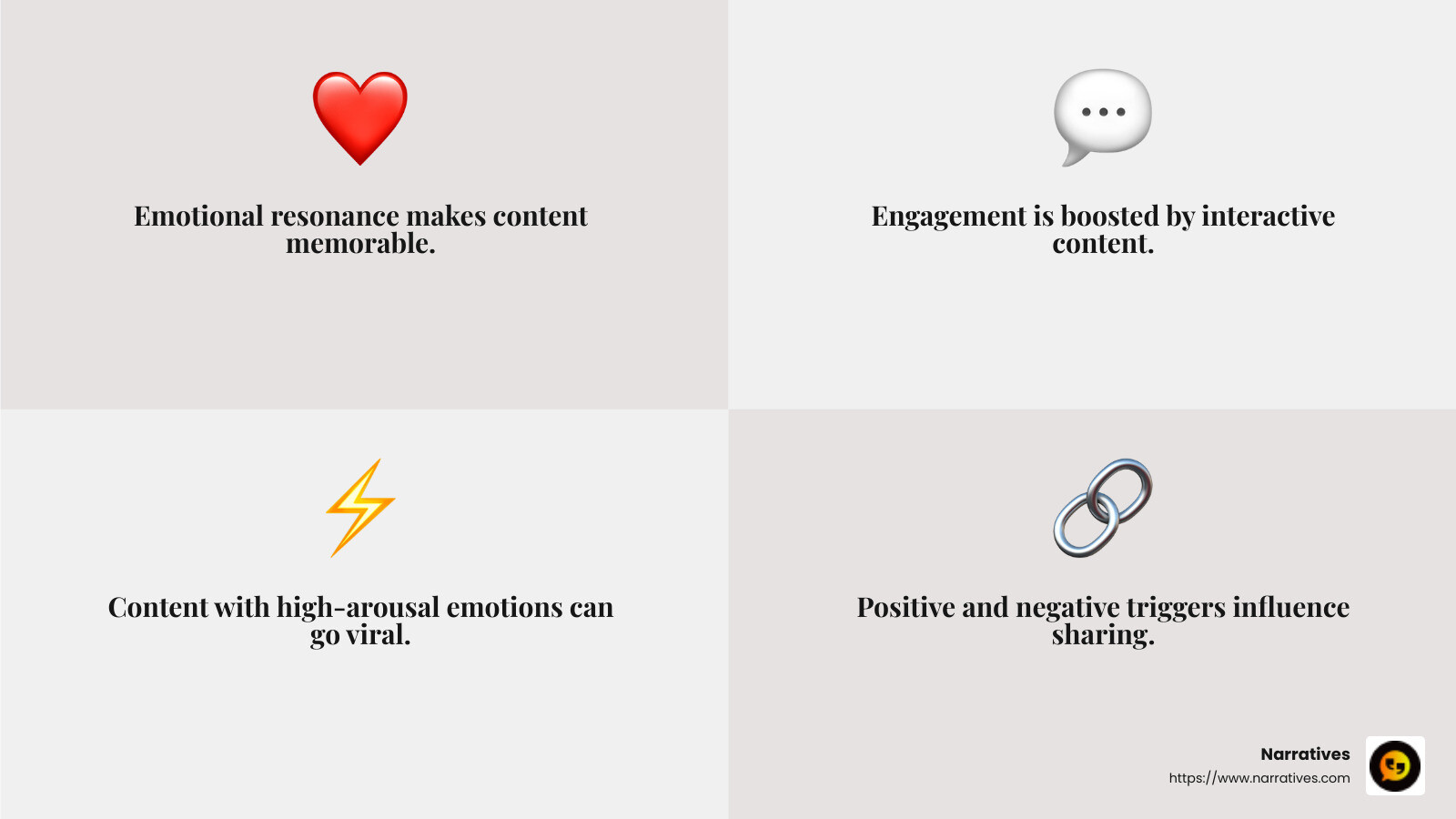
Creating emotionally resonant content is like having a conversation that touches the heart. It's content that isn't just read or watched—it's felt. To achieve this, you need to understand three key elements: emotional resonance, audience engagement, and emotional triggers.
Emotional Resonance
Emotional resonance is about making your audience "feel" your message. It's the difference between a story that stays with someone and one that's quickly forgotten. This kind of content speaks directly to a person's experiences, values, or aspirations. A great example is the Always #LikeAGirl campaign, which didn't just talk about empowerment; it made viewers feel the urgency and importance of changing perceptions about gender roles.
Audience Engagement
Engagement happens when your content prompts people to act—whether that's liking, sharing, or commenting. It's about creating a dialogue, not just a monologue. According to research, content that invites conversation, like open-ended questions, tends to perform better. This is especially true on platforms like Threads, where conversation starters are key to driving interaction.
Emotional Triggers
Emotional triggers are the catalysts that evoke feelings. These can be positive, like happiness or awe, or negative, like fear or anger. The emotions you choose to evoke can dictate how your audience will interact with your content. For example, content that triggers high-arousal emotions, such as astonishment or admiration, is more likely to go viral. Fear can create urgency, while love can foster a sense of connection and loyalty.
By understanding and leveraging these elements, you can create content that not only engages but also resonates deeply with your audience. This emotional connection is what turns casual viewers into loyal supporters.
Strategies for Creating Emotionally Resonant Content
Crafting emotionally resonant content involves more than just good writing—it's about creating an experience that connects with your audience on a deeper level. Here are some strategies to help you achieve this:
Storytelling
Storytelling is the heart of emotional content. A compelling story can transform mundane facts into a memorable journey. Consider the Always #LikeAGirl campaign. It used storytelling to challenge stereotypes and inspire empowerment, making the message stick.
When crafting your story:
- Set the Scene: Use vivid imagery to paint a picture. Describe settings and emotions so your audience can visualize and feel the narrative.
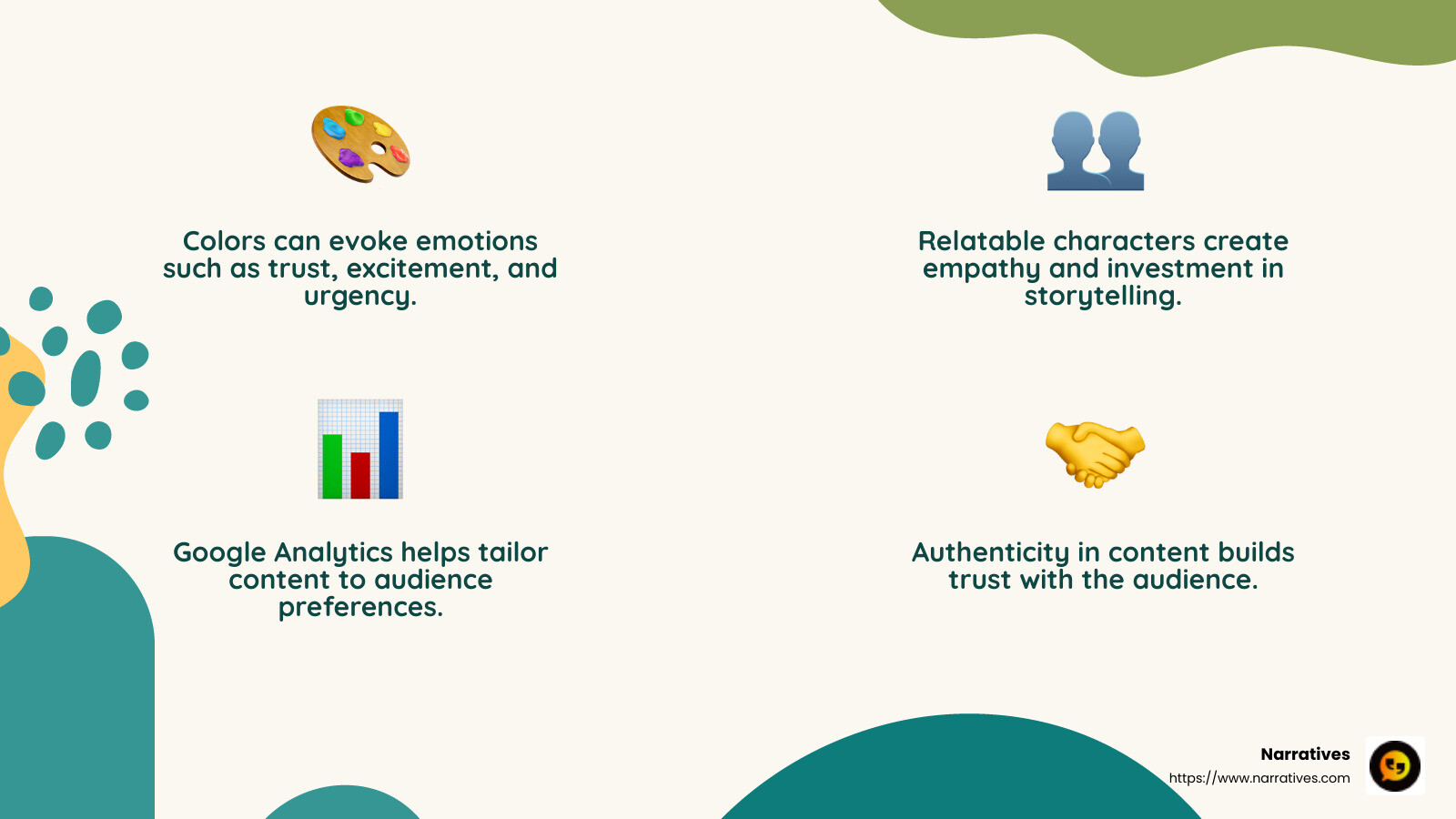
- Character Connection: Introduce relatable characters who face challenges similar to those of your audience. This creates empathy and investment in the story's outcome.
- Emotional Arc: Build a narrative that takes the audience on an emotional journey. This could start with a problem, followed by a struggle, and end with a resolution.
Personalization
Personalization makes your content feel tailor-made for your audience. By addressing individual needs and preferences, you create a more engaging experience.
- User Personas: Develop detailed personas to understand your audience’s age, interests, and challenges. This guides content creation that speaks directly to them.
- Customized Messages: Use data to tailor your content. Platforms like Google Analytics can reveal insights into what your audience cares about.
Authenticity
Authenticity builds trust. When your content reflects genuine values and beliefs, it resonates more with your audience.
- Be Honest: Share real stories and experiences. Authenticity is about being transparent and relatable.
- Consistent Voice: Maintain a consistent tone and style that reflects your brand's true character. This helps in building a recognizable and trustworthy image.
Emotional Design
The design of your content should evoke emotions that complement your message. Visuals and layout play a crucial role in how your content is perceived.
- Color Psychology: Use colors that align with the emotions you want to evoke. For instance, blue can convey trust, while red can evoke excitement or urgency.
- Imagery and Graphics: Choose images that resonate emotionally. For example, a heartfelt photo can evoke empathy or joy.
By integrating these strategies, you can create content that not only informs but also connects on a personal level. This connection is the foundation of lasting relationships with your audience.
Case Studies of Successful Emotional Content
Let's explore some powerful campaigns that have effectively used emotionally resonant content to connect with audiences and drive change.
Always #LikeAGirl
The Always #LikeAGirl campaign is a prime example of using emotional storytelling to challenge societal norms. In the campaign, children and adults were asked to demonstrate actions "like a girl," revealing stark differences in perceptions. The video highlighted how internalized misogyny is learned and inspired viewers to rethink stereotypes.
This campaign achieved its goal of sparking a global conversation about gender equality. It went viral, with millions sharing the video across platforms like YouTube and Facebook. The emotional impact drove engagement and reinforced Always as a brand committed to empowerment.
Gillette - The Best Men Can Be
Gillette's "The Best Men Can Be" campaign addressed issues of toxic masculinity. By focusing on the emotional journeys of athletes and everyday men, the campaign encouraged viewers to accept qualities like dedication and resilience.
The narrative was not just about selling razors; it was about promoting positive change. This resonated deeply with viewers, enhancing their association of Gillette with integrity and social responsibility. The campaign successfully fostered a sense of community and encouraged men to reflect on their actions.
P&G "Thank You, Mom – Strong"
Procter & Gamble's "Thank You, Mom – Strong" campaign highlighted the vital role of mothers in athletes' lives, especially during the Rio Olympics. The ads portrayed the emotional support and strength mothers provide, reinforcing P&G’s image as a brand that honors family and resilience.
This campaign used emotional triggers like pride and gratitude, which resonated with audiences worldwide. It improved customer engagement by creating a narrative that many could relate to, thus strengthening brand loyalty.
These case studies demonstrate how emotionally resonant content can effectively engage audiences, inspire change, and build strong brand connections. By focusing on relatable narratives and genuine emotions, brands can create memorable content that stands the test of time.
Next, we'll dig into the psychological impact of emotional marketing and how it influences user engagement...
Psychological Impact of Emotional Marketing
Emotions are powerful drivers of human behavior. When used in marketing, they can significantly boost user engagement and create lasting connections between brands and consumers. Let's break down the psychological impact of emotional marketing and how it influences engagement through emotional triggers and emotional contagion.
Emotional Triggers
Emotional triggers are stimuli that evoke strong feelings. They can be anything from a heartwarming story to a compelling image. In marketing, these triggers are used to connect with audiences on a personal level.
Research shows that emotionally charged content can increase sales by 23%. This is because emotions like happiness, fear, and surprise can prompt immediate responses, such as sharing content or making a purchase. Ads that tap into these emotions often outperform those that rely solely on logic.
User Engagement
When consumers feel an emotional connection to a brand, they are more likely to engage with its content. Engagement can take many forms, such as liking, commenting, or sharing a post. Emotional content tends to be more memorable, leading to higher rates of recall and interaction.
For instance, campaigns with purely emotional content can perform nearly twice as well as those with rational content. This is because emotional content is processed by the brain about five times faster than cognitive content, making it more effective in capturing attention.
Emotional Contagion
Emotional contagion is the phenomenon where people "catch" emotions from others. In marketing, this means that a viewer's emotional response to content can influence others they share it with.
A successful example of this is the Always #LikeAGirl campaign. The emotional storytelling sparked a movement, with millions sharing the message and spreading the emotional impact. This kind of viral spread is a testament to the power of emotional contagion in amplifying a brand's reach.
By understanding and leveraging these psychological elements, brands can create emotionally resonant content that not only engages but also builds lasting relationships with their audience.
Next, we'll address some frequently asked questions about emotionally resonant content and how it can transform your marketing strategy...
Frequently Asked Questions about Emotionally Resonant Content
What is Emotionally Resonant Content?
Emotionally resonant content is crafted to connect deeply with the audience's feelings. It goes beyond just presenting facts or features; it tells stories that evoke emotions like joy, sadness, or inspiration. This type of content fosters a strong emotional bond between the brand and its audience, making the message more memorable and impactful.
How Does Emotional Marketing Affect User Engagement?
Emotional marketing can significantly boost user engagement by tapping into the audience's emotions. When people feel a connection, they are more likely to interact with the content—whether it's through likes, shares, or comments. A study found that emotionally charged content can increase sales by 23%. This is because emotions like happiness or surprise can prompt immediate actions, such as sharing or purchasing. Emotional marketing makes content more relatable and shareable, leading to greater engagement.
Examples of Successful Emotional Marketing Campaigns
Several brands have mastered the art of emotionally resonant content. One standout example is the Always #LikeAGirl campaign. This campaign challenged societal norms and evoked emotions of empowerment and inspiration. It went viral, with millions sharing the powerful message, illustrating the impact of emotional storytelling.
Another example is the P&G Thank You Mom campaign, which highlights the sacrifices mothers make for their children. This campaign tapped into universal feelings of gratitude and love, resonating with viewers worldwide.
These campaigns show how emotional marketing can create a lasting impact by fostering a deep connection with the audience. By evoking emotions, brands can encourage not just engagement but also loyalty and advocacy.
In the next section, we'll explore how Narratives, a non-profit content agency, leverages these strategies to create social impact...
Conclusion
At Narratives, we believe in the transformative power of emotionally resonant content. Our mission is to help non-profits and purpose-driven organizations tell their stories in a way that not only informs but also inspires action and creates lasting change.
Narratives: Elevating Non-Profit Storytelling
Non-profit organizations often face the challenge of standing out in a crowded digital space. With our expertise in digital storytelling, we help these organizations share their impact stories through high-quality video and multimedia content. By focusing on the emotional core of their stories, we amplify underrepresented voices and bring attention to causes that matter.
The Social Impact of Emotionally Resonant Content
The power of storytelling lies in its ability to evoke emotions and drive social change. When we craft content that resonates emotionally, we create a ripple effect that extends beyond the screen. This kind of storytelling builds trust, fosters community, and encourages viewers to become advocates for the cause.
By tapping into emotions like empathy and hope, non-profits can not only increase their visibility but also strengthen their connection with supporters. This leads to greater engagement, more donations, and a broader impact.
Partner with Us for Impactful Storytelling
At Narratives, we are committed to using our storytelling expertise to support non-profits in their mission to make the world a better place. Our approach is not just about creating content; it's about creating change.
If you're ready to lift your storytelling and amplify your impact, learn more about how we can help. Together, we can craft stories that touch hearts and inspire action.
In conclusion, emotionally resonant content is not just a marketing tool—it's a bridge to deeper connections and meaningful social impact. By embracing the power of emotion, we can help non-profits tell their stories in a way that truly makes a difference.


.png)