From Story to Support: Elevate Fundraising with Narrative Power

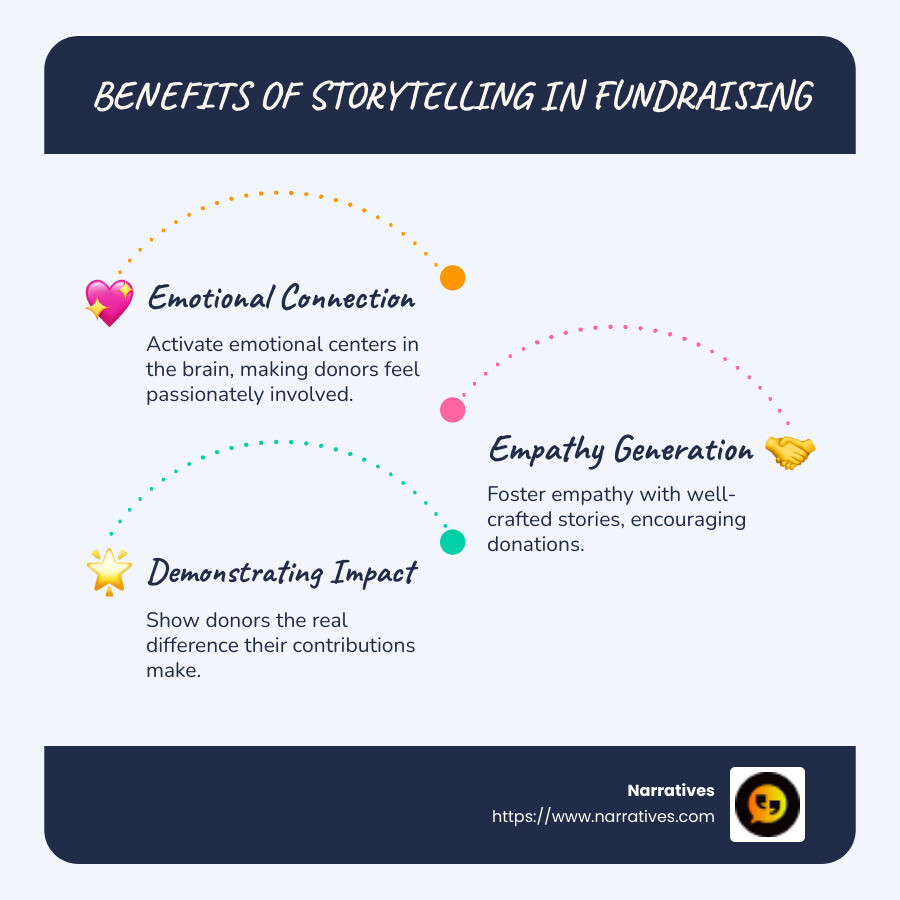
Fundraising through storytelling is a powerful way for nonprofits to connect with their audience. By weaving narratives that highlight emotional connections, organizations can drive both engagement and donations. Here’s why it works:
- Emotional Connection: Stories activate the brain's emotional centers, making donors feel passionately involved.
- Empathy Generation: Well-crafted stories foster empathy, encouraging donations.
- Demonstrating Impact: Narratives show how contributions make a real difference.
In today’s crowded digital landscape, telling a captivating story can be the key to standing out and rallying support for your cause. With the right narrative, your mission transforms from a simple appeal into an impactful journey that invites donors to be part of something larger.
Fundraising through storytelling helpful reading:
The Power of Storytelling in Fundraising
Stories are powerful tools for nonprofits. They create emotional appeal, engage donors, and build human connections. Let's explore how these elements lift fundraising efforts.
Emotional Appeal
Stories resonate deeply with people. They reach beyond facts and figures, touching the heart. When a donor hears a story that moves them, they feel a personal connection to the cause. This emotional bond is crucial. It encourages them to support your mission, not just with words, but with action.
Donor Engagement
Engaging donors is more than just asking for money. It's about making them feel like they are part of your story. When donors see the impact of their contributions through storytelling, they become more than just supporters—they become advocates. They want to share your story with others, extending your reach and influence.
Consider the example of Innovators Who Care, who use videos to show the change each donation brings. This clear demonstration of impact motivates donors to contribute and share.
Human Connection
At its core, storytelling is about connecting people. It humanizes your cause, making it relatable and real. When donors see the faces and hear the voices of those they are helping, they feel a stronger connection. This human element can transform a one-time donor into a lifelong supporter.
Personal stories of beneficiaries add authenticity and transparency, building trust with donors. They see the tangible outcomes of their support, which strengthens their commitment to your cause.
Incorporating storytelling into your fundraising strategy can make a significant difference. By appealing to emotions, engaging donors, and fostering human connections, you can lift your fundraising efforts and make a lasting impact.
Crafting Compelling Narratives
Creating impact stories is at the heart of effective fundraising through storytelling. These stories don't just tell; they show. They illustrate the real-life changes your organization is making. An impact story is like a window into the lives touched by your cause, and it resonates deeply with donors.
Storytelling Strategy
To craft a compelling narrative, you need a clear storytelling strategy. Start by identifying the key elements: the characters, setting, plot, conflict, and resolution. Each story should have a protagonist, often a beneficiary, who faces challenges and overcomes them with your organization's help.
Here's a simple framework:
- Characters: Who is the story about? This could be a beneficiary, a volunteer, or even a donor.
- Setting: Where does the story take place? It might be your community, a specific project site, or even a virtual space.
- Plot: What happens in the story? Outline the journey from challenge to resolution.
- Conflict: What is the main issue or problem? This is the heart of your mission.
- Resolution: How does your organization make a difference? Show the positive outcomes and future possibilities.
Emotional Resonance
It's not enough to tell a story; it must also resonate emotionally. This means tapping into feelings like empathy, hope, and inspiration. When donors feel these emotions, they are more likely to engage and support your cause.
Consider using vivid imagery and personal anecdotes to bring your stories to life. For example, share a beneficiary's journey from struggle to success, highlighting the role your organization played.
Real People, Real Impact: Personal stories add authenticity and credibility. They show that your work is tangible and that donations lead to real change.
Bringing It All Together
When crafting your narrative, the goal is to create a connection. A well-told story can transform a passive audience into active supporters. By focusing on impact stories, a solid storytelling strategy, and emotional resonance, your organization can lift its fundraising efforts and make a lasting impression.

In the next section, we'll explore various techniques and tips for effective fundraising through storytelling.
Fundraising through Storytelling: Techniques and Tips
Visual Storytelling is a powerful tool in your fundraising arsenal. It allows you to engage donors on multiple levels. People remember images better than words, so use visuals to make your stories unforgettable.
- Photos and Videos: These can capture emotions and moments that words alone cannot. A short video showing the impact of a donation can be more persuasive than a long article.
- Infographics: Use these to present data in a way that's easy to understand and visually appealing. They can highlight key achievements and show donors how their contributions are making a difference.
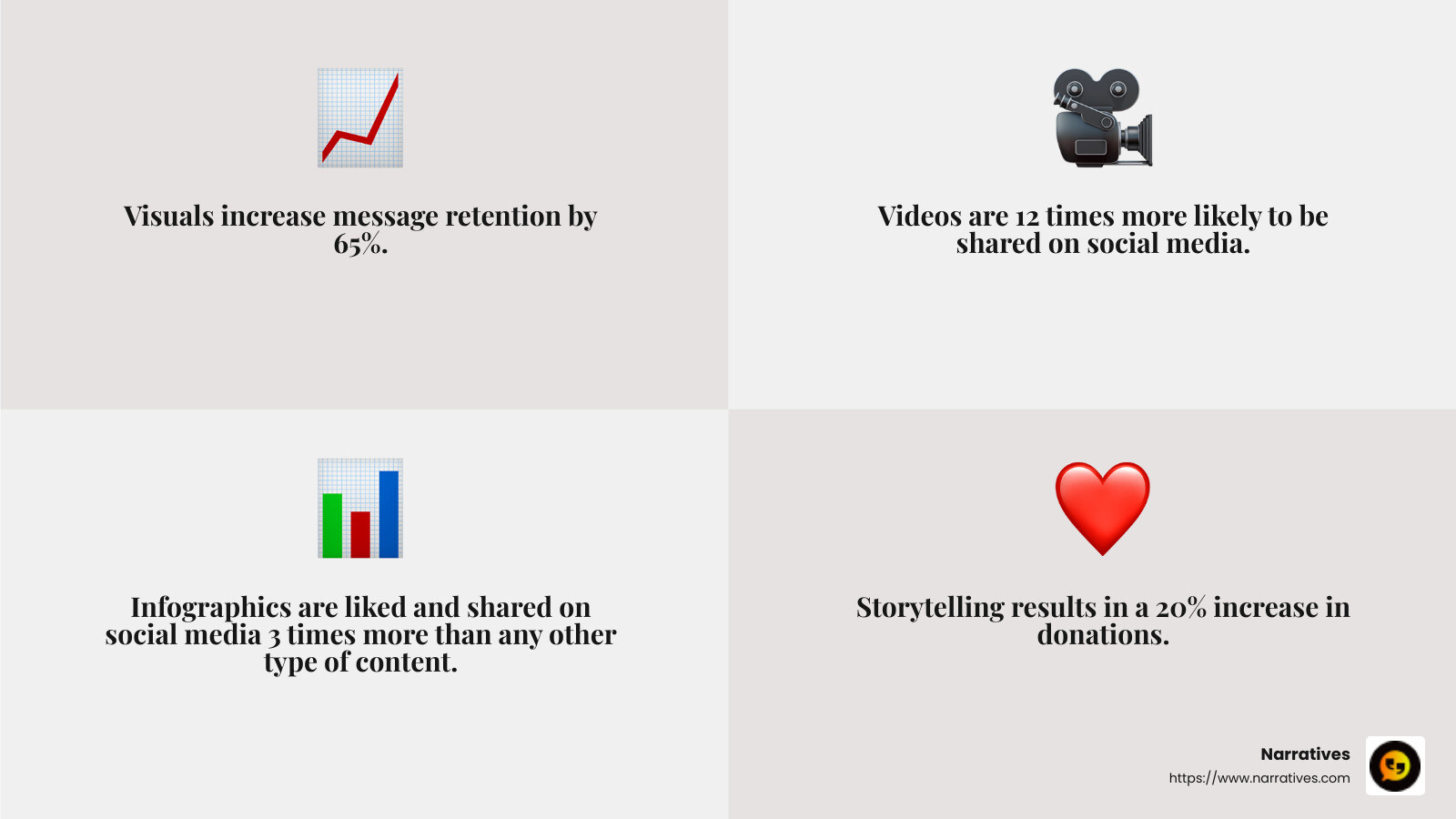
Multimedia Content is another way to enrich your storytelling. Combining different media forms can create a more immersive experience. Consider using:
- Podcasts: Share interviews with beneficiaries or staff members. This adds a personal touch and lets donors hear directly from those affected by your work.
- Webinars: Host live sessions where you can tell your story and answer questions in real-time. This interaction can build stronger connections with your audience.
Donor Appreciation should be a key part of your storytelling strategy. Recognizing your donors not only shows gratitude but also encourages continued support. Here are some ideas:
- Personalized Thank-You Videos: Send short, personalized videos to thank donors. Mention their specific contributions and how they have helped.
- Impact Reports: Share stories and updates that show donors the tangible results of their generosity. Highlight specific projects or individuals who have benefited.
Remember, every story you tell is an opportunity to connect with your donors on a deeper level. By incorporating visual storytelling, multimedia content, and donor appreciation into your strategy, you can lift your fundraising efforts and foster a community of engaged supporters.
In the next section, we'll look at case studies of successful storytelling in nonprofits, demonstrating the real-world impact of these techniques.
Case Studies: Successful Storytelling in Nonprofits
Arts Organizations: Breathing Life into Stories
Arts organizations have a unique advantage when it comes to fundraising through storytelling. Their work often revolves around creativity and expression, making it easier to craft narratives that resonate emotionally. For instance, the Performing Arts Management highlights that 50%-80% of nonprofit revenue comes from contributed sources. This underscores the importance of engaging donors through storytelling.
Consider an arts organization that shares the journey of a young musician who, thanks to donor support, was able to attend a prestigious music camp. By weaving the musician's story into their fundraising efforts, the organization can create a powerful narrative that highlights the direct impact of donations.
Donor Impact: Making Contributions Count
Donors often want to feel that their contributions matter. Unfortunately, the average donor retention rate is only 45%, partly because donors may feel their impact isn't visible. To counter this, storytelling can play a crucial role.
A compelling example is Miriam’s House, which uses a donor-based narrative to center supporters as heroes with messages like, "You can help end the cycle of homelessness." This approach not only acknowledges the donor's role but also invites them into a larger, meaningful story.
Community Stories: Connecting on a Personal Level
Community stories are another powerful tool in nonprofit storytelling. They connect donors with the lives they are helping to change. For example, the Pars Equality Center supports Persian-speaking immigrants by offering legal assistance and cultural integration services. By sharing personal stories of individuals who have benefited from their programs, they effectively demonstrate the tangible impact of donations.
Such narratives not only highlight the organization's mission but also provide a sense of community and shared purpose, encouraging donors to become part of the story.
By focusing on arts organizations, donor impact, and community stories, nonprofits can leverage storytelling to create a more engaging and emotionally resonant fundraising campaign. This not only helps in retaining donors but also in attracting new ones, as stories have the power to inspire action and foster a sense of belonging.
Next, we'll address frequently asked questions about fundraising through storytelling, exploring how this approach can improve donor retention and be effectively used on social media.
Frequently Asked Questions about Fundraising through Storytelling
How can storytelling improve donor retention?
Storytelling can significantly boost donor retention by creating an emotional connection between donors and the cause. When donors see the real impact of their contributions, they feel valued and appreciated. This emotional bond encourages them to continue supporting the organization.
According to research, the average donor retention rate is just 45%. However, when donors are shown how their gifts make a difference, retention rates can improve. For instance, by sharing stories of individuals or communities directly impacted by donations, nonprofits can demonstrate the tangible benefits of donor support. This approach not only acknowledges the donor's role but also reinforces their importance in the ongoing narrative of change.
What are some examples of effective nonprofit storytelling?
Effective nonprofit storytelling often involves creating narratives that highlight the direct impact of donations. For example, Miriam’s House uses a donor-based narrative, positioning supporters as heroes with messages like, "You can help end the cycle of homelessness." This strategy not only engages donors but also empowers them to see themselves as vital players in the mission.
Another great example is the Pars Equality Center, which shares personal stories of Persian-speaking immigrants who have received legal assistance and cultural integration services. By focusing on individual success stories, they illustrate the profound impact of their work and the essential role of donor contributions.
How can nonprofits use social media for storytelling?
Social media is a powerful tool for digital storytelling, allowing nonprofits to reach a broader audience with engaging content. Platforms like Instagram, Facebook, and Twitter enable organizations to share stories in a variety of formats, including videos, images, and live streams.
To effectively use social media for storytelling, nonprofits should:
Leverage Visual Storytelling: Use compelling images and videos to create emotional resonance. A touching video, like the one created by Wag Love Fest, can invite potential donors into a larger story.
Engage with User-Generated Content: Encourage supporters to share their stories and experiences related to the cause. This not only amplifies the narrative but also builds a sense of community.
Use Social Media Takeovers: Allow beneficiaries or volunteers to take over the organization's social media accounts for a day. This provides an authentic glimpse into the impact of the nonprofit's work.
By integrating storytelling into social media strategies, nonprofits can improve their reach, engage with supporters on a personal level, and ultimately drive more donations. This approach not only raises awareness but also fosters a deeper connection with the community.
Conclusion
Community-driven storytelling is more than just a powerful tool—it's a necessity for nonprofits aiming to make a real social impact. At Narratives, we believe that every story has the potential to inspire action and foster change. By amplifying underrepresented voices through high-quality video and multimedia content, we help nonprofits share their impact stories in ways that truly resonate.
Storytelling is at the heart of effective fundraising. It transforms abstract goals into relatable, human experiences that donors can connect with emotionally. When donors see the real-life changes their contributions make, they're more likely to feel engaged and valued, leading to increased support and retention.
Our approach at Narratives focuses on creating content that not only informs but also moves people. By highlighting personal stories and community successes, we build trust and visibility for the organizations we partner with. This strategy not only empowers nonprofits but also strengthens their relationship with supporters, fostering a sense of community and shared purpose.
To learn more about how we can help your organization harness the power of storytelling, visit our service page.
In conclusion, as we accept the art of storytelling, we open up the potential to drive social impact, build stronger communities, and lift the voices that need to be heard. Together, we can create a world where every story leads to support and every voice makes a difference.


.avif)