Crafting Narratives: Top Techniques for Impactful Storytelling

Impactful storytelling techniques are crucial not only for successful non-profits but for any organization seeking to make a meaningful connection with their audience. At its core, storytelling is about engaging emotions, creating a narrative that others can relate to, feel part of, and ultimately support. Whether you’re a marketer at a non-profit, a communications lead in a social impact organization, or an agency seeking collaboration, mastering storytelling can be your greatest ally in making your mission resonate.
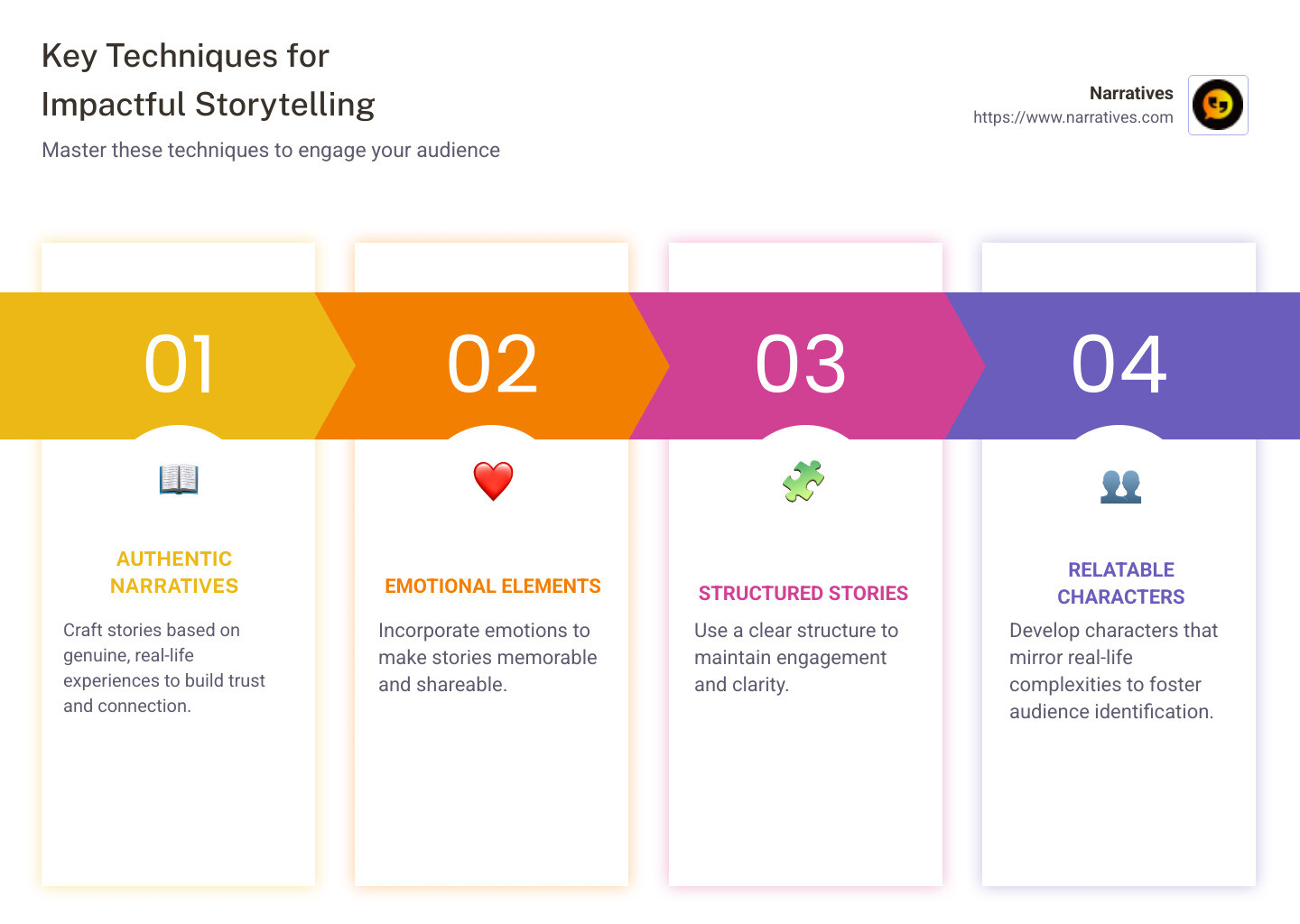
When aiming for impactful storytelling, consider these key techniques:
- Use Authentic Narratives: People connect with genuine, real-life experiences.
- Integrate Emotional Elements: Stories that evoke emotions are more likely to be remembered and shared.
- Structure Your Story Well: Following a clear structure makes your story engaging and easy to follow.
- Create Relatable Characters: Characters that echo real-life complexities foster audience identification.
When information is abundant, but meaningful connections are rare, storytelling stands out as a powerful tool to captivate and inspire. By focusing on crafting compelling narratives, you can build not just awareness but a deeper emotional commitment to your cause.
Basic impactful storytelling techniques terms:
- compelling non profit storytelling
- immersive storytelling experiences
- nonprofit storytelling best practices
Understanding Storytelling Structures
Storytelling is an art, but like any art, it has structures that can guide you to success. Let's explore some of the most effective storytelling structures that can improve your narrative and make it more impactful.
Monomyth
The monomyth, also known as the hero’s journey, is a universal story structure found in myths and tales worldwide. It begins with a hero who leaves home, faces trials, and returns with newfound wisdom. This structure is prevalent in modern stories like The Lion King and Star Wars. Using the monomyth in your storytelling can help convey your journey and the lessons learned along the way.
Mountain Structure
The mountain structure maps the tension and drama in a story. Unlike the monomyth, it doesn’t guarantee a happy ending. It builds up through a series of challenges and climaxes at the end. Think of it like a TV series, where each episode adds to the tension, culminating in a dramatic finale. This structure is perfect for stories that need to build suspense and keep the audience engaged.
Nested Loops
Nested loops involve layering narratives within each other. The core message sits at the center, surrounded by supporting stories. This technique is like peeling an onion, where each layer reveals more about the central idea. It’s particularly effective when you want to explain complex concepts by breaking them down into smaller, more digestible stories.
Sparklines
Sparklines contrast the current reality with a better, ideal world. This technique highlights problems and fuels a desire for change. By showing what is versus what could be, you can motivate your audience to act. It’s a powerful way to inspire and create a vision that resonates emotionally with your listeners.

In Medias Res
Starting in medias res means beginning your story in the middle of the action. This technique grabs attention immediately and keeps the audience hooked. After the initial excitement, you backtrack to explain how you got there. It’s a great way to start with a bang but remember not to reveal too much too soon, or you risk losing your audience's interest.
Understanding these storytelling structures can transform your narratives from ordinary to extraordinary. By applying these techniques, you can create stories that not only capture attention but also leave a lasting impact. This leads us seamlessly into the next section, where we'll explore impactful storytelling techniques that engage your audience even further.
Impactful Storytelling Techniques
Crafting a story that resonates deeply with your audience involves using specific techniques that amplify its impact. Let's explore some of the most effective impactful storytelling techniques that can lift your narrative.
Conflict Development
At the heart of every memorable story is conflict. It's the driving force that propels your plot and keeps your audience invested. Conflict isn't just about disputes or battles; it's about the challenges your characters face and their internal struggles. For instance, in the classic tale of Harry Potter, the conflict between Harry and Voldemort is not just a battle of good versus evil but also a personal journey of self-findy and courage. A well-developed conflict reveals your characters' deepest fears and desires, making them relatable and human.
Suspense Building
Suspense is the glue that holds your audience's attention. It's about creating anticipation and curiosity around what will happen next. Techniques like foreshadowing, cliffhangers, and pacing are essential in building suspense. Consider the TV show Breaking Bad—each episode leaves viewers on the edge of their seats, eager to see how the characters will steer their increasingly perilous situations. The key is to maintain a delicate balance, giving enough to keep the audience engaged but holding back just enough to keep them guessing.
Hero's Journey
The hero's journey is a time-tested narrative arc that charts a protagonist's change. This journey involves leaving the familiar, facing trials, and returning transformed. It's a powerful tool for storytelling because it taps into universal themes of growth and resilience. Think of The Lord of the Rings—Frodo's journey from the Shire to Mount Doom and back is a classic example. This structure resonates because it mirrors the human experience of overcoming obstacles and emerging stronger.
Power of Three
The power of three is a simple yet effective technique that improves the rhythm and memorability of your story. Presenting ideas or descriptions in threes creates a satisfying harmony. For example, describing a setting as "dark, stormy, and foreboding" is more impactful than a longer list. This technique leverages our cognitive preference for patterns, making your narrative more engaging and easier to remember.
Playful Language
Injecting playful language into your storytelling can lift the experience by adding delight and surprise. This could be through puns, oxymorons, or even creating new words to express unique emotions. Playful language makes your narrative stand out and adds a distinctive voice to your storytelling. It engages the audience on a deeper emotional level, making the story not just informative but also enjoyable.
By mastering these techniques, you can craft stories that captivate and leave a lasting impression. Each technique serves as a tool to improve your narrative, making it more compelling and memorable. We'll explore how to engage your audience even more effectively.
Engaging Your Audience
Engaging your audience is crucial for storytelling success. It's about making them feel a part of the story, connecting emotionally, and keeping them invested. Let's explore how to achieve this through key techniques.
Audience-Specific Storytelling
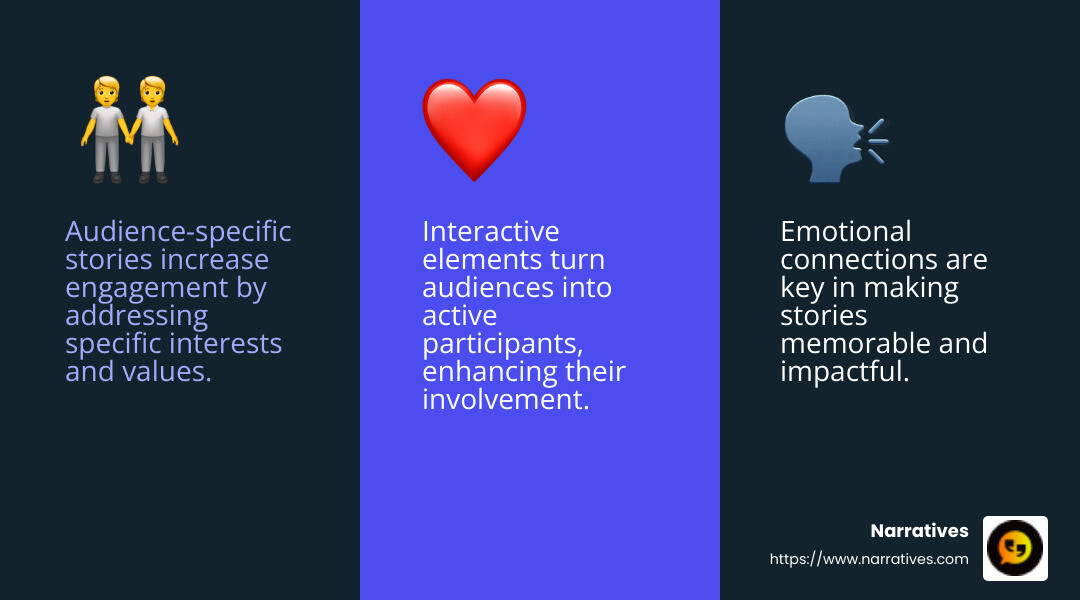
Understanding your audience is the first step to crafting a story that resonates. Tailor your narrative to their interests, values, and experiences. For example, if you're speaking to a group of environmentalists, highlight stories about conservation and sustainability.
Knowing your audience allows you to choose the right tone, language, and content. This makes your story relatable and impactful.
Emotional Connection
An emotional connection is the heart of engaging storytelling. By tapping into emotions, you create a bond between the audience and the story. Share stories that elicit emotions like joy, sadness, or hope.
Consider the impactful stories shared by nonprofits, where real-life testimonials from beneficiaries highlight the urgency of their cause. These stories aren't just about facts; they're about people and emotions, making them memorable and motivating.
Personal Stories
Personal stories add authenticity and depth to your narrative. They allow the audience to see the storyteller as a real person with genuine experiences.
Sharing personal anecdotes or experiences can make your story more relatable and trustworthy. For instance, a fundraiser sharing their personal connection to a cause can inspire others to contribute.
Interactive Elements
Incorporating interactive elements can transform a passive audience into active participants. This can be done through Q&A sessions, audience polls, or storytelling workshops.
Interactive storytelling encourages engagement and makes the experience more memorable. It allows the audience to contribute, ask questions, and feel involved in the narrative.
By focusing on these elements, you can create stories that not only capture attention but also leave a lasting impact. As we explore further, we'll dig into top techniques for crafting impactful narratives.
Top Techniques for Impactful Storytelling
Creating impactful stories is an art that involves several key techniques. Let's explore some of the most effective methods to ensure your storytelling captures and holds your audience's attention.
Immerse Your Audience
Immersing your audience means drawing them into your story. Use vivid descriptions, sensory details, and relatable characters to make your narrative come alive. Think of it like painting a picture with words. When the audience feels like they're part of the story, they're more likely to be engaged and emotionally involved.
For example, a storyteller might describe the busy streets of a city with the smell of fresh bread wafting from a nearby bakery, the sound of honking cars, and the warm sun on their skin. These details transport the audience into the scene, allowing them to experience it firsthand.
Create a Hero and an Enemy
Every great story needs a hero and an enemy. The hero is someone the audience can root for, while the enemy presents the obstacles they must overcome. This dynamic creates tension and interest.
Consider the classic hero's journey, where the protagonist faces challenges and grows along the way. This structure not only captivates the audience but also inspires them. They see the hero's resilience and can relate it to their own lives.
False Start
A false start is a storytelling technique that subverts expectations. It begins with a narrative direction that suddenly shifts, surprising the audience. This technique keeps the audience guessing and adds an element of surprise.
For instance, a story might begin with a character preparing for a long-awaited journey, only to have an unexpected event change their plans entirely. This twist piques curiosity and keeps the audience engaged, wondering what will happen next.
Demonstrate Through Action
"Show, don't tell" is a golden rule in storytelling. Instead of telling the audience how a character feels or what a situation is like, demonstrate it through action and dialogue.
For example, instead of saying "John was nervous," show John fidgeting with his tie, glancing at his watch, and taking deep breaths. These actions convey nervousness more vividly and allow the audience to infer emotions, making the story more engaging.
S.T.A.R. Moment
The S.T.A.R. moment—Something They'll Always Remember—is a powerful storytelling tool. It's a moment in the story that leaves a lasting impression on the audience. It could be a surprising twist, an emotional revelation, or a profound insight.
Creating a S.T.A.R. moment involves crafting a scene or message that resonates deeply with the audience. It's the part of the story they talk about long after it's over. For example, a nonprofit might share a moving testimonial from someone whose life was changed by their work, leaving a lasting impact on the audience.
By mastering these techniques, you can craft stories that not only captivate but also resonate deeply with your audience. Next, we'll address some frequently asked questions about impactful storytelling techniques.
Frequently Asked Questions about Impactful Storytelling Techniques
What are the key elements of a compelling story?
A compelling story revolves around three core elements: the central plot, key characters, and narrative perspective.
Central Plot: This is the backbone of your story. It's not just a series of events but a web of cause and effect that keeps the audience hooked. A strong plot stimulates curiosity and emotional engagement. It should make the audience feel like they're on a journey with the characters, sharing their struggles and triumphs.
Key Characters: Characters are the heart of your story. They should be relatable and multi-dimensional, with distinct traits and motivations. As they face challenges, their growth or decline draws the audience in. Characters that mirror real-life complexities help the audience connect emotionally and invest in the narrative.
Narrative Perspective: This is the lens through which the story is told. Whether it's a first-person, third-person, or even second-person perspective, each offers unique insights and tone. The right perspective can add depth, influence pacing, and highlight important themes.
How can storytelling be used in presentations?
Storytelling in presentations is a powerful way to engage your audience and leave a lasting impact. Here are key aspects to consider:
Story Structures: Use tried-and-tested structures like the hero's journey or the three-act structure to give your presentation a clear beginning, middle, and end. This helps maintain clarity and keeps the audience engaged.
Audience Engagement: Engage your audience by making them part of the story. Ask questions, use interactive elements, or share relatable anecdotes. This keeps the audience invested and attentive.
Emotional Resonance: Connect emotionally by sharing stories that evoke feelings. Whether it's a personal story or a case study, emotions are more memorable than data alone. For example, a nonprofit might use a personal testimonial to illustrate their impact, making the message more powerful.
Why is storytelling important for non-profits?
Storytelling is crucial for non-profits because it helps build connection, drive behavior change, and create community impact.
Connection: Stories humanize your mission. They help donors, volunteers, and stakeholders understand the real-world impact of their contributions. By sharing stories of those you serve, you create a personal connection that statistics alone can't achieve.
Behavior Change: A well-told story can inspire action. By illustrating the challenges and successes of your beneficiaries, you motivate others to support your cause. Stories can highlight the need for change and show how individuals can make a difference.
Community Impact: Stories foster a sense of community. They show the collective effort and shared values of those involved. By highlighting community success stories, you reinforce the positive impact of your organization and encourage more people to join your mission.
These elements and techniques make storytelling a powerful tool across various contexts. Next, we'll explore how these storytelling techniques can be applied to create meaningful narratives that resonate with audiences.
Conclusion
At Narratives, we're passionate about the transformative power of non-profit storytelling. It's not just about telling stories; it's about creating a deep, emotional connection that drives social impact and fosters community-driven change.
Non-profit storytelling is a powerful tool for organizations looking to make a difference. By sharing stories of real people and real challenges, we help bridge the gap between abstract causes and tangible human experiences. This connection is essential for inspiring action and building trust with your audience.
Social impact is at the heart of what we do. We believe that every story has the potential to change lives, and we work tirelessly to ensure that underrepresented voices are heard. Through high-quality, emotionally resonant video and multimedia content, we help non-profits showcase their impact in a way that inspires action and increases visibility.
Our approach is rooted in community-driven storytelling. We collaborate closely with our partners to understand their unique challenges and goals, crafting narratives that resonate with their audience and amplify their mission. By highlighting the collective effort and shared values of those involved, we create stories that not only inform but also engage and inspire.
At Narratives, we're committed to being the go-to digital storytelling partner for non-profits and purpose-driven organizations. We invite you to learn more about how we can help you share your impact stories in a way that builds lasting connections and drives meaningful change.
Together, let's harness the power of storytelling to make the world a better place.


.avif)