When Media Meets Justice: A Powerful Intersection
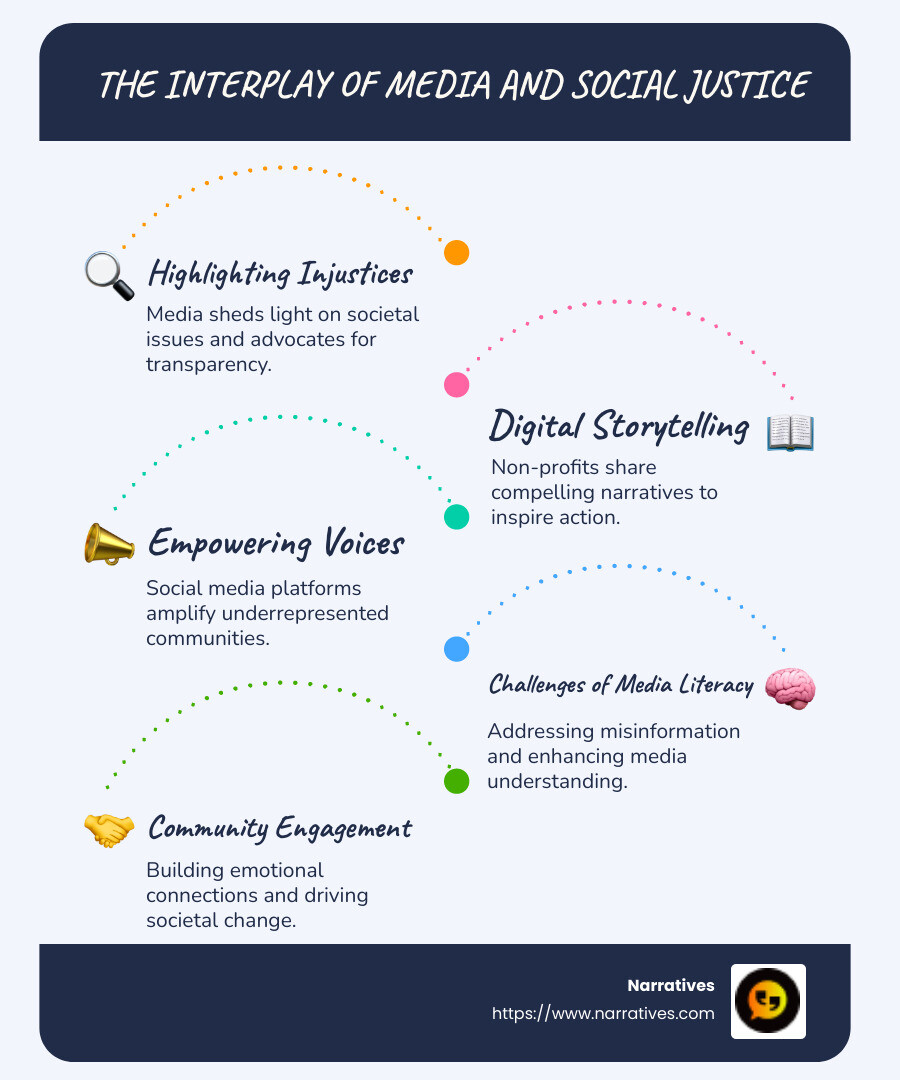
Media and social justice intersect in powerful ways, shaping narratives and driving change. This relationship is pivotal for non-profit organizations, social impact initiatives, and advocacy groups seeking to amplify their missions. By leveraging digital storytelling, these entities can reach wider audiences and foster meaningful engagement.
- Media plays a crucial role in highlighting injustices and promoting transparency, ultimately ensuring that power is held accountable.
- Non-profits use digital storytelling to transform complex issues into compelling narratives that inspire action and support.
- Social media platforms empower underrepresented voices, allowing for more inclusive dialogues on justice and equality.
- Challenges include media literacy and misinformation, which can hinder progress and dilute impactful messages.
This symbiotic relationship between media and social justice is further improved by digital tools, which offer innovative ways to document, share, and clarify social issues. For non-profits, this means an opportunity to connect emotionally with their audience, build community involvement, and drive actionable outcomes.
The Role of Media in Social Justice
Media serves as a powerful tool in the quest for justice. It shines a light on injustices, promotes transparency, and prevents abuses of power. Media's role has expanded, making it even more vital in the fight for social justice.
Shining Light on Injustices
Media acts as a watchdog, exposing wrongs that might otherwise remain hidden. For example, during the Indian Farmers' Protest, social media platforms became a lifeline for spreading awareness about the farmers' struggles. These platforms allowed accounts to reach a global audience, highlighting the farmers' plight and mobilizing support.

Promoting Transparency
Transparency is crucial for holding power accountable. Media outlets, through investigative journalism and citizen reporting, ensure that leaders and institutions remain open to public scrutiny. Pulitzer Prize-winning journalist Wesley Lowery emphasized the media's role in a multiracial democracy, urging outlets to reflect diverse voices and challenge the status quo.
"We have to think about the media as an institution with values." — Wesley Lowery
Preventing Abuses of Power
By consistently reporting on social justice issues, media can deter potential abuses of power. When media outlets cover stories like the Black Lives Matter movement, they not only inform the public but also put pressure on authorities to act justly.
In summary, media's ability to spotlight injustices, ensure transparency, and prevent power abuses makes it a cornerstone of social justice efforts. This vital role continues to evolve with digital advancements, offering new ways to engage and inform the public.
Media and Social Justice: A Symbiotic Relationship
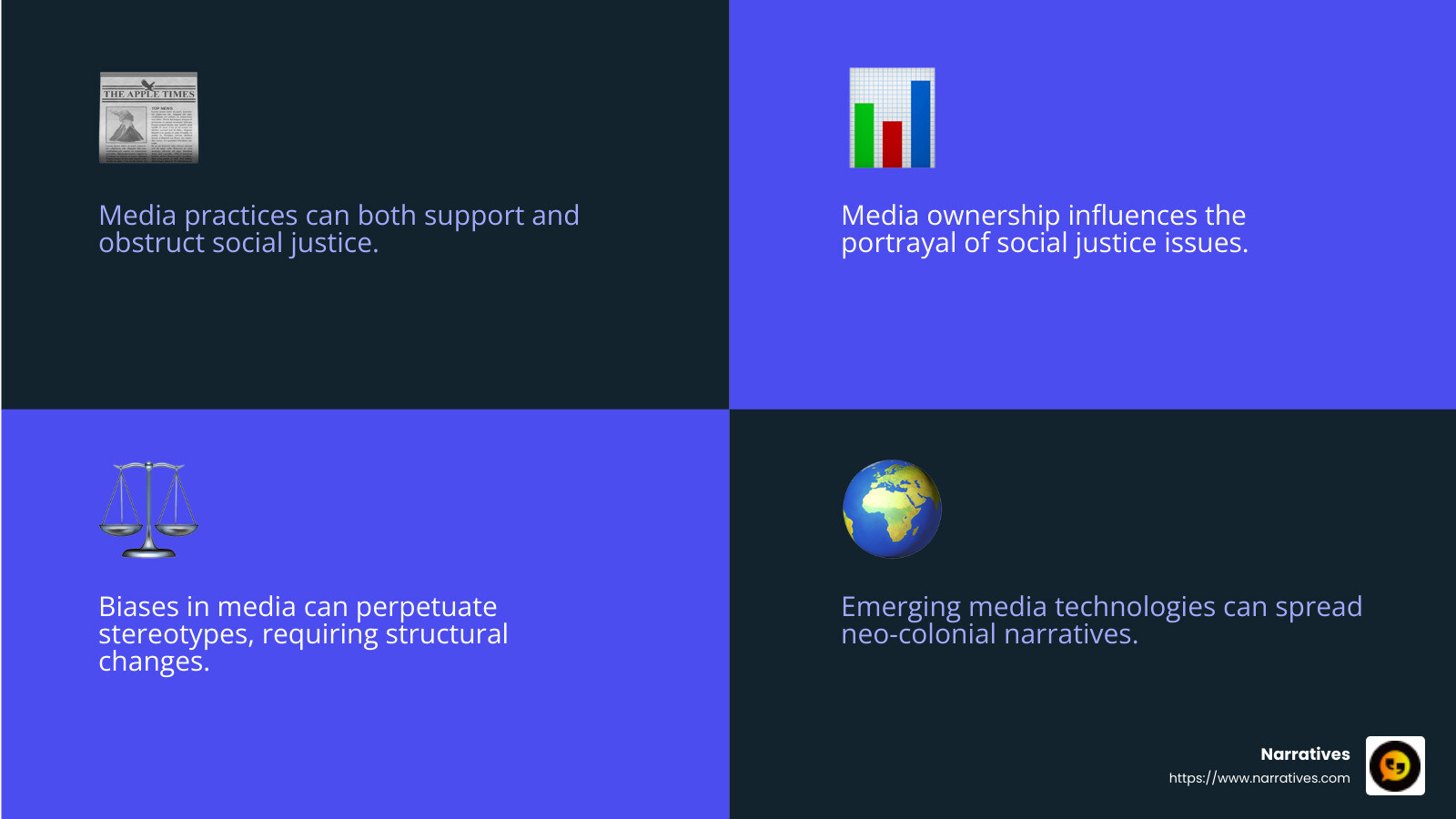
The relationship between media and social justice is complex and intertwined. At the heart of this connection are media practices that can both support and obstruct social justice efforts.
Media Practices and Risks to Social Justice
Media practices encompass everything from the way news is reported to who owns the media outlets. These practices can influence social justice positively or negatively. For example, Alicia Bell, Director of the Racial Equity in Journalism Fund, highlighted historical biases in the American press, noting how early newspapers perpetuated harmful stereotypes about Black people. This underscores the need for media reparations and structural changes to foster a truly multiracial democracy.
On the flip side, media can sometimes hinder social justice. Alison Hearn pointed out that emerging technologies like FinTech, often seen as media platforms, can perpetuate neo-colonial narratives. Companies like JUMO, which serve the "unbanked" in the Global South, may inadvertently spread harmful stereotypes by characterizing their customers as uninformed or "cognitively-impaired."
Insights from the Symposium
The recent symposium at the Annenberg School for Communication digd deep into these issues. Co-organized by the Center for Media at Risk and the Annenberg Center for Collaborative Communication, it explored how media can both advance and impede social justice.
Wesley Lowery's keynote address posed a critical question: "What’s the role of the press in a multiracial democracy?" He emphasized the necessity for media outlets to reckon with their past and commit to diverse representation. This aligns with the symposium's focus on media's role in shaping social justice, highlighting the need for media institutions to uphold values that support a multicultural society.
In summary, the symposium underscored the dual role of media as both a potential ally and adversary in the quest for social justice. By understanding and addressing the risks inherent in media practices, society can better harness the power of media to support equitable change.
This section sets the stage for discussing the impact of social media on social justice movements, exploring how platforms like Twitter and Facebook have become pivotal in organizing and amplifying voices for change.
The Impact of Social Media on Social Justice Movements
Social media has transformed how social justice movements gain traction and influence. Platforms like Twitter, Facebook, and Instagram have provided activists with tools to amplify their voices and organize on a massive scale.
Social Media Influence
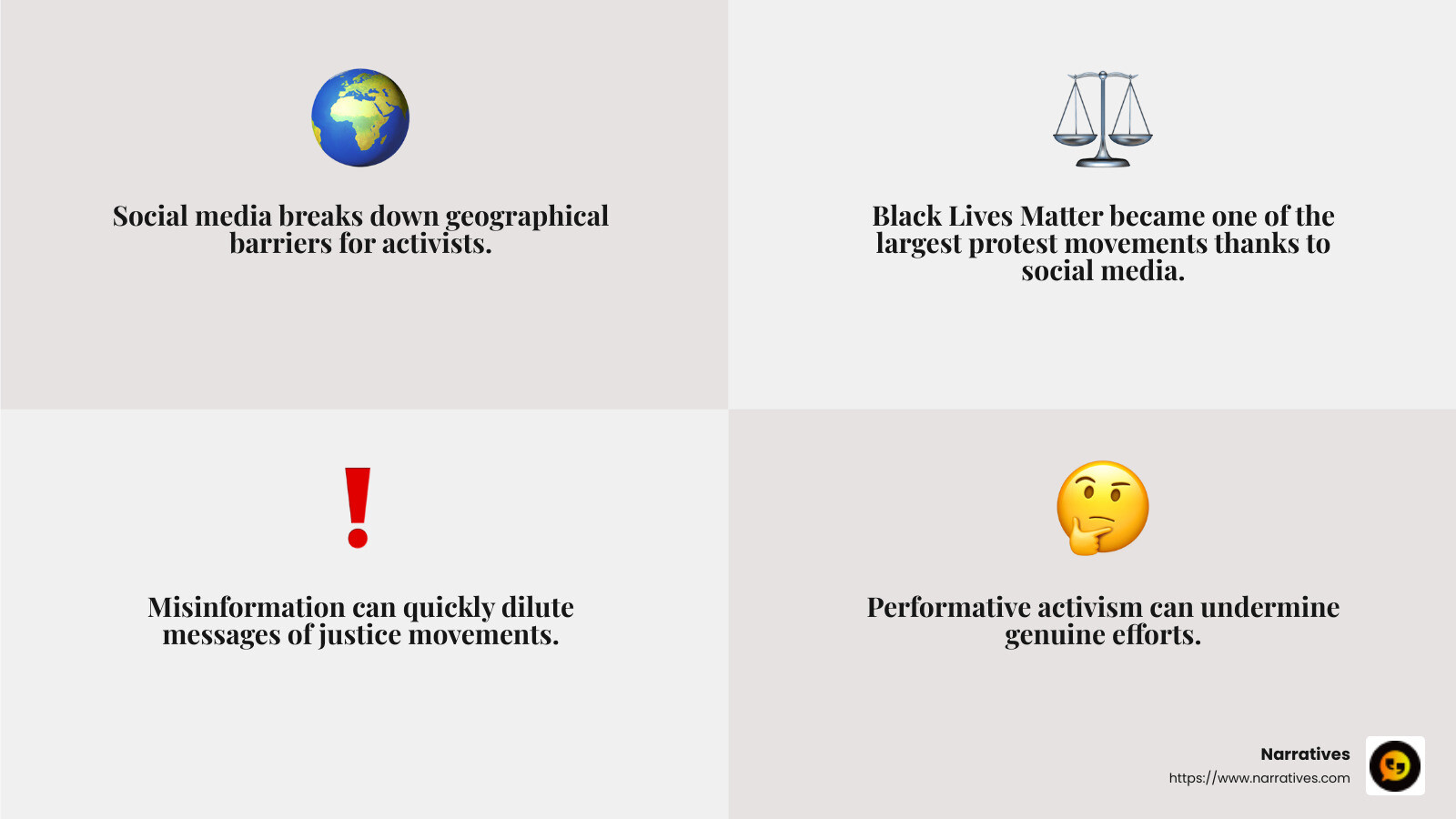
Social media's impact is undeniable. It allows activists to reach global audiences instantly, breaking down geographical barriers. Movements can gain support and momentum quickly, as seen with the Black Lives Matter (BLM) movement. BLM became one of the largest protest movements in U.S. history, largely due to social media. Activists used hashtags, videos, and posts to share stories and mobilize supporters.
However, the influence of social media is a double-edged sword. While it can spread messages rapidly, it also risks spreading misinformation just as quickly. This can dilute the movement's message and distract from its core goals.
Black Lives Matter: A Case Study
The Black Lives Matter movement is a prime example of how social media can drive social justice. The hashtag #BlackLivesMatter became a rallying cry, uniting millions across the globe. Social media allowed people to share personal stories and document instances of racial injustice, often in real time.
Yet, social media's role in BLM is not without challenges. Some critics argue that the movement's online presence sometimes leads to performative activism. This is when individuals or organizations publicly support a cause to gain social capital, rather than to achieve real change.
Performative Activism
Performative activism is a significant concern in social justice movements. When people or brands engage in activism for appearances, it can undermine genuine efforts. This phenomenon was evident during the height of BLM protests. Many companies and celebrities posted black squares on Instagram as a sign of solidarity. However, without further action or commitment to the cause, these gestures can seem hollow.
Social media's power lies in its ability to connect and inform, but it also requires users to engage critically. Movements must steer the fine line between raising awareness and ensuring that online activism translates into real-world change.
In conclusion, social media has reshaped the landscape of social justice activism. It offers unprecedented opportunities for visibility and organization, but also poses challenges like misinformation and performative activism. Understanding these dynamics is crucial for leveraging social media effectively in the fight for justice.
Challenges and Opportunities in Media for Social Justice
Navigating media and social justice is like walking a tightrope. On one side, there are incredible opportunities to make a difference. On the other, there are pitfalls that can undermine those efforts. Let's explore the key challenges and opportunities media presents in the field of social justice.
Media Literacy Issues
Understanding media is more important than ever. Media literacy involves the ability to access, analyze, evaluate, and create media in various forms. But many people struggle with this. When individuals lack media literacy, they're more likely to fall for misinformation.
For example, the symposium at Annenberg highlighted how media practices can sometimes thwart social justice. When media outlets don't provide diverse perspectives, it reinforces existing biases. It's crucial for media consumers to question and critically evaluate the information they receive. This ensures that they are not misled by biased or incomplete narratives.
Misinformation
Misinformation spreads like wildfire, especially on social media. It can distort facts and shift public perception away from the truth. During the Black Lives Matter movement, misinformation often diluted the core message. False narratives can arise quickly, leading to confusion and division.
Alicia Bell, from Borealis Philanthropy, emphasized the importance of media reparations to counteract these issues. By implementing structural changes, media can better serve a multiracial democracy. This involves correcting historical biases and ensuring accurate representation of marginalized communities.
Grassroots Journalism
Grassroots journalism offers a guide of hope. It involves ordinary people reporting on issues they care about, often from their own communities. This form of journalism can bypass traditional media gatekeepers, giving voice to those who are often unheard.
For instance, grassroots journalists played a significant role in the Dalit Lives Matter movement in India. They shared stories and highlighted caste-based discrimination that mainstream media often overlooked. Although the movement faced challenges, like limited engagement and misinformation, grassroots efforts were pivotal in bringing attention to the cause.
Grassroots journalism empowers communities to tell their own stories. It challenges the status quo and demands accountability from those in power. By fostering media literacy and supporting grassroots initiatives, we can harness the power of media to advance social justice.
In summary, the intersection of media and social justice presents both challenges and opportunities. By addressing media literacy issues, combating misinformation, and supporting grassroots journalism, we can work towards a more just and informed society.
Frequently Asked Questions about Media and Social Justice
How does media contribute to social justice?
Media plays a crucial role in advancing social justice by shining a light on injustices and promoting transparency. It allows marginalized voices to be heard and holds those in power accountable. For instance, during the Black Lives Matter movement, social media platforms helped amplify the voices of those seeking change. By providing a platform for citizen journalism, media enables individuals to report accounts of events and injustices that traditional outlets might overlook.
Moreover, media can educate the public about social justice issues, fostering empathy and understanding. This can lead to increased awareness and action among individuals who might not have been exposed to these issues otherwise.
What are the risks of media manipulation in social justice?
While media can be a powerful tool for social justice, it also carries risks of manipulation. Misinformation is a significant concern, especially on social media platforms where false narratives can spread rapidly. This can distort public perception and undermine genuine social justice efforts.
For example, during the Indian Farmers' Protest, misinformation campaigns attempted to discredit the movement's objectives. Such manipulation can create confusion and erode trust in legitimate causes.
Additionally, media outlets with biased reporting can reinforce existing stereotypes and biases. This highlights the importance of media literacy, allowing consumers to critically assess the information they receive and distinguish between fact and fiction.
How can social media be used effectively for social justice?
Social media can be a powerful catalyst for social justice when used effectively. Here are some ways to harness its potential:
Amplify Marginalized Voices: Social media provides a platform for those who might not have access to traditional media outlets. By sharing stories and experiences, individuals can raise awareness about issues affecting their communities.
Facilitate Grassroots Movements: Platforms like Twitter and Instagram have been instrumental in organizing and promoting grassroots movements. They allow activists to mobilize quickly and reach a global audience.
Combat Misinformation: Users can counteract false narratives by sharing accurate information and fact-checking claims. This helps maintain the integrity of social justice causes and prevents the spread of disinformation.
Encourage Engagement: Social media encourages dialogue and engagement, allowing individuals to discuss issues and propose solutions. This can lead to a more informed and active community.
By understanding these strategies, social media can be a force for positive change in the pursuit of social justice.
Conclusion
At Narratives, we believe in the power of media and social justice to create meaningful change. Our mission is to empower underrepresented voices through community-driven storytelling. By partnering with non-profits and purpose-driven organizations, we lift stories that might otherwise go unheard.
Empowering Underrepresented Voices
When certain narratives dominate, it's crucial to uplift those that are often overlooked. We provide a platform for underrepresented storytellers to share their experiences and insights. By doing so, we foster empathy and understanding, encouraging audiences to engage with diverse perspectives.
Community-Driven Storytelling
Our approach centers on community-driven storytelling. We collaborate with organizations to highlight the challenges and triumphs within their communities. This not only increases visibility but also builds trust and inspires action. Through high-quality, emotionally resonant content, we help non-profits showcase their impact and connect with supporters.
By focusing on these core principles, we aim to make a lasting impact in the field of media and social justice. Our commitment to authentic storytelling ensures that every voice is heard, and every story is told with integrity and respect.
Join us in this mission. Find how we can help your organization share its story and drive social change. Learn more about our media services.


.avif)