Trust in Action: The Power of Mission-Driven Content Marketing

Mission-driven content marketing is a transformative approach that aligns a brand's marketing efforts with its core purpose. It goes beyond just selling products or services by connecting with audiences on a much deeper, value-driven level. But what exactly does this concept entail for organizations aiming to make a real impact?
What is Mission-driven content marketing? It's a marketing strategy that incorporates a brand's mission and values into every piece of content. This approach ensures that the messaging authentically reflects what the organization stands for.
Why is it important? In an era where consumers seek more than just transactions, purpose-driven strategies help in building trust and fostering genuine connections with audiences. These strategies enable organizations to not only promote their offerings but also to contribute meaningfully to societal issues.
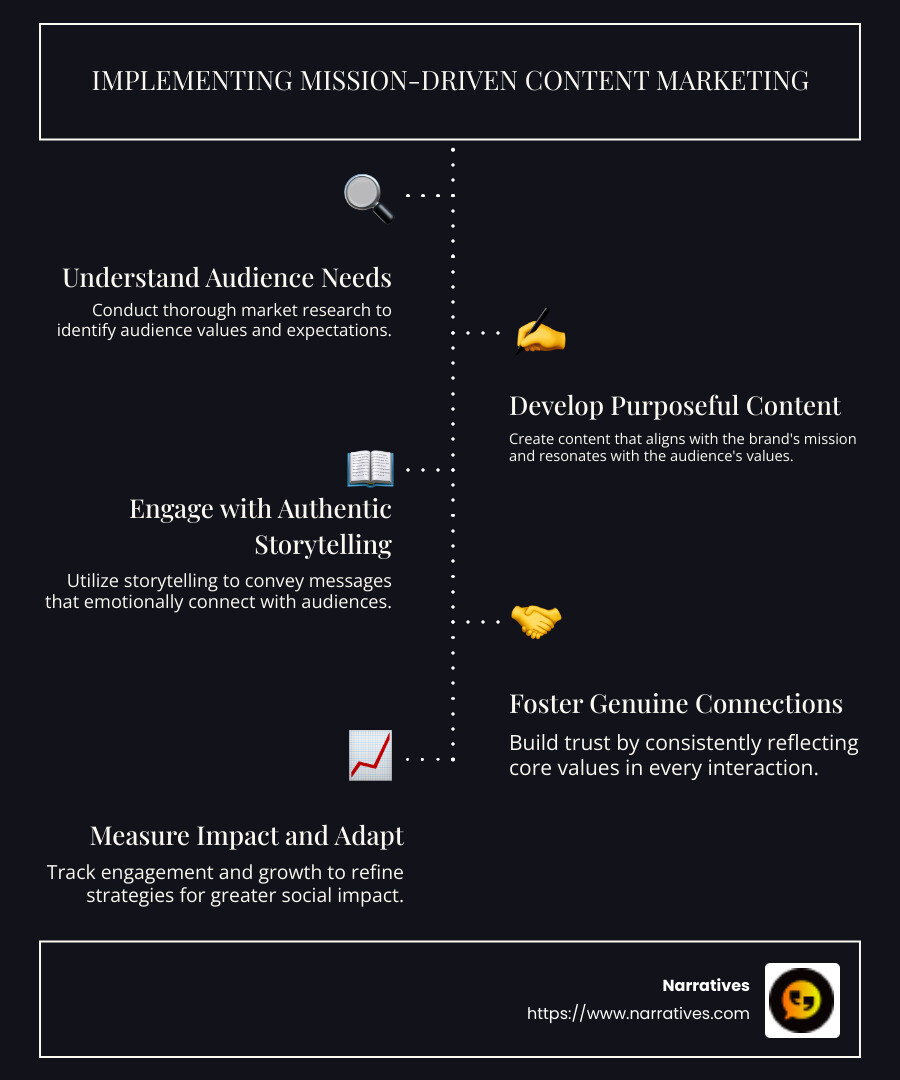
How is it implemented? By understanding your audience's needs, creating purposeful content, and engaging in authentic storytelling. These elements combined create a comprehensive strategy that both informs and inspires, leading to positive social change and increased brand loyalty.
Mission-driven marketing is not just about the brand's mission being stated; it needs to be lived and exemplified through actions and messaging. As the saying goes, “stories sell, leave an impression, lead to impacts and outcomes.” This axiom serves as a cornerstone for brands aiming to resonate in today's socially conscious marketplace.
Important Mission-driven content marketing terms:
Understanding Mission-Driven Content Marketing
Mission-driven content marketing is about more than just promoting products or services. It's about aligning your content with your brand's core values. This alignment creates a powerful connection with your audience, fostering trust and emotional investment.
Core Values
At the heart of mission-driven content marketing are your core values. These values define what your brand stands for and guide every piece of content you create. A clear mission statement is essential. It acts like a guide, ensuring that your content consistently reflects your brand's purpose and values.
Consider Patagonia, a company that weaves its mission of environmental activism into its content. They share stories of people who work to improve the planet, resonating deeply with their audience. 
Audience Engagement
Knowing your audience is key. It's not just about demographics; it's about understanding what they care about. When your content reflects your audience's values, it becomes more engaging. Patagonia knows that their customers are passionate about the environment, and their content reflects this, creating a strong emotional bond.
How to engage your audience:
- Listen to what your audience is saying on social media.
- Research their interests and challenges.
- Create content that speaks directly to their values and needs.
Emotional Investment
When your audience feels that your brand shares their values, they are more likely to invest emotionally. This emotional connection is powerful. It turns customers into advocates and helps build a community around your brand.
For example, Patagonia's content doesn’t just talk about their products; it tells stories that inspire and motivate their audience to take action for the environment. This approach not only strengthens their brand but also creates a loyal customer base that feels part of a larger mission.
In summary, mission-driven content marketing is about connecting with your audience on a deeper level. By aligning your content with your core values and understanding your audience, you can foster genuine engagement and emotional investment. This strategy not only improves your brand's image but also contributes to meaningful social change.
Next, we'll explore how to craft a compelling mission statement that resonates with your audience and sets the foundation for successful mission-driven content marketing.
Crafting a Compelling Mission Statement
Creating a mission statement is like setting the compass for your brand's journey. It guides every decision and action, ensuring alignment with your core values and audience expectations. Let's break down what makes a mission statement truly compelling.
Clarity
A clear mission statement is straightforward and easy to understand. It should convey your brand's purpose without any jargon or ambiguity. Think of it as a simple statement that anyone can grasp immediately.
For example, AARP's mission is to "champion positive social change that will improve the quality of life for all as we age." This statement is concise and leaves no room for misinterpretation.
Key Points for Clarity:
- Use simple language.
- Keep it short and to the point.
- Avoid industry jargon.
Emotional Connection
A mission statement should resonate with your audience on an emotional level. It needs to reflect not just what you do, but why you do it, tapping into the values and emotions of your audience.
Consider the mission of Texas A&M: "To develop leaders of character dedicated to serving the greater good." This statement connects with the audience emotionally by emphasizing character and service.
How to Create Emotional Connection:
- Focus on the "why" of your brand.
- Use emotionally charged words.
- Align with the values of your audience.
Differentiation
Your mission statement should set your brand apart from the competition. It should highlight what makes your brand unique and why your audience should care.
Motorola Solutions, for instance, uses the mission statement: "Helping people be better in the moments that matter." This statement differentiates them by focusing on the impact of their products on critical moments.
Tips for Differentiation:
- Highlight your unique value proposition.
- Emphasize what makes your brand special.
- Show how you solve unique challenges for your audience.
In conclusion, a compelling mission statement combines clarity, emotional connection, and differentiation. It serves as the foundation for mission-driven content marketing, ensuring that every piece of content aligns with your brand's purpose and resonates with your audience.
Next, we'll dive into the steps to implement mission-driven content marketing effectively.
Steps to Implement Mission-Driven Content Marketing
Implementing mission-driven content marketing involves a strategic approach that starts with understanding your audience and crafting content that resonates with them. Here are the key steps:
Market Research
Before creating any content, it's crucial to understand your audience. This involves both qualitative and quantitative research.
Qualitative Research: Conduct interviews and surveys to gather insights into your audience's values, motivations, and challenges. This helps in understanding not just who they are, but what drives them.
Quantitative Research: Analyze demographic data and market trends. Use resources like Pew Polls or Nielsen reports to get a broader view of your audience.
By combining these insights, you can create a detailed picture of your target market, ensuring that your content is relevant and engaging.
Develop Customer Personas
Once you have a clear understanding of your market, it's time to develop customer personas. These personas are fictional characters that represent your ideal customers.
Values and Motivations: Identify what your audience cares about and what motivates them. This helps in crafting messages that resonate on a deeper level.
Challenges and Pain Points: Understand the problems your audience faces. Addressing these challenges in your content can build trust and credibility.
Creating customer personas allows you to tailor your content to meet the specific needs and desires of your audience, leading to more effective engagement.
Create Purposeful Content
With a clear understanding of your audience, you can now focus on creating content that aligns with your mission and resonates with your audience.
Align with Your Mission: Ensure that every piece of content reflects your brand's mission. This creates a consistent message that reinforces your brand's values.
Craft Compelling Narratives: Use storytelling to connect emotionally with your audience. Share stories that highlight how your brand's mission impacts the community or the world.
Inspire Action: Encourage your audience to take action that aligns with your mission. Whether it's volunteering, donating, or simply spreading awareness, your content should inspire meaningful engagement.
By focusing on these steps, you can implement a mission-driven content marketing strategy that not only promotes your brand but also fosters a genuine connection with your audience. This approach not only drives engagement but also builds long-term trust.
Next, we'll explore how storytelling can improve your mission-driven content marketing efforts.
Leveraging Storytelling in Mission-Driven Content Marketing
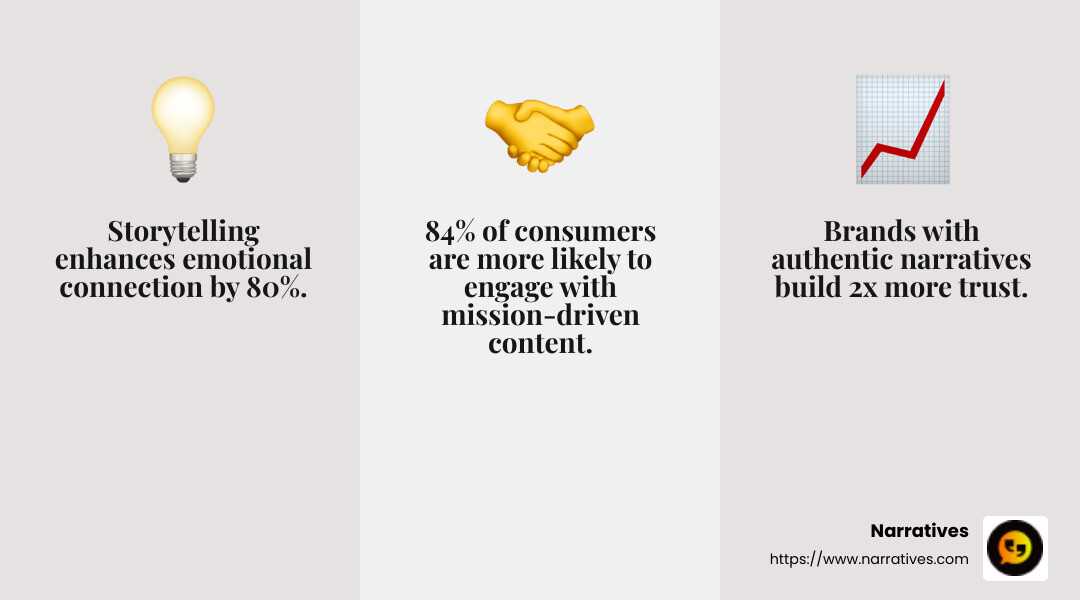
Storytelling is a powerful tool in mission-driven content marketing. It helps create authentic narratives that resonate emotionally with your audience. This connection is vital for building trust and loyalty.
Authentic Narratives
To create authentic narratives, start by highlighting real stories and experiences. Share the journey of your brand, the challenges faced, and the impact made. For example, Patagonia often shares stories of environmental activism, not just to promote their products, but to illustrate their commitment to sustainability.
Pro tip: Use real customer stories or testimonials. These stories can serve as powerful endorsements and make your mission more relatable.
Emotional Resonance
Emotional resonance is about making your audience feel something. When people connect emotionally, they are more likely to remember your brand and engage with it. Use storytelling to evoke emotions that align with your brand's mission.
- Inspire: Share stories of change and change. Highlight how your brand's efforts have made a difference.
- Empathize: Address your audience's pain points and show understanding. Use narratives that reflect their challenges and aspirations.
Audience Connection
Connecting with your audience means understanding their values and interests. Tailor your stories to reflect these elements.
Know Your Audience: Use the customer personas you've developed to guide your storytelling. This ensures your narratives are relevant and engaging.
Interactive Content: Encourage your audience to share their own stories related to your mission. This not only builds community but also provides fresh content ideas.
Consistency: Keep your storytelling consistent across all platforms. Whether it's a blog post, social media update, or video, ensure your message aligns with your brand's mission.
By leveraging storytelling, you can improve your mission-driven content marketing efforts. Authentic narratives create emotional resonance and foster a deeper connection with your audience. This approach not only engages but also builds a community around your brand's mission.
Next, let's dive into some frequently asked questions about mission-driven content marketing.
Frequently Asked Questions about Mission-Driven Content Marketing
How does mission-driven content marketing build trust?
Mission-driven content marketing builds trust by clearly aligning a brand's actions with its stated values. When a company consistently demonstrates its commitment to its mission through its content, audiences see authenticity in action. For example, Patagonia doesn't just talk about environmental responsibility; it actively promotes sustainable practices and encourages customers to repair rather than replace their gear. This consistency in messaging and action helps consumers trust that the brand genuinely cares about its mission, not just profits.
Moreover, sharing real stories and experiences—such as those of individuals positively impacted by the brand's mission—further solidifies this trust. Authentic narratives that showcase real change and relatable experiences make the mission tangible, reinforcing the brand's credibility.
What are the key elements of a mission-driven content strategy?
A successful mission-driven content strategy comprises several key elements:
Clear Mission Statement: Your mission must be clear, compelling, and directly tied to your products or services. It should outline your purpose and whom you aim to serve.
Audience Understanding: Go beyond demographics to understand what your audience truly values and cares about. This insight allows you to tailor your content to resonate with their interests and needs.
Consistent Messaging: Ensure all content consistently reflects your brand's mission. This consistency across all platforms builds a cohesive brand identity and reinforces trust.
Engaging Content: Create content that not only informs but also engages and inspires your audience. Use storytelling to evoke emotions and create a connection with your audience.
Authenticity: Be genuine in your messaging. Use real stories and testimonials to illustrate your mission in action.
How can storytelling improve mission-driven content marketing?
Storytelling improves mission-driven content marketing by making your mission relatable and memorable. Authentic stories create emotional connections, which are crucial for audience engagement.
Relatability: By sharing stories of real people and experiences, you make your mission more relatable. Audiences are more likely to connect with a story than a sales pitch.
Emotional Impact: Stories that evoke emotions—whether inspiring, empathetic, or motivational—are more likely to be remembered and shared. This emotional resonance encourages deeper engagement with your brand.
Community Building: Encourage your audience to share their own stories related to your mission. This not only provides new content ideas but also fosters a sense of community and involvement.
Incorporating storytelling into your mission-driven content strategy not only improves engagement but also strengthens the trust and loyalty of your audience. By making your mission come alive through stories, you create a meaningful connection that goes beyond mere transactions.
Next, we'll explore how Narratives collaborates with non-profits to amplify social impact through mission-driven marketing.
Conclusion
At Narratives, we believe in the power of mission-driven content marketing to create real social impact. By partnering with non-profits and purpose-driven organizations, we amplify their stories and bring their missions to life through compelling video and multimedia content. This approach not only lifts underrepresented voices but also builds trust and inspires action.
Non-Profit Partnerships
Our collaborations with non-profits are rooted in a shared commitment to making a difference. We focus on crafting narratives that highlight the positive changes these organizations bring to their communities. By doing so, we help them connect more deeply with their audiences and increase their visibility. This partnership is about more than just storytelling; it's about building a community of supporters who are inspired to contribute to the cause.
Social Impact
The impact of mission-driven content goes beyond brand awareness. It's about fostering a genuine connection between organizations and their audiences. Through authentic storytelling, we showcase the real-world implications of a non-profit's work, encouraging others to get involved. This not only strengthens the organization's mission but also contributes to a larger movement for social change.
By focusing on mission-driven content marketing, we help non-profits tell their stories in a way that resonates emotionally and inspires action. If you're looking to lift your organization's impact through powerful storytelling, explore our media services and see how we can help bring your mission to life.
In conclusion, mission-driven content marketing is not just a strategy—it's a commitment to authenticity and social responsibility. At Narratives, we are proud to support organizations that strive for positive change, and we're excited to continue partnering with those who share our vision for a better world.


.png)