Crafting Connections: Non-Profit Communication Techniques

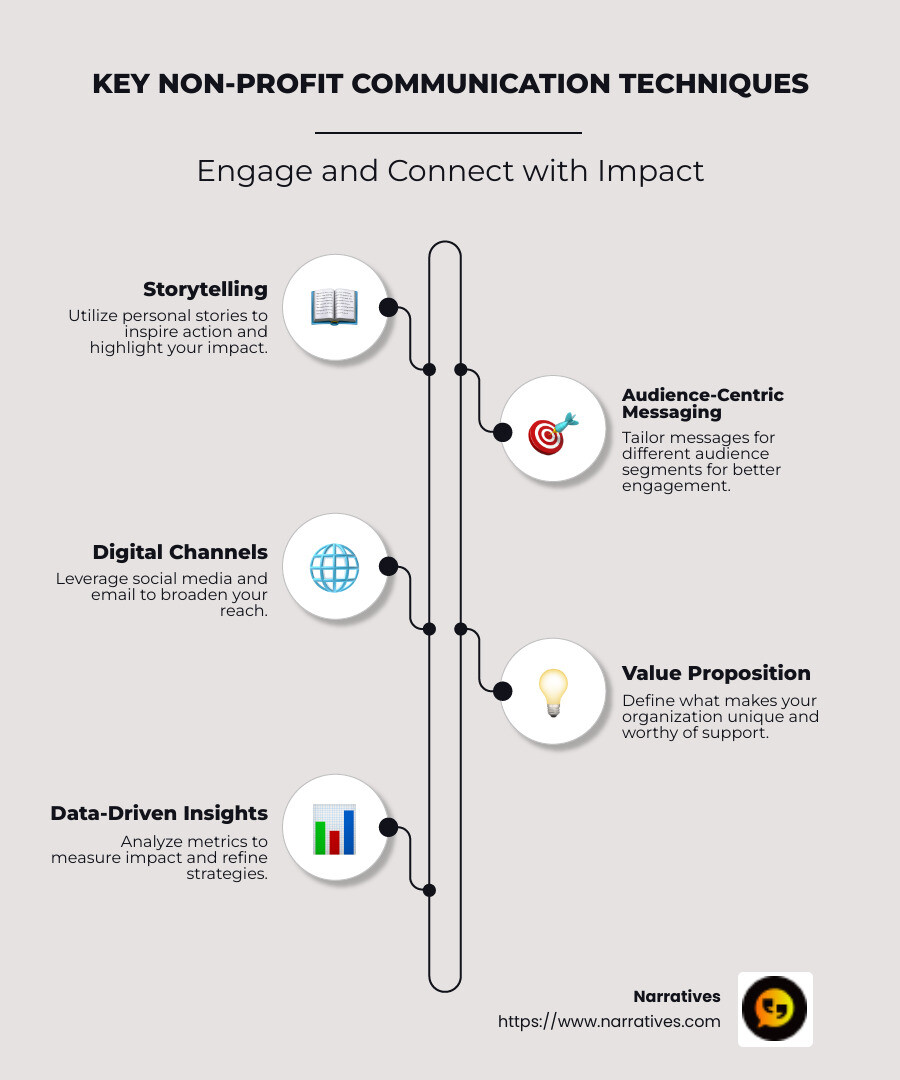
Non-profit communication techniques are essential for organizations looking to connect deeply with their communities and amplify their mission through storytelling. Effective communication in non-profits involves engaging storytelling, clear messaging, and connecting with diverse audiences. Here are the key techniques for success:
- Storytelling: Leverage personal stories to highlight the impact of your work and inspire action.
- Audience-centric messaging: Tailor your communication to different segments for maximum engagement.
- Digital channels: Use social media and email to reach and connect with broader audiences.
- Value proposition: Clearly define what makes your organization unique and why stakeholders should support it.
- Data-driven insights: Measure your communication efforts to understand impact and refine strategies.
Incorporating storytelling into your non-profit communication not only humanizes your cause but also builds trust and connection, making it easier for audiences to resonate with your mission. As George Bernard Shaw wisely stated, effective communication bridges not just the message but also the understanding and empathy between a non-profit and its stakeholders.
Learn more about Non-profit communication techniques:
Understanding Non-Profit Communication Techniques
Effective non-profit communication techniques start with a solid communication strategy. This strategy is your roadmap for reaching your goals and should be custom to your organization's unique mission and audience. Here's how to get started:
Crafting a Communication Strategy
A well-defined communication strategy is more than just sending out messages. It's about creating a plan that fosters real connections with your stakeholders. Begin by setting clear objectives. What do you want to achieve? Whether it's raising awareness, increasing donations, or recruiting volunteers, your goals will guide your strategy.
Once you have your goals, identify the key messages that align with these objectives. Ensure that your messages are consistent across all platforms and resonate with your audience.
Knowing Your Target Audience
Understanding your audience is crucial for effective communication. Tailor your messages to fit the needs and preferences of different segments of your audience. For instance, older donors might prefer direct mail, while younger supporters may engage more through social media.
Create audience personas to help visualize who you're communicating with. Consider factors like age, interests, and communication preferences. This will help you craft messages that speak directly to their motivations and concerns.
Storytelling as a Powerful Tool
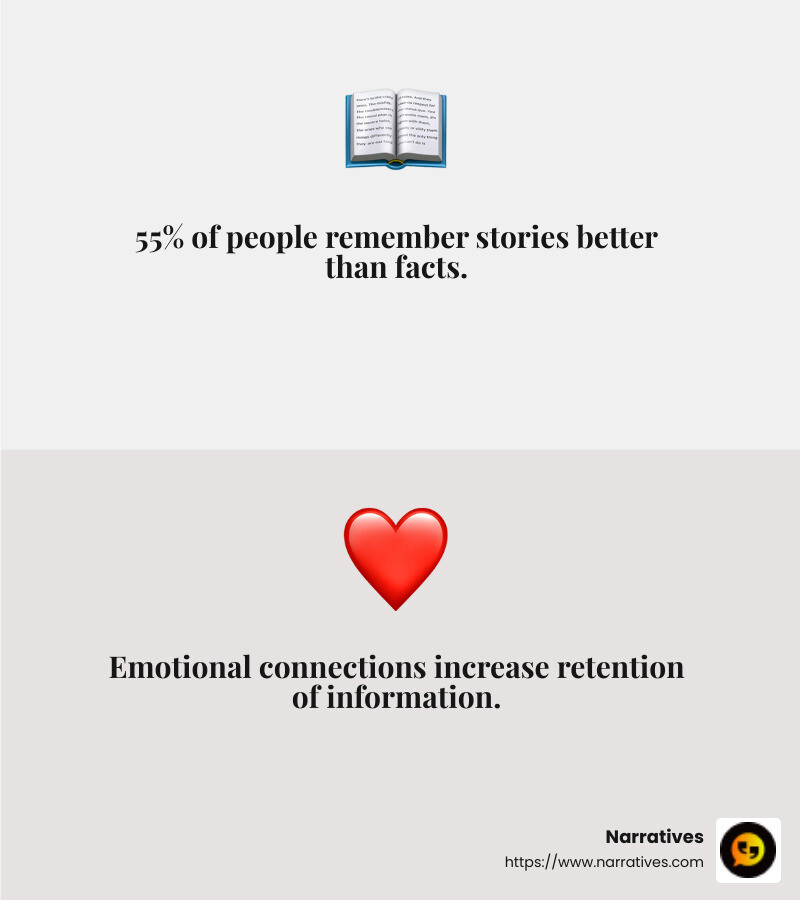
Storytelling is at the heart of non-profit communication. It’s a way to connect emotionally with your audience and make your mission memorable. People are more likely to remember a compelling story than a list of facts.
Consider these three R's of storytelling:
- Resonance: Make sure your stories resonate emotionally with your audience.
- Relevance: Clearly show how your audience plays a role in the story.
- Respect: Respect the dignity of those whose stories you tell, and avoid using negative emotions to manipulate your audience.
For example, an animal shelter might share a story about a family who adopted a pet, highlighting the joy and companionship the pet brought into their lives. This not only showcases the shelter's impact but also encourages others to adopt.
By focusing on these key areas—strategy, audience understanding, and storytelling—you can craft communication that not only informs but also inspires action.
Next, we'll explore how to build an effective communication strategy that aligns with these principles.
Building an Effective Communication Strategy
Creating a successful communication strategy for a nonprofit is like laying down the foundation for a strong building. This strategy should be adaptable, measurable, and aligned with your organization's mission and goals. Here’s how you can construct an effective plan:
Define Objectives
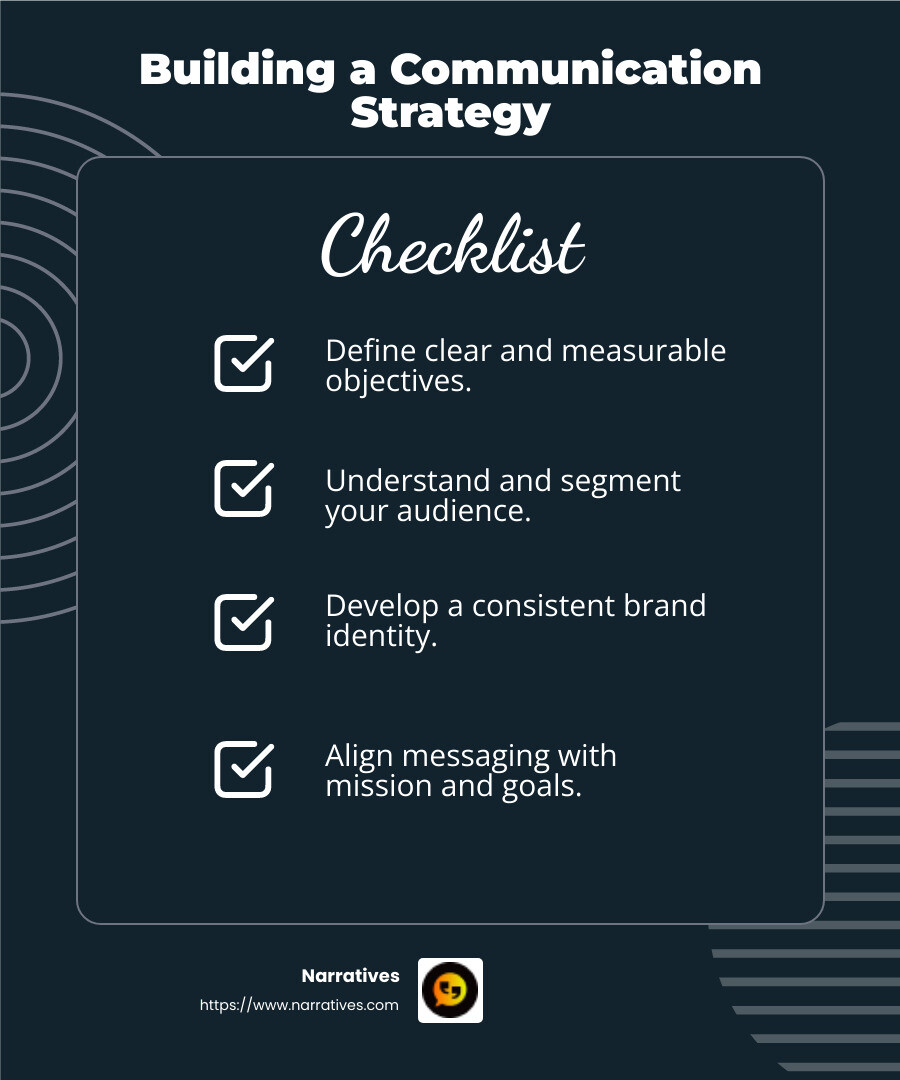
Start with the end in mind. Clearly define what you want to achieve with your communication efforts. Are you aiming to raise awareness, increase funding, or engage more volunteers? Setting specific and measurable objectives will give you a clear direction.
For example, instead of saying, "We want more donors," aim for, "We want to increase our donor base by 20% within the next year." This makes it easier to track progress and adjust strategies as needed.
Know Your Audience
Understanding your audience is key to effective communication. You need to know who they are, what they care about, and how they prefer to receive information.
Create detailed audience personas by considering factors like age, location, interests, and communication preferences. For instance, younger audiences might engage more with social media, while older supporters might prefer newsletters or direct mail.
Knowing your audience helps you tailor your messages to their needs and interests, making them more likely to support your cause.
Create and Communicate Your Identity
Your organization's identity is your story, mission, and values all wrapped up into one. It’s what sets you apart and connects you to your audience. Clearly communicate who you are and what you stand for in all your messaging.
Develop a consistent brand voice and visual identity that reflects your mission. Use this across all platforms to build recognition and trust.
Consider creating a tagline or mission statement that encapsulates your organization's purpose. This can be a powerful tool in all your communications, helping to reinforce your identity and mission in the minds of your audience.
By defining clear objectives, understanding your audience, and creating a strong identity, you lay the groundwork for a communication strategy that not only informs but inspires action.
Next, we will dig into the art of storytelling and how it can be a core technique in your communication efforts.
Storytelling as a Core Technique
Storytelling is more than just a buzzword in nonprofit communication. It's a powerful tool that helps forge emotional connections and drive action. Let's explore why storytelling should be at the heart of your communication strategy.
Emotional Connection
Stories have the unique ability to evoke emotions. When you tell a story, you invite your audience to feel something — be it hope, empathy, or urgency. This emotional connection is crucial because it transforms passive listeners into active participants.
Consider the example of a food bank sharing a volunteer's journey. Hearing about the personal impact of their work can move others to volunteer or donate. It's not just about stating facts or figures; it's about making people feel the difference they can make.
Impact Stories
Impact stories showcase real-life examples of your organization's work. They highlight the tangible changes that your efforts bring about, making your mission relatable and urgent.
For instance, a university might share a student's success story, illustrating how scholarships funded by donations have changed their life. This not only shows the direct impact of donations but also encourages further support by demonstrating real-world results.
Crafting Your Story
To craft compelling stories, start with what you already have. Gather anecdotes from your staff, volunteers, and those you serve. Ensure these stories are authentic and respectful, focusing on the strengths of the individuals involved.
Ask permission to share personal stories and images, and let those involved review the content. This approach builds trust and ensures that your storytelling is both ethical and impactful.
Diverse Perspectives
Aim to collect stories from a broad range of voices. This diversity allows you to paint a complete picture of the communities you serve and appeal to varied audiences. Whether it's a pet adoption story from an animal shelter or a cultural integration success from a nonprofit like Pars Equality Center, diverse stories enrich your narrative mix.
The Power of Visuals
Don't underestimate the power of visuals. Pair your stories with strong images or videos to improve their impact. A well-placed photo can convey emotion and context that words alone might not capture.
Incorporating storytelling into your communication strategy can transform how your audience perceives and interacts with your organization. Next, we'll explore how digital channels can amplify these stories and connect you with a wider audience.
Utilizing Digital Channels for Communication
Digital channels are essential tools for nonprofits to spread their stories and connect with audiences. Let's explore how social media, email marketing, and content creation can improve your communication efforts.
Social Media
Social media platforms are powerful for nonprofits because they allow for real-time interaction and sharing. Facebook, Instagram, and Twitter are popular choices. They offer a way to share compelling stories and updates quickly.
Why use social media?
- Reach: Connect with a global audience.
- Engagement: Encourage followers to like, comment, and share your posts.
- Community Building: Create a sense of belonging among your supporters.
The ALS Ice Bucket Challenge is a great example. It went viral on social media, raising $115 million by encouraging people to share videos of themselves taking the challenge.
Email Marketing
Email remains a vital channel for reaching your audience directly. It's personal and allows for detailed storytelling.
Benefits of email marketing:
- Direct Communication: Speak directly to your supporters.
- Custom Content: Customize messages based on audience segments.
- Cost-Effective: Reach many people without breaking the bank.
To make email marketing effective, focus on crafting clear and engaging subject lines. Use analytics to track open and click-through rates, and adjust your strategy based on these insights.
Content Creation
Creating high-quality content is key to keeping your audience engaged across digital channels. This includes blog posts, videos, and infographics.
Content creation tips:
- Consistency: Regularly update your content to keep it fresh.
- Value: Provide useful and informative content that addresses your audience's interests.
- Visuals: Use images and videos to improve storytelling and capture attention.
The Nonprofit Leadership Alliance uses SEO-focused content to attract nonprofit professionals to their site. By targeting relevant keywords, they drive organic traffic and showcase their expertise.
Digital channels offer endless possibilities for nonprofits to share their stories and connect with audiences. Next, we'll look at how to measure and improve your communication efforts using these channels.
Measuring and Improving Communication Efforts
To make the most of your non-profit communication techniques, it's crucial to measure and refine your strategies. This involves using metrics, gathering feedback, and conducting data analysis.
Metrics Matter
Metrics are the backbone of understanding how well your communication efforts are performing. They help you see what's working and what's not.
Key metrics to track:
- Email Open Rates: See how many people are opening your emails. This can indicate how engaging your subject lines are.
- Click-Through Rates (CTR): Measure how often people click on links in your emails or social media posts.
- Social Media Engagement: Track likes, shares, and comments to gauge audience interest.
- Website Traffic: Use tools like Google Analytics to see how many people visit your site and which pages they engage with.
Regularly monitor these metrics to identify trends and adjust your strategies accordingly. For instance, if your email open rates are low, try testing different subject lines or sending times.
Feedback is Gold
Feedback from your audience is invaluable. It provides insights that numbers alone can't offer.
Ways to gather feedback:
- Surveys: Send out surveys to ask your audience about their preferences and experiences.
- Interviews: Have one-on-one conversations with key stakeholders to gain deeper insights.
- Event Feedback: Collect opinions at events through quick polls or comment cards.
By applying this feedback, you can make your communications more relevant and engaging. Even if some feedback is tough to hear, it's a chance to improve and strengthen connections with your audience.
Data Analysis for Continuous Improvement
Data analysis helps you dig deeper into your metrics and feedback. It allows you to understand the "why" behind the numbers.
Steps for effective data analysis:
- Collect Data: Gather all relevant data from your communication channels.
- Analyze Trends: Look for patterns or changes over time. For example, a spike in website visits after a campaign can indicate success.
- Adjust Strategies: Use your findings to refine your communication techniques. This might mean shifting resources to more effective channels or changing messaging tactics.
Analyzing results should be an ongoing process. By continuously evaluating your efforts, you can make informed decisions that drive your mission forward.
With these tools and techniques, you can measure and improve your communication strategies, ensuring they effectively support your nonprofit's goals. Next, we'll address some common questions about non-profit communication techniques.
Frequently Asked Questions about Non-Profit Communication Techniques
How can storytelling improve non-profit communication?
Storytelling is a powerful tool for non-profits. It helps create an emotional connection with your audience. People remember stories more than facts or statistics. In fact, 55% of consumers are more likely to recall a story than a list of facts.
Why does storytelling work?
- Emotional Resonance: Stories evoke emotions, making your cause relatable and memorable.
- Human Connection: Sharing real-life stories of the people you help can inspire others to support your mission.
To make storytelling effective, focus on the three R's: Resonance, Relevance, and Respect. Make sure your stories resonate emotionally, are relevant to your audience, and respect the dignity of the people involved.
What are the best channels for non-profit communication?
Choosing the right channels is key to reaching your audience effectively. Here are some of the best options:
Social Media: Platforms like Facebook, Instagram, and Twitter are great for engaging a broad audience. Use them to share stories, updates, and calls to action. The ALS Ice Bucket Challenge is a famous example of a viral social media campaign that raised millions.
Email: Email marketing is a direct way to communicate with supporters. Use it to share newsletters, fundraising appeals, and event invitations. Track open and click-through rates to measure engagement.
Direct Mail: While more costly, direct mail can be highly effective, especially for reaching older donors who prefer traditional communication. Personal letters or brochures can make a big impact.
Each channel has its strengths, so it's important to tailor your message to fit the platform and audience.
How do you measure the success of a communication strategy?
Measuring success is crucial for improving your non-profit communication techniques. Here’s how to do it:
Metrics: Use metrics like email open rates, click-through rates, and social media engagement to see what’s working. Tools like Google Analytics can help track website traffic and user behavior.
Feedback: Gather feedback through surveys and interviews. Ask your audience what they like and where you can improve.
Data Analysis: Regularly analyze your data to identify trends and make informed decisions. Look for patterns, like increased engagement after a specific campaign, and adjust your strategies accordingly.
By focusing on metrics, feedback, and data analysis, you can refine your approach and make your communications more effective in supporting your mission.
Conclusion
Narratives plays a crucial role in empowering non-profits through digital storytelling. By focusing on elevating underrepresented voices, we help organizations craft compelling stories that not only highlight their impact but also inspire action and build trust.
Community-driven storytelling is at the heart of what we do. By partnering with non-profits, we create high-quality, emotionally resonant video and multimedia content. This approach allows organizations to share their impact stories effectively, increasing visibility and engagement with their cause.
Our strategy is designed to help non-profits differentiate themselves in a crowded space. By focusing on authentic storytelling, we ensure that your organization's mission resonates deeply with your audience, encouraging them to support your cause.
To learn more about how we can help your non-profit succeed, visit our service page and find the power of storytelling with Narratives. Together, we can amplify your message and make a meaningful difference in the communities you serve.


.avif)