Amplify Your Cause: A Guide to Nonprofit Awareness Campaigns

Nonprofit awareness campaigns are a powerful way for organizations to increase visibility and drive engagement for their missions. Whether it's through social media, events, or collaborations, these campaigns help nonprofit organizations get their message out into the world. If you're looking to integrate digital strategies into your next awareness effort, here's what you need to know:
- Objective: Increase public visibility for your cause.
- Benefits: Boost brand recognition, educate the public, and deepen supporter involvement.
- Timing: Align with national awareness events for greater impact.
- Strategy: Use a mix of online tools and platforms to reach a broader audience.
Nonprofits can harness thoughtful marketing to foster a deeper connection with both supporters and the community. By focusing on storytelling and aligning their campaigns with compelling narratives, organizations can amplify their message effectively. As demonstrated by the noteworthy success of campaigns like the ALS Ice Bucket Challenge, impactful awareness campaigns can lift a nonprofit's cause to viral fame, raising millions in support.
By integrating digital strategies and engaging storytelling, your nonprofit can create a memorable campaign that not only raises awareness but also inspires action. With the right mix of timing, media, and message, you can make a powerful impression that resonates with a diverse audience.
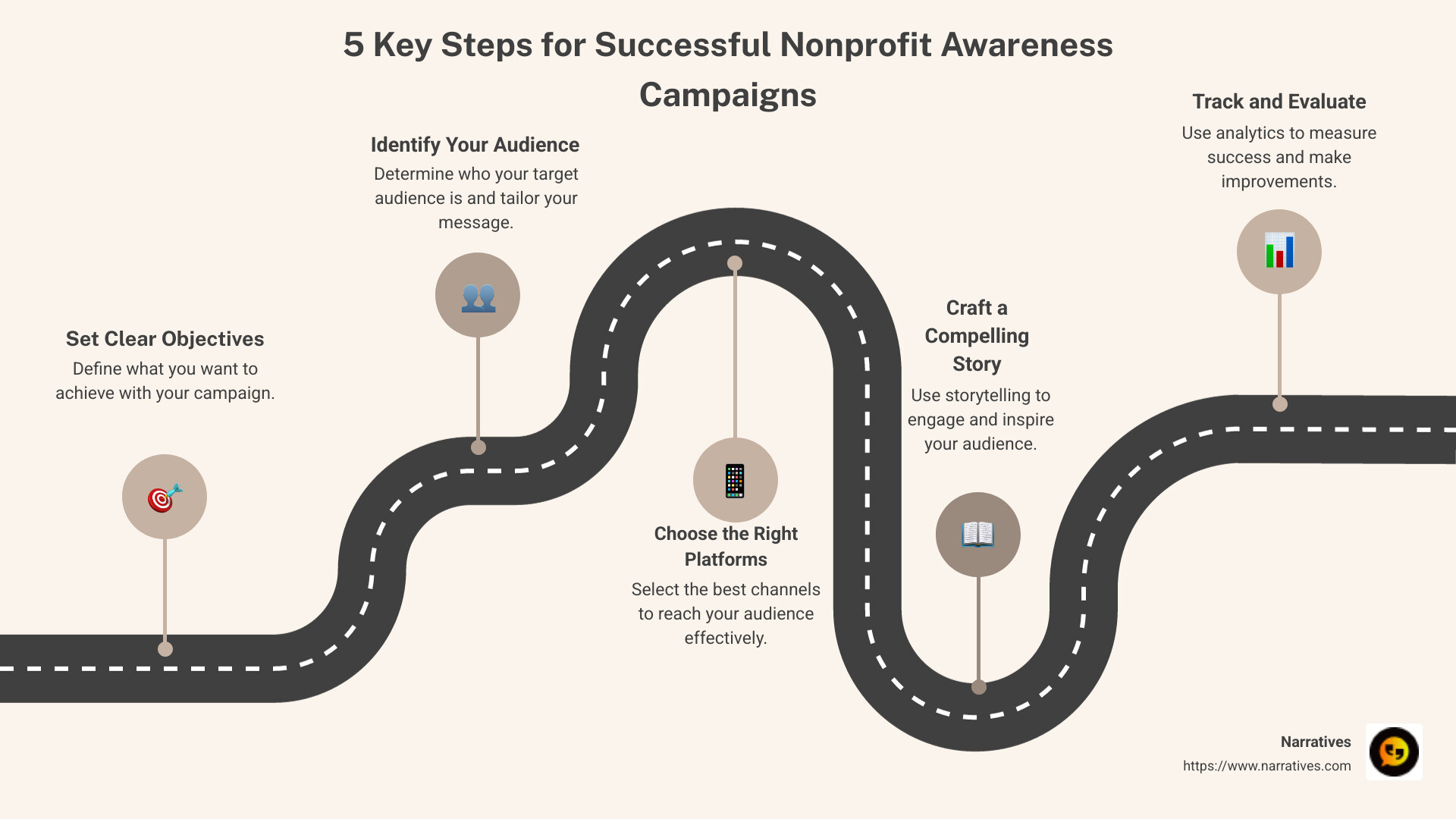
Key Nonprofit awareness campaigns vocabulary:
Understanding Nonprofit Awareness Campaigns
Nonprofit awareness campaigns are strategic efforts designed to increase the visibility of a nonprofit's mission and cause. These campaigns are time-bound and focus on educating the public about an issue, why it matters, and how the organization is addressing it. They are not primarily about fundraising, though increased donations can be a natural byproduct.
Definition
At their core, nonprofit awareness campaigns aim to spread the word about a cause. They focus on building a foundational understanding of an issue among the public. By doing so, they hope to inspire people to take action, whether that's volunteering, advocating, or eventually donating.
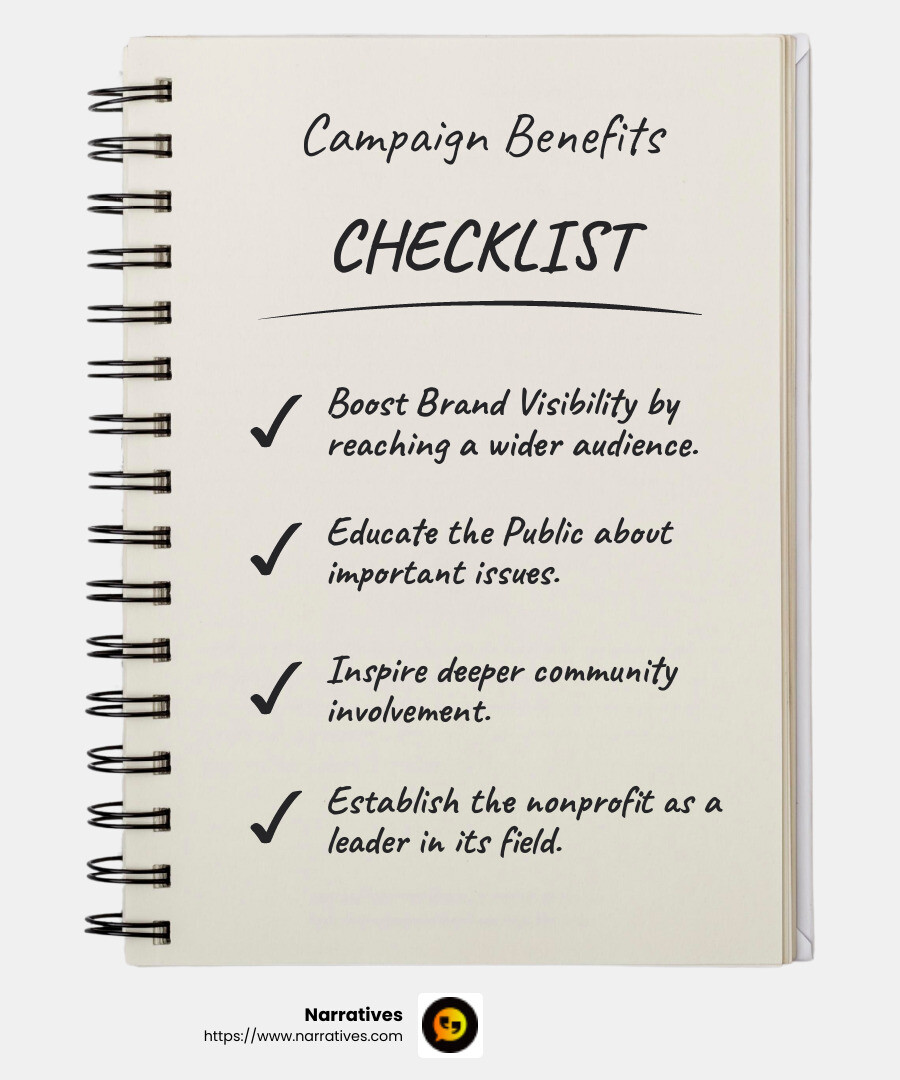
Benefits
Boost Brand Visibility: By reaching a wider audience, nonprofits improve their brand recognition and establish themselves as leaders in their field.
Educate the Public: These campaigns provide valuable information about an issue, helping to inform and engage the community.
Inspire Deeper Involvement: When people understand the importance of a cause, they are more likely to get involved and support the nonprofit's mission.
Goals
The primary goal of a nonprofit awareness campaign is to increase visibility. This involves growing the audience and strengthening the support base. However, because "raising awareness" is somewhat intangible, nonprofits often use specific key performance indicators (KPIs) to measure success. Common goals include:
- Audience Growth: Expanding the reach and size of the nonprofit's audience through various channels.
- Digital Engagement: Increasing interactions on digital platforms, such as social media likes, shares, and comments.
- Public Education: Enhancing the public's understanding of the nonprofit's mission and the issue it addresses.
By setting clear goals and using measurable KPIs, nonprofits can gauge the effectiveness of their campaigns and make data-driven decisions to improve future efforts.
Nonprofit awareness campaigns are about crafting a compelling narrative that resonates with the public. When done right, these campaigns can transform passive observers into active supporters, driving real change and progress for the cause.
Steps to Launch a Successful Awareness Campaign
Launching a nonprofit awareness campaign is like building a bridge between your cause and the community. Each step is crucial in ensuring the campaign's success. Let's break it down:
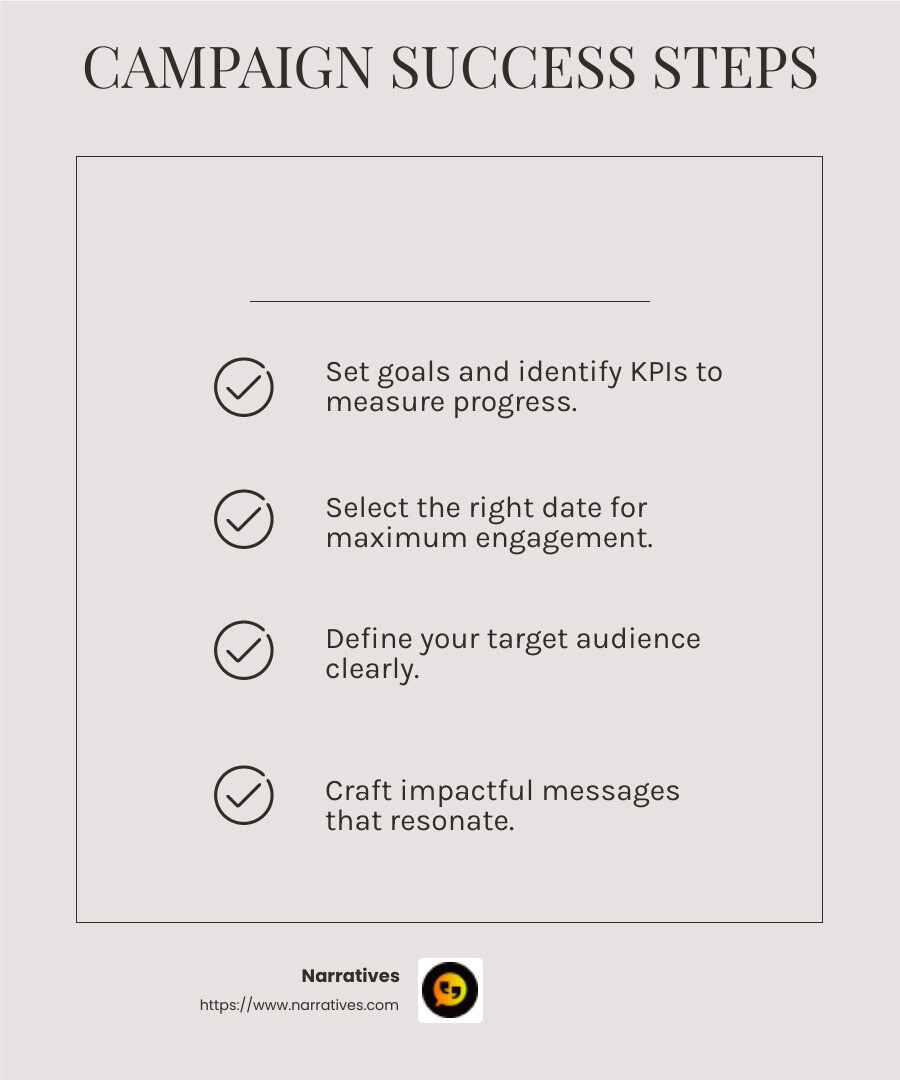
1. Set Goals and Identify KPIs
Start with a clear vision. Ask yourself what you want to achieve. Is it more followers, increased event attendance, or a greater understanding of your cause? Once you know your goals, figure out how to measure them. Use KPIs like the number of new social media followers or website traffic. This helps you track progress and adjust strategies as needed.
2. Select the Right Date
Timing matters. Align your campaign with relevant national awareness days or months if possible. If not, choose a timeframe that suits your goals. Whether it's a day, a week, or a month, ensure you have enough time to plan and promote your campaign effectively.
3. Define Your Audience
Who do you want to reach? Use your CRM data to understand your audience's demographics. Tailor your messaging to resonate with them. Whether you're targeting existing supporters or new ones, knowing your audience helps craft a message that sticks.
4. Invest in the Right Tools
Technology is your ally. Use tools like Google Analytics for tracking, Mailchimp for email marketing, and Hootsuite for social media management. These tools make your campaign smarter and more efficient.
5. Craft a Compelling Message
Your message should be clear, consistent, and compelling. Use storytelling to make it relatable. Share stories of individuals impacted by your cause. This personal touch can turn passive readers into active supporters.
6. Engage Ambassadors
Identify and engage ambassadors who are passionate about your cause. These could be influencers, community leaders, or enthusiastic volunteers. Their authentic voices can amplify your message and reach new audiences.
7. Secure Sponsors
Look for corporate sponsors who align with your values. This partnership can provide financial support and increase your campaign's credibility. Sponsors can also help you reach a broader audience.
8. Establish an Online Presence
Create a dedicated landing page for your campaign. This should be the hub for all information related to your campaign. Use clear calls-to-action (CTAs) to guide visitors on how to get involved.
9. Implement a Multichannel Marketing Plan
Reach your audience wherever they are. Use a mix of social media, email, text messaging, and direct mail. Each channel should direct supporters back to your campaign's main page for further action.
10. Celebrate and Promote Milestones
Celebrate every win, big or small. Share these milestones with your supporters to keep them engaged. Use social media shoutouts, email updates, and videos to highlight key achievements. This not only shows appreciation but also motivates continued support.
By following these steps, your nonprofit awareness campaign can effectively engage the community and amplify your cause. Now, let's explore some successful campaign examples to inspire your next move.
Top Nonprofit Awareness Campaign Examples
Successful nonprofit awareness campaigns can inspire and motivate. They show how creativity and strategy can amplify a cause. Let's explore some standout examples:
ALS Ice Bucket Challenge
In 2014, the ALS Ice Bucket Challenge became a viral sensation. People worldwide poured ice water over their heads to raise awareness and funds for ALS research. The campaign's success lay in its simplicity and social media power. Participants tagged friends, spreading the message rapidly. This fun, engaging challenge raised over $115 million, significantly boosting ALS research and awareness.
#SaveOurPlanet by Greenpeace
Greenpeace's #SaveOurPlanet campaign focuses on climate justice and biodiversity. In 2024, it went global, urging corporations and governments to stop fossil fuel projects. The campaign uses augmented reality (AR) to show climate impacts locally, making the issue personal and urgent. By combining social media, petitions, and community events, Greenpeace effectively mobilizes collective action.
#MentalHealthForAll by NAMI
The National Alliance on Mental Illness (NAMI) launched #MentalHealthForAll to reduce stigma and improve access to mental health services. This campaign emphasizes equity and inclusion, especially for marginalized communities. Using survivor stories and influencer partnerships, NAMI connects with younger audiences and advocates for mental health legislation. Digital toolkits empower communities to take action locally.
#VoicesForEquality by ACLU
The ACLU's #VoicesForEquality campaign continues its fight for civil rights, focusing on racial justice, voting rights, and LGBTQ+ equality. Through video testimonials and digital storytelling, the campaign amplifies marginalized voices. Grassroots organizing and digital petitions drive change at local and national levels, making the campaign both powerful and personal.
#EndHungerNow
EndHungerNow is a collaborative campaign aimed at addressing global hunger. By partnering with local food banks and international organizations, it raises awareness and funds to combat food insecurity. The campaign uses social media challenges and community events to engage supporters, encouraging them to donate and volunteer. By highlighting real stories of those affected by hunger, #EndHungerNow fosters empathy and action.
These examples show the power of creativity and strategic planning in nonprofit awareness campaigns. By engaging audiences through relatable stories and interactive elements, these campaigns inspire action and drive change. Let's now dig into the digital strategies that make these campaigns successful.
Digital Strategies for Nonprofit Awareness Campaigns
The right strategies can amplify your cause and broaden your reach. Here’s how to integrate effective digital tools into your nonprofit awareness campaigns:
Social Media Integration
Social media is a powerful tool for spreading your message quickly and widely. Platforms like Facebook, Instagram, and Twitter allow you to connect with your audience and encourage them to share your cause. Use tools like Hootsuite to schedule posts and track engagement. A successful campaign, like the ALS Ice Bucket Challenge, demonstrated how a simple idea could go viral, raising awareness and significant funds.
- Tip: Encourage followers to share personal stories related to your cause. This creates a sense of community and personal connection.
Peer-to-Peer Fundraising
Peer-to-peer fundraising leverages the networks of your supporters. It empowers them to create their own fundraising pages and share them with friends and family. This method was successfully used in campaigns like #EndHungerNow, where supporters became ambassadors for the cause.
- Tip: Provide supporters with easy-to-use templates and resources to make their fundraising efforts more effective.
Text-to-Give
Text-to-give is a simple and effective way to collect donations. It allows donors to contribute by sending a text message, making the process quick and convenient. This method is especially effective during live events or when engaging younger audiences who prefer mobile interactions.
- Tip: Promote your text-to-give option during events and on social media to maximize visibility and participation.
Real-Time Analytics
Tracking the performance of your campaign in real time helps you understand what's working and what needs adjustment. Use tools like Google Analytics to monitor website traffic and engagement metrics. Real-time data was crucial for campaigns like #SaveOurPlanet, allowing for quick strategy pivots based on audience response.
- Tip: Regularly review your data to identify trends and adjust your messaging and tactics accordingly.
By integrating these digital strategies, you can improve the effectiveness of your nonprofit awareness campaigns. They help you reach a wider audience, engage supporters more deeply, and ultimately drive more significant impact for your cause.
In the next section, we'll address common questions about launching and managing nonprofit awareness campaigns.
Frequently Asked Questions about Nonprofit Awareness Campaigns
What are awareness campaigns?
Awareness campaigns are strategic initiatives aimed at increasing public visibility for a cause. For nonprofits, this means spreading the word about your mission, why it matters, and how people can get involved. These campaigns are time-bound and designed to educate the community, inspire engagement, and ultimately, build a stronger support base.
What are the benefits of leading a nonprofit awareness campaign?
Leading a nonprofit awareness campaign offers several key benefits:
Boost Brand Visibility: Reach a broader audience and improve your organization's recognition. For instance, the ALS Ice Bucket Challenge significantly raised awareness and funds for ALS research.
Educate the Public: Share important information about your cause to inspire engagement. Campaigns like #MentalHealthForAll have successfully educated the public on mental health issues.
Encourage Deeper Involvement: Capture attention and establish a connection with your audience. This can lead to increased volunteerism and advocacy, as seen in the #VoicesForEquality campaign.
When would a nonprofit launch an awareness campaign?
Timing is critical when launching an awareness campaign. Nonprofits often align their campaigns with national awareness days, weeks, or months to leverage existing public attention. For example, launching a campaign during Black History Month or Mental Health Month can amplify your message. By coinciding with these periods, your campaign can tap into heightened public interest and media coverage, maximizing its impact.
In the next section, we'll explore the top examples of successful nonprofit awareness campaigns and what made them stand out.
Conclusion
In nonprofit awareness campaigns, how we tell stories can make all the difference. At Narratives, we believe in the power of ethical storytelling to lift underrepresented voices and create meaningful change. Our approach is simple: we partner with nonprofits to craft high-quality, emotionally resonant content that captures the heart of their mission.
Ethical storytelling is not just about sharing facts; it's about sharing experiences in a way that respects and honors the individuals involved. This approach builds trust and fosters a deeper connection between nonprofits and their audiences. By focusing on the real stories of those impacted by your work, you can inspire action and build a community of engaged supporters.
Community-driven storytelling is another key element in amplifying your cause. By involving the community in your narrative, you empower them to become advocates for your mission. This collaborative approach not only strengthens your message but also ensures it resonates across diverse audiences. When people see themselves reflected in your story, they are more likely to engage and support your cause.
By integrating these storytelling strategies, your nonprofit can create campaigns that don't just inform but also inspire. As we've seen with successful campaigns like the ALS Ice Bucket Challenge and #MentalHealthForAll, a well-told story has the power to reach millions and drive real-world impact.
If you're ready to amplify your cause through powerful storytelling, learn more about how Narratives can help you share your impact stories. Together, we can build a brighter future through stories that matter.


.avif)