Crafting Impact: A How-To Guide for Nonprofit Storytelling Workshops

Nonprofit storytelling workshop is a game changer for mission-driven organizations striving to connect deeply with their audience. These workshops are designed to leverage the art of storytelling to amplify an organization's mission and increase engagement. Here's why they're crucial:
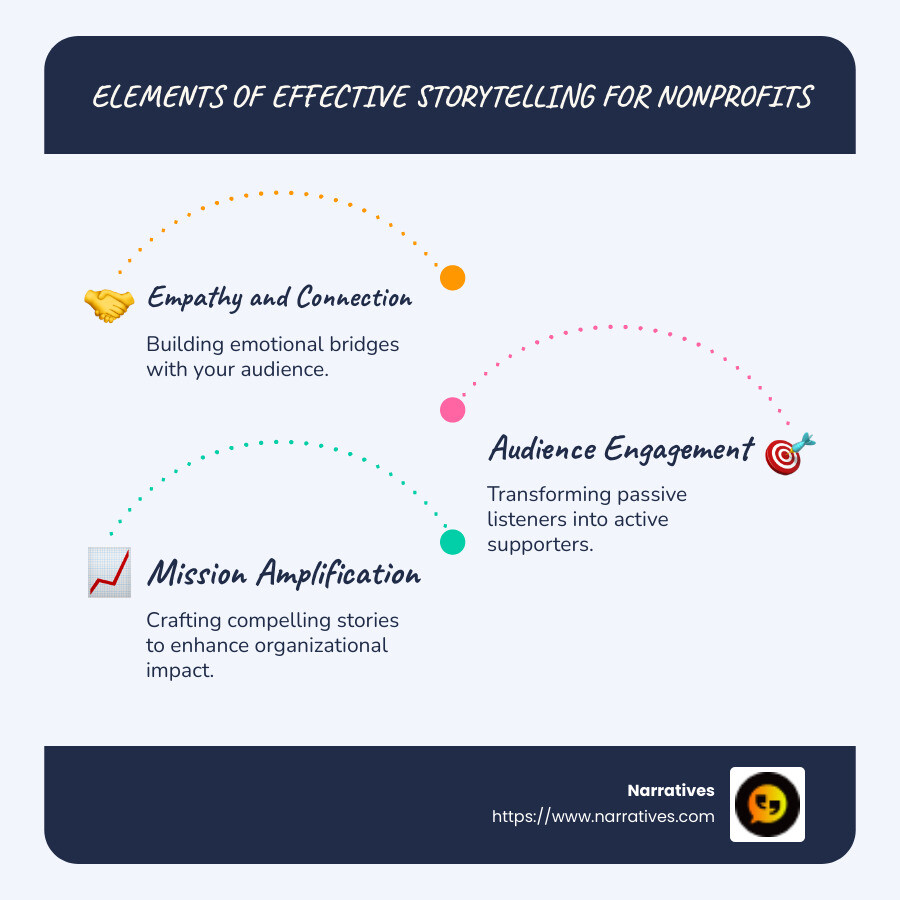
Empathy and Connection: Storytelling builds emotional bridges between nonprofits and their audiences, whether they're potential donors, volunteers, or community members.
Audience Engagement: Strong narratives captivate audiences, turning passive listeners into active supporters.
Mission Amplification: Changing your organization's mission into compelling stories can lift its profile and impact.
Storytelling is more than just sharing facts; it's about humanizing missions and showing real-life impact. As J.K. Rowling wisely said, “There’s always room for a story that transports people to another place.”
In the nonprofit world, these stories are vital. They allow organizations to illustrate their successes in a relatable way that resonates with supporters. As a potent tool to foster empathy and drive action, storytelling can transform statistics and data into compelling narratives that inspire change.
The impact is felt far and wide — from building community support to mobilizing resources and driving social impact.
Easy nonprofit storytelling workshop glossary:
- effective storytelling for nonprofits
- non-profit communication techniques
- nonprofit marketing storytelling
Understanding Nonprofit Storytelling
In nonprofits, storytelling is a powerful tool to connect with audiences on a deeper level. Here's how you can harness its potential:
Story Structure
A well-structured story is the backbone of effective storytelling. For nonprofits, this often means following a 6-step story structure custom to the nonprofit context. This structure could include:
- Introduction: Set the scene and introduce the characters.
- Problem: Present the challenge or issue being addressed.
- Solution: Describe the actions taken by the nonprofit.
- Impact: Showcase the outcomes and benefits.
- Call to Action: Encourage the audience to get involved.
- Conclusion: Wrap up the story with a compelling closing.
This structure helps in crafting narratives that are not only engaging but also easy to follow, ensuring that the audience stays connected throughout.
Audience Resonance
Crafting stories that resonate with your audience is crucial. To achieve this, consider:
- Knowing Your Audience: Understand who they are, what they care about, and how your mission aligns with their values.
- Emotional Connection: Use emotive language and relatable characters to evoke empathy and engagement.
- Real-Life Examples: Share authentic stories of beneficiaries, volunteers, and donors to illustrate the real-world impact of your work.
Fun Fact: Stories are remembered up to 22 times more than facts alone, making them a powerful tool for engagement.
Ethical Storytelling
Ethical storytelling is about respecting the dignity and voices of those whose stories you're telling. Here are some key practices:
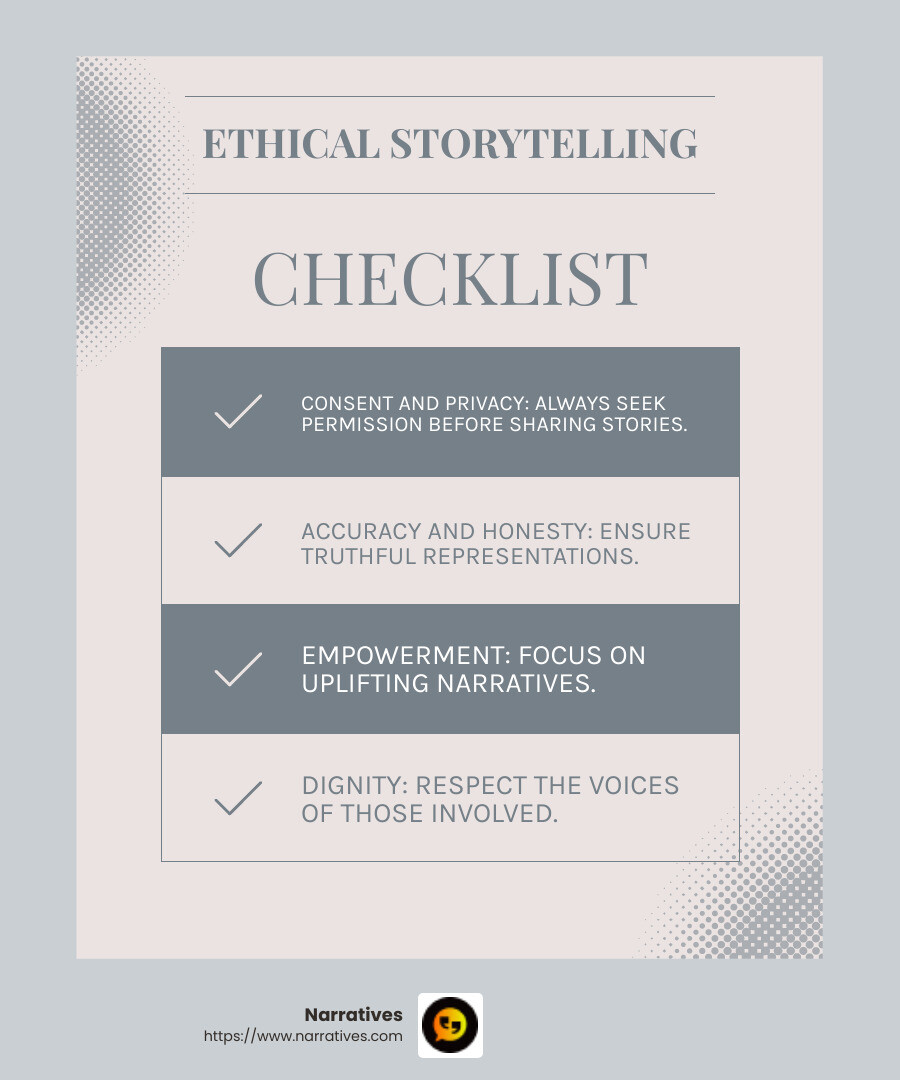
- Consent and Privacy: Always seek permission before sharing someone's story and respect their privacy.
- Accuracy and Honesty: Ensure that stories are truthful and accurately represent the individuals and situations involved.
- Empowerment: Focus on stories that empower and uplift, rather than those that perpetuate stereotypes or victimization.
By incorporating these elements into your storytelling approach, your nonprofit can create narratives that are not only compelling but also ethical and impactful. This lays the foundation for engaging workshops that teach others how to harness the power of storytelling in meaningful ways.
Designing a Nonprofit Storytelling Workshop
Creating a successful nonprofit storytelling workshop involves careful planning and execution. Let's break it down into three main components: workshop structure, narrative techniques, and stakeholder engagement.
Workshop Structure
A well-organized workshop is key to effective learning. Here's a simple structure you can follow:
Introduction and Icebreakers: Start with a brief introduction to storytelling's importance in the nonprofit sector. Use icebreakers to make participants comfortable.
Theory Session: Introduce the 6-step story structure. This is the backbone of storytelling in nonprofits. Explain each step with examples from your organization or others.
Interactive Exercises: Engage participants with activities like group improv exercises. This helps them internalize the story structure and think on their feet.
Story Identification: Teach participants how to identify compelling stories within their organization. Encourage them to look for stories from beneficiaries, volunteers, and donors.
Practice and Feedback: Allow participants to practice crafting and delivering stories. Provide constructive feedback to help them improve.
Wrap-Up and Q&A: Conclude with a summary of key points and open the floor for questions.
Narrative Techniques
Incorporating effective narrative techniques can significantly improve storytelling efforts:
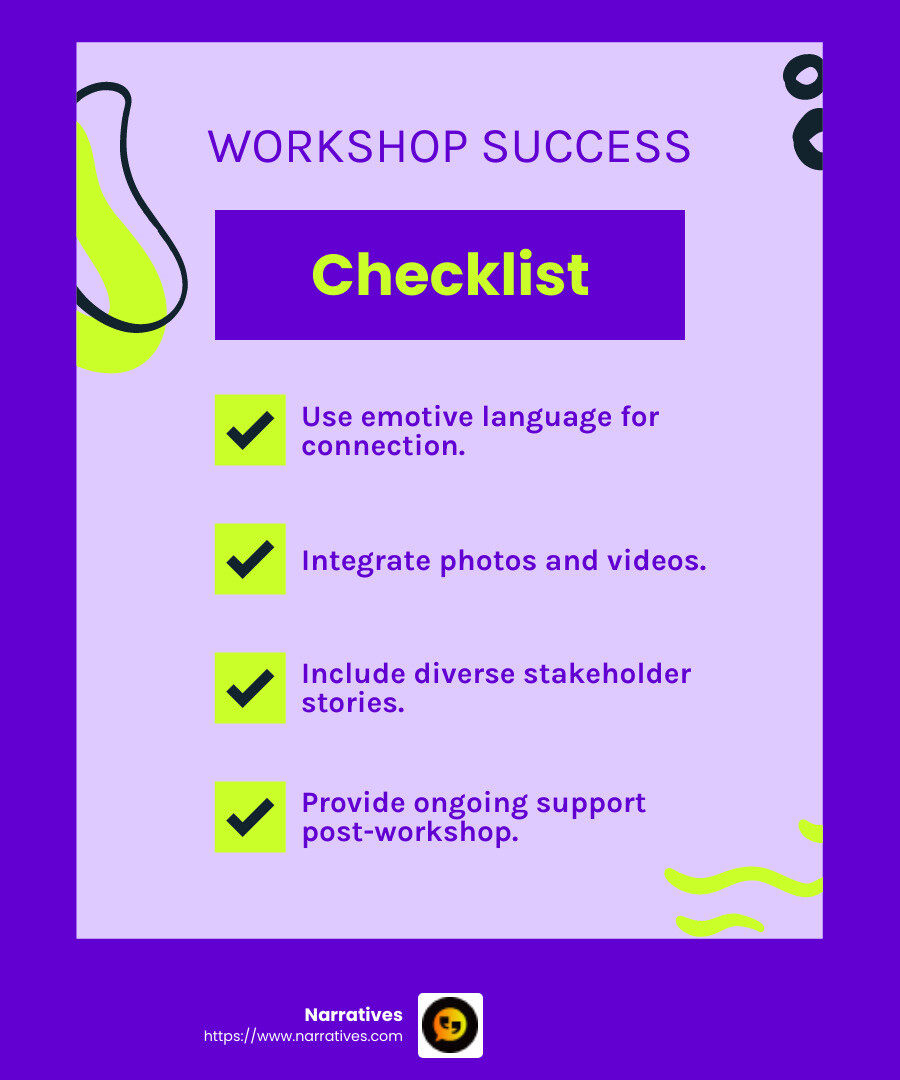
Emotional Appeal: Use emotive language to create a connection with the audience. Stories that evoke emotions are more likely to be remembered and shared.
Visual Elements: Integrate multimedia like photos or videos to make stories more vivid and engaging.
Clear Call to Action: Every story should end with a clear call to action, encouraging the audience to get involved or support the cause.
Stakeholder Engagement
Engaging stakeholders is crucial for the success of a storytelling workshop:
Involve Diverse Voices: Include stories from various stakeholders like beneficiaries, volunteers, and staff. This diversity adds depth and authenticity to the narratives.
Collaborative Environment: Foster a collaborative space where participants feel safe to share and explore stories. Encourage open discussions and peer feedback.
Continuous Engagement: After the workshop, keep participants engaged by creating a platform where they can share stories and receive ongoing support.
By focusing on these components, your nonprofit storytelling workshop can become a powerful tool for teaching others how to craft impactful narratives. This sets the stage for the next section, where we'll explore the key elements that make these workshops successful.
Key Elements of a Successful Nonprofit Storytelling Workshop
To make your nonprofit storytelling workshop truly impactful, focus on three essential elements: emotive storytelling, ethical considerations, and multimedia integration. Let's break these down:
Emotive Storytelling
Emotive storytelling is about making your audience feel something. This emotional connection can inspire action and foster deeper engagement. Here’s how to incorporate it:
Use Vivid Imagery: Paint a picture with your words. Describe scenes in a way that your audience can see, hear, and feel.
Relatable Characters: Share stories of real people whose experiences reflect the mission of your nonprofit. This makes the narrative more personal and compelling.
Highlight Change: Focus on the change or growth that occurred. Stories of resilience and triumph, like those from the StoryCorps workshops, can be especially powerful.
Ethical Considerations
Ethical storytelling ensures that narratives are respectful and truthful. This is crucial in maintaining trust and integrity.
Consent and Representation: Always seek permission before sharing someone’s story. Ensure they are comfortable with how they are portrayed.
Avoid Stereotypes: Present individuals and communities in a nuanced and multi-dimensional way. Avoid reducing people to one-dimensional characters.
Constituent-First Approach: Prioritize the dignity and voice of those whose stories you are telling. As highlighted in the Narratives approach, putting constituents first is key to ethical storytelling.
Multimedia Integration
Incorporating multimedia can improve storytelling by making it more engaging and accessible.
Videos and Photos: Use visuals to complement your narrative. A picture or video can sometimes convey emotions and context better than words alone.
Interactive Platforms: Consider using social media or online platforms to share stories widely. This can also facilitate real-time feedback and engagement.
Audio Stories: Podcasts or audio clips can be a powerful medium, as they allow listeners to connect with the story on a personal level, much like the Story of Stuff project.
By focusing on these elements, your nonprofit storytelling workshop can effectively teach participants how to craft and share impactful stories. Next, we'll dig into best practices for implementing these strategies in a digital age.
Nonprofit Storytelling Workshop: Best Practices
Nonprofit storytelling is more powerful than ever. Here are some best practices to ensure your nonprofit storytelling workshop thrives:
Digital Storytelling
Digital storytelling is about using technology to tell your stories in engaging ways. It helps reach a wider audience and makes your message more accessible.
Leverage Social Media: Platforms like Instagram and Facebook are perfect for sharing quick, impactful stories. Use them to highlight personal narratives and urgent calls to action.
Create Short Videos: Videos can capture emotion and context in a way that text alone cannot. They are also more likely to be shared, expanding your reach.
Use Interactive Content: Consider webinars or live Q&A sessions. These formats allow for real-time interaction and can make your audience feel more involved.
Donor Engagement
Engaging donors through storytelling can increase their connection to your cause, leading to more support.
Show Impact: Use stories to demonstrate the direct impact of donations. Highlight how contributions have led to real change, like those shared in Lisa Nelson-Haynes' workshops.
Personalize Communication: Tailor stories to different donor segments. A personalized story can make donors feel valued and understood.
Create a Donor Journey: Develop a narrative arc that shows donors where they fit into the larger story of your nonprofit’s mission. This can help them see themselves as heroes in your story.
Community Building
Storytelling is not just about telling stories; it's about building a community around shared values and goals.
Facilitate Story Sharing: Encourage beneficiaries and community members to share their stories. This fosters a sense of belonging and ownership.
Host Storytelling Events: Organize events like StorySLAMs, where people can come together to share and listen to stories. This can strengthen community bonds and broaden your reach.
Use Feedback: Collect feedback from your community to improve your storytelling efforts. This ensures that your stories remain relevant and resonate with your audience.
By integrating these best practices, your nonprofit storytelling workshop can effectively engage, inspire, and mobilize your audience. Next, we'll address common questions about the impact and ethics of storytelling in the nonprofit sector.
Frequently Asked Questions about Nonprofit Storytelling Workshops
How can storytelling increase donations?
Storytelling is a powerful tool for boosting donations. Here's how:
Donor Retention: Stories create emotional connections. When donors see the real-world impact of their contributions through compelling narratives, they're more likely to continue supporting your cause.
Fundraising Strategies: Use stories to highlight success stories and ongoing needs. For example, share how a donation helped a specific individual or community, making the impact tangible and urgent.
Engage Emotionally: Emotional stories resonate more deeply. They can inspire donors to act, whether that's making a donation or increasing their current level of support.
What are ethical storytelling practices?
Ethical storytelling is crucial in maintaining trust and respect with your audience. Here are some key practices:
Constituent-First Approach: Always prioritize the dignity and privacy of the individuals featured in your stories. Obtain consent and ensure their stories are told accurately and respectfully.
Nuanced Narratives: Avoid oversimplifying or sensationalizing stories. Present a balanced view that acknowledges both challenges and strengths, allowing the subjects to be seen as multi-dimensional individuals.
Transparency: Be honest about your nonprofit's goals and the impact of donations. Transparency builds trust and fosters long-term relationships with donors and constituents.
How do I measure the success of storytelling efforts?
Assessing the impact of your storytelling is essential for continuous improvement. Consider these methods:
Impact Assessment: Track metrics such as increased donation amounts, donor retention rates, and engagement levels on storytelling platforms. This data can provide insights into what's working and what needs adjustment.
Feedback Collection: Gather feedback from your audience through surveys or direct conversations. Understanding how your stories are perceived can help refine your approach and ensure they resonate.
Story Performance Analysis: Analyze which stories perform best in terms of engagement and conversions. Use this information to guide future storytelling efforts, focusing on narratives that drive the most impact.
By addressing these aspects, your nonprofit storytelling workshop can effectively harness the power of stories to drive donations, maintain ethical standards, and assess success. Next, we'll explore the conclusion of our guide, focusing on the broader impact of storytelling partnerships and social change.
Conclusion
Storytelling is more than just a tool; it's a bridge connecting your mission with the hearts of your community. At Narratives, we believe in the transformative power of storytelling partnerships to drive social impact. By collaborating with nonprofits, we help lift underrepresented voices, ensuring that every story not only reaches its audience but also inspires meaningful action.
Why Storytelling Partnerships Matter
Partnering with a storytelling expert like Narratives can amplify your organization's message. Our focus is on creating high-quality, emotionally resonant content that showcases the journey and impact of your nonprofit's work. This approach not only builds trust but also increases visibility, helping you reach a broader audience.
Driving Social Impact Through Stories
Stories have the power to humanize your mission, turning statistics into real-world impacts that resonate with your audience. Through ethical storytelling practices, we ensure that every narrative is told with dignity and respect, fostering a deeper connection with your supporters. This connection is crucial for mobilizing support, whether it's through donations, volunteer engagement, or advocacy for your cause.
The Future of Nonprofit Storytelling
As we continue to explore the evolving landscape of digital storytelling, our commitment remains to empower nonprofits by sharing their impact stories effectively. By integrating multimedia elements and focusing on community-driven narratives, we aim to create a world where every story inspires change and every voice is heard.
Ready to transform your nonprofit's storytelling approach? Learn more about how Narratives can partner with you to lift your impact. Together, let's craft stories that change the world.


.png)