The Nonprofit's Guide to Effective Outreach: Strategies for Success
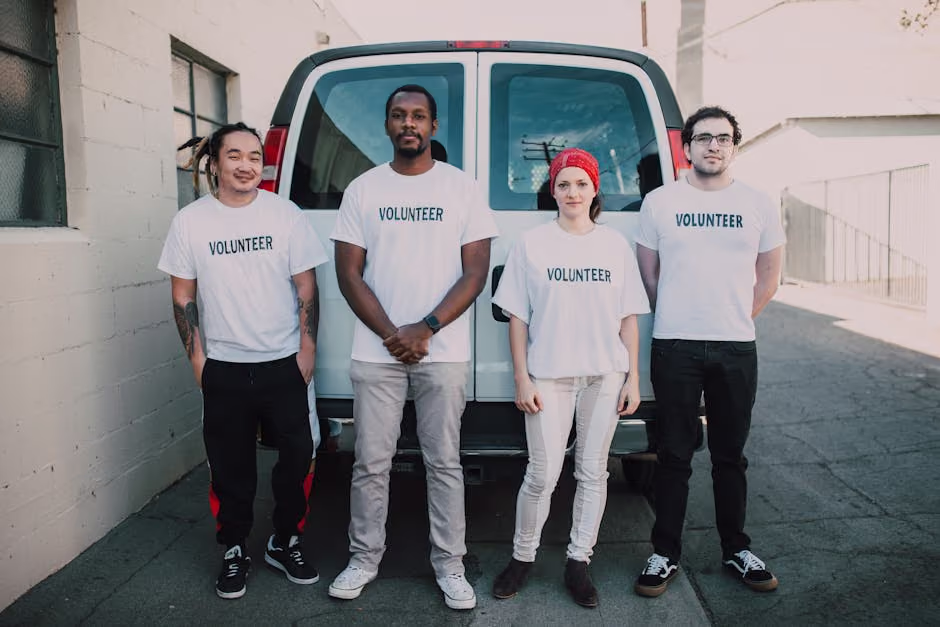
Outreach strategies for nonprofits are essential for driving impactful community engagement and amplifying the mission of any cause-driven organization. These strategies are the backbone of how nonprofits connect with and inspire their audiences, whether through digital channels, community events, or traditional media.
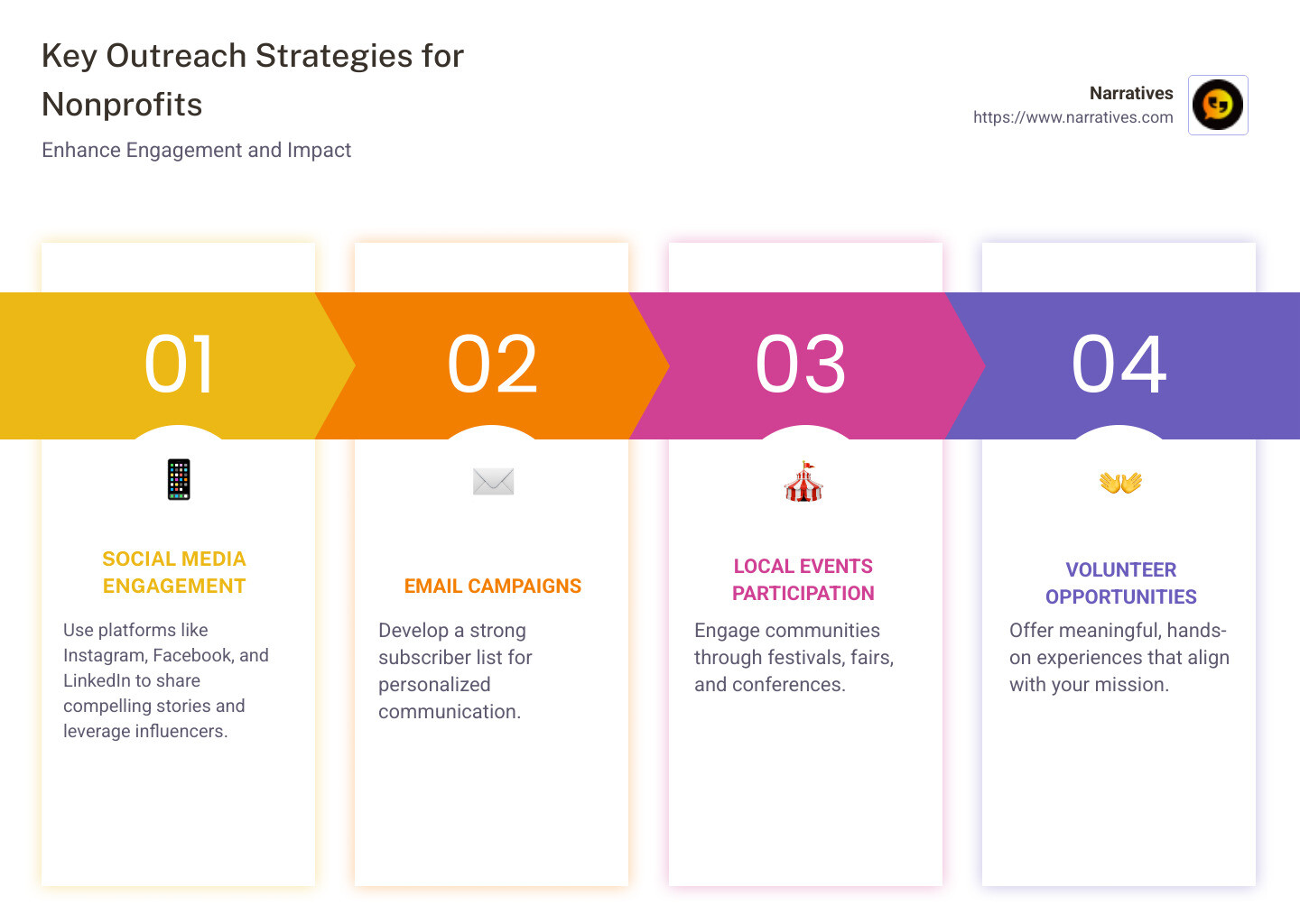
Here's a quick look at key outreach strategies for nonprofits:
- Social Media Engagement: Use platforms like Instagram, Facebook, and LinkedIn to share compelling stories and leverage influencers.
- Email Campaigns: Build a strong subscriber list for personalized communication that directly reaches potential supporters.
- Local Events Participation: Engage your community by attending or hosting local festivals, educational fairs, and business conferences.
- Volunteer Opportunities: Offer meaningful, hands-on experiences that align with your nonprofit's mission.
This guide provides insights into these strategies and how they can create lasting, systemic social change for nonprofits. By understanding your audience and crafting personalized messages, you not only build awareness but also foster a deeper connection with your community.
Nonprofits are ultimately about making a difference, and the right outreach strategy helps turn intent into tangible impact.
Easy Outreach strategies for nonprofits glossary:
Understanding Outreach Strategies for Nonprofits
Identifying Your Goals
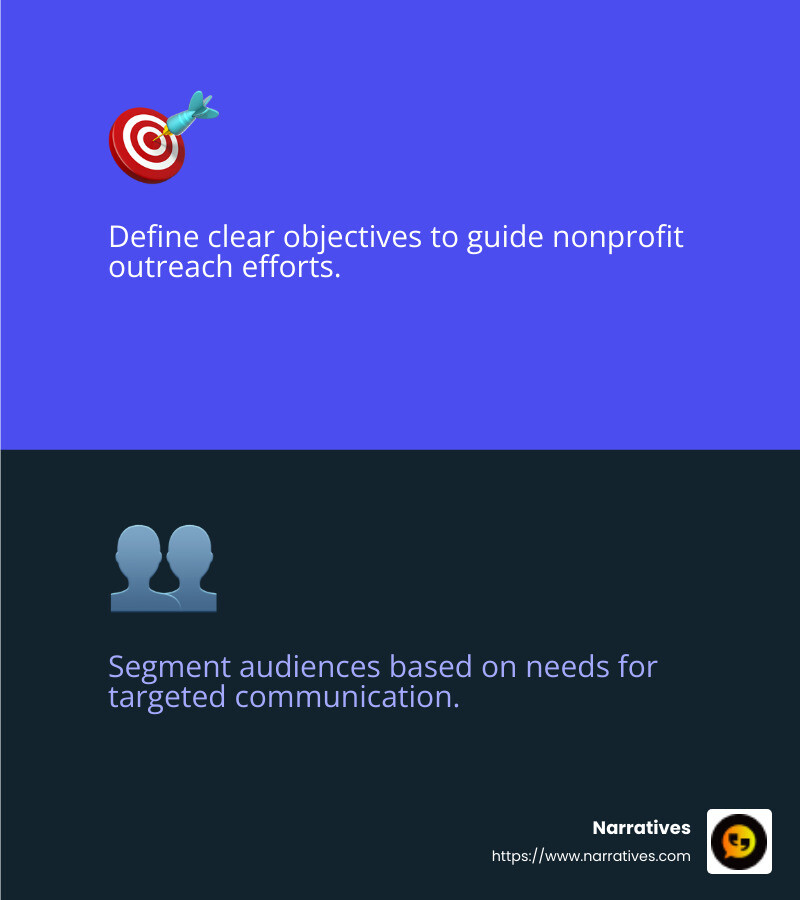
Before diving into outreach, it's crucial to identify clear objectives. What do you want to achieve? Whether it's raising awareness, increasing donations, or expanding your volunteer base, having specific goals is the first step.
Set Clear Objectives: Define what success looks like for your nonprofit. This could be increasing social media followers by 20% or securing 50 new donors. Clear goals guide your outreach efforts and help measure success.
Stakeholder Consultation: Engage with internal and external stakeholders. Talk to your team, board members, and even your audience. Their insights can shape your objectives and ensure they align with your nonprofit's mission.
Proactive Engagement: Don’t wait for opportunities to come to you. Reach out to potential partners, sponsors, and volunteers. Proactive engagement means being visible and accessible in your community.
Needs-Based Segmentation
Understanding your audience is key to effective outreach. Instead of a one-size-fits-all approach, use needs-based segmentation to tailor your communication.
Audience Segmentation: Break down your audience into distinct groups based on their needs and interests. For instance, some supporters might be more interested in volunteer opportunities, while others prefer donating.
Targeted Communication: Customize your messages for each segment. If you're reaching out to young volunteers, use vibrant imagery and social media platforms like Instagram. For older donors, a well-crafted email or direct mail might be more effective.
Communication Plans: Develop a plan that outlines how you'll reach each audience segment. This includes choosing the right channels and crafting messages that resonate with each group.
By focusing on target audience and crafting a strategic communication plan, nonprofits can increase engagement and support. It's not just about reaching people, but connecting with them in meaningful ways.
This strategic approach to outreach helps nonprofits build stronger relationships and drive impactful change in their communities.
Building an Effective Outreach Strategy
Creating an impactful outreach strategy involves a blend of community involvement and strategic partnerships. Let's explore two powerful tools: social media and email campaigns.
Leveraging Social Media
Social media isn't just about posting updates; it's a dynamic platform for engaging with your community.
Platform Selection
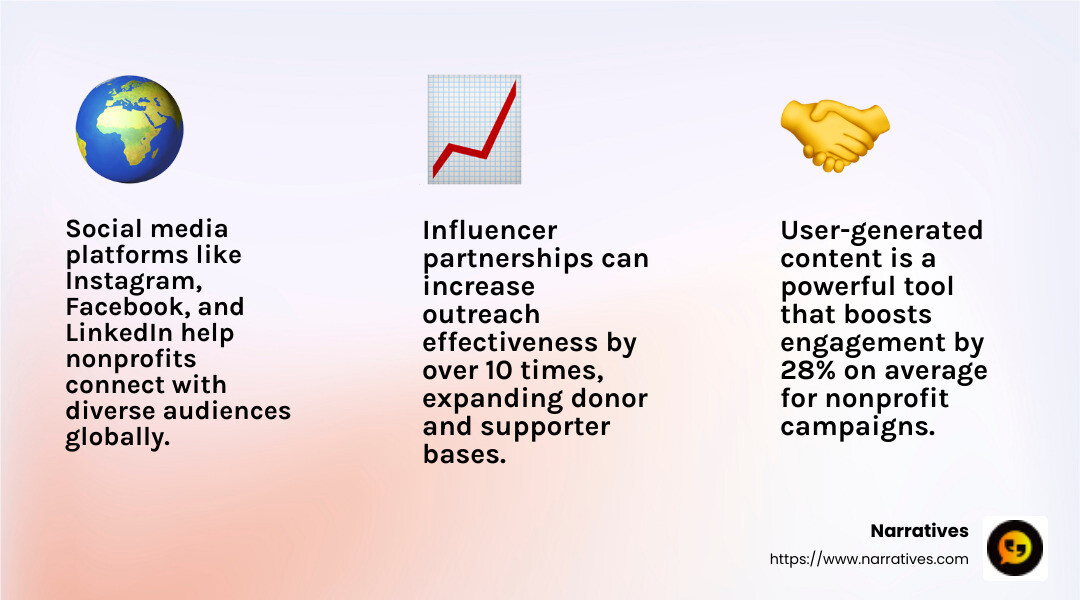
Choosing the right platform is crucial. Each social media platform attracts a different demographic, so align your choice with your target audience.
- Instagram is ideal for reaching younger audiences, especially when promoting educational initiatives or environmental campaigns.
- Facebook is great for connecting with a broad age range, but particularly effective for engaging older users in causes like heritage conservation.
- LinkedIn suits professional networks and is perfect for initiatives related to corporate social responsibility.
Content Creation
Once you've chosen your platform, the next step is to create compelling content.
- Stories and Emotions: Use images and videos to tell emotional stories. A wildlife conservation group could share touching rescue stories through short clips.
- User-Generated Content: Encourage your audience to share their stories. This could be particularly effective for nonprofits focused on mental health, creating a community of shared experiences.
- Infographics: Simplify complex data into easy-to-understand visuals. Climate change organizations can use infographics to highlight critical statistics.
Collaborating with influencers can amplify your reach. Consider both celebrity endorsements and micro-influencers to spread your message effectively.
Utilizing Email Campaigns
While social media captures attention, email campaigns offer a more direct and personal connection.
Building a Subscriber List
A strong subscriber list is the foundation of successful email outreach.
- Opt-In Forms: Clearly communicate the value of subscribing. Make sure your audience knows they won't be overwhelmed with too many emails.
- Valuable Content: Offer downloadable resources like e-books or guides to encourage sign-ups.
- Event Engagement: Collect emails at events where community members can see your impact firsthand.
Personalized Content
Segment your audience to deliver personalized content that resonates.
- Segmentation: Break your audience into smaller groups based on interests and past interactions. Tailor your messages to each segment.
- Personalized Calls-to-Action: Customize your calls-to-action for better conversions. Personalized messages can convert 202% better than generic ones.
By leveraging both social media and email campaigns, nonprofits can build a well-rounded and effective outreach strategy. This approach not only broadens reach but also deepens connections with the community. Let's explore how engaging through community events can further improve these efforts.
Engaging Through Community Events
Community events are a fantastic way for nonprofits to connect with people, build relationships, and promote their mission. Let's explore how you can make these events successful by focusing on local partnerships and removing barriers to participation.
Removing Barriers to Participation
To make events truly inclusive, it's important to identify and remove any obstacles that might prevent people from participating. Here are some strategies:
Accessibility: Ensure venues are accessible to all, including those with disabilities. This means having ramps, accessible restrooms, and clear signage. Also, consider virtual participation options for those who can't attend in person.
Affordability: Keep events free or low-cost. Offer scholarships or sliding scale fees to make sure cost isn't a barrier.
Language and Communication: Provide materials and presentations in multiple languages. Use simple, clear language and consider offering sign language interpreters or captioning for virtual events.
Timing and Location: Choose times and locations that are convenient for your target audience. Evening or weekend events might work better for those with 9-to-5 jobs.
By addressing these areas, you can create an environment where everyone feels welcome and able to participate.
Partnering with Local Leaders
Partnering with local leaders can greatly improve your event's impact. Local leaders bring valuable community insights and can help co-create events that resonate with the community.
Community Insights: Local leaders understand the unique needs and preferences of their community. They can provide input on event planning, ensuring that your activities are relevant and engaging.
Co-Creation: Involve local leaders in the planning process. This fosters a sense of ownership and can lead to more innovative and culturally appropriate events.
Promotion and Trust: Local leaders often have established trust within the community. When they endorse your event, it can improve credibility and encourage more people to attend.
Consider a case study where a nonprofit focused on literacy partnered with local schools for a book fair. By involving teachers and community leaders, they were able to create an event that not only promoted reading but also addressed the specific interests and needs of local families.
Local Partnerships
Building local partnerships is essential for successful event promotion and execution. Here's how to leverage these relationships:
Shared Resources: Partner with local businesses or schools to share resources like venues, volunteers, and promotional channels.
Joint Promotions: Collaborate on marketing efforts. For example, a local coffee shop could distribute flyers, or a community radio station could run event announcements.
Mutual Goals: Ensure that your partners share or support your mission. For instance, a marine conservation nonprofit might partner with a local dive shop for an underwater cleanup event.
By fostering strong local partnerships, you not only increase your event's reach but also strengthen community ties and support.
Focusing on accessibility, inclusivity, and local partnerships will make your community events more effective and impactful. This approach not only attracts a diverse audience but also ensures that your message resonates deeply within the community. Next, we'll explore how to measure and adapt your outreach efforts for continuous improvement.
Measuring and Adapting Outreach Efforts
Once your nonprofit has hosted events and engaged with the community, it's crucial to evaluate these efforts. By setting clear KPIs and using feedback, you can refine your strategies for better outcomes.
Setting Clear KPIs
Key Performance Indicators (KPIs) are essential for measuring the success of your outreach strategies. They help you track progress and make informed decisions.
Objective Alignment: Make sure each KPI is directly linked to your outreach goals. For example, if your goal is to increase community awareness, track metrics like social media reach or event attendance.
Specificity: Avoid vague KPIs. Instead of saying "increase engagement," specify "increase newsletter open rates by 20%."
Timeframe Establishment: Set a clear timeframe for each KPI. Whether it's monthly, quarterly, or annually, having a deadline helps keep your team focused and accountable.
Using tools like Google Analytics or Facebook Insights can simplify tracking these KPIs by providing detailed reports on user engagement and demographics.
Using Feedback for Improvement
Feedback is a treasure trove of insights that can help you refine your outreach efforts.
Surveys: After an event or campaign, send out surveys to participants. Ask questions about what they liked, what could be improved, and what topics they find most interesting. This helps you understand their preferences and improve future events.
Focus Groups: Organize focus groups with a diverse set of participants. This allows for in-depth discussions and can uncover insights that surveys might miss.
Constructive Criticism: Accept feedback, even if it's negative. It highlights areas for improvement and can lead to more effective strategies.
Consider the story of a nonprofit that used post-event surveys to find participants wanted more hands-on activities. By incorporating this feedback, their next event saw a 30% increase in attendance and engagement.
Regularly reviewing feedback and KPIs ensures your outreach strategies remain relevant and effective. As the landscape evolves, so should your approach, adapting to new insights and community needs. Next, we'll dive into frequently asked questions about outreach strategies for nonprofits.
Frequently Asked Questions about Outreach Strategies for Nonprofits
How can nonprofits effectively engage their target audience?
Engaging your target audience is crucial for the success of any nonprofit. Here are some strategies to consider:
Know Your Audience: Use surveys and online analytics to gather data about your audience's preferences and behaviors. Tools like Google Analytics can help you understand which content resonates most with your audience.
Tailor Your Message: Once you have a clear picture of who your audience is, customize your messages to speak directly to their interests and needs. Personalized communication increases engagement.
Leverage Social Media: Platforms like Facebook and Instagram offer powerful tools to reach and engage your audience. Use their analytics to find out when your audience is most active and what types of content they engage with the most.
Interactive Content: Encourage participation by creating interactive content like polls, quizzes, or live Q&A sessions. This not only engages but also provides valuable feedback.
What are the best tools for measuring outreach success?
Measuring the success of your outreach strategies is essential for continuous improvement. Here are some top tools to consider:
Google Analytics: This tool provides insights into website traffic, user behavior, and conversion rates. It's essential for tracking how your digital efforts are performing.
CRM Systems: Platforms like Salesforce or HubSpot help manage donor interactions and track engagement over time. They offer insights into donation histories and event attendance.
Social Media Analytics: Use built-in analytics on platforms like Facebook and Instagram to track post engagement, audience demographics, and more.
Survey Tools: Tools like SurveyMonkey or Google Forms are great for collecting feedback from your audience. They help you understand what works and what doesn't.
How can nonprofits build meaningful community partnerships?
Building strong community partnerships can amplify your outreach efforts. Here's how to do it:
Identify Shared Goals: Find organizations that share similar values and goals. This common ground makes collaboration smoother and more impactful.
Engage Local Leaders: Partnering with local leaders can provide valuable insights into community needs and open doors to new networks.
Co-Create Events: Collaborate on events or initiatives that benefit both parties. This not only strengthens partnerships but also increases community impact.
Consistent Communication: Keep open lines of communication with your partners. Regular check-ins and updates ensure alignment and foster trust.
Building partnerships takes time and effort, but the benefits can be significant, leading to increased resources, wider reach, and greater community impact.
Conclusion
Narratives, Storytelling, and Social Impact
We've explored a variety of outreach strategies for nonprofits, from social media engagement to community events. At the heart of these strategies lies a powerful tool: storytelling. Narratives have the unique ability to transform abstract ideas into meaningful, emotional experiences. This is where we at Narratives come in, helping nonprofits craft compelling stories that resonate and inspire action.
Why Storytelling Matters
Storytelling is more than just sharing facts; it's about connecting with people on a human level. Through stories, nonprofits can showcase their impact, humanize their causes, and build emotional connections with their audience. Consider the success stories of beneficiaries or the heartfelt experiences of volunteers. These narratives not only inform but also motivate supporters to engage and contribute.
Creating Social Impact
Effective storytelling can significantly improve a nonprofit's social impact. By sharing authentic stories, organizations can raise awareness, attract new supporters, and mobilize resources. This is crucial for driving change and making a difference in the communities they serve.
Our Commitment to Elevating Voices
At Narratives, we are dedicated to elevating underrepresented voices through high-quality, emotionally resonant content. We believe that every story has the power to inspire change and foster empathy. By partnering with us, nonprofits can amplify their message and reach a broader audience, ultimately increasing their impact and visibility.
Join Us in Making a Difference
We invite you to explore how we can help your organization harness the power of storytelling to achieve its goals. Learn more about our services and how we can support your mission by visiting our service page.
In conclusion, effective outreach is about more than just reaching people; it's about engaging them in a way that matters. Through strategic storytelling, nonprofits can not only achieve their goals but also create lasting social impact. Let's work together to make the world a better place, one story at a time.


.avif)