Partnering for Impact: How Philanthropic Media Partnerships Can Amplify Your Message

Philanthropic media partnerships are powerful collaborations where media outlets and philanthropic organizations come together to amplify messages that matter. These partnerships can lift stories about social issues and drive meaningful change by reaching broader audiences.
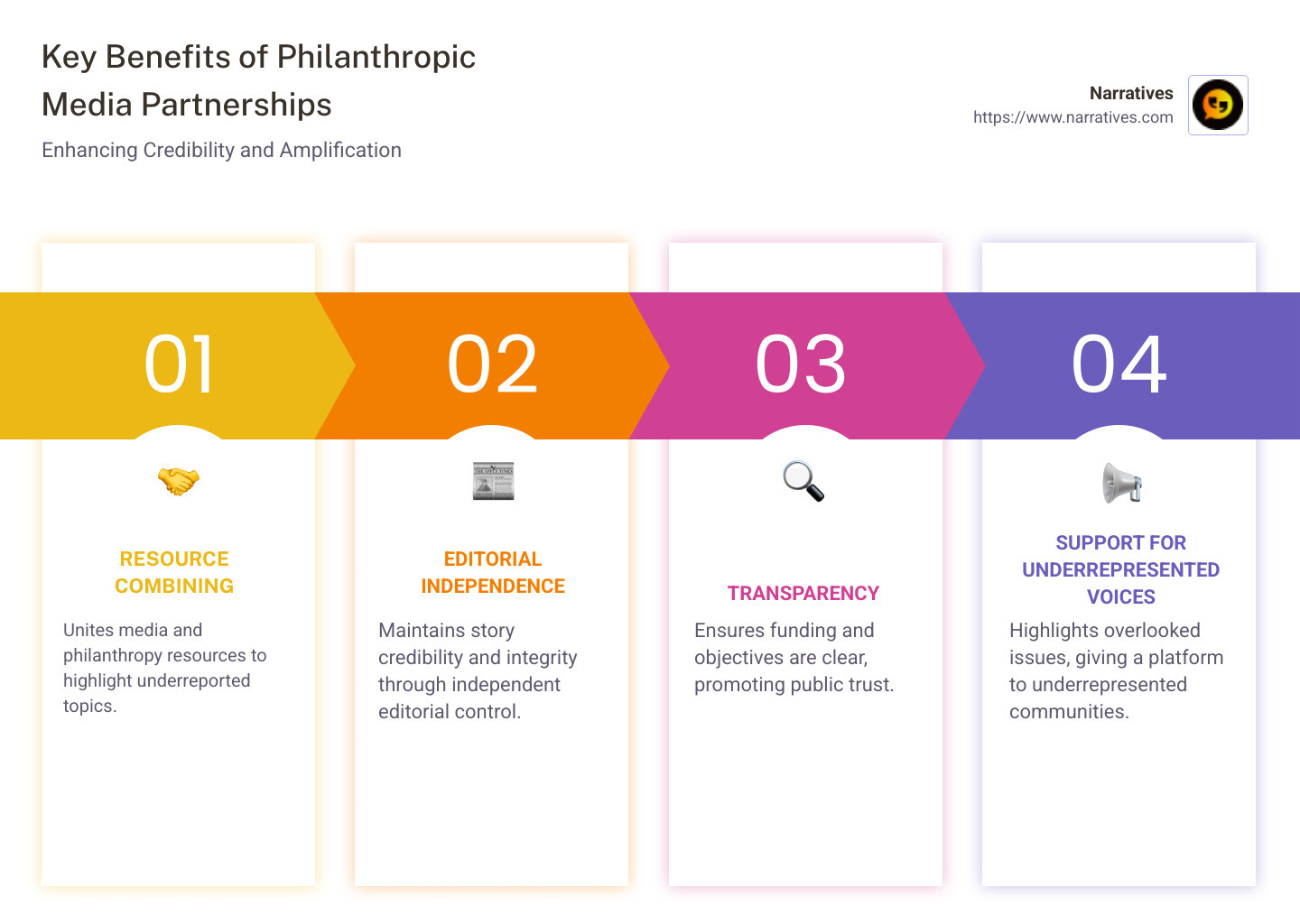
- They combine resources from both media and philanthropy to cover critical but underreported topics.
- Ensure editorial independence so that the stories maintain credibility and integrity.
- Foster transparency around funding and objectives, benefiting public trust.
- Support underrepresented voices by highlighting overlooked or complex issues.
Philanthropic media partnerships are crucial in today's world where misinformation is rampant. They play a vital role in producing insightful content that can sway public perception and inform civic discourse, particularly on global health, development, and social justice issues.
According to research, when media organizations are equipped to cover complex topics, they drive community engagement and contribute to positive societal change. These partnerships offer a way to counteract the declining revenues faced by traditional media outlets, ensuring that vital stories are told.
Such collaborations not only provide the necessary funding to cover intricate subjects but also help ensuring that stories foster informed dialogues about policy and community growth.
Understanding Philanthropic Media Partnerships
Philanthropic media partnerships are a dynamic force in today's media landscape. These collaborations between media outlets and philanthropic organizations aim to amplify vital messages, especially those that might otherwise be overlooked. By pooling resources, they tackle underreported topics with depth and insight.
The Role of Media Impact Funders
Media Impact Funders play a crucial role in these partnerships. They act as connectors, bringing together changemakers and strategic partners to address pressing societal issues. Their goal is to support media that informs, engages, and inspires communities.
Strategic Connections: Media Impact Funders create networks that link funders with media makers, fostering collaborations that might not happen otherwise. This ensures that diverse voices and stories get the attention they deserve.
Changemakers: By supporting impactful media projects, funders help drive societal change. They empower media organizations to explore topics like global health, development, and social justice—areas that are vital yet often underrepresented in mainstream media.
Benefits of Philanthropic Media Partnerships
The benefits of these partnerships are significant:
Amplifying Information: They ensure that crucial stories reach larger audiences. For instance, steady and reliable news coverage can spark civic discourse and inform policy decisions. This is especially true for topics affecting the world's poorest, where media coverage can lead to evidence-based policies.
Serving Underserved Communities: Many media organizations struggle to cover complex issues due to budget constraints. Philanthropic partnerships provide the necessary funding and support to fill these gaps, ensuring that underserved communities receive the information they need.
Creative Independence: A key principle in these partnerships is maintaining editorial independence. This means that media partners are free to pursue stories without pressure from funders, ensuring that the content remains credible and trustworthy.
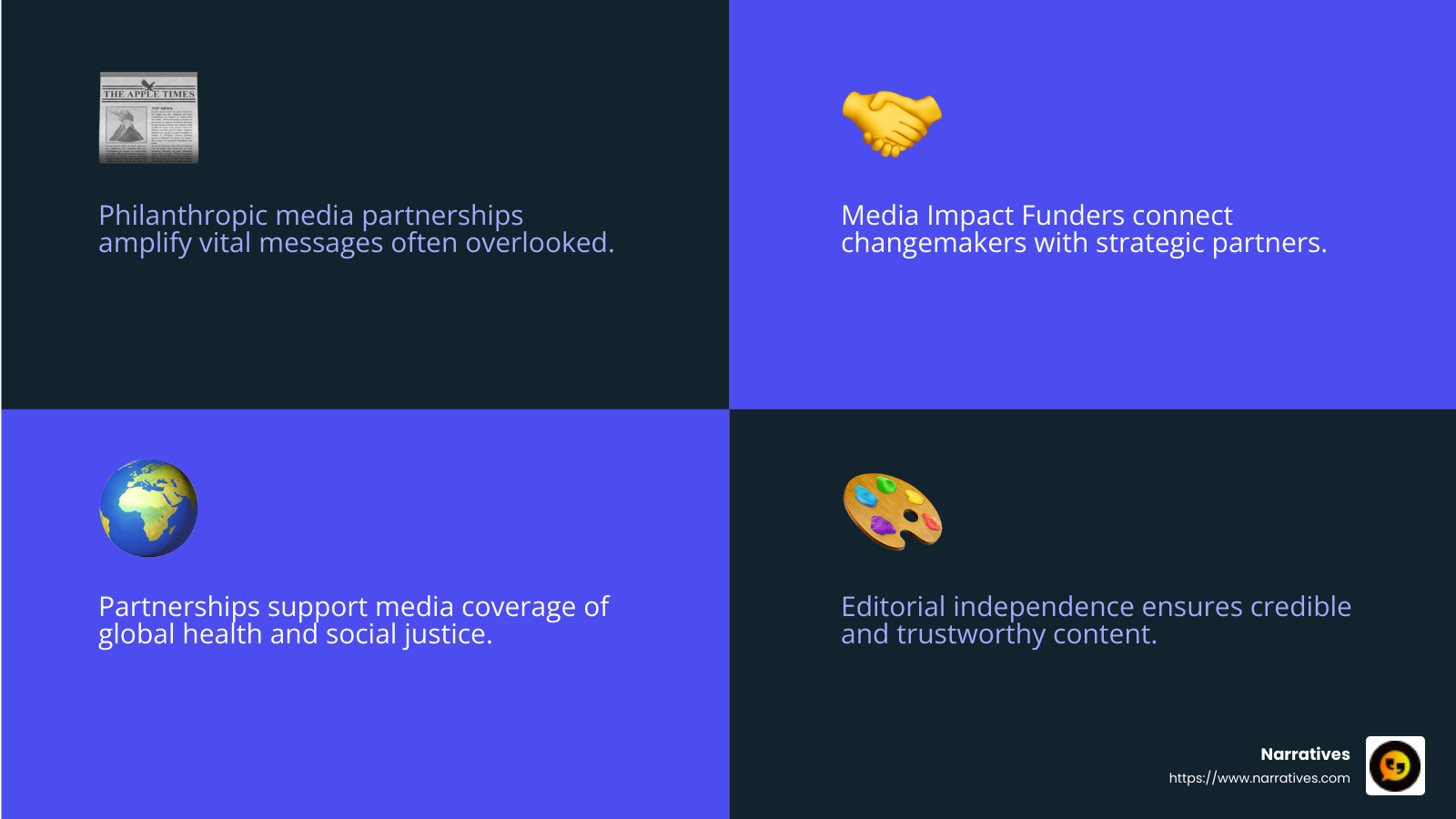
In summary, philanthropic media partnerships are essential for fostering informed communities and driving change. They provide the resources and support needed to cover important but often neglected topics, ensuring that diverse stories are told and heard. As we explore successful examples of these partnerships, it becomes clear how impactful they can be in shaping a more informed and engaged society.
Successful Examples of Philanthropic Media Partnerships
Philanthropic media partnerships have proven to be powerful tools in amplifying important messages and supporting underserved communities. Let's explore some successful examples that highlight their impact.
Global Health Reporting
One standout example is the collaboration between philanthropic organizations and media outlets to support global health reporting. Initiatives like NPR’s Goats and Soda blog and Kenya’s The Daily Nation news desk have been instrumental in providing in-depth coverage of health, development, climate, and gender issues. These partnerships ensure that critical health information reaches a wide audience, helping to inform and educate the public on pressing global health challenges.
Local News Support
Local news is vital for informed communities, yet many local outlets face financial struggles. Philanthropic media partnerships have stepped in to bridge this gap. For instance, in Houston, a collaboration with local philanthropies led to the launch of Houston Landing, an independent nonprofit news operation. Similarly, in Ohio, a partnership with The Cleveland Foundation and other local entities resulted in the creation of a statewide network of independent newsrooms, starting with Signal Cleveland. These efforts ensure that local communities have access to quality, independent news.
Entertainment Industry Foundation
The Entertainment Industry Foundation (EIF) is another example of a successful philanthropic media partnership. For over 80 years, EIF has leveraged the influence of the entertainment industry to drive positive social change. By collaborating with media outlets, EIF amplifies messages on various issues, from health to social justice, reaching millions of people globally. This partnership showcases how the entertainment industry can play a pivotal role in philanthropy and media collaboration.
Case Study: OpenAI and American Journalism Project
OpenAI's partnership with the American Journalism Project exemplifies how technology and media can converge to support local news. By providing resources and expertise, OpenAI helps local newsrooms leverage artificial intelligence to improve reporting and streamline operations. This collaboration underscores the potential of tech-driven solutions in strengthening local journalism.
Case Study: Google and Selena Gomez
In another inspiring example, Google partnered with Selena Gomez to address teen mental health in classrooms. This collaboration focuses on providing resources and support to educators, helping them address mental health challenges among students. By combining Google's technological resources with Gomez's influence, this partnership raises awareness and drives action on a crucial issue affecting young people.
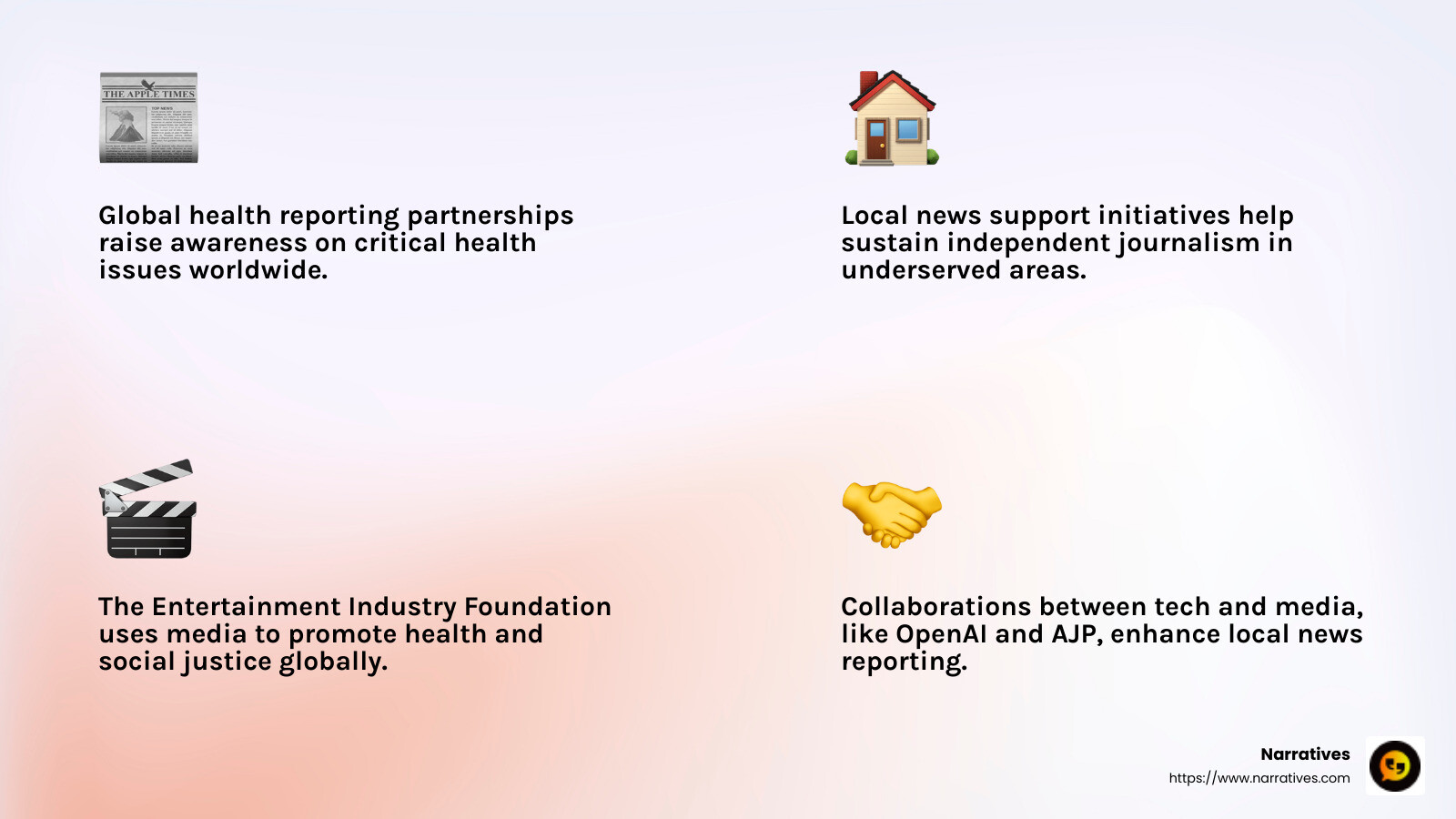
These examples demonstrate the transformative power of philanthropic media partnerships. By bringing together diverse resources and expertise, these collaborations amplify important messages, support local journalism, and address critical societal issues. These partnerships will continue to play a crucial role in shaping a more informed and engaged society.
How to Establish Effective Philanthropic Media Partnerships
Creating impactful philanthropic media partnerships hinges on a few key principles. These partnerships thrive on transparency, editorial independence, and integrity, forming a foundation that supports fact-based information and the pursuit of truth.
Key Principles for Partnerships
Transparency is crucial. Both the foundation and media partners must openly communicate the nature of their partnership and the funds involved. This openness builds trust with audiences and ensures everyone knows the partnership's goals and boundaries.
Editorial independence is non-negotiable. Media partners should have the freedom to report without any obligation to cover the foundation's strategies or take specific positions. This independence ensures that the reporting remains unbiased and credible.
Integrity in reporting is essential. Media organizations must provide fact-based information, committing to truth and accuracy. These trusted sources become reliable narrators of important stories, fostering informed communities.
Leveraging Digital Storytelling
Digital storytelling is a powerful tool in these partnerships. It allows underrepresented voices to be heard, using multimedia content to engage diverse audiences. By combining text, images, and videos, stories become more vivid and relatable.
This approach is particularly effective in highlighting community issues and solutions. For example, Narratives collaborates with nonprofits to create content that showcases the struggles and triumphs of the communities they serve. These stories not only inform but also inspire action and empathy.
By focusing on these principles and utilizing digital storytelling, philanthropic media partnerships can amplify messages and drive meaningful change.
Frequently Asked Questions about Philanthropic Media Partnerships
What are philanthropic media partnerships?
Philanthropic media partnerships are collaborations between philanthropic organizations and media outlets. These partnerships aim to support and amplify important stories, especially those that might be underreported. They focus on providing fact-based, independent journalism that serves the public interest. By combining resources and expertise, these partnerships can tackle global and local issues, from health and development to education and economic mobility.
How do these partnerships benefit nonprofits?
Nonprofits benefit from these partnerships in several ways:
Amplified Reach: Collaborating with media outlets helps nonprofits reach a broader audience. This exposure can attract more support and drive awareness of their causes.
Credibility Boost: Being associated with reputable media organizations can improve a nonprofit's credibility. This association signals to the public that the nonprofit's work is trustworthy and important.
Resource Sharing: Access to media resources, such as storytelling tools and platforms, enables nonprofits to share their stories more effectively. This can lead to increased engagement and support from the public.
How can organizations ensure editorial independence?
Ensuring editorial independence is vital for maintaining credibility in these partnerships. Here are some ways organizations can uphold this principle:
Clear Agreements: Establish agreements that explicitly state that media partners have the freedom to report without influence from the funders. This ensures that the content remains unbiased.
Transparency: Both parties should be transparent about the partnership's nature and goals. This openness fosters trust with audiences who value independent reporting.
Commit to Integrity: Media partners should commit to providing accurate, fact-based information. This commitment to integrity helps maintain the trust of their audience and upholds the partnership's credibility.
By following these guidelines, organizations can create impactful and trustworthy philanthropic media partnerships that serve the public good.
Conclusion
At Narratives, we believe in the transformative power of storytelling to create real social impact. Our mission is to lift underrepresented voices and help non-profits and purpose-driven organizations tell their stories in a way that resonates and inspires action. Through our philanthropic media partnerships, we aim to amplify messages that matter, fostering a more informed and empathetic world.
Storytelling is not just about sharing information; it's about connecting people to causes and communities in meaningful ways. By crafting emotionally engaging and visually compelling content, we help organizations build trust and visibility, ultimately driving change.
We understand that the media landscape is shifting and that traditional revenue streams for news organizations are dwindling. That's why partnerships like those we foster at Narratives are crucial. They provide the resources and platforms needed to ensure important stories are told and heard.
Our commitment to social impact is at the heart of everything we do. We strive to be the go-to partner for organizations looking to make a difference through digital storytelling. By focusing on transparency, editorial independence, and integrity, we ensure that the stories we help tell are not only impactful but also trustworthy.
When misinformation can spread quickly, the need for credible, fact-based storytelling has never been greater. Through our work, we aim to bridge the gap, providing a platform for voices that might otherwise go unheard and shining a light on issues that demand attention.
Together, through philanthropic media partnerships, we can create a ripple effect of positive change, one story at a time.


.png)