Purpose-Driven Marketing: Making a Difference with Your Brand

Purpose-driven marketing campaigns are reshaping how brands connect with consumers by prioritizing social impact and aligning with values that resonate with their audience. Instead of focusing solely on selling products or services, these campaigns highlight a brand's commitment to making a positive difference in the world.
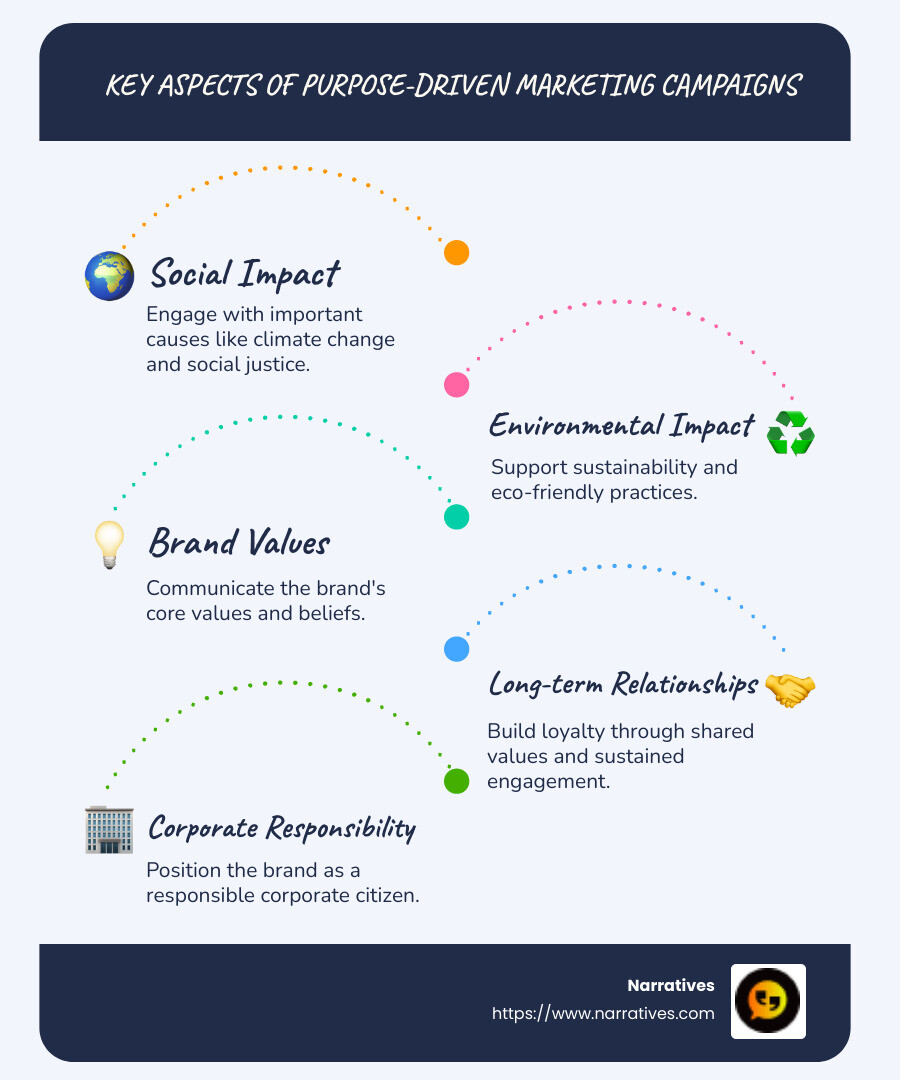
Key Aspects of Purpose-Driven Marketing Campaigns:
- Social and Environmental Impact: Engage with causes that matter, like climate change, social justice, and community development.
- Brand Values: Communicate what the brand stands for, building deeper connections with like-minded consumers.
- Long-term Relationships: Foster loyalty by appealing to shared values, leading to sustained customer support and advocacy.
In short, brands leveraging purpose-driven marketing are not just selling a product; they are sharing a mission. This approach can significantly impact society and ensure that the business is seen as a responsible corporate citizen.
Common Purpose-driven marketing campaigns vocab:
Defining Purpose-Driven Marketing Campaigns
Purpose-driven marketing campaigns are about aligning a brand's mission with social or environmental causes that resonate with consumers. These campaigns go beyond traditional marketing by focusing on the values and issues that matter most to people.
Social and Environmental Causes
At the heart of these campaigns are social and environmental causes. Brands engage with issues like climate change, racial justice, and community development. For example, Patagonia's "Don't Buy This Jacket" campaign encouraged consumers to think about sustainability and reduce unnecessary purchases. This campaign wasn't just about selling jackets; it was about promoting environmental awareness and action.
Brand Mission
A brand's mission is crucial in purpose-driven marketing. Companies like Tesla are excellent examples. Tesla's mission "to accelerate the world's transition to sustainable energy" shows how a brand can focus on a broader goal than just selling cars. Tesla's commitment to sustainability is evident in their quick response during the COVID-19 pandemic, where they repurposed car parts to build ventilators for hospitals.
Consumer Values
Consumer values play a significant role in these campaigns. People today want to support brands that reflect their beliefs. Gen Z, for instance, is passionate about transparency, social care, and climate change. Brands that align with these values can build stronger connections and foster brand loyalty.
Whole Foods, with its focus on nourishing both people and the planet, appeals to consumers who value sustainability and quality. By emphasizing these values, Whole Foods sets itself apart from other grocery chains and attracts a loyal customer base.

Purpose-driven marketing campaigns are about more than just business. They are about making a meaningful impact on society and building lasting relationships with consumers. By focusing on social and environmental causes, aligning with a clear brand mission, and resonating with consumer values, brands can create positive change and stand out in the marketplace.
The Significance of Purpose-Driven Marketing
Purpose-driven marketing campaigns are more than just a trend—they're a powerful way for brands to connect with consumers and make a real difference. Let's explore why this approach is so significant.
Authenticity and Consumer Trust
Authenticity is at the core of purpose-driven marketing. When brands genuinely commit to causes, they build trust and credibility with consumers. This trust is crucial because today's consumers, especially Gen Z, are savvy and skeptical of traditional advertising. They crave honesty and transparency.
For instance, SheaMoisture's "It Comes Naturally" campaign showcases the brand's authentic commitment to supporting Black female artists and businesses. By pledging proceeds to invest in Black-owned businesses, SheaMoisture demonstrates real action, not just words. This kind of authenticity fosters deep trust and loyalty among consumers.
Societal Impact
Purpose-driven marketing isn't just about boosting sales; it's about making a societal impact. Brands have the power to address pressing issues like poverty, inequality, and climate change. By partnering with nonprofits or grassroots organizations, they can become catalysts for progress.
Take Patagonia, for example. Their environmental activism, like the "Don't Buy This Jacket" campaign, urges consumers to think about sustainability. Beyond marketing, Patagonia donates profits to environmental causes, making a tangible impact on conservation efforts.
Building Stronger Consumer Relationships
Brands that align with consumer values can forge lasting relationships. People want to support companies that share their ideals and are working towards a better world. This emotional connection often translates into increased brand loyalty and advocacy.
Whole Foods, with its focus on sustainability and quality, appeals to consumers who care about the planet. By emphasizing these values, Whole Foods creates a unique retail niche, attracting a dedicated customer base that values more than just low prices.
In summary, purpose-driven marketing campaigns are a game-changer. They offer authenticity, build trust, and make a societal impact. By aligning with consumer values, brands can create meaningful connections and stand out in a crowded marketplace.
5 Inspiring Purpose-Driven Marketing Campaigns
Let's explore some standout purpose-driven marketing campaigns that have made waves with their innovative approaches and meaningful impact. These brands have not only captured consumer attention but have also contributed positively to society.
Patagonia’s Environmental Activism
Patagonia is a trailblazer in environmental activism. Their "Don't Buy This Jacket" campaign was a bold move, urging consumers to reconsider unnecessary purchases and accept sustainability. But Patagonia's commitment doesn't stop at clever slogans. They donate a portion of their profits to environmental causes and actively campaign for conservation efforts. Their creation of the 1% for the Planet program further emphasizes their dedication to environmental stewardship. By encouraging businesses to donate 1% of their revenue to environmental causes, Patagonia has inspired a movement of eco-conscious corporate responsibility.

SheaMoisture’s Celebration of Black Female Artists
SheaMoisture's "It Comes Naturally" campaign is a shining example of how brands can support community and cultural identity. By showcasing the work of six Black female artists, SheaMoisture highlights the stories and heritage of Black women. The campaign is more than just marketing; it's a commitment to invest proceeds in Black-owned businesses through their Community Commerce program. This initiative not only empowers Black women but also strengthens community bonds and fosters economic growth.
Mars Petcare’s Extend a Paw Campaign
Mars Petcare, in partnership with Greater Goods Charity and Walmart, launched the "Extend a Paw" campaign to tackle pet hunger in shelters. For every purchase of select products at Walmart, Mars donated a meal to a hungry pet, with a goal of 2.7 million meals. This campaign, promoted through in-store signage and digital ads, shows how brands can address societal issues—in this case, pet overpopulation and shelter resource constraints—while engaging consumers in a meaningful cause.
Pop-Tarts’ Pride Box Initiative
In support of Pride Month, Pop-Tarts introduced their first-ever Pride box, created in partnership with NEONxGLAAD. This initiative celebrated the LGBTQ+ and BIPOC communities by featuring independent artists who decorated the pastries. Each week, Pop-Tarts released limited-edition boxes, with proceeds supporting partner organizations through grants. Additionally, Pop-Tarts committed $100,000 to GLAAD, reinforcing their dedication to fostering inclusive communities.
Crest and Oral-B’s Closing America’s Smile Gap
Procter & Gamble brands Crest and Oral-B launched the "Closing America’s Smile Gap" campaign to address oral health disparities. By partnering with organizations like America’s Toothfairy and Feeding America, they provided education, dental care access, and oral care products to 2 million people. This campaign highlights the significant role brands can play in improving health outcomes and supporting underserved communities through strategic partnerships.
These inspiring purpose-driven marketing campaigns demonstrate how brands can innovate and engage with communities while making a positive impact. By aligning with social and environmental causes, these companies not only improve their brand image but also contribute to a better world.
Purpose-Driven Marketing Campaigns: Strategies for Success
Creating a successful purpose-driven marketing campaign involves more than just good intentions. It requires strategic thinking and a genuine commitment to making a difference. Here are some key strategies that can help your brand succeed in this arena:
Cause-Related Marketing
Cause-related marketing involves partnering with nonprofit organizations to support specific causes. This strategy not only raises awareness but also funds for important issues. For example, Mars Petcare's "Extend a Paw" campaign, in collaboration with Greater Goods Charity and Walmart, tackled pet hunger. By donating a meal for every purchase of select products, they engaged consumers in a shared mission to support animal shelters.
Corporate Social Responsibility (CSR) Initiatives
CSR initiatives showcase a company's commitment to ethical business practices and community engagement. Patagonia is a standout example with its environmental activism. Through programs like 1% for the Planet, Patagonia encourages businesses to donate a portion of their revenue to environmental causes. This approach not only boosts brand loyalty but also positions the company as a leader in sustainability.
Advocacy and Activism
Advocacy and activism use a brand's platform to champion social or political change. Ben & Jerry's has long been a pioneer in this area. Their recent "Make Some Motherchunkin’ Change!" campaign calls on consumers to become activists in their communities, addressing issues like climate change and racial justice. By inspiring action, brands can build a community of engaged and passionate supporters.
Product-Driven Purpose
Product-driven purpose means designing products that address social or environmental challenges. Pop-Tarts' Pride Box initiative is a great example. By partnering with NEONxGLAAD, they created a product that celebrates the LGBTQ+ and BIPOC communities. Proceeds supported partner organizations, demonstrating how product design can align with and promote a brand's values.
These strategies highlight the diverse approaches brands can take to align their marketing efforts with meaningful causes. Whether through partnerships, product innovation, or advocacy, purpose-driven marketing can transform both businesses and communities.
Frequently Asked Questions about Purpose-Driven Marketing Campaigns
What is purpose-driven marketing?
Purpose-driven marketing is a strategy where brands align their messaging, actions, and resources with a social or environmental cause. Unlike traditional marketing, which focuses mainly on selling products, purpose-driven marketing aims to make a positive impact on society or the planet. Brands like Patagonia, for example, focus on environmental activism as part of their core mission, urging consumers to make sustainable choices. This approach resonates deeply with consumers who value authenticity and social responsibility.
How do purpose-driven campaigns benefit businesses?
Purpose-driven campaigns offer multiple benefits for businesses:
Build Trust and Credibility: By demonstrating genuine commitment to causes, brands establish themselves as trustworthy and responsible. This fosters consumer trust, as seen with companies like Tesla, which aligns its mission with sustainable energy.
Improve Brand Loyalty: When brands share values with their consumers, they create strong emotional bonds. This often leads to increased loyalty and advocacy. For instance, Whole Foods' emphasis on sustainability and quality has carved out a loyal customer base.
Drive Positive Change: These campaigns can lead to real-world impacts, addressing issues like poverty or environmental degradation. SheaMoisture's "It Comes Naturally" campaign, for example, supports Black female artists and invests in businesses owned by Black women, showcasing how brands can be catalysts for societal progress.
How can companies implement purpose-driven marketing?
Implementing purpose-driven marketing involves several key steps:
Identify Core Values: Companies should start by identifying their core values and aligning them with relevant causes. This ensures authenticity and consistency in messaging.
Engage in Partnerships: Partnering with nonprofits or community organizations can amplify a brand's impact. Cause-related marketing, like the collaboration between Mars Petcare and Greater Goods Charity, is an effective way to engage consumers.
Incorporate CSR Initiatives: Implementing corporate social responsibility programs demonstrates a company's commitment to ethical practices. Patagonia's 1% for the Planet program is a prime example of how CSR can improve brand reputation.
Focus on Product Innovation: Designing products that address social or environmental issues can strengthen a brand's purpose. Pop-Tarts' Pride Box initiative shows how product-driven purpose can align with broader social goals.
Leverage Advocacy and Activism: Brands can use their platforms to advocate for change, inspiring consumers to take action. Ben & Jerry's campaigns encourage community activism, illustrating how brands can drive social and political change.
By implementing these strategies, companies can create purpose-driven marketing campaigns that not only benefit their business but also contribute to a better world.
Conclusion
Purpose-driven marketing is more than just a trend—it's a necessity. As we’ve explored, aligning your brand with meaningful causes can build trust, inspire loyalty, and drive positive change. But how can your organization truly make a difference?
Narratives is here to help. We specialize in digital storytelling that lifts underrepresented voices and showcases the impact of non-profits and purpose-driven organizations. Through our high-quality, emotionally resonant video and multimedia content, we help you share your stories in a way that inspires action and builds lasting trust.
Partnering with non-profits is at the heart of what we do. We believe that by working together, we can amplify your mission and increase your visibility. Our approach is all about creating content that resonates with your audience and aligns with your values, ensuring that your message is both powerful and authentic.
If you're ready to harness the power of purpose-driven marketing and make a real impact, learn more about how Narratives can support your storytelling journey. Together, we can create content that not only tells your story but also makes a difference in the world.


.avif)