Broadcasting Change: The Role of Media in Social Movements

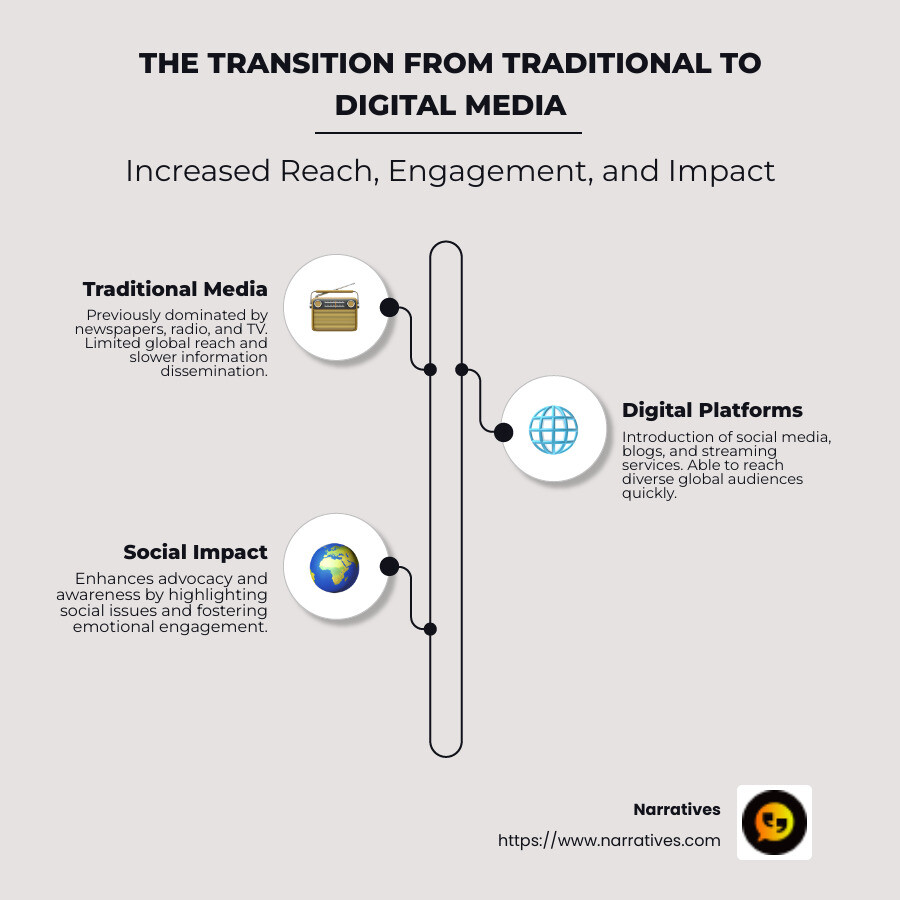
Social change through media has transformed how society addresses pressing issues and fosters movements. With the evolution of media—from traditional newspapers and radio to dynamic digital platforms—the potential for social impact has grown exponentially.
Media evolution: Once limited, media now includes traditional forms like radio and TV and digital platforms such as social media, blogs, and streaming services. This expansion has improved the reach and effectiveness of social movements, addressing audiences globally.
Digital platforms: These platforms amplify voices and enable rapid information sharing, making social issues more transparent and relatable. The internet and social media offer unique opportunities to engage with diverse audiences, mobilize resources, and drive change.
Social impact: Modern media supports advocacy and awareness by highlighting social injustices, ethical dilemmas, and community needs. It enables individuals and organizations to tell compelling stories that resonate emotionally and inspire action.
Through these mediums, we witness stories that reshape public perceptions, drive awareness, and spark global movements.
Quick Social change through media definitions:
The Evolution of Media and Its Impact on Social Change
The journey of media over the years has been nothing short of revolutionary. From the days of print and radio to the digital age of today, media has continuously evolved, opening new doors for social change through media.
Media Change
In the early days, media was a one-way street. Newspapers, radio, and TV broadcasted information to a passive audience. But with the rise of the internet, things changed. Suddenly, media became interactive. Platforms like blogs and social media allowed people to share their voices and stories, creating a vibrant two-way communication channel.
This change means that today, anyone with internet access can be a content creator. We’ve moved from a world where a few controlled the narrative to one where everyone can contribute. This democratization of media has paved the way for more inclusive social movements.
The Digital Age
The digital age has brought about an explosion in the accessibility of information. With just a few clicks, people can access a wealth of knowledge on any topic. This easy access has empowered individuals to educate themselves on social issues and become active participants in social change.

Social media platforms like Facebook and Twitter have become powerful tools for activism. They allow people to organize, mobilize, and spread messages faster than ever before. For example, during the Arab Spring, social media was instrumental in coordinating protests and sharing real-time updates.
Accessibility
One of the most significant impacts of media evolution is increased accessibility. Today, anyone with a smartphone can access news, join discussions, and participate in movements. This has broken down barriers and allowed marginalized voices to be heard.
Platforms like YouTube and podcasts provide a stage for underrepresented groups to share their stories, reaching audiences worldwide. This accessibility has led to a more informed public, ready to take action on issues that matter.
The evolution of media continues to shape how we perceive and engage with social change. As media becomes more inclusive and accessible, its potential to drive meaningful impact grows, bringing us closer to a more connected and empathetic world.
Social Change through Media: Key Examples
Throughout history, social change through media has been a powerful catalyst for movements across the globe. Let's explore some key examples where media played a pivotal role.
Egypt’s Digital Revolution
In 2011, Egypt witnessed a historic revolution that was significantly fueled by social media. The youth, frustrated with Hosni Mubarak's 30-year reign, turned to platforms like Facebook and Twitter to organize protests. A simple Facebook post calling for change on January 25 became a rallying cry that mobilized thousands.
Despite government attempts to control the narrative by shutting down traditional media and internet access, activists found ways to stay connected. They used hashtags like #jan25 to share real-time updates and coordinate efforts. The world watched as social media became a tool for empowerment and change.
Japan’s 2011 Quake
When Japan was struck by a devastating earthquake and tsunami in March 2011, traditional communication lines were down. People turned to social media to connect with loved ones and share information about affected areas.
Platforms like YouTube saw over 15,000 video uploads capturing the disaster's impact. Google launched "Person Finder" to help families reunite, and hashtags like #prayforjapan brought global attention and aid to the crisis. Social media became a lifeline, providing comfort and support during a time of need.
Tunisia’s Virtual Voices
Tunisia's journey to political freedom was amplified by social media. Under an oppressive regime, platforms like Facebook and Twitter were initially banned. However, citizens found ways to bypass these restrictions, using social media to raise awareness and demand change.
During the Arab Spring, social media became a venue for discussion and activism. It empowered Tunisians to speak out against censorship and fight for freedom of speech. This digital connectivity played a crucial role in the country's transition to democracy.
Twestival
Twestival, a global series of events organized through Twitter, exemplifies how social media can drive philanthropy and community action. By using the power of tweets, Twestival has raised millions for various causes since its inception.
Participants worldwide come together both online and offline to support local charities, demonstrating the potential of social media to unite people for a common cause. It shows how digital platforms can be harnessed to create tangible social impact.
These examples highlight the transformative power of media in driving social change. Whether through organizing revolutions, providing disaster relief, or supporting charitable causes, media continues to be a vital tool for empowering communities and fostering change.
How Media Influences Public Belief and Attitudes
Media has an incredible ability to shape public beliefs and attitudes. This is achieved through audience engagement, emotional connectedness, and understanding. Let's break these down.
Audience Engagement
Engagement is about capturing the audience's attention and encouraging interaction. Content is everywhere, making engagement more challenging but also more critical.
Social media platforms, like Facebook and Twitter, allow users to interact with content through likes, shares, and comments. This interaction can amplify a message and reach a wider audience. For instance, during Egypt's Digital Revolution, engagement with social media posts helped spread awareness and mobilize action.
Emotional Connectedness
For media to influence attitudes, it must create an emotional connection. This means resonating with the audience on a personal level.
Consider the 2011 Japan earthquake. Videos and images shared on platforms like YouTube didn't just inform; they moved people emotionally. The global response, driven by empathy and solidarity, was immense. Hashtags like #prayforjapan connected people emotionally, encouraging them to contribute to relief efforts.
Understanding
Understanding is the foundation of informed action. Media plays a crucial role in educating the public about issues and solutions.
Solutions journalism is a great example of media enhancing understanding. By focusing on solutions rather than problems alone, it empowers audiences with knowledge and inspires them to act. As Jenifer Morgan from Stanford Social Innovation Review notes, "People trust solutions journalism more than traditional news, and it makes them feel less anxious, more connected, and very importantly, more likely to take action."
In short, when media engages audiences, connects with them emotionally, and improves their understanding, it can significantly influence public beliefs and attitudes. This sets the stage for meaningful social change.
The Role of Social Media in Modern Activism
Social media has become a powerful tool for modern activism. It's reshaping how movements start, grow, and succeed. Let's explore three key aspects: hashtag activism, viral protests, and online communities.
Hashtag Activism
Hashtags are more than just symbols. They're rallying cries for change. They allow people to unite under a common cause with just a few keystrokes.
One of the most famous examples is #jan25 during Egypt's Digital Revolution. This hashtag not only marked a date but also symbolized a movement against a 30-year regime. It helped gather global attention and support, showing the world the power of collective voices online.
Viral Protests
Social media can turn a local protest into a global phenomenon. This is the essence of viral protests.
Consider the role of social media in the 2011 Japan earthquake. While not a protest, the rapid spread of information and emotional stories created a global wave of support and action. Similarly, movements like the ALS Ice Bucket Challenge used virality to raise awareness and funds, proving that social media can drive both awareness and tangible outcomes.
Online Communities
Online communities are the backbone of social media activism. They provide a space for like-minded individuals to connect, share ideas, and mobilize action.
In Tunisia, social networks broke through the barriers of censorship, allowing citizens to discuss political issues openly. These virtual voices contributed significantly to the country's newfound political freedom. Online communities empower people to take local issues to a global stage, fostering solidarity and collective action.
Social media is changing activism by making it more accessible and immediate. It allows movements to grow rapidly, connect emotionally, and act collectively, paving the way for significant social change.
Frequently Asked Questions about Social Change through Media
How does media influence social change?
Media has the power to influence social change by shaping public opinion, raising awareness, and mobilizing action. It provides a platform for voices that might otherwise go unheard and can highlight issues that need attention. For example, solutions journalism focuses on exploring issues through a lens that encourages action. This type of media is trusted more by people and makes them feel connected and empowered to act, as noted by Jenifer Morgan from Stanford Social Innovation Review.
Media can also serve as a catalyst for change by providing real-time coverage of significant events. During Egypt’s Digital Revolution, social media was pivotal in organizing protests and drawing international attention to the cause. Similarly, during Japan’s 2011 earthquake, social media platforms were instrumental in coordinating relief efforts and sharing critical information.
What are some examples of social change through media?
There are numerous examples where media has played a crucial role in driving social change:
Egypt’s Digital Revolution: Social media was a key tool in organizing protests against the long-standing regime. The use of platforms like Facebook and Twitter helped spread the message and gather support globally.
Japan’s 2011 Quake: Social media provided a lifeline for communication and coordination of relief efforts. Platforms like YouTube and Twitter became vital in sharing information and rallying support worldwide.
Tunisia’s Virtual Voices: Social networks broke through government censorship, allowing citizens to discuss political issues openly. This contributed significantly to the country's political change.
These examples illustrate the profound impact media can have in amplifying voices and driving social change.
How can non-profits leverage media for social impact?
Non-profits can harness the power of media to amplify their message and drive social impact in several ways:
Storytelling: By sharing compelling stories and narratives, non-profits can connect emotionally with their audience. This can inspire action and build a community around their cause.
Targeted Campaigns: Leveraging digital platforms allows non-profits to reach specific audiences with custom messages. This ensures their content reaches the right people at the right time, maximizing impact.
Collaboration and Partnerships: Working with media outlets and influencers can improve visibility and credibility. Partnerships can also provide access to resources and expertise that can amplify their efforts.
Engagement and Interaction: Non-profits can use social media to engage directly with their audience, fostering a sense of community and encouraging participation in their initiatives.
By strategically using media, non-profits can effectively promote their causes, raise awareness, and drive meaningful social change.
Conclusion
In today's digital landscape, Narratives stands as a guide for social change through media. As a digital storytelling partner, we specialize in elevating underrepresented voices and crafting multimedia content that resonates emotionally. By doing so, we help non-profits and purpose-driven organizations share their impact stories in ways that inspire action, build trust, and increase visibility.
Digital storytelling is more than just sharing a message—it's about creating a connection. When non-profits partner with us, they gain the ability to reach audiences with stories that matter. Our approach ensures that these stories are not only heard but felt, driving engagement and fostering a supportive community around their causes.
Non-profit partnerships are at the heart of what we do. By collaborating with organizations committed to making a difference, we amplify their efforts and extend their reach. Through strategic use of digital platforms, we help non-profits connect with audiences in meaningful ways, ensuring their campaigns are both targeted and impactful.
For non-profits looking to harness the power of media for social impact, our services provide the tools and expertise needed to steer the digital world effectively. By focusing on community-driven storytelling and leveraging our multimedia capabilities, we empower organizations to make a lasting difference.
Explore how Narratives can help your organization make an impact through storytelling. Learn more about our media services and find how we can partner with you to drive social change.

.avif)