Social Impact Storytelling: Using Purposeful Films to Drive Change
Social impact storytelling begins when a story resonates with its audience, creating subtle yet meaningful shifts in perspective. Effective storytelling is not about a single technique; it is a deliberate use of film, sound, and real-life experiences to engage attention, evoke empathy, and inspire action.
Many nonprofits have sensed this change for years. They rely on narrative work to explain what reports or press releases can’t. Yet the field is evolving. Visual culture moves faster, audiences skim quicker, and meaningful messages risk being drowned out. So the question becomes: how do purposeful films still break through the noise?
Let’s step into that answer by examining how impact-driven stories operate beneath the surface.
How Social Impact Storytelling Builds Emotional Access Rather Than Just Awareness
Awareness is easy. A headline can spark that. Social impact storytelling works on something deeper, more layered. It involves uncertainty, contradiction, or the uncomfortable truths often softened in traditional marketing.
Film, especially documentary style work, offers a space to sit with nuance. A camera lingers on a face longer than a caption ever could. Silence functions as its own evidence. And viewers, without being told, begin forming their own recognition of what a community is facing.
This approach appears more effective for nonprofits because emotional access translates into support.
Why Purposeful Films Often Succeed Where Data Alone Struggles
There’s an interesting tension in advocacy. Organizations track everything: outcomes, demographics, funding gaps, service metrics. Data proves importance. But meaning rarely comes from numbers alone. Purposeful films lean on sensory engagement. Viewers hear breath, uneven footsteps, doors closing, and laughter that carries two emotions at once.
Those sensory cues do something subtle. They make information feel lived rather than abstract. And audiences, especially supporters of nonprofit causes, tend to respond strongly to lived truth.
Some practitioners believe purposeful films work because they activate narrative transportation. Others argue it’s simpler than that. People just trust what feels real.
Either way, the medium has become essential in storytelling for nonprofits that hope to move beyond traditional updates and into a deeper connection.
Inside Nonprofit Storytelling: The Craft, The Gaps, The Responsibility
Nonprofit storytelling has its own constraints. Time, budget, and the ethical weight of representing someone else’s lived experience. The process often involves long conversations before a single frame is shot. Teams must understand power dynamics, consent, and how communities define themselves, not how outsiders define them.
A few tensions frequently appear:
- balancing dignity with honesty
- finding narrative arcs without simplifying complexity
- avoiding savior framing
- acknowledging systemic issues without overwhelming viewers
These aren’t failures. They’re part of the craft. Good nonprofit storytelling is rarely perfect. It wavers, repositions, and hesitates. That human uncertainty often becomes the thing that makes it credible.
Where Multimedia Content Production Adds Scale To Mission Driven Narratives
While film remains the centerpiece for many social campaigns, multimedia content production gives organizations a larger toolkit. Short clips for social platforms. Audio diaries. Photograph collections. Interactive timelines. Each format reaches a different layer of the public.
When these formats work together, they build something close to a narrative ecosystem. Instead of relying on one communication channel, nonprofits can introduce audiences to the same story at different depths.
How Social Impact Storytelling Shapes Public Understanding Over Time
Change rarely happens after one viewing. What seems more likely is cumulative influence. A purposeful film may move someone once, but repeated exposure to related stories, updates, and lived experiences builds recognition that sticks.
Public understanding develops in waves. First exposure brings curiosity. Repeated exposure builds credibility. And when enough stories circulate, public imagination shifts, often without people noticing when the change began.
Social impact storytelling works well in this slow arc because it gives audiences mental models to interpret social issues. They start seeing patterns. They recognize faces. A community that once felt distant becomes familiar.
The Ethical Edge: When Storytelling Risks Overshadowing The Community It Aims To Support
Some filmmakers argue that every impact story sits on a fine line. On one side is empowerment. On the other is extraction. Purposeful films carry enormous responsibility because they operate with real lives and real consequences.
Indicators of ethical storytelling may include:
- shared authorship with the community
- transparent consent processes
- portraying individuals as agents, not subjects
- allowing participants to preview or contextualize their representation
When these principles guide the process, storytelling becomes a form of partnership rather than performance.
The Growing Demand For Better Stories In A Fragmented Media Landscape
Audiences appear fatigued by sensationalized news cycles. Many express a desire for narratives rooted in empathy and human detail. This shift gives social impact storytelling a distinct role in modern media. Purpose driven films have room to breathe where traditional news often rushes.
Nonprofits that invest in thoughtful storytelling often see a secondary benefit. Supporters feel closer to the mission. Donors understand the real faces behind the causes. Volunteers recognize the value of their involvement.
This doesn’t turn storytelling into marketing. It simply acknowledges how human beings connect.
Considering Where To Begin If A Nonprofit Has Never Used Film Before
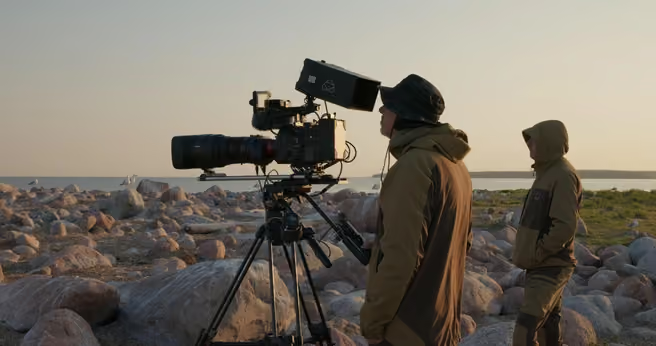
Not every organization feels ready to dive into film production. It can seem overwhelming. Too much equipment. Too many decisions. Yet the process often starts with something modest. A single conversation on camera. An interview recorded outdoors, where ambient sound adds texture. A moment that feels true.
From there, teams build comfort. They test formats. They explore what their community wants to express, not just what donors want to hear.
Over time, a storytelling practice forms.
Amplify Your Mission Through Stories That Matter
When a team seeks deeper narrative impact, collaboration becomes essential. Nonprofits can work with organizations like Narratives, a 501(c)(3) dedicated to human-centered storytelling with communities often overlooked by mainstream media. They create purposeful films that highlight both the challenges and resilience of the people they serve, helping nonprofits amplify their mission without compromising authenticity.
Partner with Narratives today to turn real community experiences into powerful stories that inspire action.
FAQs
1. Are small nonprofits able to use film effectively?
Yes. Many begin with simple interviews or short scenes before expanding into larger projects.
2. How does multimedia content production support advocacy work?
It adds variety and scale, letting organizations reach audiences across multiple platforms.
3. Is ethical approval necessary for nonprofit storytelling?
While formal review boards aren’t always required, strong consent processes and community collaboration remain essential.
.avif)