Social Media Strategies for Nonprofits: A Guide to Success

The Power of Social Media Strategy for Nonprofits
Social media strategy for nonprofits is critical for success in today's digital age. Whether you're aiming to amplify your mission, engage with supporters, or drive donations, a well-crafted social media strategy is a must-have.
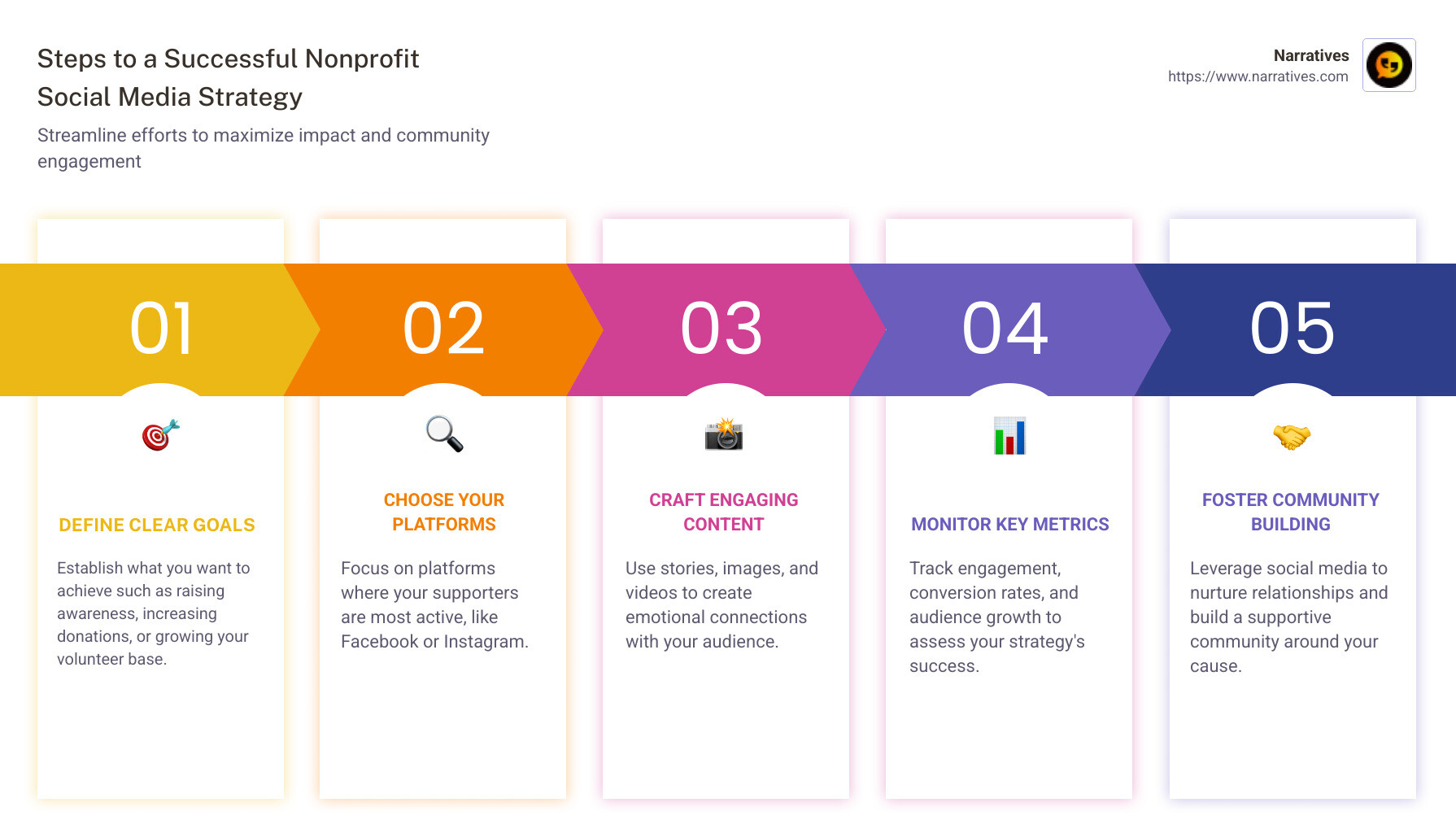
Here’s a quick summary of the core steps to develop an effective strategy:
- Define Clear Goals: What do you want to achieve—raise awareness, increase donations, or grow your volunteer base?
- Choose Your Platforms Wisely: Focus on where your supporters are most active, like Facebook or Instagram.
- Craft Engaging Content: Use stories, images, and videos to connect emotionally with your audience.
- Monitor Key Metrics: Keep track of engagement, conversion rates, and audience growth to measure success.
Social media has revolutionized the way nonprofits can connect with the world. It serves as both the marketing backbone and a powerful communication tool that can reach vast audiences with minimal resources. This not only improves digital marketing efforts but also helps foster relationships and build communities.
To get started, think about how you’re using digital channels. Are you telling your story in a compelling way? With the right strategy, social media can lift your organization's visibility and impact across diverse communities and causes.
Social media strategy for non profits terms to remember:
- instagram strategy for nonprofits
- sample social media plan for nonprofits
- social media tips for nonprofits
Benefits of a Social Media Strategy for Nonprofits
A social media strategy for nonprofits can work wonders for your organization. It's not just about getting likes and shares; it's about building meaningful relationships, engaging your community, and doing it all without breaking the bank.
Relationship Building
Social media is a fantastic tool for relationship building. It allows nonprofits to connect with supporters on a personal level. By sharing stories, mission updates, and success stories, you can create a sense of community among your followers.
Consider this: 82% of Americans use social media sites. This means your supporters are already there, waiting to engage with your content. By consistently posting and interacting with your audience, you can strengthen these relationships and turn casual followers into dedicated supporters.
Minimal Resources
One of the greatest advantages of using social media is that it requires minimal resources. Unlike traditional marketing methods, social media allows nonprofits to reach a wide audience without spending a fortune.
With platforms like Facebook and Instagram, you can share updates, photos, and videos for free. And if you choose to invest in ads, you can start with a small budget and scale up as you see results.
The key is to be strategic. Focus on platforms where your audience is most active and create content that resonates with them. This way, you can maximize your impact without stretching your resources thin.
Engagement
Engagement is the heartbeat of social media. It's not enough to have followers; you need to engage them. This means responding to comments, asking questions, and encouraging followers to share their stories.
Engagement isn't just about likes and shares. It's about creating a dialogue with your audience. When supporters feel heard and valued, they're more likely to stick around and support your cause.
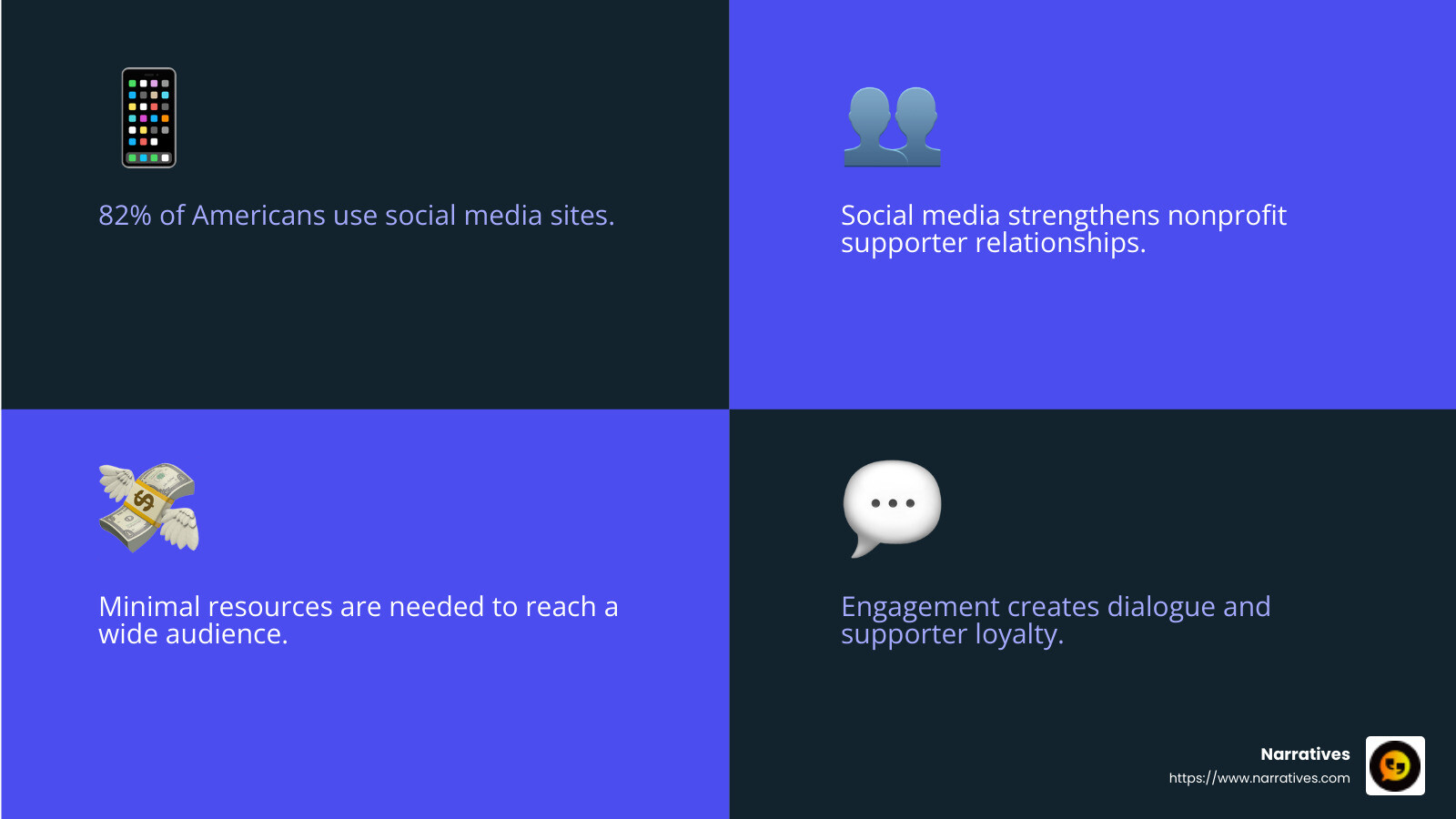
By focusing on relationship building, using minimal resources, and fostering engagement, your nonprofit can harness the full potential of social media. This approach doesn't just amplify your message; it helps create a community of passionate advocates for your cause.
Next, we'll dive into the essential steps for crafting your nonprofit social media strategy to ensure your efforts are as effective as possible.
Crafting Your Nonprofit Social Media Strategy
Creating a social media strategy for nonprofits involves several key steps. It's not just about posting content; it's about setting clear goals, choosing the right platforms, and measuring success.
Goal Definition
First things first: define your goals. What do you want to achieve with social media? Common goals include raising brand awareness, spreading important information, increasing website traffic, building meaningful relationships, and driving donations.
Tip: Assign a metric to each goal. For example, if your goal is to increase website traffic, track the number of clicks your social media posts generate.
Platform Selection
Not all social media platforms are created equal. Each has its own strengths and audience. For instance, Facebook is great for community building, while Instagram is perfect for visual storytelling.
Start by focusing on one or two platforms where your audience is most active. This will help you allocate your resources effectively.
Example: A nonprofit focused on youth engagement might prioritize TikTok and Instagram, where younger demographics are most active.
Content Calendar
A content calendar is your roadmap. It helps you plan what to post and when. Consistency is key, so decide on your posting frequency and stick to it.
Pro Tip: Use the 80/20 rule. 80% of your content should be educational or entertaining, while 20% can be promotional.
Social Media Policy
A social media policy ensures everyone in your organization is on the same page. It outlines who posts what, the tone and voice to use, and how to handle comments and conflicts.
Quote: "The reality is that no organization—either for-profit or non-profit—has control over its image any longer," says Chris Bailey, Executive Director of Bailey WorkPlay. A solid policy can help manage this reality.
Metrics Analysis
Finally, track your progress. Use social media analytics tools to measure engagement, conversion rates, and follower demographics.
Focus on both quantity and quality. Are your follower numbers growing? Are you seeing more engagement and conversions?
Stat: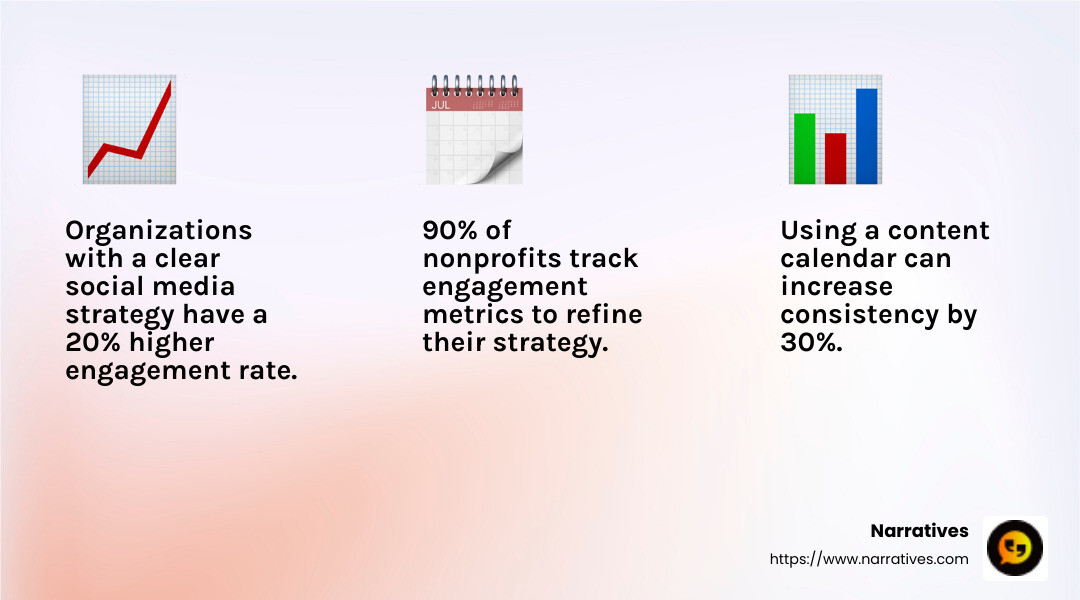
By defining goals, selecting the right platforms, planning with a content calendar, setting a social media policy, and analyzing metrics, your nonprofit can create a powerful social media strategy. This structured approach ensures your social media efforts are not just active but effective.
Next, we'll explore how to choose the right social media platforms for your nonprofit's unique needs.
Choosing the Right Social Media Platforms
Picking the right platforms is crucial for a successful social media strategy for nonprofits. Different platforms suit different goals and audiences. Let's explore the strengths of each major platform to help you make informed choices.
With nearly 3 billion users, Facebook is a powerhouse for nonprofits. It's ideal for sharing event details, creating fundraising pages, and building a community. Use Facebook's live-streaming feature to offer behind-the-scenes glimpses of your work.
Tip: Engage with your audience through comments and messages. This builds trust and a sense of community.
Instagram is all about visuals. It's a great platform for nonprofits to showcase their impact through photos, videos, and stories. The platform's younger user base makes it perfect for reaching Millennials and Gen Z.
Pro Tip: Use Instagram Reels and Stories to engage your audience. Behind-the-scenes content resonates well here.
TikTok
If you're targeting a younger audience, TikTok is the place to be. Its short, engaging video format is perfect for storytelling. Use trending sounds and hashtags to increase your reach.
Feature: TikTok's "Donation Stickers" allow users to donate directly through the app, making fundraising easier.
X (formerly Twitter)
X is best for quick updates and engaging in conversations. Its character limit encourages concise communication. Use hashtags to run campaigns and join larger conversations.
Example: Participate in awareness days with relevant hashtags like #WorldRefugeeDay to increase visibility.
LinkedIn is not just for job seekers. It's a valuable platform for nonprofits to share educational content and connect with professionals. An optimized profile can attract donors who research before donating.
Stat: 71% of surveyed donors follow at least one nonprofit on LinkedIn, making it crucial for professional engagement.
Summary Table
| Platform | Best For | Key Features |
|---|---|---|
| Community building, fundraising | Live-streaming, event sharing | |
| Visual storytelling, youth outreach | Reels, Stories, influencer marketing | |
| TikTok | Engaging younger audiences | Donation Stickers, trending content |
| X | Quick updates, hashtag campaigns | Concise posts, media interactions |
| Professional engagement | Educational content, donor research |
Choosing the right platform means understanding where your audience spends their time and what type of content they engage with. By focusing your efforts on the platforms that best align with your goals, you'll maximize your impact and build a stronger online presence.
Next, we'll discuss how to create engaging content that captures attention and drives action on these platforms.
Creating Engaging Content for Nonprofits
Creating engaging content is the heart of any successful social media strategy for nonprofits. It's what captures attention and drives action. Let's look at some effective content types and strategies.
Videos
Videos are a powerful tool for storytelling. They capture emotions and can convey complex messages quickly. Platforms like Instagram, TikTok, and Facebook are perfect for short, impactful videos.
Tip: Keep videos under two minutes to maintain attention. Use them to showcase success stories, upcoming events, or behind-the-scenes footage.
Hashtags
Hashtags are essential for increasing the reach of your posts. They help categorize content and join larger conversations.
Example: Running a campaign for animal rescue? Use a hashtag like #AdoptDontShop to connect with a larger movement and encourage user-generated content.
Static Posts
Static posts, like images and infographics, are great for sharing impactful visuals and concise information. They work well on platforms like Instagram and Facebook.
Pro Tip: Use high-quality images that tell a story. Pair them with a compelling caption to boost engagement.
Consistency
Consistency is key to building a recognizable online presence. It involves regular posting and maintaining a coherent brand voice.
Strategy: Create a content calendar to plan and schedule posts. This ensures a steady stream of content and keeps your audience engaged.
Ads
Advertisements can amplify your reach and attract new supporters. Platforms like Facebook and Instagram offer targeted ad options that allow you to reach specific demographics.
Insight: Use lookalike audiences to find new supporters similar to your existing ones. Retargeting ads can bring back previous visitors to your website.
By using these strategies, you can create content that not only engages but also inspires action. Next, we'll explore the key metrics to measure the success of your social media efforts.
Social Media Strategy for Nonprofits: Key Metrics to Measure
Measuring the success of your social media strategy for nonprofits is crucial. It helps you understand what's working and where you need to improve. Here are the key metrics to focus on:
Click-Through Rate (CTR)
CTR measures how often people click on the links in your posts. It's a good indicator of how effective your content is at driving traffic to your website.
- How to Improve: Use clear and compelling calls to action. Make sure your links are easy to find and relevant to the content.
Conversion Rate
This metric shows how many people take a desired action, like signing up for a newsletter or making a donation, after clicking through to your site.
- Tip: Optimize your landing pages to ensure they match the expectations set by your social media content. This alignment can improve your conversion rate.
Engagement
Engagement includes likes, shares, comments, and other interactions with your posts. High engagement means your audience finds your content interesting and valuable.
- Strategy: Ask questions and encourage discussions to boost engagement. Respond to comments to build relationships and community.
Retention
Retention measures how well you keep your audience over time. This includes returning visitors to your social media pages and website.
- Insight: Consistently provide valuable content and interact with your audience to improve retention. Regular updates keep your audience coming back for more.
Demographics
Understanding who your audience is can help tailor your content and strategy. Look at age, location, interests, and other demographic data.
- Pro Tip: Use platform-specific analytics tools like Facebook Insights to gather detailed demographic information. This data can guide your content creation and advertising strategies.
By focusing on these metrics, nonprofits can ensure their social media efforts are effective and aligned with their goals. These insights will help refine strategies and maximize impact.
Next, we'll address some frequently asked questions about using social media for nonprofits.
Frequently Asked Questions about Social Media Strategy for Nonprofits
How can nonprofits effectively use social media?
Nonprofits can make a big impact on social media by focusing on a few key strategies:
Tell Your Story: Share compelling stories about your mission and impact. Use photos, videos, and testimonials to bring these stories to life.
Engage Your Audience: Respond to comments and messages promptly. Ask questions and encourage discussions to foster a sense of community.
Use Video Content: Video is highly engaging and can convey your message more effectively than text alone. Consider live streaming events or sharing behind-the-scenes looks at your work.
Collaborate with Influencers: Partner with influencers who align with your cause. They can help amplify your message and reach new audiences.
By implementing these strategies, nonprofits can build stronger relationships with their audience and drive more support for their cause.
What are the best platforms for nonprofit social media?
Choosing the right platforms is crucial for any social media strategy for nonprofits. Here are some top choices:
Facebook: Great for building a community and sharing a variety of content types. Its donation tools can also facilitate fundraising efforts.
Instagram: Ideal for visual storytelling. Use images and short videos to engage your audience, and take advantage of Instagram Stories for real-time updates.
TikTok: Perfect for reaching younger audiences with creative, short-form videos. TikTok's algorithm can help your content reach a wide audience quickly.
LinkedIn: Best for professional networking and sharing in-depth content. It's a good platform for connecting with potential partners and volunteers.
By focusing on the platforms that best suit their goals and audience, nonprofits can maximize their social media impact.
How do you measure success in nonprofit social media campaigns?
To measure the success of your social media strategy for nonprofits, focus on these key metrics:
Engagement Rate: Track likes, shares, comments, and other interactions to gauge how well your content resonates with your audience.
Click-Through Rate (CTR): Measure how often people click on the links in your posts to assess the effectiveness of your call to action.
Conversion Rate: Look at how many people take a desired action, such as donating or signing up for a newsletter, after engaging with your content.
Audience Growth: Monitor your follower count over time to ensure your audience is expanding.
Content Reach: Check how many people see your posts to ensure your message is getting out there.
By keeping an eye on these metrics, nonprofits can refine their strategies and ensure their social media efforts are driving results.
In the next section, we'll conclude with how Narratives uses digital storytelling to improve brand awareness and community engagement.
Conclusion
Narratives stands out as a leader in helping nonprofits use storytelling to lift their brand and mission. We believe in the power of digital storytelling to transform how nonprofits connect with their audiences. By focusing on high-quality, emotionally resonant video and multimedia content, we help organizations share their impact stories in a way that inspires action and builds trust.
Our approach centers on community-driven storytelling, which means amplifying the voices of those who are often underrepresented. This not only improves a nonprofit's brand awareness but also fosters a deeper connection with its audience. When people see authentic stories that resonate with their experiences or aspirations, they are more likely to engage, support, and spread the word.
By partnering with us, nonprofits can effectively leverage social media to reach new heights. We provide the tools and expertise needed to create compelling content that not only tells a story but also drives meaningful engagement and support.
To learn more about how Narratives can help your nonprofit harness the power of storytelling, visit our media service page. Let's work together to make a lasting impact through the art of storytelling.


.avif)