Creating Bonds: Using Storytelling to Build Community

Storytelling and community building are powerful tools for creating meaningful relationships and fostering unity. At its core, storytelling is about sharing experiences that connect us on a deeper level. Here are the key elements where storytelling intertwines with effective community building:
- Connection: Stories evoke emotions that help create bonds among people.
- Identity: Shared narratives contribute to a collective sense of identity within a community.
- Communication: They simplify complex ideas and break down barriers to understanding.
- Action: Compelling stories motivate communal participation and inspire positive change.
Chimamanda Ngozi Adichie, a renowned author, famously reflects on the transformative power of stories: “Many stories matter. Stories have been used to dispossess and to malign. But stories can also be used to empower, and to humanize.”
In today's world, communities—from non-profits to social impact organizations—are learning that stories can do more than just entertain. They're a way to get messages across, build alliances, and create steadfast communities, both locally and globally.
The rise of digital tools and platforms offers exciting opportunities to amplify these stories, making them more accessible and impactful. When organizations harness the power of storytelling, they don't just tell stories—they help build bridges that connect people across distances and differences.
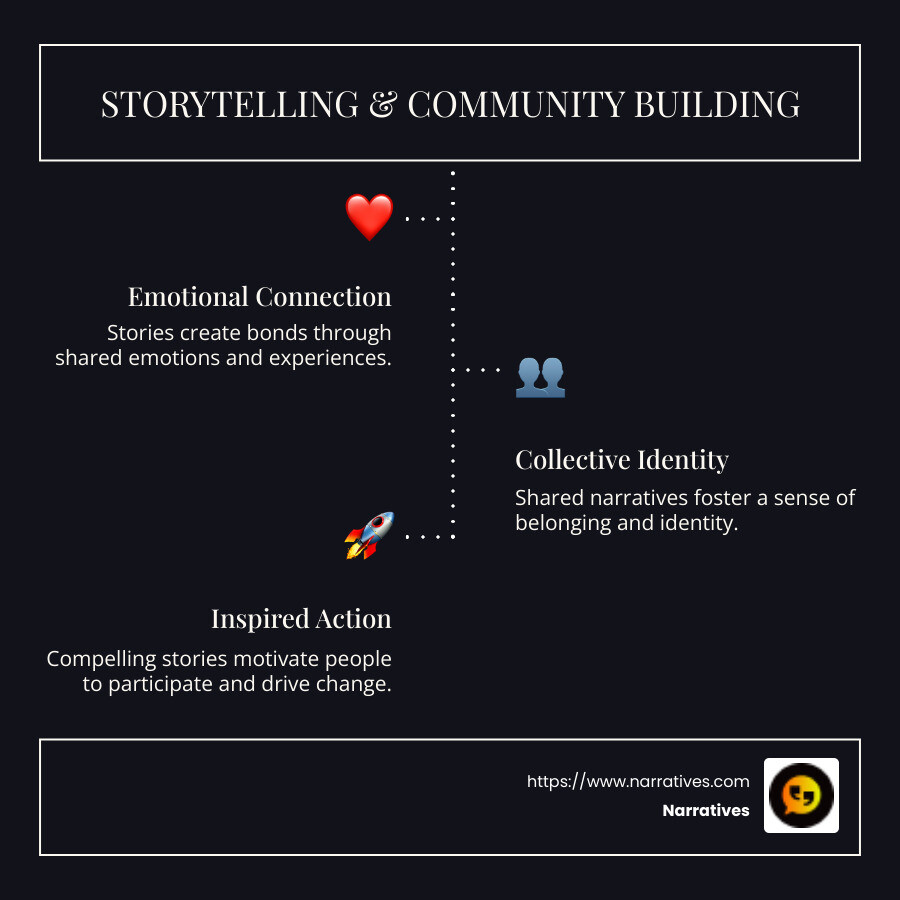
Storytelling and community building word guide:
The Power of Storytelling in Community Building
Storytelling is a powerful tool for building strong communities. It does this by creating emotional connections, fostering shared experiences, and cultivating empathy.
Emotional Connection
Stories have the unique ability to touch our hearts. When organizations share stories that resonate with the experiences of community members, they create deep emotional connections. For instance, a story about a local initiative that helped a family in need can make people feel more connected to the cause and each other. This emotional bond is crucial for community building, as it encourages people to care and get involved.
Shared Experiences
Stories allow people to share experiences, even if they haven't lived them personally. This shared understanding is a cornerstone of community identity. When community members see themselves reflected in a narrative, they feel like they belong to something bigger. For example, when an organization highlights how a community came together to support a local food pantry, it creates a sense of unity and shared purpose.
Empathy
Empathy is the ability to understand and share the feelings of others. Storytelling fosters empathy by allowing us to see the world through someone else's eyes. This is particularly important in diverse communities, where understanding different perspectives can bridge gaps and bring people together. Effective storytelling breaks down barriers and fosters a deeper understanding of diverse perspectives, as seen in initiatives like Narratives, which amplify underrepresented voices to cultivate empathy and connection.
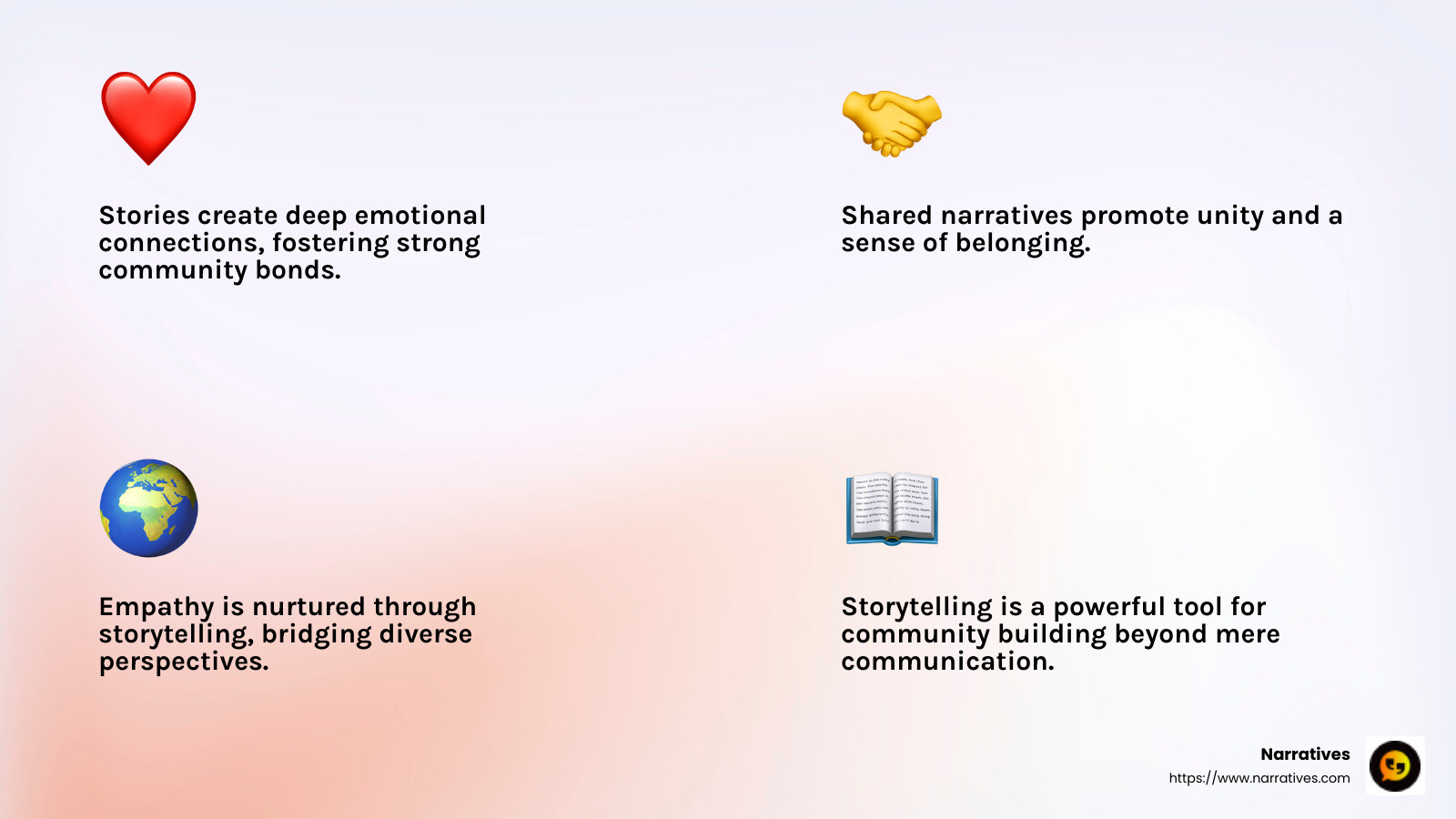
Storytelling is more than just a means of communication. It's a way to weave the fabric of a community, connecting people through shared emotions and experiences. When organizations use storytelling effectively, they can inspire action, build trust, and strengthen the bonds that hold communities together.
Next, we'll explore storytelling techniques that can improve community engagement.
Storytelling Techniques for Community Engagement
When it comes to storytelling and community building, certain techniques stand out for their ability to engage and empower communities. Let's explore some of these methods, focusing on participatory storytelling, narrative processes, and cultural sensitivity.
Participatory Storytelling
Participatory storytelling involves the community in the storytelling process. It's about giving everyone a voice and a chance to share their stories. This approach not only empowers individuals but also builds a stronger sense of community identity. By involving community members in crafting their narratives, organizations can create a mix of stories that reflect the diverse experiences and perspectives within the community.
For example, a non-profit might host storytelling workshops where community members can share their personal experiences. This collaborative approach not only enriches the narrative but also fosters a sense of ownership and pride among participants.
Narrative Processes
Narrative processes are the methods used to gather, shape, and share stories. Effective narrative processes ensure that stories are authentic and resonate with the audience. This involves careful listening, understanding the context, and crafting stories that are both engaging and meaningful.
One effective narrative process is to focus on the 'hero's journey'—a storytelling framework that highlights the challenges, changes, and successes of individuals or communities. By structuring stories in this way, organizations can create compelling narratives that inspire and motivate action.
Cultural Sensitivity
Cultural sensitivity is crucial in storytelling, especially in diverse communities. It involves respecting and honoring the cultural backgrounds and traditions of the people whose stories are being told. This sensitivity helps avoid cultural appropriation and ensures that stories are told ethically and respectfully.
Organizations should engage with community members to understand their cultural nuances and seek permission before sharing their stories. This approach not only builds trust but also ensures that the storytelling process is inclusive and respectful.
By integrating participatory storytelling, narrative processes, and cultural sensitivity, organizations can effectively engage communities, creating stories that resonate, inspire, and foster a sense of belonging.
Next, we'll dig into the ethical considerations that come with storytelling in community engagement.
Ethical Considerations in Storytelling
When engaging in storytelling and community building, it's crucial to consider the ethical dimensions. Let's explore the key concerns: cultural appropriation, ethical storytelling, and power dynamics.
Cultural Appropriation
Cultural appropriation occurs when someone from a dominant culture takes elements from a marginalized culture without permission or understanding. This can lead to misrepresentation and harm. In storytelling, it's important to respect the origins of stories and the communities they come from.
Before sharing a story, ask yourself: Who owns this story? Did you get permission to share it? Being mindful of these questions helps avoid cultural appropriation and ensures stories are shared with respect and integrity.
Ethical Storytelling
Ethical storytelling involves being truthful, respectful, and considerate of the people whose stories are being told. This means obtaining consent, being transparent about intentions, and ensuring that the storytelling process benefits the community.
In his work, Dwight Conquergood emphasizes the importance of ethical dimensions in performance and storytelling. He suggests that storytellers should engage in "performing as a moral act," where the focus is on the ethical implications of sharing stories.
Power Dynamics
Power dynamics can influence which stories are told and who gets to tell them. Often, the voices of marginalized communities are overshadowed by those in positions of power. It's essential to recognize these dynamics and strive to amplify underrepresented voices.
Organizations should work collaboratively with communities, giving them control over their narratives. This approach not only empowers communities but also leads to more authentic and impactful storytelling.
By addressing cultural appropriation, practicing ethical storytelling, and being aware of power dynamics, organizations can create a storytelling environment that is respectful, inclusive, and empowering.
Next, we'll explore how storytelling and community building manifest in the non-profit sector.
Storytelling and Community Building in Non-Profits
Storytelling is a powerful tool for non-profits, not just for communication, but for building strong community connections. Let's explore how non-profits can harness storytelling for community building, focusing on non-profit partnerships, social impact, and community-driven storytelling.
Non-Profit Partnerships
Non-profits often collaborate with other organizations to amplify their impact. These partnerships can be strengthened through storytelling. By sharing stories of joint projects, non-profits can highlight the collective efforts and successes of their partnerships. This not only showcases the impact of their work but also builds trust and transparency with supporters and stakeholders.
For example, Pars Equality Center, a non-profit serving Persian-speaking immigrants, uses storytelling to highlight its collaborative initiatives. By sharing narratives about legal assistance and cultural integration, they demonstrate the value of their partnerships and the tangible benefits for the community.
Social Impact
Storytelling can vividly illustrate the social impact of a non-profit's work. By crafting compelling narratives about how their services change lives, non-profits can evoke emotions and foster connections with their audience. Stories about real people and their journeys can make the abstract concept of social impact tangible and relatable.
A great example is the use of storytelling by organizations to convey how their services helped a newcomer student find housing and legal resources. Such stories create lasting bonds with audiences, as they resonate with the shared experiences and challenges faced by community members.
Community-Driven Storytelling
Community-driven storytelling empowers individuals to share their own stories. This approach not only amplifies underrepresented voices but also fosters a sense of ownership and belonging within the community. When people see themselves as integral parts of a larger narrative, it strengthens their connection to the cause.
Organizations can facilitate community-driven storytelling by creating platforms for individuals to share their experiences. For instance, The Storytelling Non-Profit LinkedIn group encourages members to share personal stories, creating a web of meaningful connections. This leads to less isolation and more knowledge exchange, friendship, and authenticity.
By integrating storytelling into their strategies, non-profits can build stronger, more engaged communities. Through partnerships, demonstrating social impact, and empowering community voices, storytelling becomes a catalyst for meaningful change.
Next, we'll address some frequently asked questions about storytelling and community building.
Frequently Asked Questions about Storytelling and Community Building
What is storytelling repertoire?
A storytelling repertoire refers to the collection of stories, techniques, and narrative skills that a storyteller uses to engage and captivate their audience. This repertoire is not just about having a set of stories to tell; it's about understanding the nuances of storytelling, such as pacing, tone, and emotional depth.
A well-rounded storytelling repertoire is crucial for those involved in community building. It allows storytellers to adapt their narratives to different audiences and contexts, ensuring that the stories resonate deeply and foster connections. By honing their narrative skills, storytellers can create more impactful and memorable experiences that bring communities together.
How can storytelling raise community awareness?
Storytelling is a powerful tool for raising community awareness. By sharing stories that highlight local issues, successes, and challenges, storytellers can create empathy and understanding among community members. This shared understanding can lead to increased engagement and action.
For example, in Maryland, community organizers used storytelling to uncover the root causes of local crime, which were not apparent through statistics alone. By listening to personal stories, they learned that the increase in crime was linked to broken streetlights, revealing a clear action point for the community. 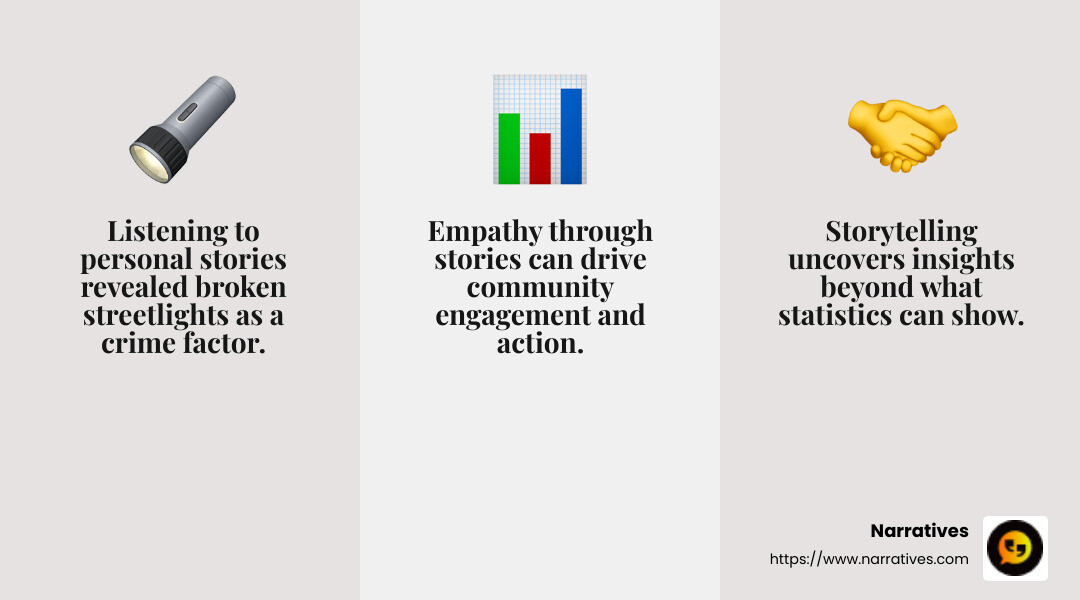
Through impactful storytelling, communities can spotlight underrepresented voices and bring attention to critical issues. This approach not only informs but also inspires community members to participate in solutions, fostering a sense of shared responsibility and collective action.
What role does storytelling play in community-led development?
In community-led development, storytelling serves as a vital tool for empowerment and change. Unlike traditional development approaches that often impose external solutions, storytelling allows communities to define their own narratives and goals.
By sharing local narratives, communities can articulate their visions and aspirations. This process encourages participation from all community members, including those who might feel marginalized or unheard. Involving everyone in the storytelling process ensures that development initiatives are truly reflective of the community's needs and desires.
For instance, when community members in underserved neighborhoods share stories about their dreams for safer, more vibrant spaces, they are not just expressing hopes—they are laying the groundwork for actionable plans. This participatory approach ensures that development is driven by the community, for the community, resulting in more sustainable and meaningful outcomes.
Conclusion
At Narratives, we believe in the transformative power of digital storytelling to uplift and amplify underrepresented voices. Our mission is to partner with non-profits and purpose-driven organizations to craft high-quality, emotionally resonant multimedia content that not only tells stories but also inspires action, builds trust, and improves visibility.
Storytelling is more than just sharing tales; it's about creating connections and fostering understanding. Through storytelling and community building, we can bridge gaps, celebrate diversity, and drive social impact. By focusing on the authentic voices of communities, we ensure that their stories are not just heard but truly felt.
Narratives is committed to being the go-to partner for organizations looking to harness the power of storytelling. Our approach is simple: listen deeply, create authentically, and share widely. We understand that every story matters and that each narrative has the potential to ignite change.
Join us in this journey of storytelling. Let's work together to lift those who need it most and create a world where every story finds its place. To learn more about how we can help your organization tell its story, click here.


.png)