The Ripple Effect: How Storytelling Drives Social Impact

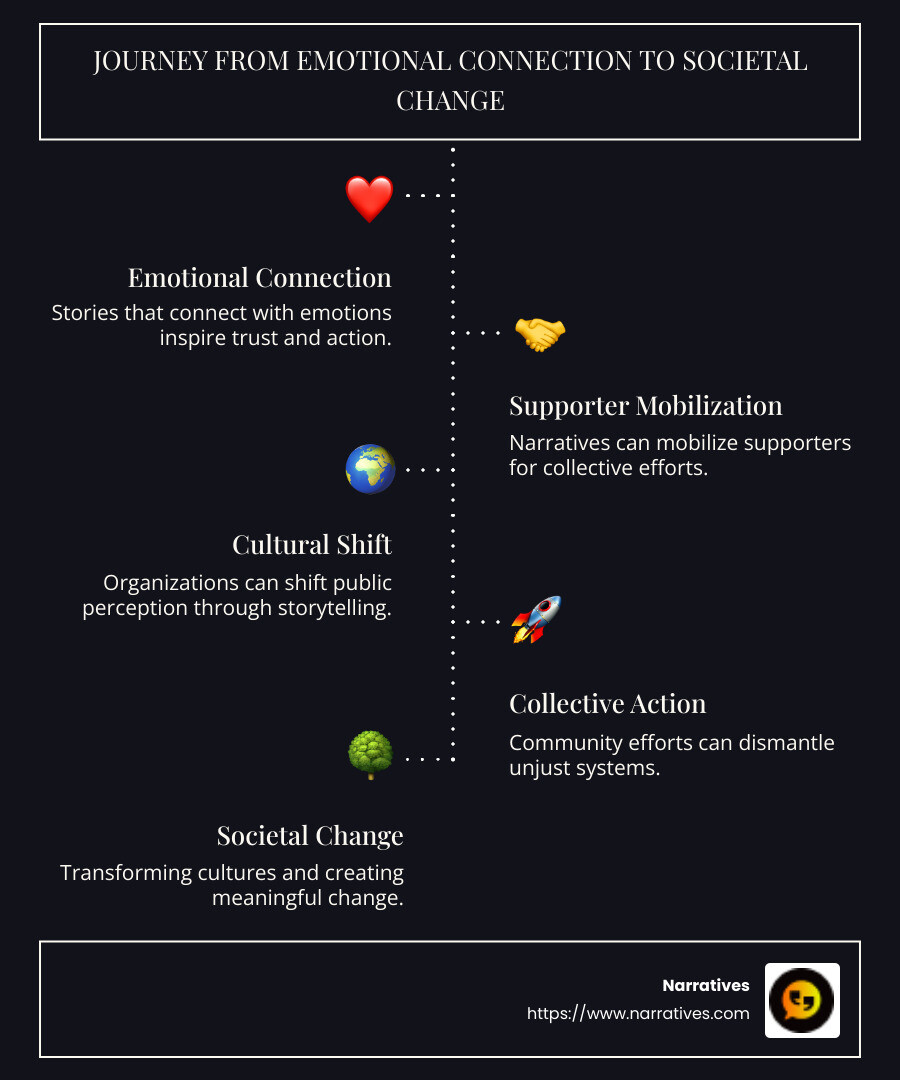
Storytelling and social impact are inseparable in today's world. They connect us, inspire action, and drive change. When done right, storytelling has the power to amplify social missions and resonate deeply with audiences. If you're looking to understand the relationship between storytelling and social impact, here's a quick overview:
Emotional Engagement: Stories that connect with our emotions inspire trust and action.
Building Movements: Narratives can mobilize supporters and spur collective efforts for change.
Cultural Change: Through stories, organizations can shift public perception and influence society.
Stories are not just about individual impact; they are about collective action. When we tell these narratives, we illustrate how community efforts can dismantle unjust systems, leading to meaningful change. This storytelling approach is what helps build movements and transforms cultures. The discussions around storytelling today highlight its role in creating societal impact and changing the world for the better.
As Jacqueline Woodson once said, “The more specific we are, the more universal something can become. Life is in the details.”
Basic Storytelling and social impact vocab:
The Power of Storytelling in Social Impact
Emotional Connections are at the heart of effective storytelling. Stories that resonate on an emotional level can bridge the gap between awareness and action. They trigger a release of oxytocin in our brains, which fosters trust and empathy. This emotional bond makes people more likely to support a cause. For instance, sharing a story about a young woman's journey from uncertainty to confidence through a coding bootcamp can highlight the transformative power of education and inspire others to support similar initiatives.
Mobilizing Supporters is another key aspect of storytelling in social impact. A well-told story can rally individuals around a common cause, turning passive observers into active participants. Consider the podcast "The Sum of Us" by Heather McGee, which narrates the story of Bruce's Beach. This story not only raises awareness about racial injustice but also mobilizes community members and leaders to take action towards reparations and justice.
Driving Action is the ultimate goal of storytelling in the social impact sector. Stories have the power to inspire both small daily changes and larger efforts like volunteering or policy advocacy. By showcasing stories of individuals who have made a difference, organizations can encourage others to follow suit, creating a ripple effect of positive change.
By blending emotional connections with strategic narratives, storytelling becomes a powerful tool to drive social impact, mobilize supporters, and inspire action. When done right, it can transform individual stories into collective movements that challenge and change societal norms.
Crafting Compelling Narratives
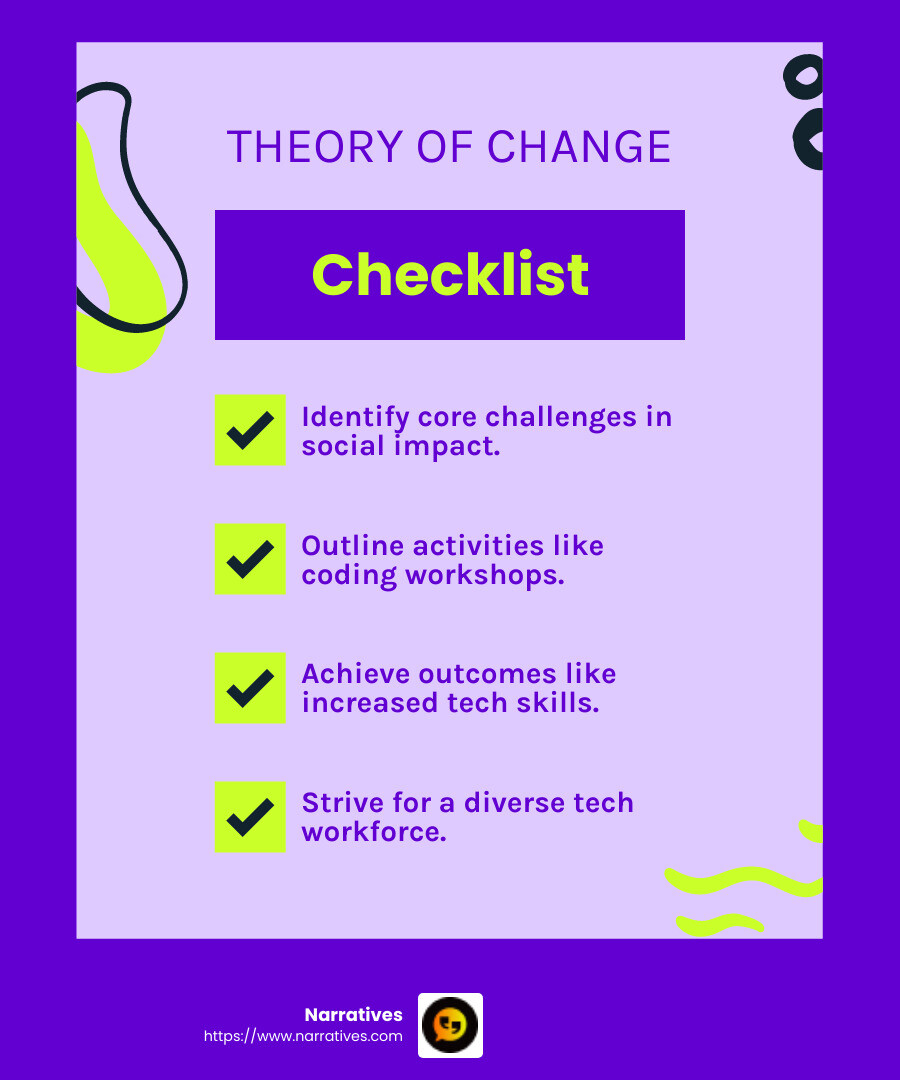
Creating compelling narratives in the field of social impact begins with a well-defined problem statement. This statement should be clear and concise, laying out the core challenge your organization aims to address. For example, if your focus is on increasing diversity in tech, your problem statement might be: "Young women face barriers in accessing STEM education, resulting in underrepresentation in tech industries." This sets the stage for the story you want to tell.
A strong narrative often employs a Theory of Change framework. This strategic approach outlines how your activities lead to your desired outcomes and impacts. It provides a roadmap from problem identification to solution implementation. In our example of supporting young women in tech, the Theory of Change could include activities like coding workshops and mentorship programs, leading to outcomes such as increased tech skills and job placements. The ultimate impact could be a more diverse and innovative tech workforce.
Complex characters are essential to storytelling that drives social impact. Characters should have depth, with qualities and struggles that audiences can relate to. Avoid portraying them as mere victims or heroes. Instead, show them navigating real-life challenges and systemic barriers. This approach not only humanizes the characters but also highlights the broader context of the issues at hand. For instance, instead of just focusing on the challenges faced by a single mother, illustrate how she overcomes obstacles with the support of community programs and her personal resilience.
Incorporating these elements—problem statements, Theory of Change, and complex characters—into your narratives ensures they are not only engaging but also impactful. They help audiences understand the issues, see the pathways to change, and feel connected to the people at the heart of the story. This is how storytelling becomes a catalyst for social change, resonating with individuals on a personal level and inspiring them to take action.
Storytelling and Social Impact: Strategies for Success
When it comes to highlighting social issues, storytelling is a powerful tool. It transforms abstract problems into relatable and urgent matters. By sharing stories of real people affected by these issues, you can shine a light on challenges that might otherwise remain unseen. For example, the story of Bruce's Beach, as told in the podcast The Sum of Us, illustrates the impact of racial injustice and the efforts to rectify historical wrongs through reparations. This narrative not only educates but also engages listeners in a broader conversation about racial justice.
Influencing public perception is another crucial role of storytelling. A well-told story can shift how people view a societal issue. By presenting new narratives, you can dispel stereotypes and build empathy. For instance, sharing the journey of a young woman who gained coding skills through a bootcamp can challenge perceptions about gender roles in technology. It shows the transformative power of education and highlights the importance of gender diversity in tech fields.
Moreover, storytelling is essential for driving societal change. It can inspire individuals to take action, whether it’s volunteering, advocating for policy changes, or simply altering their daily behaviors. By telling stories of those who have already made positive changes, you create a ripple effect. People see the possibilities and feel motivated to contribute to the cause. As Heather McGee's storytelling in The Sum of Us demonstrates, narratives about multiracial coalitions working together can inspire collective action for social justice.
For storytelling to be effective in social impact, it must be strategic. This means selecting stories that not only highlight important issues but also resonate with your audience. It's about creating narratives that are not only compelling but also inspire real-world action. By focusing on these strategies, organizations can harness the power of storytelling to create meaningful changes in society.
Ethical Storytelling Practices
Storytelling and social impact are deeply intertwined, but with great power comes great responsibility. When crafting narratives, it's crucial to be mindful of ethical storytelling practices. This ensures that stories do not inadvertently harm or misrepresent the very communities they aim to help.
Systems of Inequality
At the heart of impactful storytelling is the need to highlight systems of inequality. These systems—like racism, capitalism, and patriarchy—are often the backdrop against which personal stories unfold. By explicitly addressing these systemic barriers, storytellers can provide a richer context for the struggles and triumphs of individuals. For example, when sharing stories about poverty, it's important to show how economic systems contribute to the problem, rather than just focusing on individual hardships. This approach not only educates audiences but also encourages them to think critically about the root causes of social issues.
Collective Action
Effective storytelling should also emphasize collective action. Instead of portraying organizations as lone heroes, narratives should highlight how they work alongside communities to create change. This approach reflects the reality of social movements, where progress is often the result of collaborative efforts. For instance, stories that showcase refugees taking action, rather than just being passive recipients of aid, can change perceptions and inspire broader support for their cause. By focusing on collective efforts, stories can motivate audiences to join in and contribute to the movement.
Human Experiences
At its core, storytelling is about sharing human experiences. It's essential to depict people as more than just their struggles. This means capturing the full spectrum of their lives—their hopes, dreams, and everyday moments. By doing so, stories become more relatable and powerful. For example, the video "Technically Illegal" by Reform Alliance uses vignettes to show the real-life impact of probation laws on individuals. These personal stories help audiences connect emotionally and understand the broader issues at play.
Ethical storytelling requires a careful balance. It's about lifting voices without exploiting them, and sharing truths without oversimplifying. By adhering to these principles, storytellers can ensure that their narratives contribute positively to social impact efforts.
Frequently Asked Questions about Storytelling and Social Impact
How can storytelling raise awareness of issues?
Storytelling and social impact go hand in hand when it comes to raising awareness. Stories have the unique ability to create emotional connections and foster empathy. When audiences hear about real individuals facing challenges, they are more likely to understand and care about those issues.
For example, consider a story about a young woman who gains confidence through a coding bootcamp. This narrative can help dispel stereotypes about gender roles in technology and highlight the transformative power of education. By focusing on personal journeys, storytelling can make complex societal issues more accessible and relatable.
What is the role of storytelling in driving societal change?
Stories are powerful tools for inspiring societal change. They can motivate people to take action, whether that's making small changes in their daily lives or participating in larger collective efforts.
A compelling narrative can illustrate how individuals and communities overcome obstacles, encouraging others to join in and support the cause. For instance, sharing stories of people who began volunteering after learning about a social issue can inspire a ripple effect, leading to more community involvement and advocacy.
By showcasing collective efforts, storytelling can shift public perception and drive meaningful change. This approach emphasizes that change is not the work of a single hero but a collaborative journey involving many voices and actions.
How do organizations measure the impact of their storytelling?
Measuring the impact of storytelling involves looking beyond superficial metrics. Instead of just counting views or shares, organizations should focus on meaningful outcomes that reflect real change.
Key metrics might include:
- Improved Awareness: How well has the story increased understanding of the issue?
- Behavioral Changes: Are audiences more likely to volunteer or advocate after engaging with the story?
- Community Engagement: Has there been an increase in community involvement or support?
Organizations can also track long-term impacts, like career growth for program participants or policy changes resulting from increased awareness. By balancing quantitative data with qualitative anecdotes, organizations can present a fuller picture of their storytelling impact.
This careful measurement helps build trust with stakeholders and demonstrates the true value of storytelling in driving social impact.
Conclusion
At Narratives, we believe in the transformative power of storytelling and social impact. Our mission is to partner with non-profits and purpose-driven organizations to amplify their voices and share their unique stories. By focusing on community-driven storytelling, we help these organizations inspire action, build trust, and increase their visibility.
Non-profit partnerships are at the heart of what we do. We understand that these organizations face unique challenges, and we are committed to helping them overcome these obstacles through strategic storytelling. By crafting emotionally resonant video and multimedia content, we lift underrepresented voices and highlight the important work being done to address social issues.
Community-driven storytelling is more than just a buzzword; it's a way to connect with audiences on a deeper level. By sharing stories that reflect the real experiences and challenges of communities, we create a platform for collective action. This approach not only raises awareness but also encourages individuals to become part of the solution.
To learn more about how Narratives can help your organization harness the power of storytelling for social impact, visit our service page. Find how our approach can lift your mission and drive meaningful change in your community.
In a world filled with noise, it's crucial to tell stories that matter. Together, we can create a ripple effect that leads to real, lasting impact.


.avif)