Transform Your Content: The Power of Storytelling

Storytelling content creation is more important than ever. It's not just about creating content; it's about creating connections. This powerful technique allows you to effectively communicate your mission and engage with your audience on a deeper level.
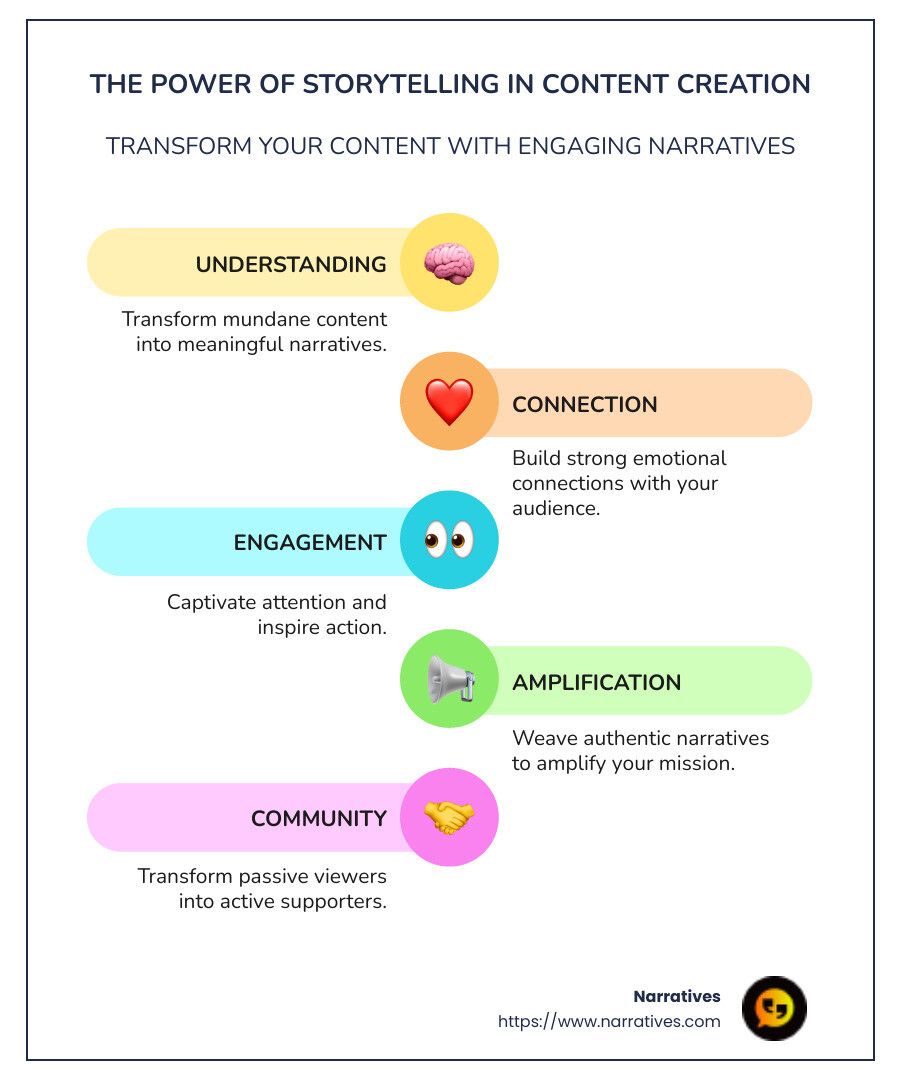
- Understanding: Storytelling transforms mundane content into meaningful narratives.
- Connection: Stories build strong emotional connections with audiences.
- Engagement: Compelling stories captivate attention and inspire action.
For non-profits and story-driven brands, storytelling in content creation can be a game-changer. It serves as a bridge between your values and the audience's emotions, turning passive viewers into active supporters. By weaving authentic narratives, you can amplify your mission, spark real conversations, and drive measurable results.
Every piece of content you create should be seen as an opportunity to tell a part of a larger story — one that resonates with your audience's values and aspirations. In the chaotic sea of digital content, storytelling is your anchor.
Storytelling content creation word list:
Understanding Storytelling Content Creation
In digital content, storytelling is not just an art—it's a strategy. Storytelling content creation involves crafting narratives that resonate with your audience on a personal level. This approach isn't just about sharing information; it's about building an emotional bridge.
The Power of Narrative
A strong narrative can transform ordinary content into something extraordinary. It provides structure and meaning, guiding your audience through a journey. Think of it as the backbone of your story. A well-crafted narrative captures attention and keeps your audience engaged from start to finish.
Consider the example of Coca-Cola's journalistic storytelling. By turning their website into a digital magazine, they created narratives that connect with audiences worldwide. This approach not only informs but also entertains, making the brand's story more relatable and memorable.
Creating Emotional Connections
Stories have the unique ability to tap into emotions. When your audience feels something, they are more likely to remember and act on your message. Emotional connections are what make stories stick. They transform passive viewers into active participants.
Hyundai's Super Bowl ad is a perfect illustration. By focusing on the emotional connection between troops and their families, Hyundai created a memorable experience that resonated with viewers. The ad wasn't just about cars; it was about human connections.
Engaging Your Audience
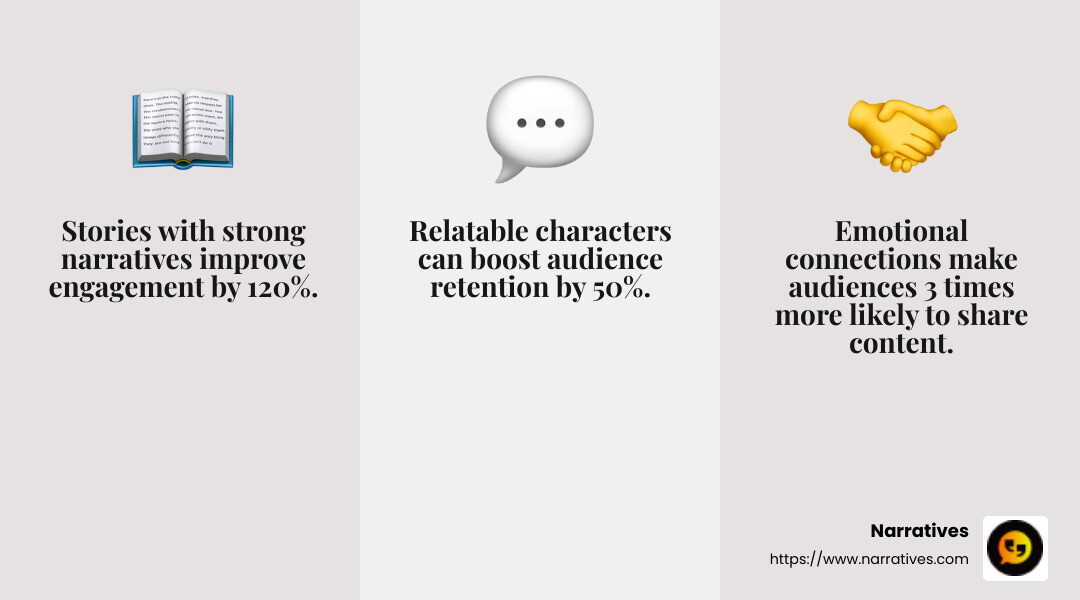
Engagement is the ultimate goal of storytelling. When your audience is engaged, they are more likely to interact with your content and share it with others. Engaging stories often feature relatable characters, conflict, and a satisfying resolution.
Lego's magazine for children showcases how engaging content can captivate a specific audience. By encouraging kids to share their Lego creations, Lego not only engaged young readers but also built a community around their brand.
Storytelling content creation is your key to cutting through the noise. By crafting narratives that build emotional connections and engage your audience, you can transform your content into a powerful tool for communication and connection.
As we explore the role of storytelling in non-profit content, we'll see how purpose-driven narratives can drive social impact and inspire change.
The Role of Storytelling in Non-Profit Content
Storytelling is a powerful ally for non-profits. It lets them share their mission in a way that resonates with people on a deep, emotional level. In non-profits, purpose-driven storytelling is key to driving social impact.
Purpose-Driven Narratives
Non-profits aren't just about services; they're about stories. They have a unique opportunity to spotlight real-life heroes and challenges. These stories aren't just narratives—they're invitations to join a cause. By sharing the real struggles and triumphs of the communities they serve, non-profits can showcase the difference they make.
Take Lume's story of a young girl with a rare disorder. Her story wasn't just about a product; it was about a solution that changed a life. This kind of storytelling highlights the purpose behind the product, making it relatable and impactful.
Creating Social Impact
When non-profits use storytelling, they're not just informing—they're inspiring. Stories can move people to act, donate, or volunteer. They can transform viewers into advocates. By highlighting the human element, non-profits can make their cause more tangible and urgent.
For example, the Pars Equality Center uses storytelling to show how they empower Persian-speaking immigrants. By sharing stories of cultural integration and community support, they create a narrative that highlights the social impact of their work.
Building Emotional Connections
Emotional stories are memorable. They help build a community of supporters who feel personally connected to the cause. This connection can lead to long-term support and advocacy. The goal is to make the audience feel like they're part of the story.
Hyundai's Super Bowl ad serves as a great example. By focusing on emotional connections, Hyundai made viewers feel part of a larger story. This approach can be mirrored by non-profits to create a sense of belonging and urgency.
Engaging Through Stories
Engagement is crucial for non-profits. Stories that feature relatable characters and real-life conflicts can capture attention and inspire action. By sharing personal stories or community achievements, non-profits can create content that resonates and engages.
Narratives, a content agency, focuses on humanizing news to build empathy and connection. This approach is essential for non-profits looking to engage their audience and inspire change through storytelling.
In the field of non-profits, storytelling content creation is not just a tool—it's a bridge. It connects missions to supporters, turning stories into movements and viewers into changemakers.
Key Elements of Effective Storytelling
In storytelling, certain elements are essential to captivate and engage an audience. Let's break down these key components: characters, conflict, sensory details, and emotional appeal.
Characters
Characters are the heart of any story. They need to be relatable and well-developed to create an emotional connection with the audience. Think about your favorite stories. Chances are, you remember the characters vividly. This is because they were crafted with care, featuring distinct personalities and motivations.
Good character development isn't just about describing what a character looks like; it's about diving deep into their thoughts, emotions, and actions. When audiences see themselves in these characters, they become invested in their journeys. This is crucial in storytelling content creation, where the goal is to engage and move your audience.
Conflict
Conflict is what drives a story forward. It's the challenge or problem that needs solving, creating tension and keeping the audience hooked. In content creation, conflict doesn't have to be dramatic. It could be a simple problem that your product or service solves.
For example, imagine a skincare brand telling the story of someone struggling with dry skin. The conflict is the battle against dryness, and the resolution is the brand's moisturizing product. This structure not only keeps the audience engaged but also subtly highlights the brand's value.
Sensory Details
Sensory details bring a story to life, making it more immersive and memorable. These details allow the audience to 'experience' the story rather than just read it. By appealing to the senses—sight, sound, touch, taste, and smell—you can create vivid imagery that sticks with your audience.
For instance, if your story involves a busy market, describe the vibrant colors of the fruits, the chatter of vendors, and the aroma of spices wafting through the air. These details make the scene tangible, pulling your audience into the narrative.
Emotional Appeal
Emotional appeal is the glue that binds the elements of storytelling together. It's what makes a story resonate on a deeper level. By tapping into emotions, you can create a powerful connection with your audience, inspiring them to take action.
Stories that evoke emotions—be it joy, sadness, hope, or nostalgia—are more likely to be remembered. This emotional connection can turn passive viewers into active participants, whether it's through sharing the story, donating, or supporting a cause.
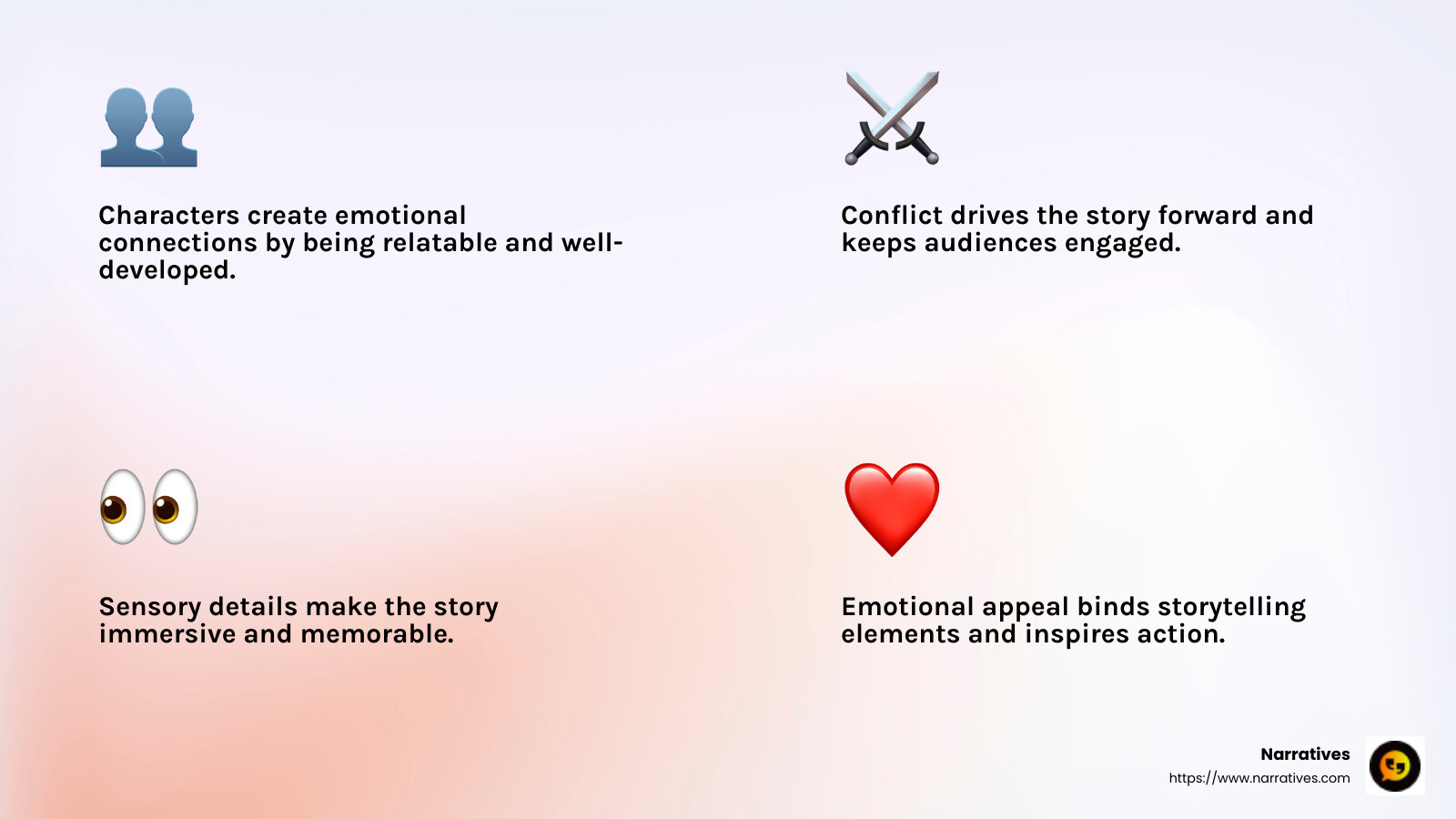
Incorporating these elements—characters, conflict, sensory details, and emotional appeal—into your storytelling can transform your content. It can turn a simple narrative into a compelling journey that engages, inspires, and moves your audience.
Next, we'll explore storytelling techniques for content creators to further improve your storytelling skills.
Storytelling Techniques for Content Creators
When it comes to storytelling content creation, there are several techniques that can make your stories more engaging and impactful. Let's explore some effective methods: interactive storytelling, educational storytelling, and personal stories.
Interactive Storytelling
Interactive storytelling is all about giving your audience a role in the story. This technique transforms passive viewers into active participants. For example, in an interactive video for the World Cup by Pepsi, viewers could open up moments and influence the narrative. This approach not only captivates the audience but also deepens their connection to the content.
To implement interactive storytelling, consider platforms that allow for user input, such as quizzes, polls, or choose-your-own-trip formats. These tools create a personalized experience, making the audience feel like a part of the story.
Educational Storytelling
Educational storytelling combines information with narrative to teach and engage. It's not just about presenting facts; it's about weaving them into a story that resonates with your audience. This method is particularly effective in complex topics where a direct approach might be overwhelming or dull.
For instance, a financial services company might use a story about a family's budgeting journey to explain financial concepts. By embedding lessons within a narrative, audiences are more likely to retain information and apply it to their own lives.
Personal Stories
Personal stories are powerful because they are authentic and relatable. They provide a glimpse into real experiences, creating an emotional bond with the audience. This technique can humanize brands and make them more approachable.
Consider the story of a little girl with a rare disorder that was transformed by a deodorant company's product. This personal narrative not only highlighted the product's benefits but also showcased the brand's empathy and commitment to making a difference.
To use personal stories, encourage community members or employees to share their experiences related to your brand. These stories can be featured in blogs, videos, or social media posts, adding a personal touch to your content.
By leveraging these storytelling techniques—interactive storytelling, educational storytelling, and personal stories—content creators can craft narratives that captivate and inspire their audience. These methods not only improve engagement but also strengthen the connection between the story and the audience.
Next, we'll tackle some frequently asked questions about storytelling content creation to address common concerns and provide further insights.
Frequently Asked Questions about Storytelling Content Creation
What makes a good story in content creation?
A good story in storytelling content creation is one that captivates and engages the audience from start to finish. It starts with a compelling narrative that draws readers in. This narrative should have a clear beginning, middle, and end, guiding the audience through a journey.
The key to a successful story is creating an emotional connection. This means tapping into the feelings and experiences of your audience. When people feel something, they're more likely to remember and share the story.
For instance, a non-profit might tell the story of a community transformed by clean water access. By focusing on individual experiences within the community, the narrative becomes relatable and impactful.
How can storytelling inspire action?
Storytelling can inspire action by engaging the audience and leading them to a call to action. A well-told story doesn't just inform; it motivates.
To inspire action, the story should highlight a problem and present a solution, often involving the audience as part of that solution. This creates a sense of urgency and importance.
For example, in a campaign to reduce plastic waste, a story about a beach cleanup can show the problem of ocean pollution and invite the audience to join future cleanups. This approach not only raises awareness but also encourages direct participation.
Why is character development important in storytelling?
Character development is crucial because it makes the story more relatable and engaging. Well-developed characters are the heart of the story, providing a connection point for the audience.
Relatable characters have clear motivations, strengths, and weaknesses. They face challenges that the audience can empathize with, creating a deeper emotional connection. This connection is what keeps the audience invested in the story.
Consider a story about a struggling entrepreneur who overcomes obstacles to succeed. The audience can relate to the entrepreneur's journey, making the story memorable and inspiring.
By focusing on character development, storytellers can create narratives that resonate with the audience, driving engagement and emotional investment.
These elements—narrative, emotional connection, and character development—are essential in crafting stories that not only capture attention but also inspire action and build lasting connections.
Conclusion
Storytelling has evolved into a powerful tool for engaging audiences and driving meaningful connections. At Narratives, we believe in using the power of digital storytelling to lift underrepresented voices, especially within the non-profit sector. Our approach is all about creating community-driven content that not only tells a story but also inspires action and fosters trust.
By focusing on the unique experiences and challenges faced by communities, we craft stories that are both authentic and impactful. These stories are not just about sharing information; they are about building bridges between organizations and the people they serve. Through high-quality, emotionally resonant content, we help non-profits highlight their social impact, encouraging audiences to become part of the change.
Narratives is committed to being the go-to partner for purpose-driven organizations looking to amplify their message. By leveraging storytelling techniques, we transform content into a catalyst for social good. Whether it's through video, multimedia, or interactive storytelling, our goal is to make a lasting impact.
Ready to transform your content and connect with your audience on a deeper level? Learn more about our storytelling services and find how we can help you share your story in a way that resonates and inspires.


.avif)