Storytelling Magic: Compelling Content Examples to Inspire

Storytelling content examples are changing the way brands and organizations connect with audiences. Whether through a product like Coca-Cola, a children's magazine from Lego, or community-focused initiatives, these examples demonstrate the incredible impact of storytelling in content marketing:
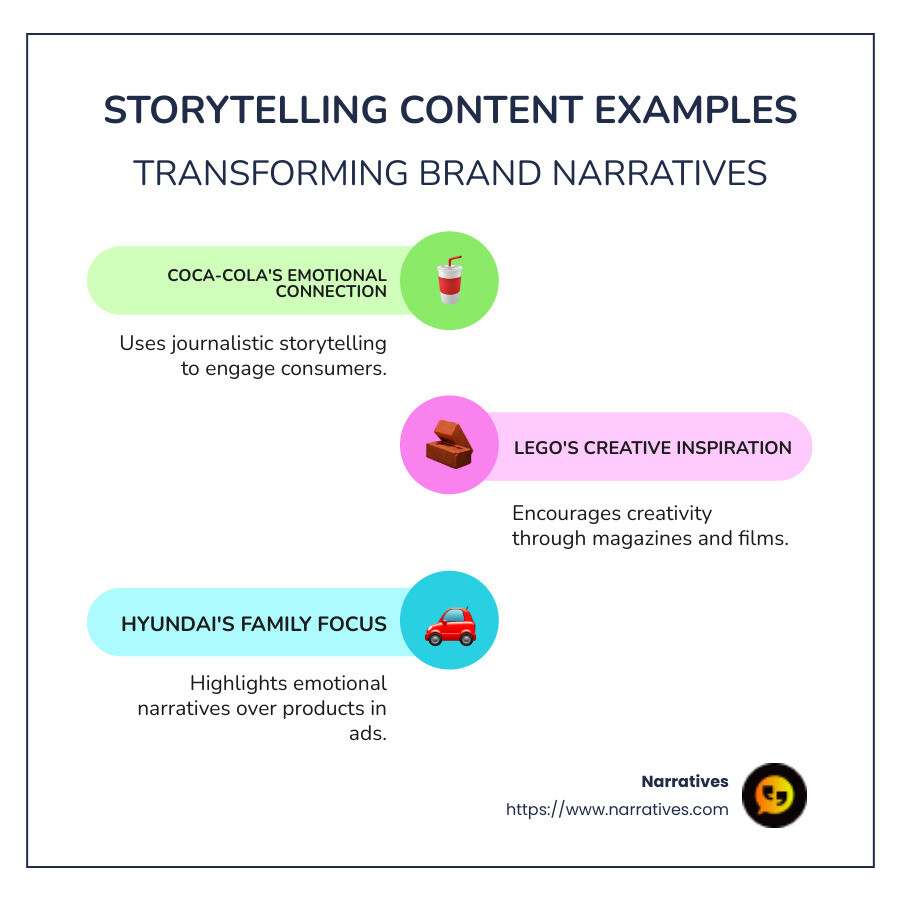
- Coca-Cola: Uses journalistic storytelling to share the stories behind its brand and engage consumers.
- Lego: Inspires creativity and connection through storytelling in children’s magazines and films.
- Hyundai: Creates emotional connections by focusing on family reunions instead of products in its remarkable Super Bowl ads.
- Warby Parker: Communicates brand values and company culture in product-focused videos.
Storytelling is more than marketing; it's about creating an emotional connection with your audience. It's a way to make your marketing efforts memorable and meaningful.
Effective storytelling helps brands cut through the noise and forge a genuine emotional link with people. It allows organizations to resonate with stakeholders on a deeper level, leading to increased engagement and loyalty.
For non-profits and social impact organizations, in particular, using the power of storytelling can be the key to amplifying their mission and driving meaningful change. By crafting narratives that are not only heartfelt but also impactful, non-profits can inspire action, foster community growth, and truly make a difference in the world.
Storytelling content examples word guide:
The Power of Storytelling in Marketing
Storytelling isn't just a buzzword in marketing; it's a powerful tool that can transform how brands connect with their audiences. By weaving narratives into their strategies, brands can create emotional resonance, engage audiences, and build loyalty. Let's explore how storytelling can lift marketing efforts.
Brand Storytelling
At its core, brand storytelling is about sharing a brand's identity and values through compelling narratives. It's not just about selling a product; it's about sharing why the brand exists and what it stands for.
Take Coca-Cola, for instance. By embracing journalistic storytelling, they’ve turned their website into a digital magazine that shares the stories behind the people and events driving the brand. This approach not only humanizes the brand but also builds a deeper connection with consumers around the world.
Emotional Resonance
Emotional resonance is key to making a story memorable. When a brand taps into emotions, it creates a lasting impression. This is evident in Hyundai's 2017 Super Bowl ad, which connected troops with their families virtually. By focusing on the emotional aspect of family reunions, rather than the product itself, Hyundai created a memorable experience that resonated deeply with viewers.
Audience Engagement
Engaging your audience is about making them feel a part of the story. Lego achieves this by encouraging children to share their creations in their magazine, fostering a sense of community and creativity. This interactive approach not only engages the audience but also turns them into active participants in the brand's story.
Warby Parker also excels in audience engagement by sharing insights into their company culture and values. Their video, "How Warby Parker Glasses Are Made," not only highlights the product but also shares the brand's mission of giving back. This transparency builds trust and encourages consumers to engage with the brand on a deeper level.
Conclusion
By leveraging storytelling, brands can create a powerful connection with their audiences. This connection not only makes marketing efforts more effective but also fosters loyalty and engagement. For non-profits and social impact organizations, storytelling can amplify their mission and inspire meaningful change. In the next section, we will explore how to incorporate storytelling in non-profit campaigns to drive social impact and community growth.
Storytelling Content Examples
Storytelling has the power to transform brands into iconic entities. Let's explore some storytelling content examples that showcase how brands have crafted memorable narratives and impactful campaigns.
Iconic Brands
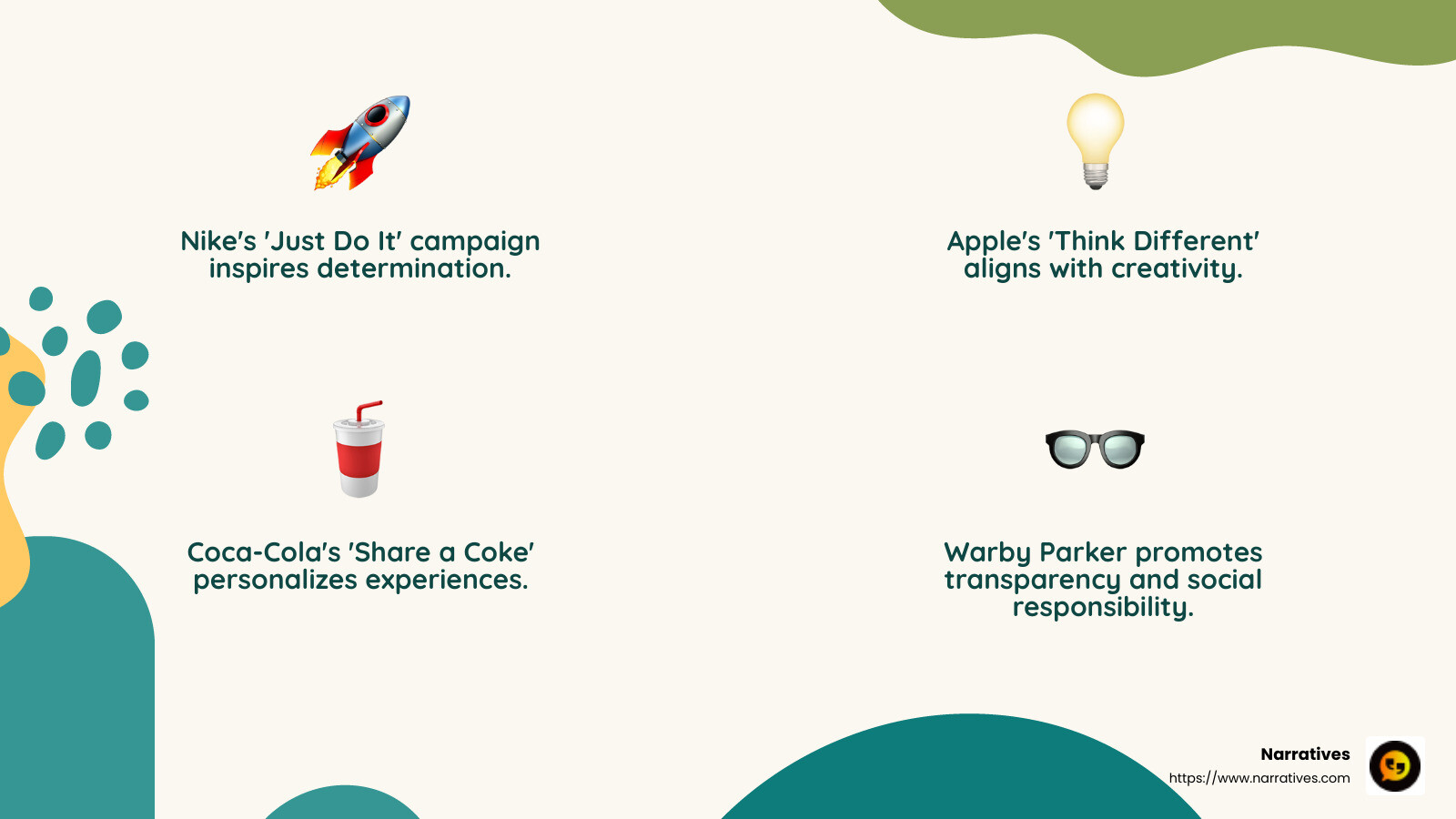
Nike is a master of storytelling, using narratives that go beyond selling shoes. Their "Just Do It" slogan isn't just a tagline; it's a call to action. Nike's stories often feature athletes overcoming challenges, which inspires audiences to push their limits. These narratives resonate deeply because they tap into universal themes of determination and achievement.
Apple is another brand that excels in storytelling. Their approach revolves around simplicity and innovation. Apple's "Think Different" campaign celebrated pioneers who challenged norms, aligning the brand with creativity and progress. This narrative not only liftd Apple's products but also positioned the brand as a symbol of innovation.
Impactful Campaigns
One of the most impactful campaigns is Coca-Cola's "Share a Coke." By personalizing bottles with people's names, Coca-Cola created a campaign that felt personal and engaging. This simple yet effective strategy turned a product into a conversation starter, encouraging people to connect and share moments of happiness.
Another excellent example is Hyundai's Super Bowl ad in 2017. By focusing on the emotional reunion of troops with their families, Hyundai crafted a narrative that transcended the product itself. This emotional appeal left a lasting impact, demonstrating how storytelling can create powerful connections.
Memorable Narratives
Lego has mastered the art of creating memorable narratives through its magazine and movies. By inviting children to share their Lego creations, they foster a sense of community and creativity. The Lego Movie further expanded this narrative, allowing audiences to immerse themselves in a world built entirely from Lego bricks.
Warby Parker uses storytelling to highlight their company culture and values. Their video, "How Warby Parker Glasses Are Made," goes beyond showcasing products to share their mission of giving back. By doing so, they create a narrative that resonates with consumers who value transparency and social responsibility.
These examples illustrate how storytelling can lift a brand from just a name to a meaningful experience. By crafting narratives that resonate emotionally and engage audiences, brands can build lasting connections and foster loyalty. Up next, we'll dig into how non-profits can harness the power of storytelling to drive social impact and community growth.
How to Incorporate Storytelling in Non-Profit Campaigns
Storytelling isn't just for big brands. Non-profits can also use it to make a real difference. Let's explore how non-profit storytelling can drive social impact and build community-driven narratives.
Non-Profit Storytelling
Non-profits often have powerful stories at their core. These stories can highlight the challenges faced by the communities they serve. By sharing these narratives, non-profits can create emotional connections with their audience. This connection can inspire action and support for their cause.
For example, Pars Equality Center supports Persian-speaking immigrants. They share stories of individuals overcoming barriers to find a new home. These stories are not just about struggles but also about hope and resilience. By highlighting personal journeys, Pars Equality Center makes their mission relatable and urgent.
Social Impact
A compelling story can show the real-world impact of a non-profit's work. It can transform statistics into faces and numbers into names. This makes the cause feel immediate and important. It can also show how donations and support make a tangible difference.
Consider Toms Shoes' "One for One" story. For every pair of shoes sold, they donate a pair to a child in need. This simple narrative highlights the direct impact of each purchase. It turns a shopping decision into a meaningful contribution to social good.
Community-Driven Narratives
Engaging the community in storytelling can amplify a non-profit's reach. By encouraging people to share their own stories, non-profits can create a sense of belonging and collective purpose. This approach can also uncover diverse perspectives and highlight different aspects of the non-profit's mission.
Lego provides a great example with their magazine. They invite children to share their Lego creations, fostering community and creativity. Non-profits can adopt a similar strategy by inviting beneficiaries and supporters to share their stories. This not only enriches the narrative but also strengthens the community's bond with the cause.
By using storytelling, non-profits can connect with their audience on a deeper level. This connection can lead to greater support and engagement, driving meaningful change. Up next, let's answer some common questions about storytelling content examples.
Frequently Asked Questions about Storytelling Content Examples
What are storytelling content examples?
Storytelling content examples are instances where brands or organizations use narratives to engage their audience. These stories often focus on emotions, experiences, or values that resonate with people. For instance, Coca-Cola's approach to brand journalism is a prime example. They use stories to connect with consumers on a personal level, showcasing the people behind their brand and their global impact. Similarly, Hyundai's Super Bowl ad focused on emotionally connecting troops with their families, creating a memorable experience without directly promoting the brand.
How can storytelling improve marketing strategies?
Storytelling can transform marketing strategies by creating an emotional bond with the audience. This bond fosters trust and loyalty. When brands share compelling stories, they aren't just selling products—they're selling experiences and values. Take Airbnb, for example. They don't just offer lodging; they share travel stories that highlight the connections formed between hosts and guests. This storytelling approach makes their service feel personal and community-driven, enhancing customer engagement and retention.
Why is storytelling important for non-profits?
For non-profits, storytelling is a powerful tool to highlight their mission and impact. It turns abstract goals into relatable narratives, making it easier for people to understand and support the cause. By sharing stories of individuals who benefit from their services or contribute to their mission, non-profits can create a sense of urgency and empathy.
Pars Equality Center, for instance, uses storytelling to showcase the journeys of Persian-speaking immigrants as they steer new challenges and find hope. These stories not only raise awareness but also inspire action from donors and volunteers. Storytelling helps non-profits build a community around their cause, encouraging people to contribute and participate in meaningful ways.
Ready to dive deeper into storytelling? Let's explore how narratives can drive purpose-driven organizations forward.
Conclusion
In digital storytelling, Narratives stands out as a guide for purpose-driven organizations. We believe in the transformative power of stories to lift underrepresented voices and create meaningful connections. By partnering with non-profits, we craft high-quality, emotionally resonant multimedia content that not only shares impactful stories but also inspires action.
Our approach to digital storytelling is rooted in authenticity and empathy. We help organizations convey their mission and impact through compelling narratives that build trust and increase visibility. For us, it's not just about telling stories; it's about driving social change and fostering community engagement.
In today's digital landscape, purpose-driven organizations need more than just visibility—they need to resonate with their audience on a deeper level. Through storytelling, we turn abstract goals into relatable experiences, making it easier for people to understand, connect, and take action.
Narratives is committed to being the go-to digital storytelling partner for non-profits. Our mission is to empower these organizations to share their stories in a way that truly matters.
Explore how we can help your organization harness the power of storytelling. Learn more about our services and start changing your impact today.


.png)