The Therapeutic Power of Storytelling: Mental Health Benefits Unveiled

The Healing Power of Storytelling
Storytelling for mental health is more than just sharing tales—it's a powerful tool for healing and personal growth. Whether you're recounting your day's events or weaving intricate narratives, storytelling helps connect, cope, and foster a deeper understanding of ourselves and others.
Here's what you need to know about storytelling for mental health:
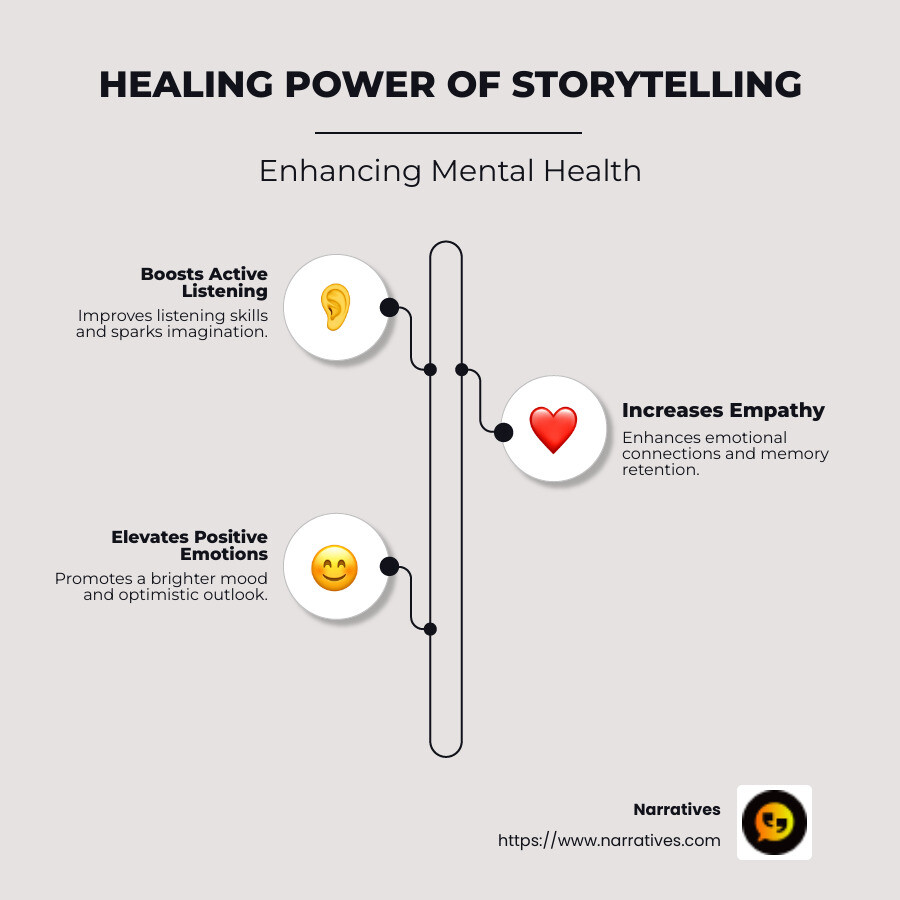
- Boosts Active Listening and Imagination: Engaging with stories hones our listening skills and sparks creativity.
- Increases Empathy and Memory Retention: Stories help us connect emotionally, improving relationships and memory retention.
- Lifts Positive Emotions: Crafting and experiencing stories boosts mood and promotes an optimistic outlook.
Storytelling allows us to express emotions, process experiences, and ultimately, find paths to healing. This ancient practice links us with others, supports mental well-being, and helps us steer life's challenges. Annie Brewster from Health Story Collaborative highlights this by emphasizing how sharing personal narratives can be transformative and healing, particularly in overcoming trauma and adversity.
Storytelling for mental health terminology:
The Link Between Storytelling and Mental Health
Narratives are more than just stories; they are bridges to well-being. They offer a way to understand and process our experiences. In the field of narrative psychology, the stories we tell ourselves and others play a crucial role in shaping our mental health.
How Narratives Impact Well-Being
When we engage in storytelling, we're not just recounting events—we're actively shaping our reality. This process can help us make sense of the world and our place in it. Annie Brewster, a pioneer in this field, established the Health Story Collaborative to highlight how personal narratives can transform healthcare and aid in overcoming trauma.
Research shows that exploring and sharing personal stories can lead to healing and growth. By reflecting on our experiences, we can alter our perspectives, leading to improved mental well-being.
The Role of Narrative Psychology
Narrative psychology examines how human beings construct stories to understand their lives. This branch of psychology suggests that our narratives can significantly influence our mental health. By consciously crafting our stories, we can shift negative patterns of thought and behavior.
- Empowerment through Storytelling: Sharing stories empowers individuals by giving them a voice and a platform to express their truths.
- Connection and Community: Stories connect us to others, fostering a sense of belonging and reducing feelings of isolation.
Real-Life Applications
Consider the case of a community storytelling project that brings people together to share their mental health journeys. Participants not only find solace in sharing their stories but also gain insights from hearing others'. This communal narrative exchange can break down barriers and reduce stigma associated with mental health challenges.
Storytelling for mental health offers a unique pathway to understanding ourselves and enhancing our well-being. By embracing our narratives, we can promote healing, foster empathy, and create supportive communities.
Mental Health Benefits of Storytelling
Storytelling for mental health offers numerous benefits that can improve our emotional and cognitive well-being. Let's explore some key areas where storytelling shines.
Empathy
When we engage with stories, we connect with characters on a deep emotional level. This connection releases oxytocin, often called the "empathy hormone." Oxytocin helps us feel compassion and understanding, which are crucial for building strong relationships.
By fostering empathy, storytelling can break down barriers and help us see the world from different perspectives. This is why storytelling is a powerful tool for enhancing our social skills and emotional intelligence.
Memory Retention
Stories are more memorable than plain facts. Research by Jennifer Aaker, a marketing professor at Stanford, found that people remember information up to 22 times better when it is part of a narrative.
This is because stories engage our brains in a more comprehensive way, involving emotions, imagination, and logic. So, if you want to remember something, try weaving it into a story!
Positive Emotions
The way we tell our stories can significantly impact our mood and self-image. Positive storytelling can uplift us, making it easier to cope with life's challenges.
According to positive psychology, a healthy dose of optimism and positive emotion can improve our resilience. By focusing on the positive aspects of our stories, we can improve our overall mental health.
Dementia Support
Storytelling also plays a role in supporting those with dementia. Engaging in storytelling and reminiscence therapy has been shown to help improve memory and cognitive function in seniors.
Like music and other arts, storytelling stimulates the brain and can lead to emotional and psychological benefits for individuals with memory issues.
In summary, storytelling is not just an art form; it's a powerful tool for mental health. By embracing narratives, we can boost empathy, improve memory retention, increase positive emotions, and support those with dementia.
As we continue to explore the therapeutic power of storytelling, we uncover new ways to improve our mental well-being and connect with others.
Storytelling Techniques for Mental Health
Storytelling isn't just about sharing tales; it's a tool for mental health improvement. Let's explore three effective storytelling techniques: journaling, creative writing, and narrative therapy.
Journaling
Journaling is a simple yet powerful way to process emotions and gain clarity. It allows you to express thoughts and feelings without judgment.
One unique method is the Dominant Non-Dominant Hand-Writing Exercise. Here, your dominant hand asks questions, and your non-dominant hand responds, tapping into your emotional side. This technique can help reveal inner thoughts and feelings that might be hidden by your logical mind.
Creative Writing
Creative writing lets your imagination run wild. Whether it’s stories, poetry, or songs, this form of expression allows you to explore your emotions and experiences in unique ways.
Creating fictional worlds and characters can mirror your own struggles and desires. This not only provides catharsis but also opens new pathways for personal growth. By engaging creatively, you can find new perspectives and solutions to problems.
Narrative Therapy
Narrative therapy involves reshaping your personal stories to change how you view yourself and your life. Often guided by professionals, this technique helps individuals reinterpret their experiences and challenge negative beliefs.
Through narrative therapy, you can develop new, empowering narratives. This reframing process opens up your strengths and aligns you with your values, giving you control over your life's journey.
In essence, these storytelling techniques offer various avenues for self-exploration and healing. By embracing journaling, creative writing, and narrative therapy, individuals can foster resilience and personal growth.
Next, we'll dig into the community and ethical considerations of storytelling for mental health, highlighting its broader impact.
Storytelling for Mental Health: Community and Ethical Considerations
Storytelling is a powerful tool for mental health, but it's important to consider the community and ethical aspects involved. Sharing personal stories can bring people together, help break down stigma, and create a supportive environment.
Community Storytelling
Community storytelling allows individuals to share their experiences in a group setting. This can foster a sense of belonging and mutual support. When people come together to share their stories, it creates a safe space where everyone feels heard and understood.
- Empathy and Connection: Hearing others' stories fosters empathy. It helps people realize they are not alone in their struggles.
- Shared Experiences: Community storytelling highlights common challenges and triumphs, reinforcing the idea that mental health issues are universal.
Ethical Storytelling
When sharing stories, it's crucial to be ethical. Respect and sensitivity are key, especially when discussing mental health. Here are some guidelines:
- Consent: Always get permission before sharing someone else's story.
- Anonymity: Protect identities unless the storyteller wishes to be named.
- Sensitivity: Avoid triggering content and be mindful of how stories might affect others.
Ethical storytelling ensures that narratives are shared responsibly, without causing harm.
Combating Mental Health Stigma
Storytelling plays a significant role in reducing mental health stigma. By sharing personal experiences, individuals can challenge misconceptions and stereotypes about mental health conditions.
- Humanizing Mental Health: Personal stories make mental health issues relatable and understandable.
- Breaking Barriers: Open discussions can dismantle societal norms that discourage talking about mental health.
Through storytelling, we can change the narrative around mental health, creating a more accepting and supportive society.
In the next section, we'll address frequently asked questions about storytelling for mental health, exploring how it improves mental health, effective techniques, and its role in reducing stigma.
Frequently Asked Questions about Storytelling for Mental Health
How does storytelling improve mental health?
Storytelling improves mental health in multiple ways. It helps individuals process emotions, gain insights, and find meaning in their experiences. By sharing stories, people can connect with others who have similar experiences, fostering a sense of community and reducing feelings of isolation.
Research shows that storytelling can boost empathy, increase memory retention, and promote positive emotions. When we hear or tell stories, our brains release oxytocin, which helps us connect with others and feel more empathetic. This connection is crucial for mental well-being.
What are some effective storytelling techniques for therapy?
Several storytelling techniques are effective for therapy:
Journaling: Writing down thoughts and feelings helps individuals process emotions and gain clarity. Journaling can reduce stress and improve emotional well-being.
Creative Writing: Crafting stories, poems, or songs allows people to express emotions creatively. This form of storytelling can be cathartic and lead to personal growth.
Narrative Therapy: Guided by a therapist, individuals can explore their life stories and reshape narratives. This process helps challenge negative beliefs and develop empowering stories.
Each of these techniques offers a unique way to engage with personal narratives and foster healing.
How can storytelling reduce mental health stigma?
Storytelling can significantly reduce mental health stigma by:
Humanizing Mental Health: Personal stories make mental health issues relatable. They show that anyone can face mental health challenges, breaking down stereotypes.
Encouraging Open Dialogue: Sharing experiences encourages open discussions about mental health. This openness helps dismantle societal norms that discourage talking about mental health.
Changing Perceptions: As more people share their stories, public perceptions shift. Storytelling challenges misconceptions and fosters a more accepting society.
By using storytelling, individuals can help create a world where mental health is understood and accepted.
Conclusion
In our journey through the therapeutic power of storytelling, we've uncovered how Storytelling for Mental Health not only aids personal healing but also fosters broader societal change. At Narratives, we believe in the transformative potential of stories, especially when shared through the lens of non-profit partnerships and social impact initiatives.
Narratives play a crucial role in shaping our understanding of mental health. By sharing personal stories, individuals can find solace and community, while also contributing to a larger conversation that challenges stigma and promotes empathy. This storytelling approach is not just about individual growth but about creating a ripple effect that touches entire communities.
Our partnerships with non-profits and purpose-driven organizations are at the heart of this mission. These collaborations enable us to amplify underrepresented voices and highlight the stories that matter. By crafting high-quality, emotionally resonant content, we help organizations share their impact stories in ways that inspire action and build trust.
The social impact of storytelling is profound. When we humanize mental health through personal narratives, we encourage open dialogue and change perceptions. This not only helps individuals but also drives societal progress toward a more accepting and understanding world.
As we continue to explore and expand the possibilities of Storytelling for Mental Health, we invite you to be part of this journey. Together, we can harness the power of stories to make a difference.
For more on how we lift voices and create impactful storytelling, visit our media page.
Let's keep the conversation going and build a more empathetic world through the art of storytelling.


.avif)