Pixels and Prose: Navigating Storytelling in the Digital Age

Storytelling in the digital age stands as a guide amidst the digital noise, offering a way to connect deeply with audiences. This timeless art form has evolved with technology, weaving craft, connection, and creativity into digital narratives.
Key Insights on Storytelling in the Digital Age:
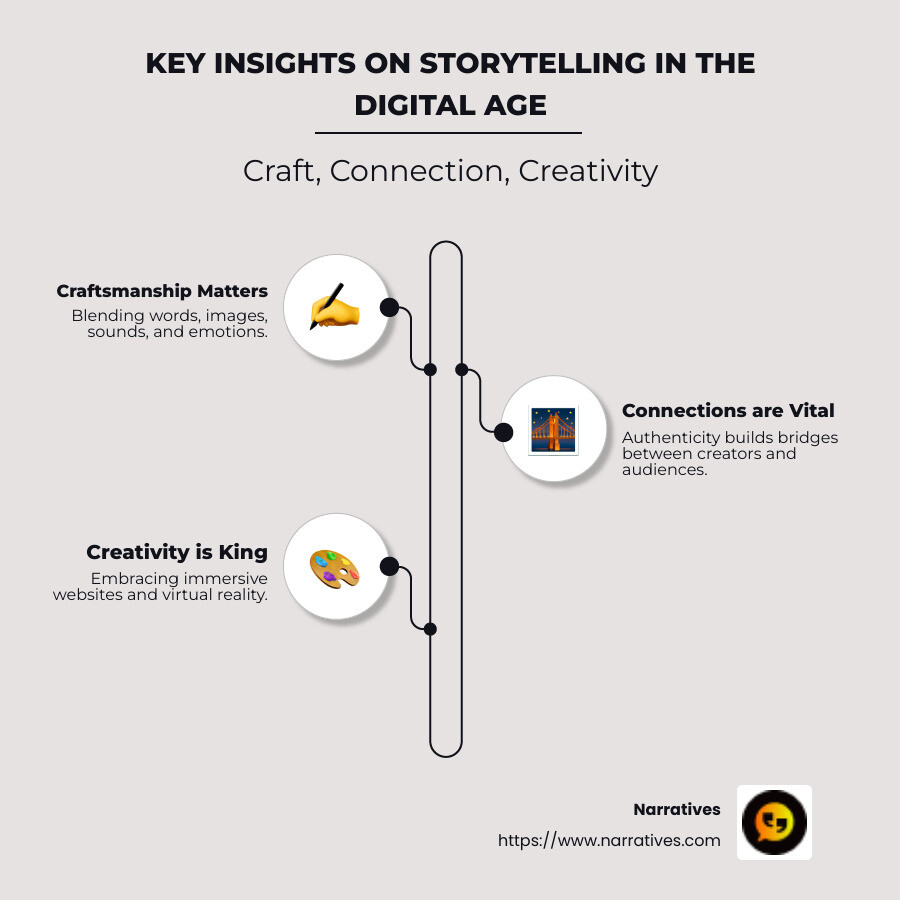
- Craftsmanship Matters: It's not just about words but a blend of images, sounds, and emotions.
- Connections are Vital: Authentic storytelling builds bridges between creators and audiences.
- Creativity is King: From immersive websites to virtual reality, storytelling accepts new tools.
The art of storytelling remains essential, even as our methods change. In the digital world, we have more tools than ever to tell our stories. Yet, the heart of storytelling—crafting a connection with creativity—remains unchanged.
Storytelling in the digital age vocabulary:
Crafting Stories in the Digital Age
Crafting a story today is akin to painting a masterpiece. It's about blending words, images, sounds, and emotions into a cohesive narrative that resonates with audiences. This craft has evolved, offering storytellers a rich palette of tools and techniques.
Weaving Words, Images, Sounds, and Emotions
Words are the foundation of any story. They set the tone and provide the framework upon which other elements are built. In digital storytelling, words must be concise and impactful, as attention spans are shorter than ever.
Images are powerful. A single picture can convey emotions and messages instantly, often more effectively than paragraphs of text. In fact, visual storytelling has become a cornerstone in capturing audience attention.
Sounds add another layer of depth. Whether it's background music that sets the mood or sound effects that bring scenes to life, audio elements improve the storytelling experience.
Emotions are the glue that ties everything together. A story that evokes strong emotions—be it joy, sadness, or excitement—creates a lasting impact.
The Digital Canvas
In the digital landscape, storytellers have access to a variety of platforms to showcase their craft. From interactive websites to immersive virtual reality experiences, the possibilities are endless.
Interactive narratives allow audiences to become active participants, choosing their path through the story. This engagement not only captivates but also makes the experience personal.
The Role of Technology
Technology, while a powerful ally, also presents challenges. With so many options, the key is to use technology to improve, not overshadow, the story. Authenticity should remain at the core, ensuring that the human element is never lost amidst the digital tools.
In summary, crafting stories in the digital age requires a delicate balance of tradition and innovation. By weaving together words, images, sounds, and emotions, storytellers can create narratives that not only capture attention but also leave a lasting impression.

Building Connections Through Storytelling
Storytelling in the digital age is more than just sharing narratives; it's about building genuine connections. At its heart, storytelling is a bridge that unites storytellers with their audience. This connection is forged through authenticity and empathy, addressing the audience's needs and desires.
Authenticity: The Core of Genuine Connection
In a world filled with digital noise, authenticity stands out. Audiences crave real stories that speak to their experiences and emotions. Authentic storytelling doesn't shy away from the truth. It accepts the imperfections and nuances of real life.
Brands that tell authentic stories build trust. When a story feels genuine, it resonates on a deeper level. People are more likely to remember and engage with content that reflects real human experiences.
Empathy: Understanding Your Audience
Empathy is about seeing through the eyes of your audience. It's understanding their hopes, fears, and dreams. Empathy allows storytellers to create content that feels personal and relevant.
To build empathy, listen to your audience. Engage in conversations and pay attention to their feedback. This insight helps craft stories that not only meet but also anticipate their needs and desires.
Meeting Audience Needs and Desires
A successful story addresses the audience's needs and desires. It provides value, whether through entertainment, education, or inspiration. When audiences see their own stories reflected in the narrative, they feel understood and valued.
Consider the case of Dove's "Campaign for Real Beauty." By focusing on real people and authentic experiences, Dove connected with audiences on a personal level. This approach transformed a simple marketing campaign into a meaningful movement that resonated worldwide.
The Digital Connection
In the digital era, building connections through storytelling has never been more accessible. Technology allows storytellers to reach global audiences, breaking down geographical barriers. However, despite the vast reach, the focus should remain on creating personal connections.
Interactive platforms and social media enable two-way communication, fostering a sense of community. By inviting audiences to participate in the story, storytellers create a shared experience that improves engagement.
Conclusion
Authenticity and empathy are the cornerstones of building connections through storytelling. By understanding and addressing the audience's needs and desires, storytellers can create narratives that resonate deeply, fostering genuine connections in the digital age.
Next, we will explore how embracing creativity and new mediums can lift storytelling to new heights.
Embracing Creativity and New Mediums
Creativity knows no bounds. Storytellers have a vast array of tools at their disposal to craft engaging narratives. Let's explore three exciting mediums that are reshaping storytelling: interactive websites, virtual reality, and video content.
Interactive Websites: Choose Your Own Trip
Interactive websites allow audiences to become part of the story. These platforms offer readers choices that affect the narrative's outcome, creating a personalized experience.
- Case Study: Interactive fiction, like the "choose-your-own-trip" format, has gained popularity. It invites users to make decisions that influence the plot, making them active participants in the story.
Interactive storytelling is not just about entertainment. It also improves learning and engagement by providing users with a hands-on experience. This approach can make complex topics more accessible and memorable.
Virtual Reality: Stepping Into New Worlds
Virtual reality (VR) takes storytelling to a whole new level by immersing the audience in a 3D world. This medium allows users to experience stories in a way that feels almost real.
- Fact: Stories told with VR are often rated as more trustworthy and emotionally engaging compared to traditional media. The immersive nature of VR can evoke strong emotional reactions, making stories unforgettable.
VR offers endless possibilities, from exploring historical events to experiencing life from another's perspective. It breaks down the barriers between the story and the audience, creating an intimate connection.
Video Content: Captivating Visuals
Video content remains a powerful storytelling tool. With platforms like YouTube and TikTok, videos can reach millions in seconds. They combine visuals, sound, and narrative to create an emotional impact.
- Statistic: Visual storytelling is impactful because a picture is worth a thousand words. Videos can convey complex emotions and messages quickly, making them ideal for today's world.
Videos can be used to tell stories that entertain, educate, or inspire. They can also be interactive, allowing viewers to engage directly with the content.
Conclusion
Embracing creativity and new mediums opens up a world of possibilities for storytellers. Whether through interactive websites, virtual reality, or video content, these tools can lift storytelling to new heights, creating engaging and memorable experiences for the audience.
Next, we will explore the challenges and opportunities in the digital landscape that storytellers face today.
Visual and Interactive Storytelling
In the digital age, storytelling has transformed into a vibrant mix of visuals and interactivity. Let's explore how these elements improve narratives and create immersive experiences.
Visual Storytelling: The Power of Images
Visual storytelling uses images and videos to convey stories. It's a potent tool because visuals can communicate complex ideas quickly and emotionally.
- Fact: According to Deloitte Insights, stories with strong visual elements can change neural pathways in our brains, making them memorable and impactful.
Platforms like Instagram and YouTube thrive on visual content. National Geographic, for example, uses long captions and stunning photos to tell stories that feel like flipping through their magazine. This approach keeps their brand experience consistent and engaging.
Interactive Narratives: Engaging the Audience
Interactive storytelling invites audiences to participate in the narrative. This engagement creates a deeper connection between the story and its audience.
- Example: Choose-your-own-trip stories are a popular form of interactive fiction. They allow readers to make decisions that alter the plot, making them co-creators of the story.
Interactive narratives are not just for entertainment. They can be educational, offering hands-on experiences that make learning more engaging and memorable.
Immersive Experiences: Beyond Reality
Immersive experiences, like those offered by virtual reality (VR), take storytelling to new dimensions. VR places users inside a story, creating a sense of presence and emotional engagement.
- Statistic: Stories told through VR are perceived as more trustworthy and emotionally engaging. This medium evokes strong reactions, making stories unforgettable.
VR can transport audiences to different worlds, allowing them to explore new perspectives and experiences. It's a powerful tool for empathy, breaking down barriers between the story and its audience.
Conclusion
Visual and interactive storytelling harness the power of images and audience participation to create immersive experiences. As we steer the digital landscape, these elements are essential for crafting stories that captivate and connect with audiences.
Next, we will dig into the challenges and opportunities storytellers face in this evolving digital world.
Challenges and Opportunities in the Digital Landscape
Navigating storytelling in the digital age presents both problems and openings. As we dive into this field, three key areas demand our attention: information overload, privacy concerns, and authenticity.
Information Overload: The Digital Deluge
The internet is a vast ocean of information, with content created every second. This abundance can overwhelm audiences, making it hard for stories to stand out.
- Fact: The sheer volume of digital content means that capturing attention is more challenging than ever. As National Geographic's Instagram strategy shows, staying true to a consistent brand experience can help cut through the noise.
To combat information overload, storytellers must craft clear, concise, and compelling narratives that resonate with their audience.
Privacy Concerns: Balancing Personalization and Trust
In the digital landscape, privacy is a growing concern. Audiences are wary of how their data is used, which can affect their willingness to engage with content.
- Example: Brands need to be transparent about data usage and prioritize user consent to build trust. This trust is essential for nurturing long-term relationships with audiences.
By respecting privacy, storytellers can create a safe space for audiences to connect with their narratives, fostering stronger bonds.
Authenticity: The Key to Connection
In a world of digital facades, authenticity is crucial. Audiences crave genuine stories that reflect real experiences and emotions.
- Quote: "We may have access to more information today, and we may be working with bytes, but we have never stopped working with humans." This reminder from Forbes Business Council underscores the enduring power of honest storytelling.
Authentic stories can inspire loyalty and spark connections, making them invaluable in the digital age.
Conclusion
As we steer the complexities of the digital landscape, addressing information overload, privacy concerns, and authenticity is vital. These challenges and opportunities shape how we tell stories and connect with audiences in meaningful ways.
Next, we'll explore frequently asked questions about storytelling in the digital age.
Frequently Asked Questions about Storytelling in the Digital Age
How has digital technology changed storytelling?
Digital technology has transformed storytelling by introducing digital reality and data-driven storytelling. With digital reality, such as augmented and virtual reality, storytellers can create immersive experiences where audiences feel part of the narrative. This makes stories more engaging and memorable. According to Deloitte Insights, these technologies blur the line between storyteller and listener, creating powerful emotional connections.
Data-driven storytelling allows creators to tailor their stories based on audience preferences and behaviors. By analyzing data, storytellers can understand what resonates with their audience and adjust their narratives accordingly. This ensures that stories are relevant and impactful, capturing the audience's attention in a crowded digital space.
What are the benefits of interactive storytelling?
Interactive storytelling, including interactive fiction and immersive gaming, offers unique benefits by allowing audiences to become active participants in the story. This engagement creates a deeper connection, as participants feel they have a stake in the outcome.
Interactive Fiction: These stories let readers choose their own paths, making the experience personal and engaging. The sense of control improves emotional investment and keeps audiences returning for more.
Immersive Gaming: Games like choose-your-own-trip or role-playing games enable players to explore narratives in dynamic ways. This interactivity fosters a strong bond between the player and the story, as highlighted by the rise of narrative-driven games in recent years.
How can brands effectively use storytelling?
Brands can leverage storytelling by embracing brand archetypes and focusing on consumer connection. Brand archetypes are universal characters or themes that resonate with audiences, such as the hero, the caregiver, or the explorer. By aligning with these archetypes, brands can convey their values and identity in a relatable way.
Creating a strong consumer connection involves telling authentic stories that reflect the brand's mission and values. As noted by Forbes Business Council, genuine storytelling can inspire loyalty and influence consumer behavior. Brands should focus on narratives that align with their audience's needs and desires, ensuring that their stories are both meaningful and memorable.
By integrating these elements, brands can use storytelling to build emotional connections, improve their identity, and drive business results.
Conclusion
Storytelling is more than just a way to share information—it's a tool for building connections and driving change. At Narratives, we believe in the power of storytelling to lift underrepresented voices and foster community-driven impact.
Narratives and Non-Profit Partnerships
We specialize in partnering with non-profits and purpose-driven organizations to create content that resonates emotionally. Our approach centers on crafting high-quality video and multimedia stories that highlight the real impact of these organizations. Through our work, we aim to inspire action, build trust, and increase visibility for those making a difference in their communities.
Social Impact and Community-Driven Storytelling
The stories we tell have the potential to create significant social impact. By focusing on authentic and empathetic storytelling, we help non-profits connect with their audiences on a deeper level. This connection is crucial for driving engagement and fostering a sense of community around important causes.
Community-driven storytelling is about more than just sharing a narrative; it's about involving the audience in the journey. By engaging with the community, we ensure that the stories we tell truly reflect the experiences and aspirations of those involved. This approach not only amplifies the message but also encourages collective action and support.
Looking Forward
As we continue to steer the evolving landscape of storytelling in the digital age, we remain committed to our mission of amplifying voices and driving social change. Our expertise in crafting compelling narratives positions us as the go-to digital storytelling partner for non-profits looking to make a lasting impact.
For more information on how we can help your organization tell its story, learn more about our services. Together, let's write the next chapter of your brand's journey and create stories that matter.


.avif)