Narrative Navigation: Using Storytelling in Project Management

Igniting Impact: Storytelling Project Management
Storytelling project management is about infusing narratives into project management to improve communication, engagement, and impact. For many organizations, especially non-profits and social impact groups, this approach can uncover a new way to inspire teams and connect with stakeholders.
Here's why it matters:
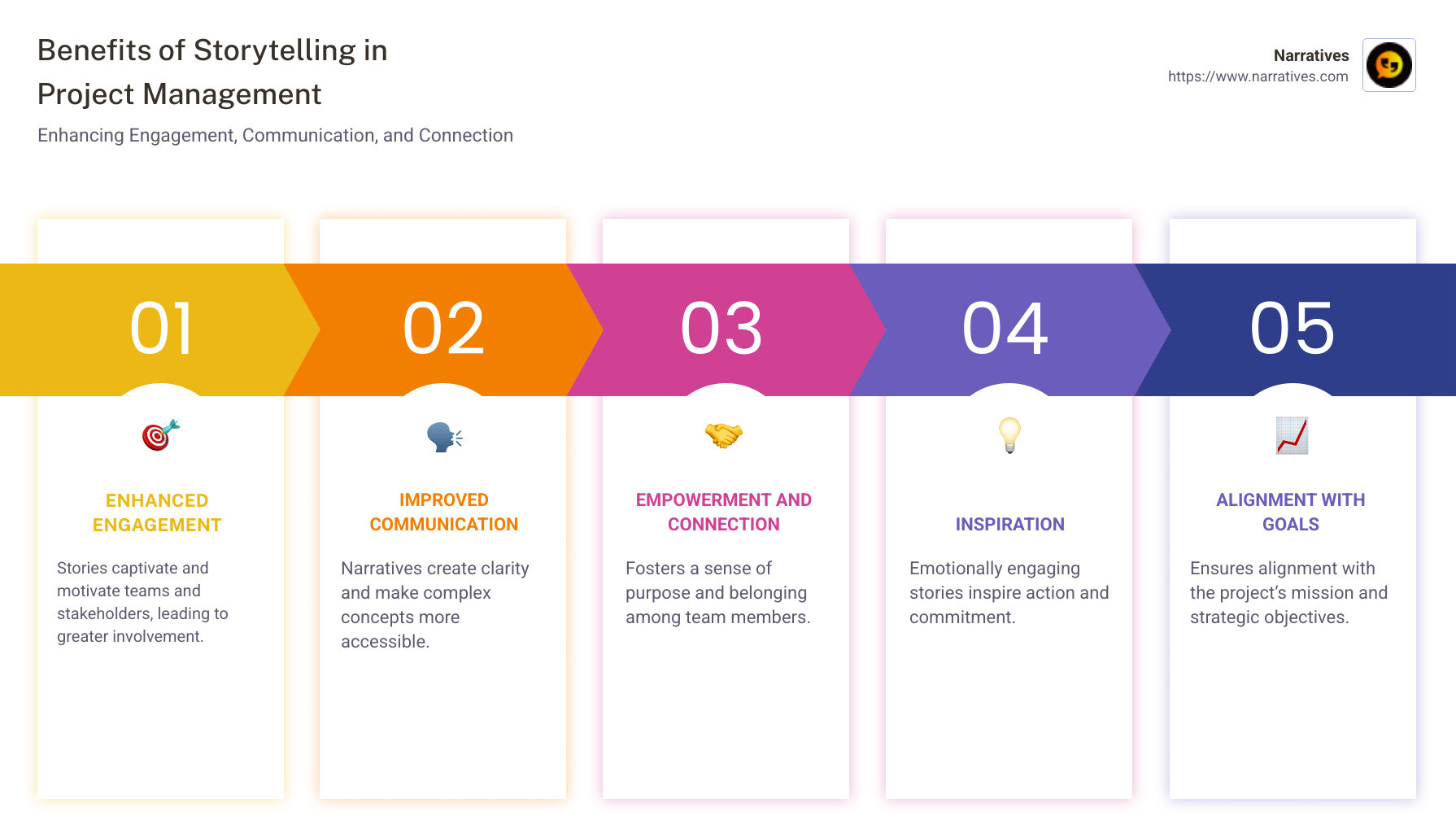
- Improved Engagement: Stories captivate and motivate your team and stakeholders.
- Improved Communication: Create clarity and simplify complex concepts.
- Empowerment and Connection: Foster a sense of purpose and belonging.
In today's environment, where every project counts, using storytelling transforms data and facts into meaningful narratives. These narratives not only help in conveying critical messages but also ensure that every member involved feels aligned and inspired by the project’s mission and goals.
A great example is Amazon, where memos have replaced slides to encourage detailed, narrative-driven communication. This shift in approach emphasizes the power of stories in professional settings, impacting decision-making and propelling the project towards success.
Embracing storytelling in project management is more than just a novel idea; it’s a powerful tool that can drive change, improve understanding, and engage audiences more deeply and meaningfully. It's time to explore how your organization can leverage this technique for greater impact.
Learn more about storytelling project management:
The Power of Storytelling in Project Management
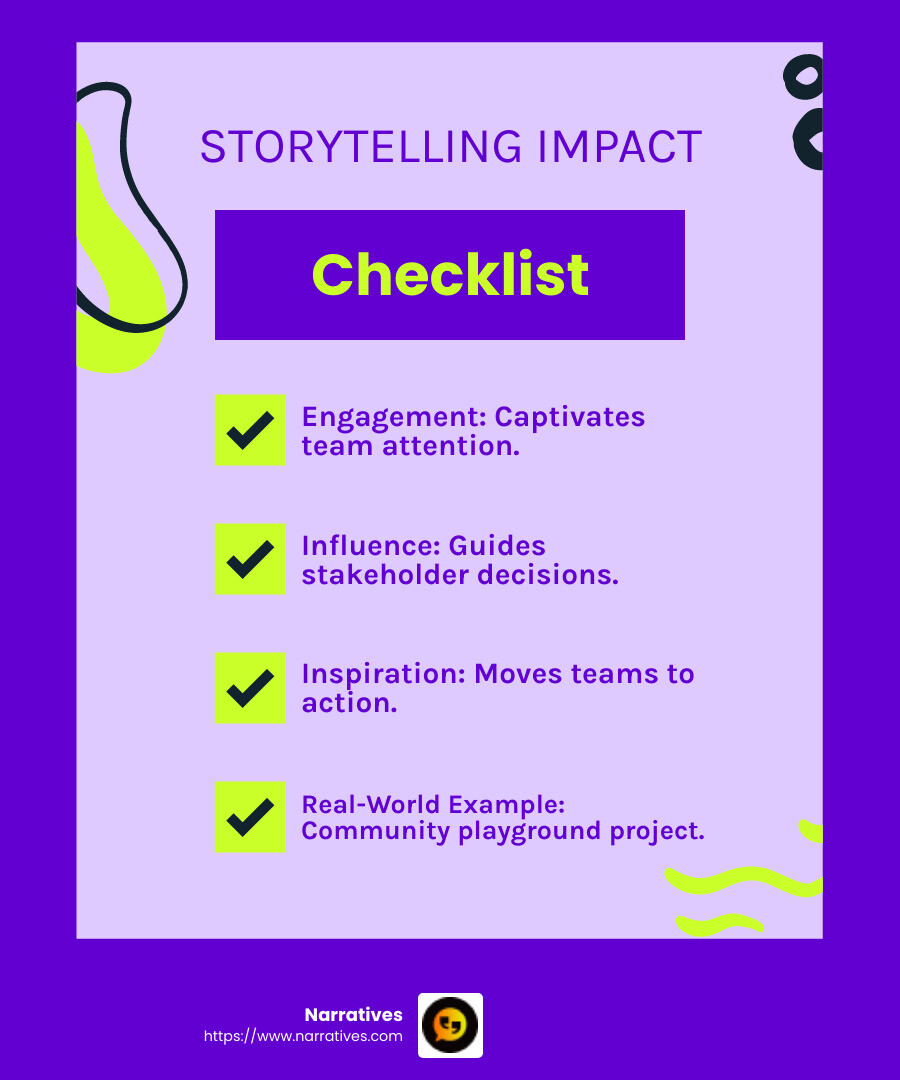
Engagement, Influence, and Inspiration:
In project management, storytelling isn't just a buzzword; it's a transformative tool. Imagine your project as a storybook. Each chapter unfolds with purpose, drawing in your audience—your team and stakeholders. But how does storytelling project management really wield such power?
Engagement through Stories
Stories captivate. They turn mundane meetings into engaging narratives. When your team hears a story, they're more likely to remember key points and stay focused. Like a gripping novel, a well-told project story keeps everyone on the same page, literally and figuratively. This engagement fosters a collaborative spirit where team members feel invested in the project's success.
Influence: Guiding Decisions
A narrative isn't just for entertainment; it guides decisions. When stakeholders understand the story behind a project, they see more than just numbers and deadlines. They see the vision and the mission. This clarity influences their decisions, aligning them with the project's goals. It's like giving them a map—clear, concise, and compelling.
Inspiration: Fuel for Action
Inspiration is the heart of storytelling. A powerful story moves people to action. It transforms passive listeners into active participants. By painting a vivid picture of the project's potential impact, storytelling project management inspires teams to push boundaries and overcome challenges. It's the difference between knowing the path and walking it.
Real-World Example:
Consider the construction of a community playground. Instead of listing tasks and deadlines, the project manager tells the story of children playing safely, parents watching proudly, and a community coming together. This narrative not only engages but also inspires all involved to work towards a shared vision.
Storytelling in project management is about creating a narrative that everyone can rally behind. It improves engagement, influences decisions, and inspires action, making it an indispensable tool for project success.
Crafting Compelling Narratives
Clarity: Simplifying Complexity
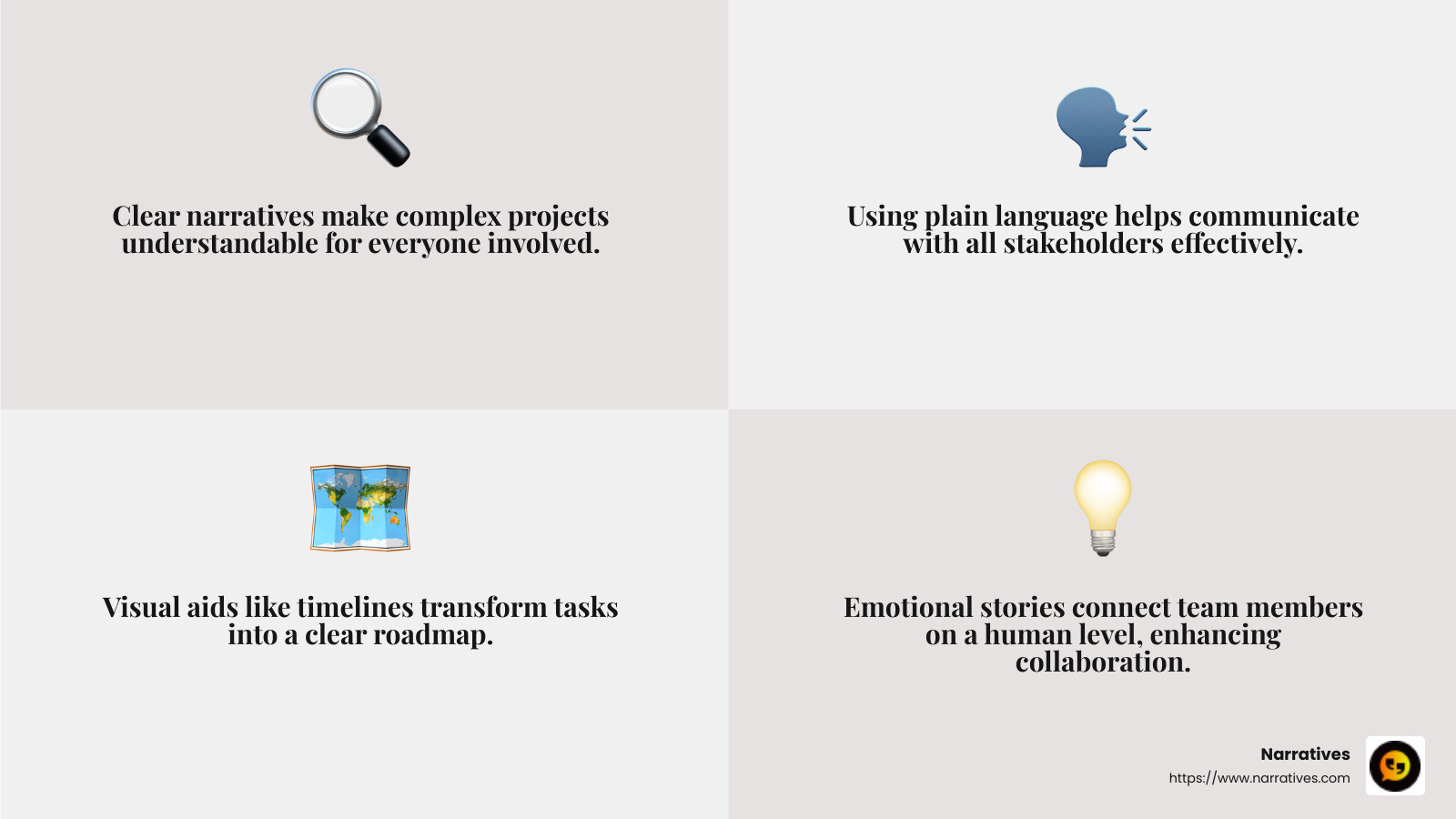
A compelling narrative starts with clarity. In project management, clarity means breaking down complex ideas into simple, understandable stories. Think of it like turning a technical manual into a bedtime story. A clear narrative ensures that everyone—from the CEO to the newest team member—understands the project's goals and their role in achieving them.
Imagine a project manager explaining a new software rollout. Instead of diving into technical jargon, they might say, "We're building a bridge to connect our team with our customers seamlessly." This simple analogy helps everyone grasp the project's essence quickly.
Accessibility: Reaching All Audiences
Accessibility in storytelling means ensuring that your narrative is understandable and relatable to all stakeholders. This involves using plain language, vivid imagery, and relatable examples. It's about making the narrative accessible, not just in terms of language, but also in how it's presented.
Visual aids like timelines or infographics can help. For instance, a Gantt chart can transform an overwhelming list of tasks into a clear roadmap that everyone can follow.
Emotional Impact: Connecting on a Human Level
Stories have the power to evoke emotions, and emotions drive action. In project management, creating an emotional impact means connecting the project's story to real human experiences. It's about making stakeholders feel the project's significance on a personal level.
Consider a project aimed at reducing company waste. Instead of focusing solely on cost savings, a project manager might tell the story of how the project contributes to a healthier planet for future generations. This emotional connection can motivate teams and stakeholders to commit more deeply to the project's success.
Real-World Application:
Let's look at a healthcare project aimed at improving patient care. A project manager could craft a story around a patient named Emily, whose life improves due to the new system. By personalizing the narrative, stakeholders see beyond the technical details and connect with the project's real-world impact.
In crafting compelling narratives, project managers turn complexity into clarity, make information accessible, and create emotional connections. This approach not only improves understanding but also fosters a sense of purpose and commitment among all involved.
Storytelling Project Management Techniques
Narrative Creation: Building the Big Picture
In storytelling project management, narrative creation is about weaving together the fragments of a project into a cohesive story. It's like assembling a puzzle where every piece reveals a part of the larger picture. The goal is to turn vague objectives into a clear, engaging story that guides the team.
Consider a project with unclear goals, like "improving customer service." A project manager can frame this as a journey: "We're on a mission to transform every customer interaction into a memorable experience." This narrative not only clarifies the goal but also energizes the team to move forward.
Character Development: Defining Roles and Contributions
Characters are the heart of any story, and in project management, your team members are those characters. Character development involves defining each team member's role and how they contribute to the project. It’s about turning team members into heroes of the story.
For example, in a software development project, the developers are the creators, the testers are the guardians of quality, and the project manager is the navigator. Clearly defining these roles helps each person see their importance in the project’s success, fostering motivation and accountability.
Plot and Milestones: Charting the Course
Every story has a plot, and in project management, this translates to setting clear milestones. Milestones are the key events that move the project forward, much like chapters in a book. They provide structure and keep the team focused on the next goal.
Imagine a project to build a community playground. The plot might include milestones like design approval, securing funding, and construction phases. Each milestone is a chapter in the project story, guiding the team through the journey and maintaining momentum.
Real-World Application:
Take a project to develop a new marketing campaign. The narrative begins with understanding the audience's needs, the characters are the creative and analytics teams, and the plot unfolds through brainstorming sessions, design reviews, and campaign launch. By creating a story around these elements, the project manager ensures every team member knows their role and the path to success.
Incorporating storytelling project management techniques such as narrative creation, character development, and plot with milestones transforms the project process. It not only clarifies the journey but also aligns and inspires the team, leading to successful outcomes.
Benefits of Storytelling in Project Management
Collaboration: Bringing Teams Together
In storytelling project management, collaboration is more than just working together—it's about creating a shared journey. When a project is framed as a story, team members see themselves as part of a narrative where their roles are interconnected. This perspective fosters a sense of unity and purpose.
For example, consider a project to launch a new product. By narrating the project as a quest to revolutionize the market, each team member—from designers to marketers—understands their contribution towards a common goal. This shared vision encourages teamwork and smoother collaboration.
Stakeholder Engagement: Capturing Interest and Support
Engaging stakeholders can be challenging, especially when they have diverse interests. Storytelling transforms dry project updates into captivating narratives that capture attention and build support.
Imagine updating stakeholders on a sustainable energy project. Instead of presenting statistics, a project manager can share a story about the community's journey towards sustainability, highlighting the project's impact on future generations. This approach not only informs but also emotionally engages stakeholders, making them more likely to support and invest in the project.
Emotional Connection: Inspiring and Motivating
Humans are naturally drawn to stories because they evoke emotions. In project management, creating an emotional connection through storytelling can inspire and motivate both the team and stakeholders.
Consider a project to improve public transportation. By framing the project as a story about enhancing daily life and reducing environmental impact, the project manager taps into emotions like pride and responsibility. This emotional connection helps team members feel passionate about their work and stakeholders feel invested in the project's success.
Incorporating storytelling into project management isn't just about adding flair; it's about changing the way teams and stakeholders perceive and engage with projects. By fostering collaboration, engaging stakeholders, and creating emotional connections, storytelling becomes a powerful tool for driving project success.
Frequently Asked Questions about Storytelling Project Management
How does storytelling improve project management?
Communication, Leadership, and Decision-Making
Storytelling in project management improves communication by changing complex information into relatable narratives. This makes it easier for team members to understand project goals and objectives. Donald Miller, in his book A Million Miles in a Thousand Years, highlights that a good story involves a character overcoming conflict to achieve a goal. In project management, this means clearly communicating the challenges and triumphs of a project, making the information memorable and engaging.
Leadership is also strengthened through storytelling. Project managers who use stories can motivate and align their teams towards a common vision. By sharing narratives that illustrate the project’s purpose and impact, leaders can inspire their teams to work collaboratively and efficiently.
Decision-making benefits as well. When project data and findings are embedded in a narrative, it provides context that can guide more informed decisions. For example, a story about past project challenges and how they were overcome can help teams anticipate and address similar issues in future projects.
What are some examples of storytelling in project management?
Examples, Case Studies, Real-World Applications
One real-world example comes from Sarah, a project manager who successfully used storytelling to improve her team's performance. By framing the project as a narrative, she was able to create a sense of purpose and connection among team members and stakeholders. This approach led to improved collaboration and project outcomes.
Another case study involves a project aimed at reducing energy consumption. Instead of presenting dry data, the project manager crafted a story about a community’s journey to sustainability. This narrative not only engaged stakeholders but also inspired them to support the project actively.
In a corporate setting, storytelling with data can transform financial metrics into compelling narratives. For instance, rather than just presenting revenue figures, a project manager can share a story about the company’s growth journey, highlighting key milestones and future aspirations. This approach makes data more relatable and actionable.
Why is storytelling important for project managers?
Motivation, Team Alignment, Strategic Objectives
Storytelling is crucial for motivation. By sharing stories that highlight the positive impact of a project, managers can inspire their teams to strive for excellence. Stories evoke emotions, making team members feel more connected to the project and committed to its success.
Team alignment is another significant benefit. When a project is presented as a cohesive story, it helps team members understand their roles within the larger narrative. This clarity fosters a sense of unity and ensures everyone is working towards the same strategic objectives.
Finally, storytelling aids in achieving strategic objectives by clearly communicating the project’s vision and goals. It helps stakeholders see the bigger picture and understand how their contributions fit into the overall success of the project. This understanding is essential for gaining their support and ensuring the project aligns with organizational goals.
Conclusion
In the field of project management, storytelling isn't just a tool—it's a game-changer. At Narratives, we believe in the power of stories to transform projects, especially for non-profits and purpose-driven organizations. By crafting compelling narratives, we help these organizations lift their voices and amplify their impact.
Narratives play a crucial role in non-profit partnerships. They provide a platform for underrepresented voices, ensuring their stories are heard and valued. This connection builds trust and fosters collaboration, essential elements for successful project management. When non-profits share their journeys, they inspire action and drive social change.
The social impact of storytelling is profound. By weaving narratives that highlight challenges and triumphs, non-profits can engage stakeholders on a deeper level. This emotional connection not only boosts support but also encourages ongoing commitment to the cause. Storytelling helps translate complex data into relatable stories, making it easier for stakeholders to understand and act upon.
At Narratives, we are committed to supporting non-profits in sharing their stories effectively. Our approach focuses on high-quality, emotionally resonant content that resonates with audiences and drives meaningful action. By partnering with us, non-profits can harness the full potential of storytelling to achieve their goals and make a lasting impact.
For more on how we can support your storytelling journey, learn more about our services. Let's work together to create narratives that inspire change and build a better future.


.avif)