From Heart to Action: Essential Storytelling Tips for Nonprofits

Storytelling tips for nonprofits are crucial for creating impactful communication that captures attention and fosters connection. Nonprofits face unique challenges in changing their heartfelt missions into compelling stories that resonate with their audience. Here are some quick tips for effective storytelling:
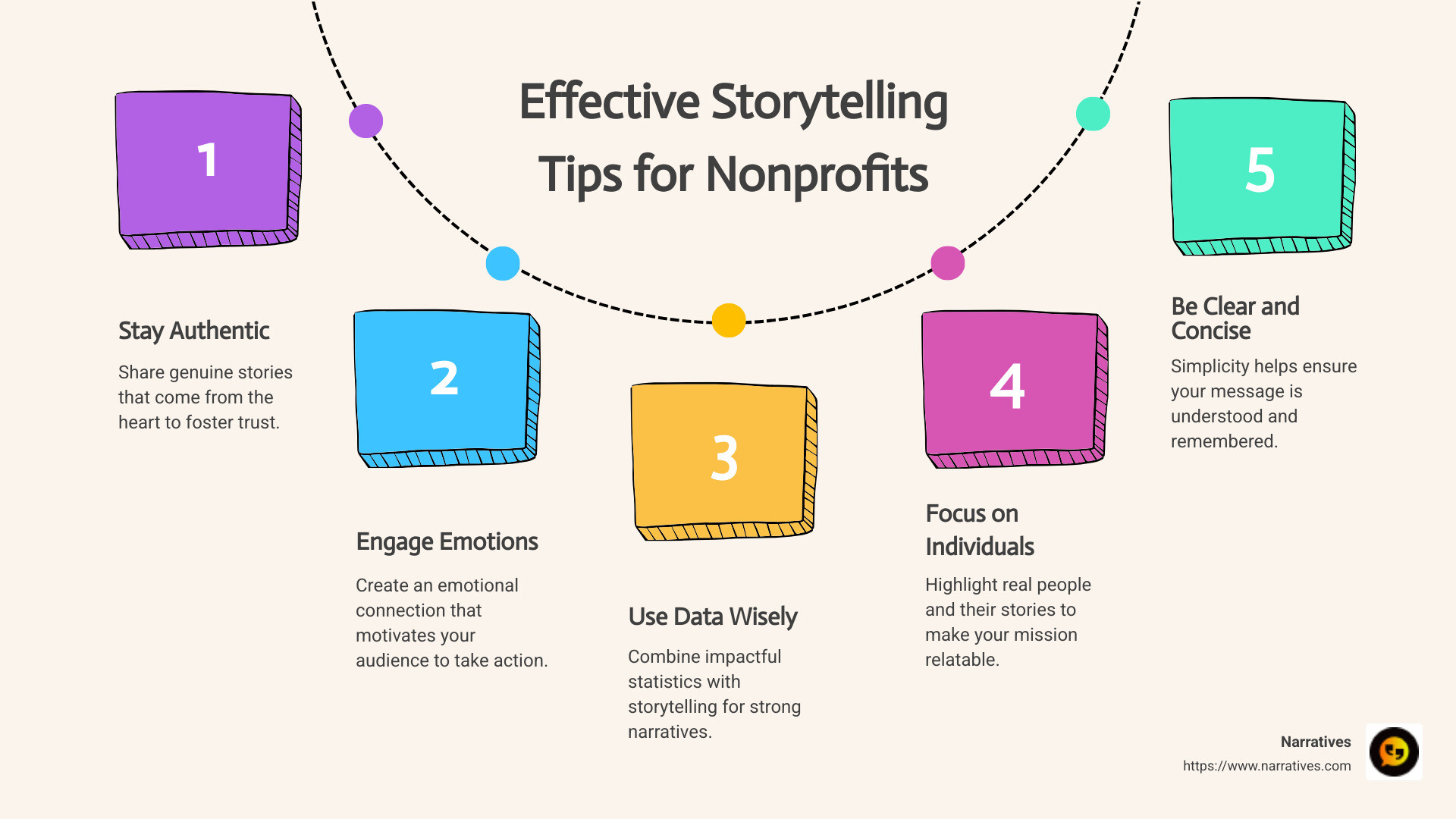
- Stay Authentic: Nothing beats genuine stories coming from the heart.
- Engage Emotions: Create an emotional connection that motivates action.
- Use Data Wisely: Combine storytelling with impactful statistics for a strong narrative.
- Focus on Individuals: Highlight real people to make your mission relatable.
- Be Clear and Concise: Simplicity helps your message stick.
In a world brimming with data, facts, and figures, stories stand out. They make organizations memorable and foster deeper bonds with communities and donors. It's been noted by Forbes that storytelling is a crucial career skill for the future because it transcends simple transactions, encouraging heartfelt engagement and action.
For nonprofits, storytelling isn't just a tool—it's the foundation of impactful communication. By crafting narratives that highlight changes, and focusing on characters and their journeys, nonprofits not only make their missions memorable but also prompt their audiences to make a difference.
Storytelling tips for nonprofits terms made easy:
The Power of Storytelling in Nonprofits
In the nonprofit world, storytelling is more than just a buzzword—it's a powerful tool for engagement, influence, and creating emotional connections.
Engagement
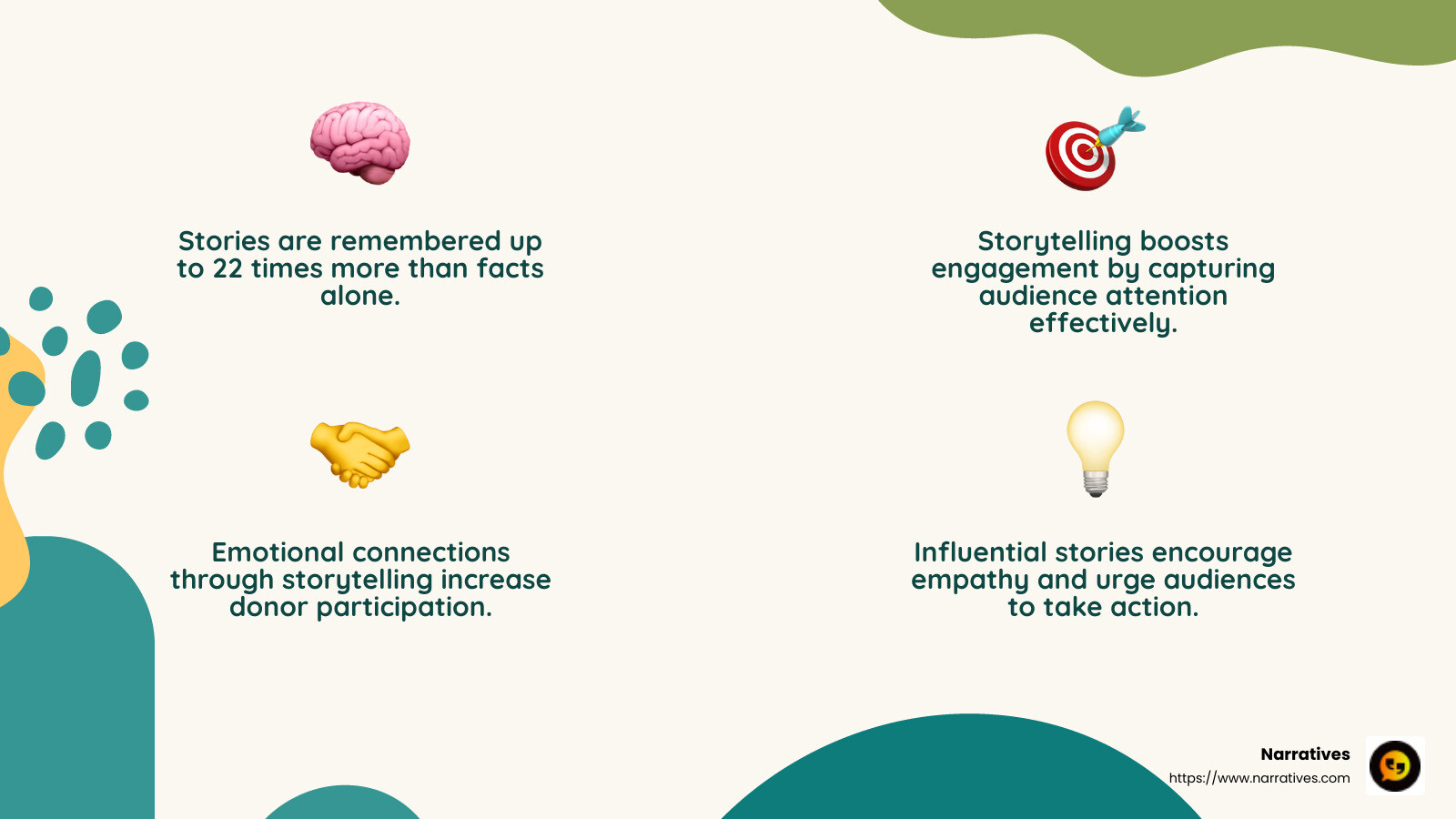
Stories captivate audiences in a way that raw data often cannot. When you tell a compelling story, you're more likely to grab and hold attention. This is crucial for nonprofits, where the goal is to engage potential donors and supporters. According to research, stories are remembered up to 22 times more than facts alone. This means that a well-told story can stick with your audience long after they've heard it.
Influence
Storytelling also has the power to influence behavior. When people hear a story, they often put themselves in the shoes of the characters, experiencing their struggles and triumphs. This vicarious experience can lead to increased empathy and a stronger urge to help. For instance, a video showing a local family overcoming adversity with the help of your nonprofit can inspire viewers to donate or volunteer.
Emotional Connection
At the heart of storytelling is the ability to forge emotional connections. When people feel emotionally connected to a cause, they're more likely to support it. This connection is what transforms passive listeners into active participants. By sharing personal narratives and success stories, nonprofits can demonstrate the real impact of their work, making it personal and relatable.
Storytelling tips for nonprofits are not just about sharing information; they're about creating a narrative that resonates on a personal level. When done well, storytelling can turn a simple message into a movement, inspiring people to take action and make a difference.
Storytelling Tips for Nonprofits
In nonprofits, storytelling is an essential tool for building connections and driving action. Here are some tips to help you harness its power effectively.
Define Goals and Objectives
Before diving into storytelling, it's crucial to define your goals and objectives. What is the purpose of your story? Are you aiming to inform, inspire, or persuade? Clearly outline your mission and identify your target audience. Knowing who you're speaking to will guide the tone and content of your story, ensuring it aligns with your nonprofit's overall mission.
Use Data and Imagery
Combining data with imagery can make your stories more compelling. Numbers alone can be dry, but when paired with visual elements, they come alive. Use photos and videos to illustrate your impact. For example, show how donations have provided clean water to communities by featuring images of smiling children drinking from new pumps.
Visual storytelling helps your audience see the difference their support makes, making your message both tangible and engaging. The goal is to paint a picture that sticks in the minds of your audience.
Focus on Real People
Putting a face to your cause can make a world of difference. Highlighting real people in your stories taps into the singularity effect, where individuals are more likely to empathize with a single character than a group. Share testimonials and personal narratives to humanize your mission.
For instance, a first-hand account from a cancer survivor can ground your audience in the reality of your work. This approach not only builds trust but also inspires ongoing support.
By focusing on real people, you create stories that resonate emotionally, turning passive listeners into active supporters.
Accept Transparency
Transparency is key to building trust with your audience. Use storytelling to show how donations are used effectively. Share the journey from donation to impact, illustrating each step with honesty and clarity. This not only improves credibility but also encourages donor retention.
Incorporating these tips into your storytelling strategy can lift your nonprofit's communication, making your mission more relatable and memorable. By defining clear goals, using data and imagery, focusing on real people, and embracing transparency, you can create narratives that inspire action and foster lasting connections.
6 Steps to Telling Your Nonprofit's Stories
Step 1: Understand Story Structure
A well-told story follows a clear structure, making it easier for your audience to follow and connect. The three-act structure is a tried-and-true method.
Act One – Setup: Introduce the main character and their world. What is their normal life like? This is where you hook the audience, much like Harry Potter finding he's a wizard.
Act Two – Confrontation: Here, the character faces challenges and obstacles. This is the heart of the story, where conflict arises. Highlight the courage and strength the character shows in overcoming these challenges.
Act Three – Resolution: This is where change happens. The character's journey concludes, leaving the audience with a clear takeaway or message.
Step 2: Focus on One Character
The singularity effect suggests that focusing on one character makes a story more relatable and impactful. Choose a real person whose story exemplifies your mission. Use visual storytelling—photos or videos can bring their story to life.
Include personal details to create a connection. What are their dreams and fears? Use direct quotes to let their personality shine through. This approach not only humanizes your cause but also fosters emotional engagement.
Step 3: Communicate the Conflict, Goals, and Successes
Conflict is the engine of any compelling story. Clearly outline the challenges your character faces and how your nonprofit offers a solution. Highlight the character’s courage and resilience in overcoming obstacles. This not only adds depth but also instills hope in your audience.
Share the goals of both the character and your organization. Show how support from donors is crucial in achieving these goals.
Step 4: Highlight the Result
Your audience wants to see the impact of their support. Show the takeaway or change that occurred as a result of your nonprofit's intervention. Whether it's emotional, physical, or circumstantial, make sure the change is clear.
By illustrating the before-and-after, you inspire your audience, making them feel part of the success story.
Step 5: Call Readers to Action
A great story should lead to action. Encourage your audience to get involved. Whether it's donating, volunteering, or spreading the word, make your call to action clear and compelling.
Use emotional engagement to motivate your audience. Show them how they can be part of the change they just read about.
Step 6: Edit
Finally, ensure your story is concise and free of errors. Proofread to maintain professionalism and clarity. Focus on the core components of your story—character, conflict, and resolution.
A well-edited story not only holds attention but also improves credibility, making your message more impactful.
By following these steps, you can craft stories that not only engage but also drive action, turning readers into advocates for your cause.
Frequently Asked Questions about Storytelling Tips for Nonprofits
How can storytelling improve nonprofit communication?
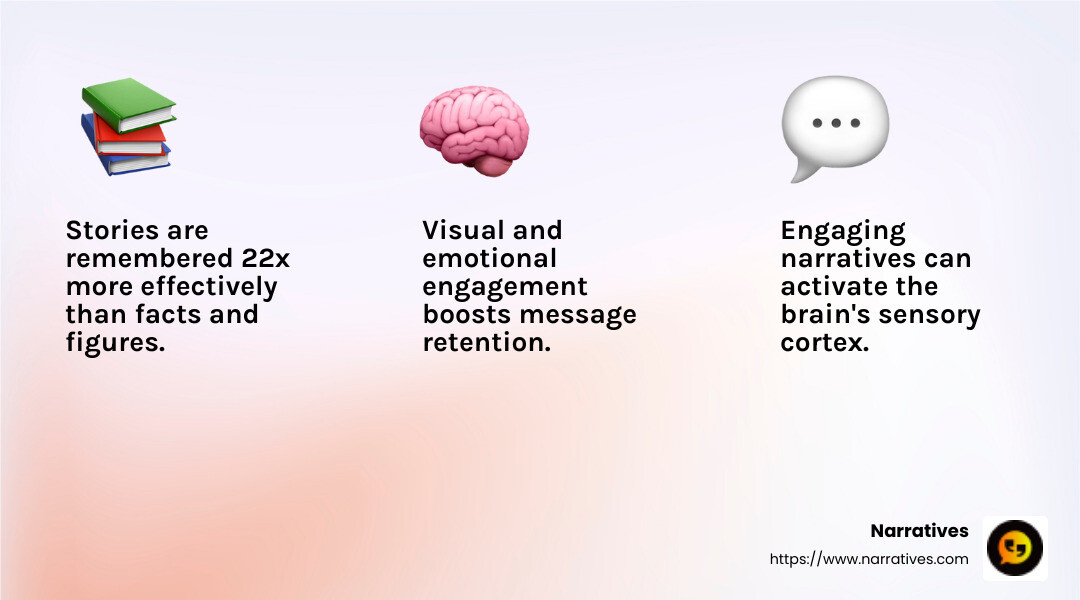
Storytelling is a powerful tool for nonprofits because it transforms your mission into a relatable narrative. By focusing on real-life stories, you create emotional connections that engage your audience. According to research from the Stanford Graduate School of Business, stories are remembered up to 22 times more than just facts alone. This means your message sticks with people longer, increasing the chances of support and action.
When nonprofits tell stories, they give a face and a name to their cause, making it personal. This approach helps your audience understand why your mission matters and motivates them to get involved. Storytelling also allows you to communicate complex issues in a simple, relatable way, making your mission accessible to a wider audience.
What are the benefits of using visuals in storytelling?
Visual storytelling can significantly improve the impact of your nonprofit's message. Images and videos can convey emotions and details that words alone might miss. For example, the United Nations Development Programme used powerful photos to highlight the issue of plastic pollution, helping readers grasp the problem's scale immediately.
Using visuals makes your stories more memorable and engaging. They help your audience visualize the change their support can bring, whether it's a smiling child or a thriving community garden. Visuals also cater to different learning styles, ensuring your message reaches and resonates with more people.
How can nonprofits ensure transparency through storytelling?
Transparency builds trust with donors and supporters, and storytelling can play a crucial role in this. By sharing real stories of how donations are used, nonprofits can show the journey from donation to impact. For instance, World Vision uses testimonials and photos to illustrate how contributions help children worldwide, fostering confidence in their mission.
To ensure transparency, include clear information about how funds are used and the outcomes achieved. Use storytelling to highlight each step of your projects, from inception to completion, showing donors exactly where their money goes. This approach not only improves trust but also encourages continued support, as donors can see the tangible results of their contributions.
Conclusion
At Narratives, we understand the power of storytelling in creating meaningful connections and driving social impact. Community-driven storytelling is at the heart of what we do. By elevating underrepresented voices, we help nonprofits share their stories in ways that engage and inspire action.
Our approach is simple: we use high-quality, emotionally resonant video and multimedia content to bring nonprofit missions to life. This not only builds trust with audiences but also increases visibility, helping organizations reach a broader audience.
Storytelling isn't just about sharing facts; it's about creating an emotional journey. This journey makes your audience feel connected to your cause, encouraging them to become active participants in your mission.
By partnering with us, nonprofits can harness the power of storytelling to amplify their impact. Whether it's through visual storytelling or focusing on real people, we provide the tools and expertise needed to craft compelling narratives that resonate.
Ready to take your nonprofit's storytelling to the next level? Explore our media services and see how we can help you make a difference. Together, we can transform stories from the heart into action that drives change.


.avif)