From Curiosity to Creation: Mastering Storytelling with Purpose

Storytelling with purpose transforms the mundane into meaningful narratives that engage hearts and minds. Whether you want to captivate a classroom or inspire change through non-profit work, this approach harnesses digital storytelling to fuel curiosity and inspire purposeful learning.
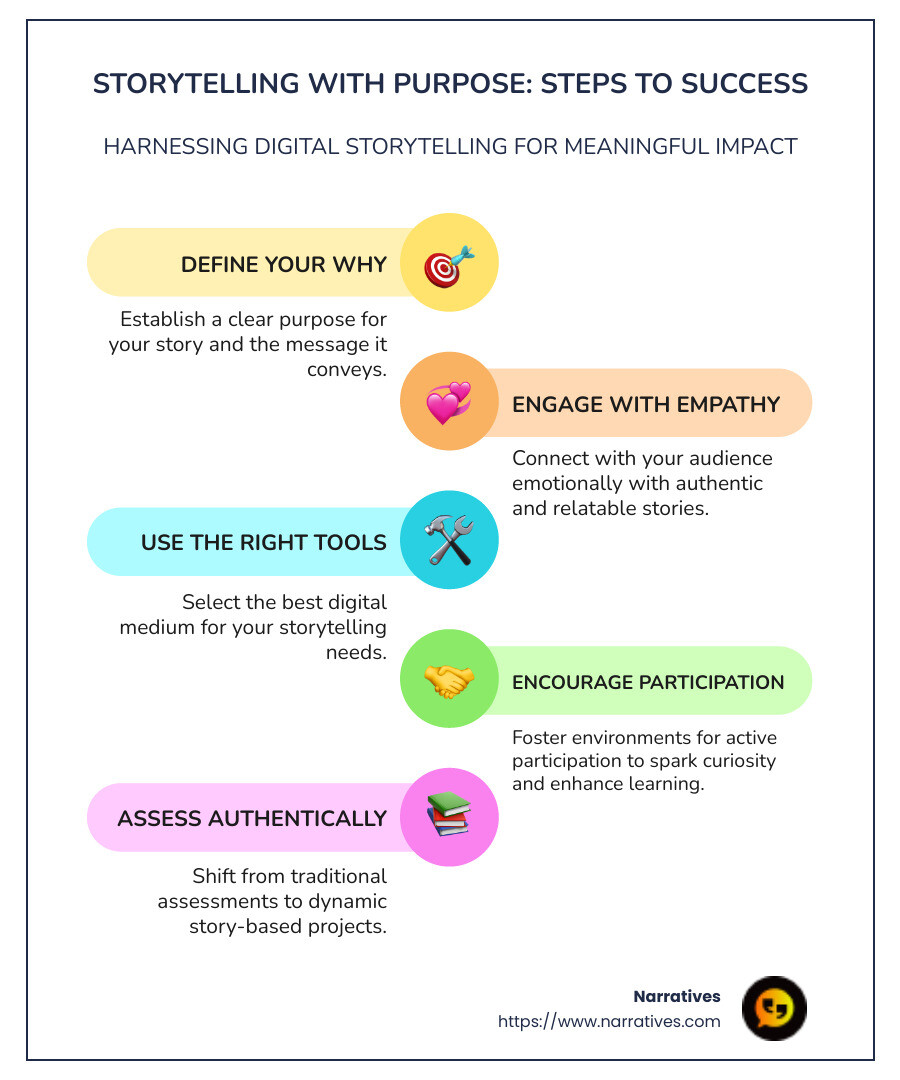
Here's what you should know about storytelling with purpose:
Define Your Why: Establish a clear purpose for your story. What message do you want to convey, and why does it matter?
Engage with Empathy: Connect with your audience emotionally. Authentic stories resonate because they are real and relatable.
Use the Right Tools: Choose the best digital medium that suits your storytelling needs — from podcasts to video documentaries.
Encourage Participation: Foster an environment where students or team members can actively participate in storytelling, sparking curiosity and enhancing learning.
Assess Authentically: Shift from traditional assessments to dynamic story-based projects that showcase understanding and creativity.
As Ken Burns eloquently states, “Teaching is the most important profession in any democracy.” His sentiment underscores the power of storytelling as a tool in education — one that can ignite curiosity and invoke change.
Imagine an educational landscape where stories drive learning, and each narrative serves as a catalyst for intellectual and emotional growth. With digital storytelling, your narratives have the potential not only to teach but also to transform understanding and inspire action.
Basic storytelling with purpose glossary:
- act on health equity community solutions challenge
- challenges in community engagement and solutions
- community networks in latin america challenges regulations and solutions
Understanding Storytelling with Purpose
Storytelling with purpose is about crafting narratives that connect deeply with audiences, whether in a classroom, community, or broader social context. It's not just about telling a story; it's about telling the right story that resonates and inspires.
The Essence of Purposeful Storytelling
Purpose is the core of any impactful story. It's the "why" that drives the narrative. When you have a clear purpose, your story gains direction and meaning, making it more engaging and memorable.
For instance, Michael Hernandez, an expert in digital storytelling, emphasizes that purposeful storytelling helps students explore cultural and historical contexts. This approach not only educates but also empowers students to become engaged global citizens.
Creating Emotional Connections
Stories are powerful because they evoke emotions. An emotional connection is crucial to making your story stick. When people feel something, they are more likely to remember and act on it.
Jennifer Aaker, a storytelling expert, notes that good stories have three components: a strong beginning, a strong end, and a point of tension. This tension draws the audience in, creating a connection that makes the story memorable.
Practical Applications
Digital storytelling offers various formats to connect with different audiences. Whether through infographics, social media posts, or video documentaries, choosing the right medium is key. This flexibility allows storytellers to tailor their message to their audience, enhancing engagement and impact.

In the educational field, storytelling with purpose can transform traditional learning into engaging experiences. Students can use storytelling to conduct research, process information, and share insights creatively. This approach not only boosts engagement but also fosters higher-level thinking.
By incorporating storytelling into your projects, whether in education or non-profit work, you can create narratives that inspire change and promote understanding. This is the power of storytelling with purpose — it turns ordinary messages into extraordinary experiences that resonate with the heart and mind.
The Role of Digital Storytelling in Education
Digital storytelling is reshaping how students engage with learning. By integrating digital projects into the classroom, educators can create a dynamic environment that fosters curiosity and authentic learning experiences.
Digital Projects: A Catalyst for Engagement
Digital projects, like podcasts and video documentaries, provide students with hands-on opportunities to explore subjects creatively. These projects make learning interactive and relevant to the digital age. When students create their own stories, they become active participants in their education, rather than passive recipients.
Michael Hernandez, a leader in digital storytelling, highlights how these projects can help students develop critical skills. They learn to research, process complex ideas, and communicate effectively. This active involvement boosts student engagement, making education more meaningful and enjoyable.
Authentic Learning Through Storytelling
Authentic learning is about connecting classroom activities to real-world experiences. Digital storytelling allows students to explore topics that matter to them and their communities. By crafting narratives that reflect their perspectives, students can see the relevance of their education in the world around them.
A case study from the book Storytelling With Purpose shows how a high school class used digital storytelling to document local history. Students interviewed community members, capturing stories that would otherwise be lost. This project not only taught them historical research skills but also instilled a sense of pride and connection to their community.
Bridging the Gap Between Education and the Real World
Digital storytelling bridges the gap between classroom learning and real-world application. By working on projects that have a purpose beyond the classroom, students develop a mindset of curiosity, agency, and purpose. This kind of learning prepares them to be engaged global citizens.
Storytelling with purpose in education is not just about using technology; it's about changing how students learn and interact with the world. By encouraging students to tell stories that matter, educators can ignite a lifelong love for learning and findy.
Practical Steps to Implement Storytelling with Purpose
Implementing storytelling with purpose in the classroom requires a strategic approach. Here's how educators can integrate digital storytelling effectively, using practical advice and real-life case studies.
Start with a Clear Purpose
Before diving into digital storytelling projects, define the purpose. What do you want students to learn or achieve? A clear purpose guides the storytelling process and ensures that projects are meaningful.
Michael Hernandez emphasizes the importance of purpose-driven learning. By framing projects around a central goal, students can connect their work to larger themes and ideas. This approach not only improves learning but also motivates students to engage deeply with the material.
Choose the Right Tools
Digital storytelling can take many forms, from infographics to video documentaries. Selecting the right tools is crucial. Consider the resources available and the skills you want students to develop.
The book Storytelling With Purpose provides a toolbox of digital storytelling resources, helping teachers choose the best tools for their classrooms. Whether using simple audio recording apps or advanced video editing software, the key is to match the tool to the project's goals.
Encourage Student Ownership
Giving students ownership of their stories fosters creativity and engagement. Allow them to choose topics that interest them and encourage them to explore these topics from their unique perspectives.
A case study from Hernandez's work highlights a project where students created podcasts about environmental issues affecting their local community. By choosing topics they were passionate about, students took ownership of their learning and produced compelling, authentic stories.
Provide Structure and Support
While student ownership is crucial, providing structure and support is equally important. Offer guidelines on storytelling elements, such as narrative structure, character development, and emotional impact.
In Storytelling With Purpose, Hernandez outlines ways to scaffold learning, ensuring students have the support they need to succeed. This includes workshops on storytelling techniques and feedback sessions to refine their work.
Assess and Reflect
Assessment in digital storytelling should focus on both the process and the final product. Encourage students to reflect on their learning journey, considering what they learned and how they can apply these skills in the future.
Uncheatable assessments, as discussed in the book, are a powerful way to evaluate student work. By focusing on creativity, critical thinking, and personal expression, these assessments provide a holistic view of student learning.
By following these practical steps, educators can successfully implement storytelling with purpose in their classrooms. This approach not only enriches the learning experience but also empowers students to tell stories that matter.
Leveraging Storytelling for Non-Profits
Non-profits have a unique opportunity to harness the power of storytelling with purpose to create social impact. By focusing on community-driven storytelling, these organizations can amplify underrepresented voices and foster meaningful connections.
Social Impact through Storytelling
Storytelling is more than just sharing information—it's about making an emotional connection. Non-profits can use stories to highlight their mission and the impact they have on communities. This approach not only informs the public but also inspires action.
Consider the case of charity: water. By sharing personal stories of individuals affected by the lack of clean water, they evoke empathy and drive donations. Their storytelling strategy combines powerful narratives with transparent reporting, showing donors exactly where their money goes.
Community-Driven Storytelling
For storytelling to be effective, it must be rooted in the community's experiences. Non-profits should engage with the people they serve, ensuring their stories are told authentically and respectfully. This not only empowers the community but also builds trust and credibility.
Narratives, a content agency, exemplifies this approach by working with underrepresented storytellers. They partner with non-profits to create content that highlights community challenges and triumphs, encouraging public support and engagement.
Amplifying Underrepresented Voices
Many communities have stories that are seldom heard. Non-profits can play a crucial role in amplifying these voices, providing a platform for individuals to share their experiences and perspectives.
For example, the Pars Equality Center supports Persian-speaking immigrants by sharing their stories of resilience and integration. By focusing on these underrepresented voices, they foster understanding and support within the broader community.
Practical Steps for Non-Profits
Identify the Stories: Work closely with your community to identify stories that align with your mission and resonate with your audience.
Choose the Right Medium: Whether it's video, podcasts, or social media posts, select the medium that best suits your story and audience.
Engage Your Audience: Use storytelling to create an emotional connection. Encourage your audience to share and interact with your content.
Measure Impact: Track how your stories influence public perception and engagement. Use this data to refine your storytelling strategy.
By leveraging storytelling with purpose, non-profits can create powerful narratives that drive social change and build stronger communities.
Frequently Asked Questions about Storytelling with Purpose
How can storytelling improve student engagement?
Storytelling is a powerful tool in education, changing passive learning into an active, engaging experience. When students are involved in crafting their own narratives, they become more invested in their learning journey.
Why does this work? Storytelling taps into students' natural curiosity and creativity, making lessons more relatable and memorable. According to Michael Hernandez, storytelling in the classroom provides a framework for learning that encourages curiosity and purpose. By integrating digital storytelling, educators can offer authentic learning experiences that extend beyond the classroom.
Consider the impact of digital storytelling projects, which allow students to create podcasts, videos, or infographics. These projects not only improve engagement but also help students develop critical thinking and communication skills.
What are the benefits of digital storytelling for non-profits?
Digital storytelling offers non-profits a unique way to connect with their audience and amplify their mission. By sharing compelling stories, non-profits can highlight their impact and inspire action.
Key benefits include:
Emotional Connection: Stories evoke empathy and motivate people to support causes. For example, Narratives collaborates with non-profits to create content that highlights community challenges and successes, driving public engagement.
Amplifying Voices: Digital storytelling can give a voice to underrepresented communities, shining a light on their experiences and needs. This not only raises awareness but also fosters a sense of community and support.
Transparency and Trust: By sharing stories that document their work and its outcomes, non-profits can build trust with donors and stakeholders. This transparency encourages continued support and collaboration.
How does storytelling provide purpose in learning?
Storytelling with purpose transforms education by making learning meaningful and relevant. It shifts the focus from rote memorization to exploration and understanding.
How does it achieve this?
Contextual Learning: Stories provide context, helping students understand complex concepts by relating them to real-world scenarios. This contextual learning fosters deeper comprehension and retention.
Empowerment and Agency: When students create their own stories, they gain a sense of ownership over their learning. This empowerment encourages them to explore topics with curiosity and confidence.
Purpose-Driven Projects: Storytelling projects are not just assignments; they are opportunities for students to express their values and perspectives. This purpose-driven approach makes learning more fulfilling and impactful.
By incorporating storytelling with purpose into education, we can create a learning environment that is engaging, meaningful, and transformative.
Conclusion
In today's , digital world, storytelling with purpose is more than just a tool—it's a transformative approach that can reshape how we connect, learn, and inspire. As a digital storytelling partner, Narratives is committed to helping non-profits and purpose-driven organizations lift their stories to new heights.
Why partner with Narratives?
Amplifying Impact: We specialize in creating emotionally resonant content that highlights the powerful work of non-profits. By focusing on underrepresented voices, we help organizations share their impact in a way that inspires action and fosters community support.
Building Trust and Visibility: Through high-quality multimedia content, Narratives assists non-profits in building trust with their audiences. Transparency and authenticity in storytelling not only increase visibility but also strengthen relationships with donors and stakeholders.
Empowering Communities: Our approach is centered around community-driven storytelling. We believe in giving a platform to those whose stories need to be heard, helping to drive social impact and positive change.
By integrating digital storytelling into their strategy, non-profits can effectively communicate their mission and achievements. This approach not only amplifies their message but also engages and mobilizes their audience, creating a ripple effect of support and advocacy.
Narratives is here to guide and support non-profits in mastering the art of storytelling with purpose. To learn more about how we can help your organization make a difference, explore our services. Together, let's transform stories into powerful catalysts for change.

.avif)