AI in Video Content Creation: A New Era or Overhyped?
Video content creation ai is changing how organizations create engaging digital stories.
- AI Video Generators: Tools that produce professional videos from simple prompts.
- Text-to-Video: Converts text descriptions into vivid, dynamic visuals.
- Image-to-Video: Transforms static images into lively video sequences.
This technology is not just a trend but a powerful tool that helps non-profits and advocacy groups maintain a strong digital presence. It allows them to tell their stories, emphasize their missions, and connect with audiences more energetically and convincingly than ever before.
Imagine an era where crafting a video doesn’t involve complex editing software or hours of labor. Whether through converting text narratives into visuals or animating still images, AI is making it possible, efficient, and accessible for organizations with limited resources.
Such advancements mean that mission-driven organizations can focus less on the technicalities and more on their core purpose—creating impactful narratives.
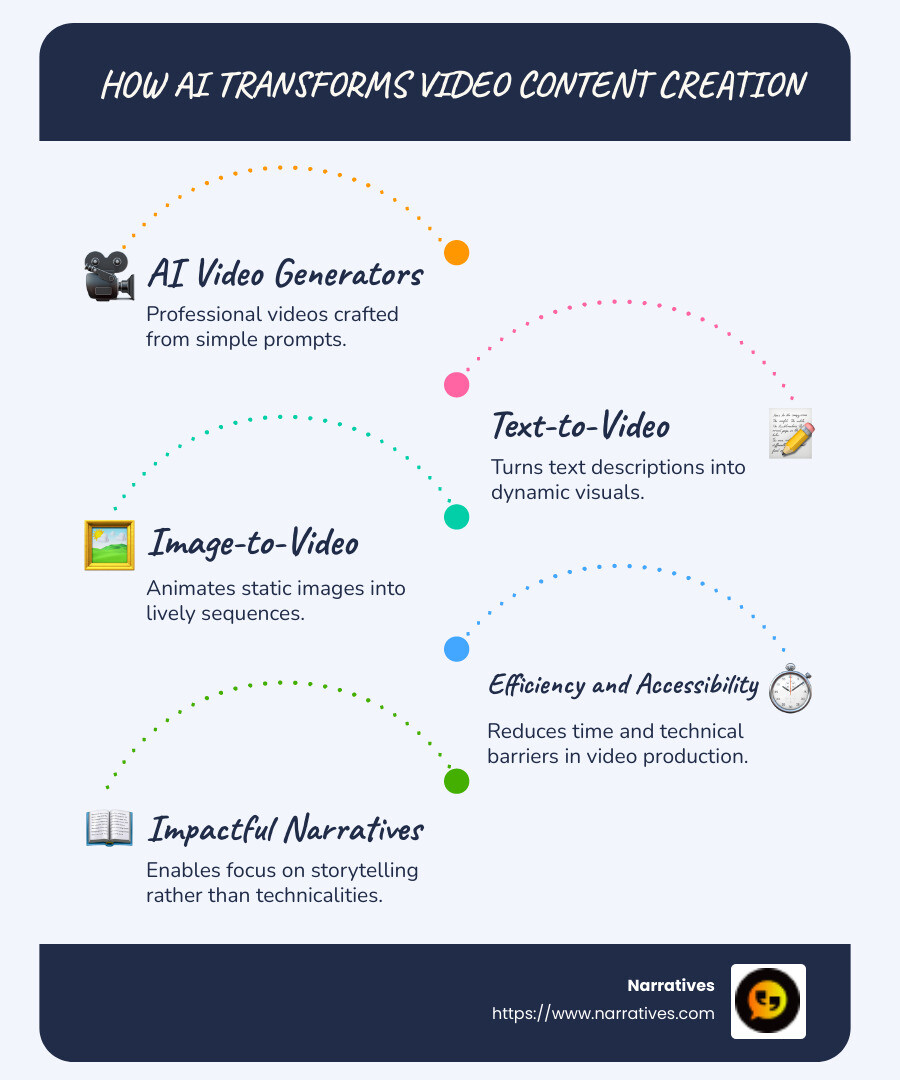
Video content creation ai terms simplified:
The Rise of AI in Video Content Creation
In recent years, generative AI has revolutionized the landscape of video content creation, offering a new field of possibilities for creators. This technology has not only simplified the production process but also expanded the boundaries of creative work.
Generative AI tools can transform simple text prompts into dynamic video content, enabling creators to produce a wide array of videos without extensive technical skills. This democratization of video creation is pivotal, especially for non-profits and small organizations that often operate with limited budgets and resources.
Expanding Creative Horizons
AI-driven tools allow users to explore diverse forms of content. They can easily generate videos featuring AI avatars or animate text into engaging visuals. This capability to produce content variety is a game-changer.
For instance, non-profits can now create educational videos, personalized messages, and storytelling pieces that resonate with their audience. This flexibility enables them to communicate their missions more effectively and reach a broader audience without the need for a full-scale production team.
A New Era of Content Variety
The introduction of AI into video content creation has also led to an explosion of content variety. Creators can now experiment with different styles and formats, from live-action to animated storytelling. This variety ensures that content remains fresh and engaging, capturing the attention of diverse audiences.
Moreover, AI tools can assist in localizing content for global audiences by automatically translating and adapting videos into multiple languages. This feature is particularly beneficial for organizations aiming to connect with international communities.
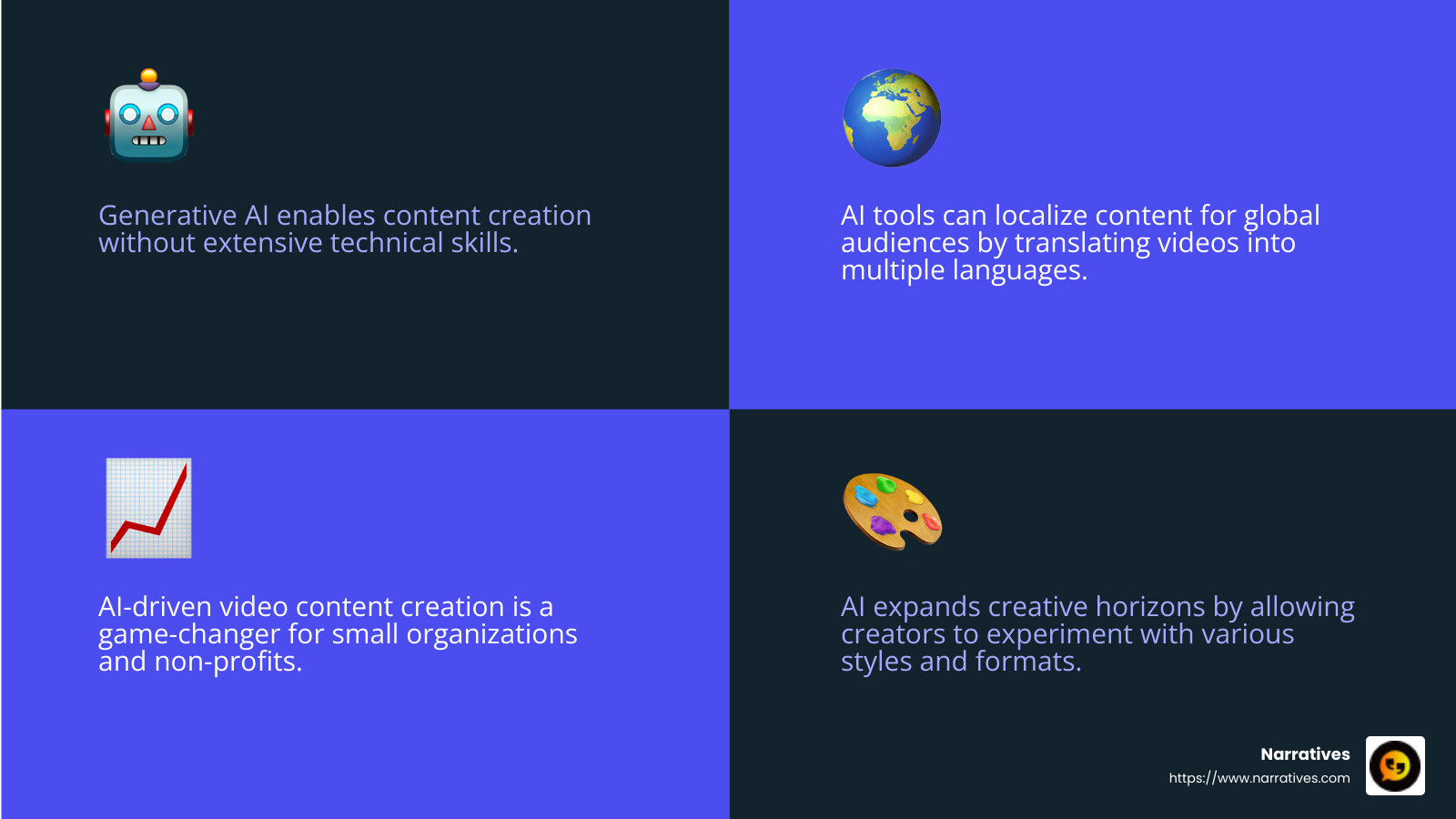
In summary, the rise of AI in video content creation is not just a technological advancement; it's a cultural shift. By enabling more people to create rich, diverse content, AI is fostering a more inclusive and vibrant digital storytelling landscape.
As we dig deeper into innovative AI solutions, we'll explore how these tools improve creativity and boost productivity, further redefining the possibilities within video content creation.
Types of AI Video Generation
AI technology has opened up new avenues in video content creation, making it easier than ever to transform ideas into engaging visuals. Let's explore the three main types of AI video generation: text-to-video, image-to-video, and video-to-video.
Text-to-Video
Text-to-video is a fascinating process where AI takes written content and turns it into visual narratives. Tools like Steve AI excel in this area, allowing users to input a script or even just a prompt to generate a video. This is especially useful for creating educational content, explainer videos, or even marketing clips.
Here's how it works: The AI analyzes the text, identifies key themes, and selects appropriate visuals and animations to match the narrative. It can also generate voiceovers, adding another layer of engagement. For non-profits, this means they can quickly produce compelling videos to share their stories and missions without needing a large production team.
Image-to-Video
Image-to-video is another innovative application of AI. This process involves taking static images and changing them into dynamic video content. This can be particularly useful for organizations with a wealth of photographic material but limited video footage.
AI tools can animate images by adding motion effects, transitions, and even background music to create a seamless video experience. This technique is ideal for creating slideshows, promotional videos, or visual storytelling pieces. It allows creators to breathe life into their existing image libraries and engage audiences in a more interactive way.
Video-to-Video
Video-to-video AI tools are designed to improve and repurpose existing video content. These tools can apply stylistic changes, improve quality, or even adapt videos for different platforms and audiences. For example, an AI could take a long-form video and create shorter clips optimized for social media sharing.
This capability is particularly beneficial in today's digital landscape, where content needs to be custom to various platforms and audience preferences. By using AI to edit and repurpose videos, creators can maximize the reach and impact of their content without starting from scratch each time.
AI video generation offers diverse methods to create and improve video content, each with its unique benefits. Whether you're starting with text, images, or existing video footage, AI tools provide the flexibility and efficiency needed to produce high-quality videos that captivate audiences. As we explore further, we'll see how these innovative solutions are reshaping the way we approach video content creation.
Innovative AI Solutions for Video Content Creation
AI is revolutionizing video content creation. It's not just about automation; it's about opening up creativity and boosting productivity. Let's explore some cutting-edge tools and see how they're reshaping the landscape.
Cutting-Edge Tools
Innovative AI tools are at the forefront, allowing users to transform text, images, and audio into videos with ease. These AI solutions streamline the production process, making it accessible even to those without extensive video editing skills. Users can go from a simple text prompt to a fully rendered video in minutes. This kind of innovation democratizes video creation, enabling more voices to be heard.
Enhancing Creativity
AI tools don't replace creativity; they improve it. By taking care of the technical aspects, AI frees up creators to focus on storytelling and conceptualization. For instance, AI can suggest visuals, animations, or even music that aligns with the content's mood and message. This synergy between human creativity and AI efficiency leads to more engaging and imaginative videos.
Consider the non-profit sector, where storytelling is crucial. AI tools enable these organizations to craft compelling narratives that resonate with their audience, without the need for a large production team. They can turn a simple story into a visually rich experience that draws in viewers and inspires action.
Boosting Productivity
When content is king, speed and efficiency are paramount. AI video generators significantly reduce the time it takes to create high-quality videos. This is crucial for businesses and organizations that need to keep up with the digital landscape.
For example, by using AI to repurpose existing content, creators can quickly adapt videos for different platforms, ensuring maximum reach and engagement. AI can automatically generate shorter clips from longer videos, tailor content for specific audiences, and even translate videos into multiple languages. This kind of productivity boost allows creators to maintain a steady stream of fresh content, keeping their audience engaged and informed.
AI in video content creation is not just a trend—it's a transformative force. By exploring and adopting these innovative solutions, creators can improve their storytelling, reach broader audiences, and achieve their goals more efficiently. We'll dig into how these advancements are particularly impactful for non-profits and community-driven storytelling.
Video Content Creation AI: A Game Changer for Non-Profits
In the field of video content creation AI, non-profits are finding a powerful ally. This technology is not just changing how stories are told but also amplifying the impact of those stories.
Digital Storytelling
For non-profits, storytelling is at the heart of their mission. It's how they connect with donors, volunteers, and the communities they serve. AI is revolutionizing digital storytelling by making it more accessible and impactful.
With AI tools, non-profits can create videos that highlight their work and the stories of the people they help. These tools simplify the process, allowing organizations to turn text, audio, and images into compelling videos. This means more time to focus on their mission and less on the technical aspects of video production.
Social Impact
AI-driven video content can significantly boost a non-profit's social impact. By creating engaging videos, organizations can raise awareness about important issues, attract more supporters, and drive action.
Consider a non-profit working on environmental conservation. With AI, they can quickly produce a video showing the effects of climate change and the steps they are taking to combat it. This video can reach a global audience, inspiring viewers to contribute to the cause.
Community-Driven Storytelling
AI in video content creation also empowers community-driven storytelling. Non-profits can showcase the voices and stories of the communities they serve, giving them a platform to be heard.
For instance, a non-profit focused on education can use AI to create videos featuring the stories of students whose lives have been changed by their programs. These personal stories can be powerful tools for advocacy and fundraising.
Moreover, AI tools like Steve AI provide customization options, allowing non-profits to tailor their videos to reflect the unique identity and voice of the communities they represent. This personalization improves the authenticity and relatability of their content.
As we explore further, we'll address common questions about AI in video content creation and its benefits and limitations. This will help non-profits leverage these tools effectively to maximize their storytelling potential.
Frequently Asked Questions about AI in Video Content Creation
How does AI video generation work?
AI video generation leverages advanced AI models to transform simple inputs into dynamic video content. Users typically start with text prompts—a few lines describing the desired video. The AI then processes these prompts to create scripts, visuals, and even voiceovers, piecing them together into a cohesive video.
This process is akin to having a digital director that understands your vision and executes it with precision. The AI selects appropriate images, animates transitions, and applies soundtracks, all without human intervention. This streamlined approach makes video creation more accessible, even for those without technical skills.
What are the benefits of using AI for video content?
The integration of AI in video content creation offers several compelling benefits:
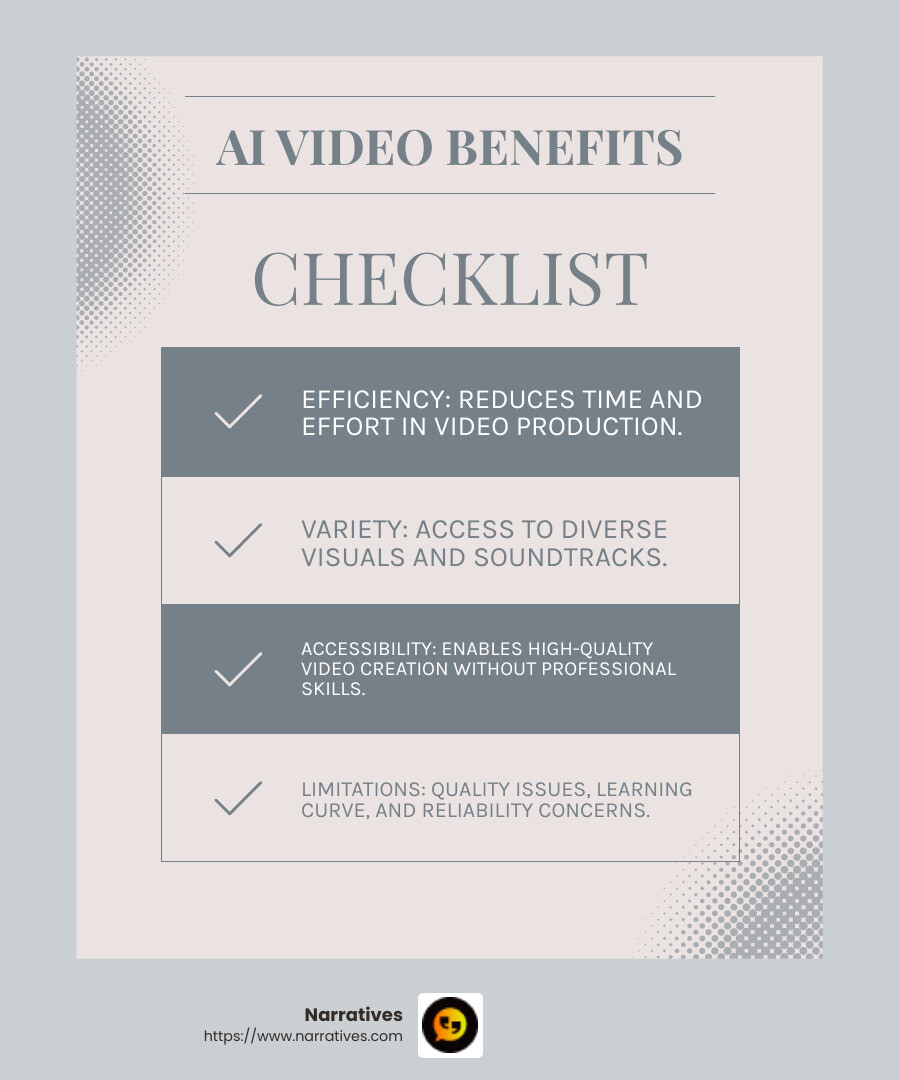
Efficiency: AI significantly reduces the time and effort required to produce videos. By automating scriptwriting, editing, and production, creators can focus on refining their message rather than getting bogged down in the technicalities.
Variety: AI tools provide access to an extensive library of visuals and soundtracks, allowing for a wide range of creative possibilities. This variety ensures that content remains fresh and engaging.
Accessibility: With AI, video production is no longer limited to those with specialized skills. Non-profits, small businesses, and individual creators can now produce high-quality videos without needing a professional studio.
Are there any limitations to AI video generators?
Despite their advantages, AI video generators do have some limitations:
Quality Issues: While AI-generated videos are improving, they may sometimes lack the polish of professionally crafted content. Issues like awkward animations or unnatural voiceovers can detract from the overall quality.
Learning Curve: Although AI tools are designed to be user-friendly, there can still be a learning curve. Users need to understand how to effectively use text prompts and customize outputs to suit their needs.
Reliability: AI-generated content can sometimes be unpredictable. The technology is still evolving, and occasional glitches or unexpected results can occur, requiring manual adjustments.
As AI technology continues to advance, these limitations are expected to diminish, paving the way for even more sophisticated and reliable video content creation solutions.
In the next section, we'll dig into some of the innovative AI solutions available today and how they are enhancing creativity and boosting productivity in video content creation.
Conclusion
As we wrap up our exploration of video content creation AI, it's clear that this technology is reshaping the landscape of digital storytelling. At Narratives, we understand the power of storytelling to drive social impact and foster community connections. Our focus is on empowering non-profits and purpose-driven organizations to share their stories in compelling ways.
Storytelling is at the heart of what we do. With AI, the barriers to creating high-quality video content are lowered, allowing more voices to be heard. This democratization of content creation means that non-profits can effectively communicate their missions and showcase the real-world impacts of their work.
Our partnerships with non-profits enable us to lift underrepresented voices through emotionally resonant video content. By integrating AI tools, we help these organizations craft narratives that inspire action, build trust, and increase visibility. These partnerships not only improve the reach of non-profits but also enrich the communities they serve.
In summary, AI in video content creation is not just a technological advancement—it's a game changer for those striving to make a difference. At Narratives, we are committed to leveraging this technology to support and amplify the stories of those who are making the world a better place.
For more information on how we can help your organization tell its story, learn more about our services.

.avif)