Video Content Strategies: The Blueprint for Success
Video content strategies have become essential for organizations aiming to connect deeply with their audience and amplify their mission. When digital content is king, video stands out as the most impactful medium for storytelling and audience engagement. Here's why:
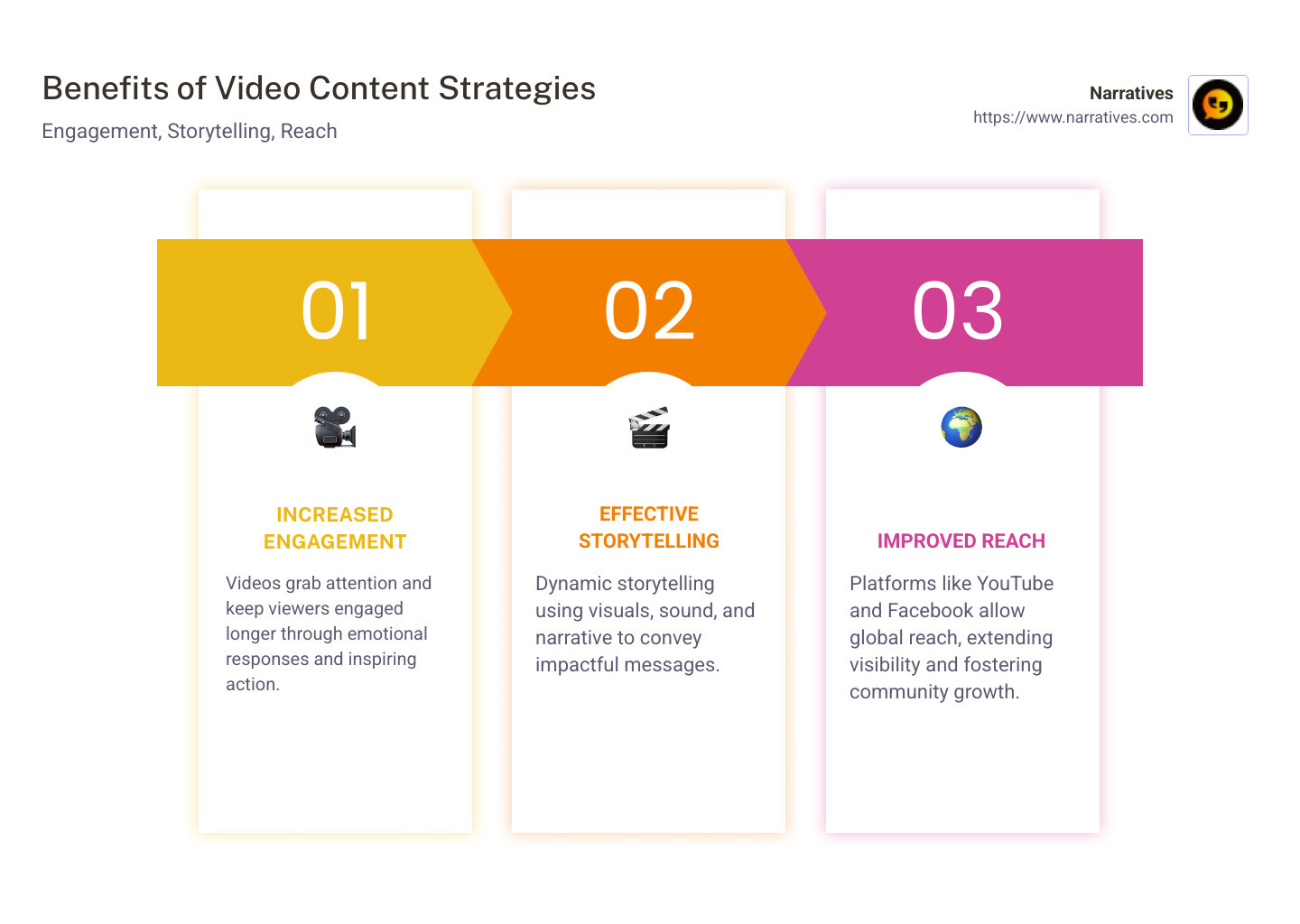
Increased Engagement: Videos grab attention quickly and keep viewers engaged longer than other media forms. They evoke emotional responses, making them a powerful tool for non-profits looking to inspire action and awareness.
Effective Storytelling: Video allows for dynamic storytelling, blending visuals, sound, and narrative to convey messages that resonate with viewers on a personal level. This makes it ideal for organizations looking to showcase their impact and mission-driven work.
Improved Reach and Influence: With platforms like YouTube, Instagram, and Facebook, video content can reach a global audience, expanding an organization's visibility and influence. The shareability of video further extends its reach, promoting community growth and awareness.
As we dig into video content strategies, the key is to create authentic and emotionally impactful content. This approach not only builds brand recognition but also fosters long-term relationships with audiences invested in your cause.
Understanding Video Content Strategies
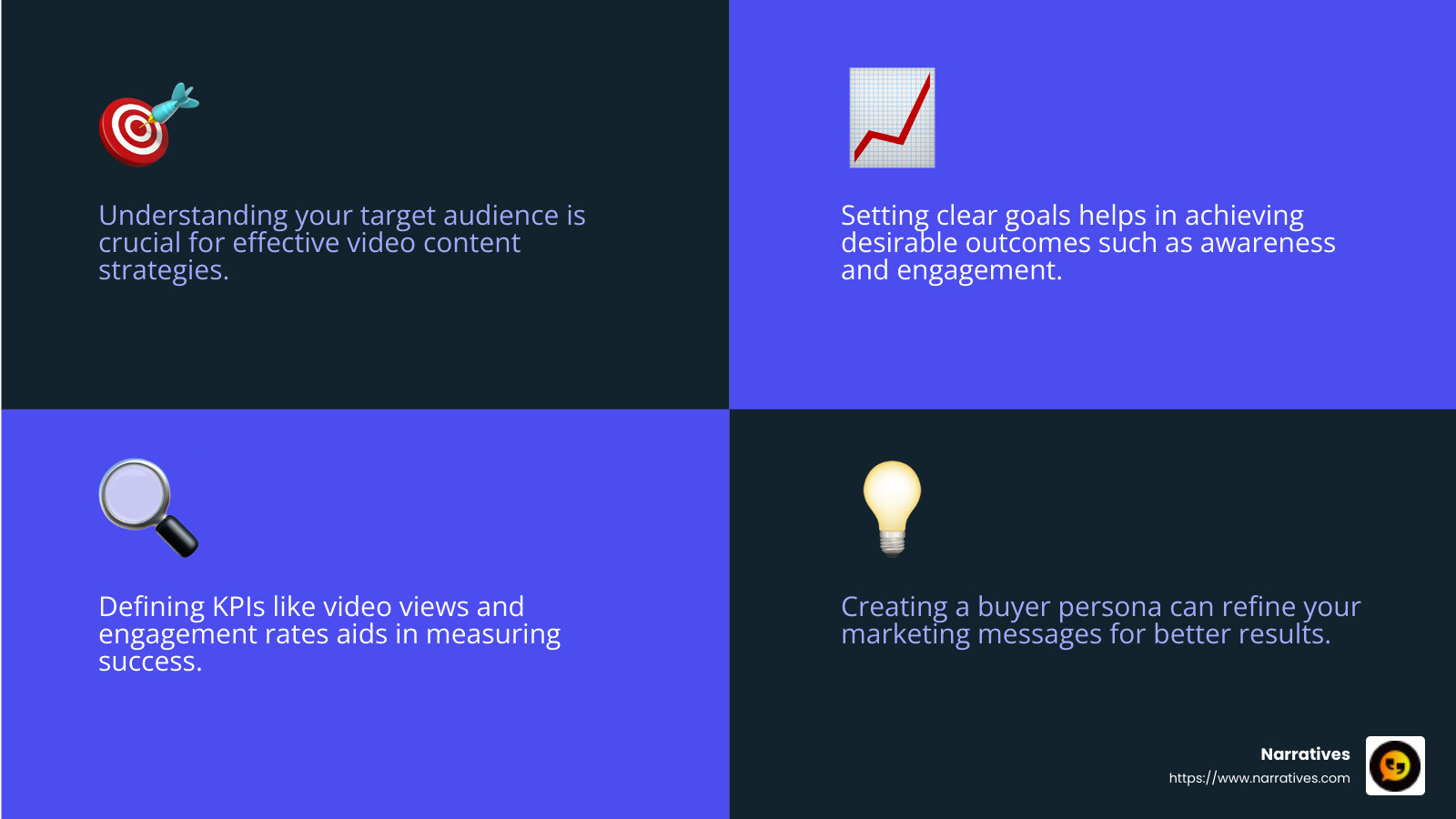
To create effective video content strategies, you must first understand your target audience. Knowing who they are helps tailor your messages to their preferences and needs. This ensures your videos resonate and inspire action.
Target Audience
Consider creating a buyer persona. This is a fictional representation of your ideal viewer, complete with details like age, interests, and pain points. For instance, Deloitte Private partnered with Aamplify to develop detailed personas, which helped them refine their marketing message and achieve positive results.
Goals and Metrics
Once you know your audience, set clear goals. These could be raising awareness, driving donations, or increasing engagement. Define key performance indicators (KPIs) like video views, engagement rates, or conversions to measure success.
Content Strategy
A well-thought-out content strategy is crucial. Decide on the type of content, such as explainer videos, testimonials, or live streams. Choose the right platforms—YouTube for long-term visibility or Instagram for quick engagement.
Frequency and Consistency: Plan a content calendar to maintain regular posting. Consistency builds trust and keeps your audience engaged.
Keyword Research: Understand what your audience is searching for. Use relevant keywords to optimize your content for search engines, improving your reach.
Storytelling: Focus on emotional storytelling that aligns with your brand’s mission. This builds a deeper connection with your audience and improves brand recognition.
By understanding your audience, setting clear goals, and crafting a robust content strategy, your organization can leverage video to build meaningful connections and drive real impact.
Types of Video Content for Non-Profits
Creating the right types of videos can lift your non-profit's message and reach. Let's explore four key types of video content that can make a significant impact: explainer videos, testimonials, live streaming, and user-generated content.
Explainer Videos
Explainer videos are educational tools that simplify complex topics. They highlight key features of your organization and explain how you work to solve problems. These videos are perfect for establishing credibility and building trust with your audience.
For instance, an explainer video for a non-profit focused on providing clean water could demonstrate the process of water purification and its impact on communities. This type of content not only informs but also motivates viewers to support your cause.
Testimonials
Testimonials provide real-world validation from those who have benefited from your services. They showcase authentic experiences, offering a powerful way to build credibility.
Consider a testimonial video from a family whose lives improved due to your non-profit’s efforts. Hearing their story can inspire potential donors or volunteers to take action. 
Live Streaming
Live streaming offers real-time engagement with your audience. It’s an excellent way to share events, interviews, or behind-the-scenes looks at your operations. Platforms like Instagram and YouTube allow you to interact with viewers, answer questions, and create a sense of community.
Imagine live-streaming a fundraising event or a day in the life of your volunteers. This transparency can deepen trust and encourage more people to get involved.
User-Generated Content
User-generated content (UGC) is content created by your supporters. This type of content is incredibly authentic and relatable. Encouraging your audience to share their stories or experiences with your organization can amplify your reach and strengthen your community.
For example, you might ask supporters to share short videos of themselves explaining why they support your cause. These personal endorsements can be powerful tools for attracting new supporters.
By incorporating these types of video content into your strategy, your non-profit can effectively communicate its mission, engage supporters, and drive meaningful action. Next, we'll explore how to create impactful video content through emotional storytelling and brand recognition.
Creating Impactful Video Content
Crafting impactful video content is all about connecting with your audience on a deeper level. This involves using emotional storytelling, enhancing brand recognition, and incorporating a clear call to action.
Emotional Storytelling
Emotional storytelling is the heart of engaging video content. It’s not just about sharing information; it’s about creating a narrative that resonates with your audience. When done well, it can transform passive viewers into active supporters.
Take, for example, a non-profit working to support underprivileged children. A video that follows a day in the life of a child benefiting from your programs can evoke empathy and inspire action. Highlighting their challenges and triumphs makes the story relatable and compelling.
Coca-Cola’s holiday video is a perfect illustration of emotional storytelling. It showcases the hard work of individuals during the holiday season and ends with a heartfelt gesture. This approach not only shares a message but also builds a strong emotional connection with the audience.
Brand Recognition
Building brand recognition is crucial for any organization. Video content is a powerful tool to establish and reinforce your brand identity. Consistent visuals, messaging, and tone help create a recognizable and trustworthy brand.
For non-profits, showcasing the uniqueness of your mission and the impact of your work is essential. Highlight what sets you apart from others. Whether it’s your innovative approach or a specific community you serve, make sure your audience knows why your organization matters.
Call to Action
Every impactful video should have a clear call to action (CTA). This is the part where you guide your audience on what to do next. Whether it’s donating, volunteering, or simply sharing the video, a CTA turns viewers into participants in your cause.
A strong CTA is simple and direct, like "Join us in making a difference" or "Donate today to change lives." By including this in your video, you provide a clear path for viewers to engage with your mission.
Creating impactful video content requires a blend of storytelling, branding, and actionable steps. These elements together can lift your non-profit's message and inspire your audience to take meaningful action. Next, we'll dig into optimizing your video content for SEO to ensure it reaches the right audience.
Optimizing Video Content for SEO
Optimizing video content for SEO is essential if you want your videos to reach the right audience and perform well in search engine rankings. Let's explore how you can improve your video's visibility through SEO rankings, keywords, and video platforms.
SEO Rankings
Videos are a powerful tool for improving your website's SEO rankings. Search engines like Google prioritize web pages with video content because they engage users more effectively. According to research, websites with video content are 53 times more likely to rank on the first page of Google search results. This is because videos increase the time users spend on a page and reduce bounce rates.
To take advantage of this, ensure your videos are embedded on relevant pages of your website. For example, if you have a product video, include it on your homepage and product pages. If your content is educational, consider embedding videos in blog posts or FAQ sections.
Keywords
Keywords are the backbone of any SEO strategy, and video content is no exception. Conduct thorough keyword research to identify the terms your audience is searching for. Use tools like Google Keyword Planner or Ubersuggest to find relevant keywords that match your content.
Once you've identified the right keywords, incorporate them into your video titles, descriptions, and tags. This helps search engines understand what your video is about and improves its chances of appearing in search results. For instance, if your video is about "sustainable farming practices," ensure that phrase is prominently featured in your metadata.
Video Platforms
Choosing the right video platform is crucial for maximizing your video's reach. Popular platforms like YouTube, Vimeo, and Wistia offer different benefits, so consider where your audience is most active.
YouTube is the second largest search engine globally, making it a prime choice for reaching a wide audience. Videos on YouTube can also appear in Google search results, providing additional visibility.
Vimeo offers a more professional, ad-free experience, which might be ideal for showcasing high-quality content.
Wistia provides detailed analytics and customization options, making it perfect for businesses looking to track performance closely.
Posting your video natively on social media platforms like Facebook, Instagram, and LinkedIn can also boost engagement, as these platforms often prioritize native content over external links.
By focusing on SEO rankings, keywords, and the right video platforms, you can ensure your video content is optimized for search engines. This will help attract more viewers, increase engagement, and ultimately drive your mission forward.
Now that we've covered how to optimize your video content for SEO, let's address some frequently asked questions about video content strategies, including how they can improve brand recognition and what types of videos work best for non-profits.
Frequently Asked Questions about Video Content Strategies
How can video content improve brand recognition?
Video content is a game-changer for brand recognition. It helps create a strong brand identity by visually showcasing what your organization stands for. When viewers see consistent messaging and visuals, they start to associate those elements with your brand. This is crucial for building a memorable identity.
Moreover, video content taps into emotional engagement. By telling stories that resonate with your audience, you can forge a deeper connection. For instance, a heartfelt video showing the impact of your non-profit's work can evoke empathy and inspire viewers to support your cause. According to a study by HubSpot, 94% of users watch videos to learn about a product or service, making it a powerful medium for emotional storytelling.
What are the best types of videos for non-profits?
Non-profits can benefit greatly from using explainer videos and testimonials.
Explainer videos are perfect for breaking down complex concepts or highlighting the mission of your organization. These videos can succinctly explain what you do and why it matters, making it easier for potential donors or volunteers to understand your cause. They often use animated or live-action formats to keep things engaging.
Testimonials provide social proof. Featuring stories from people who have benefited from your organization's efforts can build trust and credibility. When viewers see real people sharing their positive experiences, it reinforces the impact of your work.
Live streaming and user-generated content are also effective. Live videos offer real-time interaction, allowing non-profits to engage with their audience directly. User-generated content, such as videos from volunteers or beneficiaries, adds authenticity and broadens your reach.
How do you measure the success of video content?
Success in video content strategies hinges on tracking the right KPIs and using analytics effectively.
Key Performance Indicators (KPIs) for video content may include:
- View Count: The number of times your video has been watched. This gives a general sense of reach.
- Engagement Rate: Measures likes, comments, and shares. High engagement indicates that your content resonates with viewers.
- Watch Time: The total time viewers spend watching your video. Longer watch times suggest that your content is compelling and holds attention.
- Conversion Rate: Tracks how many viewers take a desired action after watching your video, such as donating or signing up for a newsletter.
Using analytics tools like Google Analytics or platform-specific insights (like YouTube Analytics) can help you gather and analyze this data. By understanding these metrics, you can refine your strategy to better meet your goals.
Now that we've tackled these common questions, let's explore how non-profits can create impactful video content through emotional storytelling and compelling calls to action.
Conclusion
At Narratives, we believe that community-driven storytelling is the cornerstone of impactful video content strategies. By focusing on the stories that matter most, non-profits can create videos that not only inform but also inspire action and forge meaningful connections.
Partnerships with non-profits are at the heart of our approach. We work alongside purpose-driven organizations to lift underrepresented voices and share the transformative work happening in communities around the world. This collaboration allows us to craft content that is not only visually stunning but also emotionally resonant, helping to build trust and increase visibility for important causes.
Through our work, we aim to demonstrate the power of video as a tool for change. Whether it's through explainer videos that clarify complex missions, testimonials that provide social proof, or live streams that engage audiences in real-time, our goal is to help non-profits tell their stories in the most effective way possible.
By embracing these video content strategies, non-profits can improve their brand recognition, engage their audiences on a deeper level, and ultimately, drive more support for their missions. At Narratives, we are committed to being the go-to digital storytelling partner for those making a difference.
Explore how we can help your organization share its story by visiting our media services page. Together, we can create compelling content that inspires action and makes a lasting impact.


.png)