Real-World Ethics: Video Production Case Studies You Need to Know

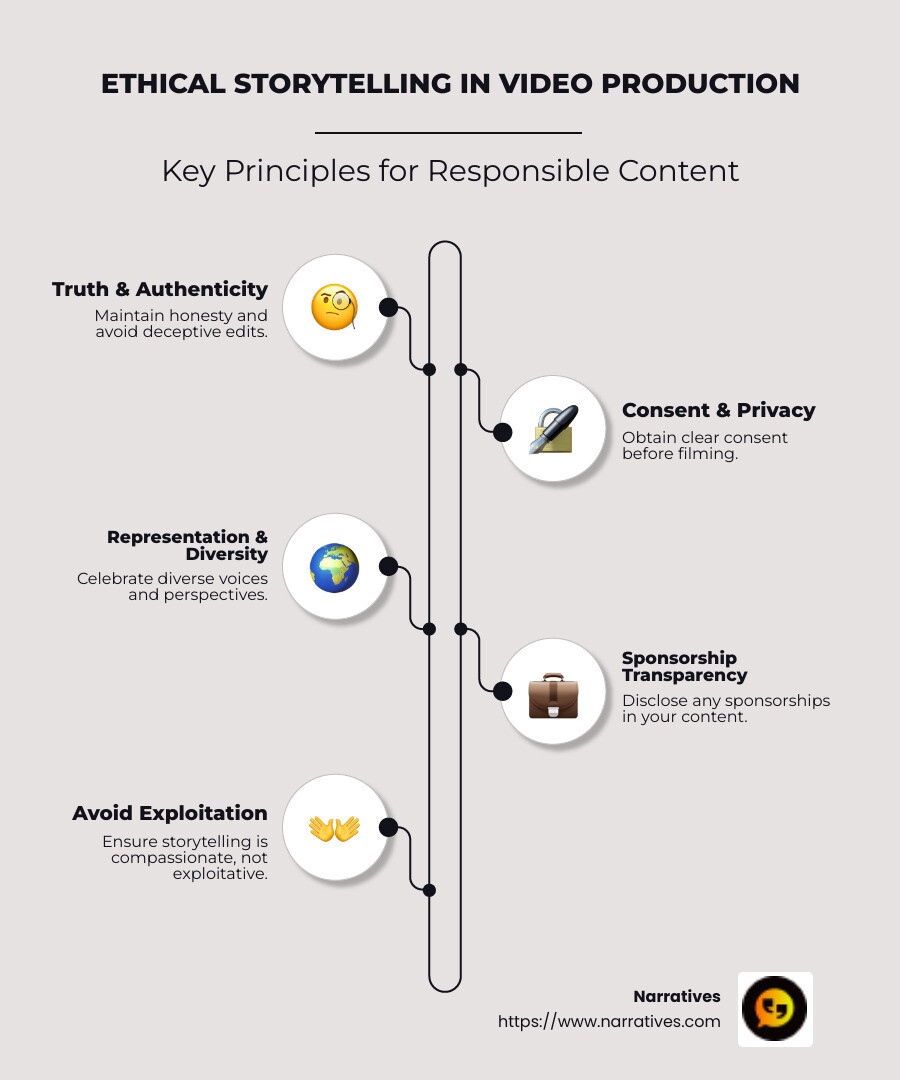
Video production ethics case studies are critical for anyone involved in storytelling through video. Understanding these case studies can guide creators in navigating ethical challenges. Here's a quick snapshot of what you need to know:
- Truth & Authenticity: Stay honest and avoid deceptive edits.
- Consent & Privacy: Always obtain clear consent before filming.
- Representation & Diversity: Celebrate diverse voices and perspectives.
- Sponsorship Transparency: Disclose any sponsorships in your content.
- Copyright Compliance: Respect intellectual property rights.
- Avoid Exploitation: Ensure storytelling is compassionate, not exploitative.
As the digital age fuels an insatiable appetite for video content, the importance of ethics in video production has grown exponentially. With the power to shape narratives and influence public perception, video producers bear a significant responsibility. Ethical storytelling isn't just a box to tick but is central to creating content that truly resonates with audiences.
Producers must juggle multiple ethical considerations, from maintaining narrative integrity to handling consent and privacy. The goal isn't just to tell stories but to tell them ethically—to uphold truth, accept diversity, and ensure transparency. This approach not only fosters trust but also lifts the quality of the storytelling itself.
Take a moment to reflect on how these principles apply to your work. How are you ensuring your storytelling is both impactful and ethical?
Video production ethics case studies basics:
Pursuing Truth in Video Production
In video production, authenticity is king. Audiences crave content that feels real and genuine. It's not just about getting the perfect shot; it's about maintaining narrative integrity. This means being honest and transparent in your storytelling.
The Power of Truth
When we talk about truth in video production, we're referring to the commitment to present information as accurately as possible. This doesn't mean you can't be creative, but it does mean you should avoid altering footage to mislead or misrepresent.
A classic example of this is the Kuleshov Effect, where the context of a shot can change its meaning. While this can be a powerful storytelling tool, it can also be used unethically to manipulate emotions or perceptions.
Building Audience Trust
Audience trust is built on a foundation of honesty. When viewers feel deceived, it can damage your reputation and the trust you've built. Remember the case of James Frey's memoir, "A Million Little Pieces"? The book's fabrications led to a significant backlash because readers felt betrayed.
To maintain trust, always strive for transparency. If you must edit content for clarity or brevity, ensure it doesn't change the core message. This honesty will resonate with your audience, fostering a loyal viewer base.
Real-Life Ethics in Action
Consider a case study from journalism, where a reporter faced an ethical dilemma: protect a source or hold them accountable. This highlights the balance between truth and responsibility. The same principles apply to video production. Upholding truth sometimes means making tough decisions.
In conclusion, pursuing truth in video production is about more than just avoiding deception. It's about crafting narratives that are honest, transparent, and respectful of the audience's trust. Let's keep these principles at the forefront of our storytelling.
Next, we'll explore the critical role of consent and privacy in video production.
Consent and Privacy in Video Production
When it comes to consent and privacy, video producers walk a tightrope. Respecting individuals' rights while telling compelling stories is key. Let's explore the core aspects: privacy invasion, consent clarity, and ethical boundaries.
Privacy Invasion
Privacy invasion occurs when a person's private life is exposed without their consent. Consider how hidden cameras or unauthorized recordings can breach someone's privacy. This isn't just unethical—it's often illegal. For instance, using hidden microphones without permission can lead to serious legal repercussions.
To avoid privacy invasion, always be transparent with your subjects. Explain what you're filming, why, and how it will be used. This not only builds trust but also protects you from potential legal issues.
Consent Clarity
Informed consent is a cornerstone of ethical video production. It's not enough to simply ask for permission. Subjects must fully understand the scope of the project, including where and how their likeness will be used. This is especially crucial when dealing with sensitive topics or vulnerable individuals.
For example, when filming a documentary about personal hardships, ensure participants are comfortable with the content being shared. They should know if their stories will be broadcasted widely or kept within a private circle.
Navigating Ethical Boundaries
Ethical boundaries are about knowing where to draw the line. Even when consent is given, it's important to respect the dignity and privacy of your subjects. Avoid sensationalism or exploiting individuals for dramatic effect.
A poignant case study is the controversy surrounding James Frey's memoir, "A Million Little Pieces," which was criticized for fabrications. Although not a video production case, it underscores the importance of truth and respect in storytelling.
In video production, ethical boundaries might involve deciding whether to include sensitive footage that could harm or embarrass someone. Always weigh the potential impact on your subjects against the value of the story.
Real-Life Implications
Consider a case where a video team documented the lives of undocumented students. Granting anonymity was crucial to protect their identities and personal safety. This decision balanced storytelling with ethical responsibility, showing respect for the individuals involved.
To ensure ethical practices, maintain open communication with your subjects. Regularly check in to confirm they're still comfortable with the direction of the project. This ongoing dialogue helps uphold ethical standards throughout the production process.
In summary, consent and privacy are not just legal requirements—they're ethical imperatives. By respecting privacy, ensuring consent clarity, and navigating ethical boundaries, video producers can tell stories that are both powerful and principled.
Next, we'll dig into the importance of representation and diversity in video content.
Representation and Diversity in Video Content
Representation and diversity in video content aren't just buzzwords—they're essential components of ethical storytelling. Let's explore how inclusive narratives, diverse voices, and stereotype avoidance can transform video production.
Inclusive Narratives
Creating inclusive narratives means reflecting the world as it truly is. That means showcasing a variety of perspectives and experiences. It's about telling stories that resonate with a wide audience, not just a select few.
Consider the impact of inclusive storytelling in the film industry. Movies like "Black Panther" and "Crazy Rich Asians" shattered box office records while celebrating diverse cultures. They proved that audiences crave stories that reflect their realities.
In video production, aim to include voices from different backgrounds, ethnicities, and experiences. This not only enriches your content but also fosters a sense of belonging among viewers.
Diverse Voices
Diverse voices are the heart of authentic storytelling. They bring unique insights and add depth to narratives. Unfortunately, many media outlets have historically underrepresented marginalized groups.
To counteract this, actively seek out contributors from varied backgrounds. This might mean collaborating with individuals from different cultural, gender, or socioeconomic groups. By amplifying diverse voices, you create a richer mix of stories.
A poignant example is the work of PARS Equality Center, which empowers Persian-speaking immigrants by sharing their stories. This approach not only highlights their struggles but also their resilience and contributions to society.
Stereotype Avoidance
Avoiding stereotypes is crucial in maintaining the integrity of your content. Stereotypes can be harmful and perpetuate misconceptions. They reduce individuals to simplistic caricatures rather than showcasing their full humanity.
When crafting your stories, strive to portray characters as complex and multi-dimensional. Avoid lazy tropes and instead, dig into the nuances of their experiences.
A telling case is the backlash against certain video content that reinforces negative stereotypes. These instances highlight the importance of thoughtful representation. By being mindful of how characters are portrayed, you can create content that educates and uplifts.
Real-World Impact
The impact of representation and diversity in video content extends beyond the screen. It influences societal perceptions and can drive meaningful change. By showcasing diverse stories, producers contribute to a more inclusive and understanding world.
For example, the Narratives platform focuses on underrepresented storytellers, fostering empathy and connection through human-centered content. This approach not only enriches the digital landscape but also empowers communities to share their truths.
In conclusion, embracing representation and diversity in video production is not just an ethical choice—it's a creative one. By crafting inclusive narratives, amplifying diverse voices, and avoiding stereotypes, you can create content that resonates deeply and inspires change.
Next, we'll explore the challenges of navigating sponsorships and maintaining editorial integrity in video production.
Navigating Sponsorships and Editorial Integrity
When it comes to video production, sponsorships are a double-edged sword. They can provide much-needed funding but also pose ethical challenges. Let's explore how transparency, commercial interests, and editorial independence can coexist harmoniously.
Transparency in Sponsorships
Transparency is key when dealing with sponsors. Viewers have a right to know if a segment is sponsored. This builds trust and maintains credibility. Always disclose sponsorships clearly and upfront.
Consider the SPJ Code of Ethics, which emphasizes transparency. It's a guiding light for journalists and content creators. It reminds us that honesty builds a loyal audience.
Balancing Commercial Interests
It's tempting to let sponsors influence content. However, this can compromise your message. The goal is to create content that serves both the audience and the sponsor without sacrificing integrity.
One way to balance these interests is by setting clear boundaries with sponsors. Define what is negotiable and what isn't. This ensures that the narrative remains authentic and true to its purpose.
Maintaining Editorial Independence
Editorial independence is the backbone of ethical video production. It means having the freedom to tell stories without undue influence. This can be challenging, especially when sponsors have their own agendas.
A good practice is to separate commercial content from editorial content. This distinction helps maintain objectivity and keeps the audience's trust intact.
Real-World Examples
A classic case involves major publications like Rolling Stone and Billboard covering leaked music. While they provide valuable information, they must tread carefully to avoid promoting piracy. This balance of reporting news and maintaining ethical standards is crucial.
Similarly, video producers can learn from these examples by ensuring that sponsorships do not overshadow the truth. Transparency and integrity should always guide the storytelling process.
In conclusion, navigating sponsorships and maintaining editorial integrity is a delicate dance. By prioritizing transparency, balancing commercial interests, and upholding editorial independence, video producers can create content that resonates with authenticity and trustworthiness.
Next, we'll dig into the ethical challenges of video editing and how to handle them responsibly.
Ethical Challenges in Video Editing
Video editing is more than just cutting and splicing clips. It's a powerful storytelling tool that shapes narratives and emotions. But with great power comes great responsibility. Let's explore the ethical challenges editors face, including the Kuleshov Effect, emotional manipulation, and ethical editing practices.
The Kuleshov Effect
The Kuleshov Effect, named after Soviet filmmaker Lev Kuleshov, is a fascinating phenomenon in film editing. It shows how the context in which a shot is placed can change the audience's perception of it. Kuleshov demonstrated that an actor's neutral expression could evoke different emotions depending on the subsequent shot—be it an image of food, a child, or a coffin.
This underscores the editor's role in shaping emotional narratives. While this power can improve storytelling, it also presents ethical dilemmas. Editors must ask themselves: Are they manipulating emotions to tell the truth, or are they distorting reality?
Emotional Manipulation in Editing
Editing is an art, but it can also be a tool for manipulation. By choosing specific shots, altering sequences, or adding music, editors can influence how viewers feel and interpret a story. This can be seen in reality TV, where editing often creates drama and conflict that may not truly exist.
Consider the case of a BBC documentary that misleadingly edited footage of Queen Elizabeth II, suggesting she stormed out of a photo session. This manipulation led to public outcry and highlighted the ethical responsibility editors have in maintaining the truth.
Principles of Ethical Editing
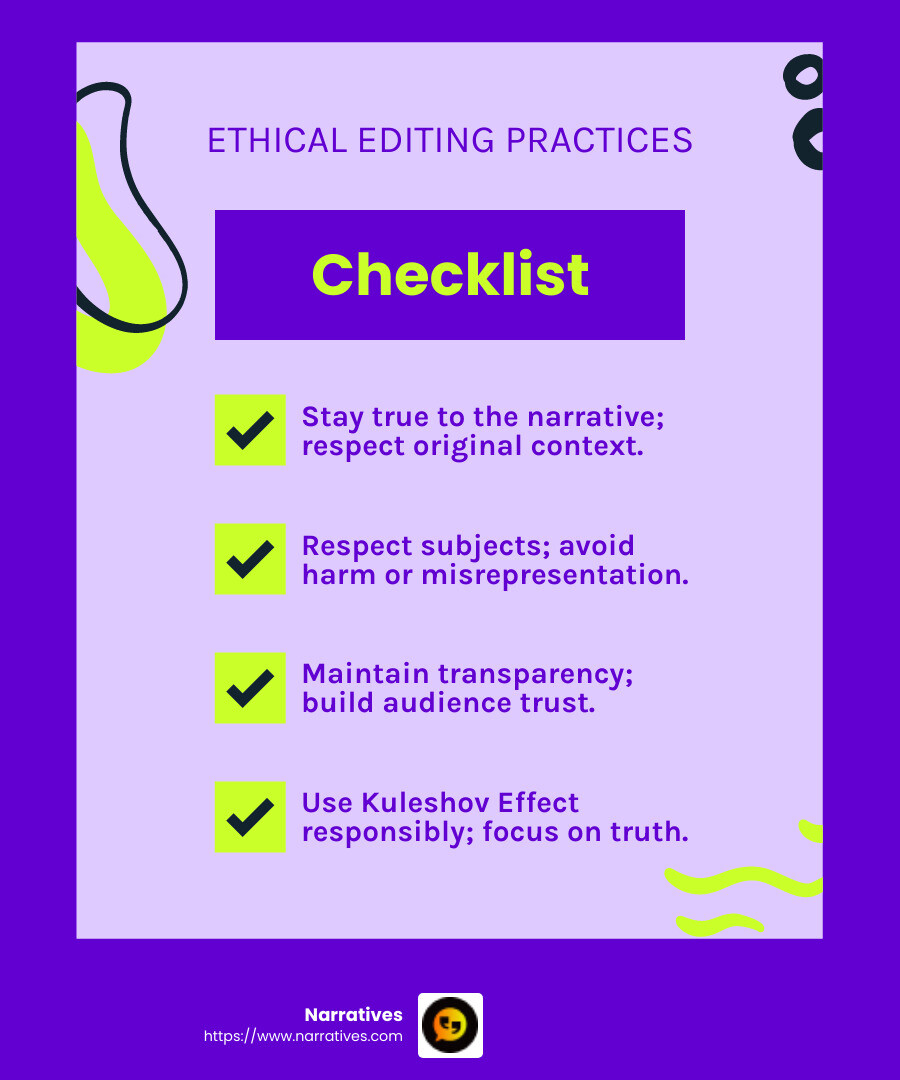
Ethical editing is grounded in authenticity and integrity. Editors should strive to represent the footage and story honestly, without altering the core truth. Here are a few principles to guide ethical editing:
Stay True to the Narrative: Respect the original context and intent of the footage. Avoid misleading edits that could distort the story.
Respect Subjects: Consider the impact of editing choices on the people involved. Avoid edits that could harm or misrepresent them.
Maintain Transparency: Be open about the editing process, especially in documentary and journalistic contexts. Transparency builds trust with the audience.
Real-World Examples
NBC's "Dateline" faced backlash for rigging a truck's fuel tank to explode, misleading viewers about a supposed design flaw. This case highlights the consequences of unethical editing and the importance of maintaining factual integrity.
Similarly, Morgan Spurlock's documentary on fast food was criticized for selective editing that exaggerated the effects of eating fast food. This serves as a reminder that while storytelling can be compelling, it must not compromise the truth.
In summary, video editors wield significant power in shaping narratives and emotions. By adhering to ethical practices, they can create content that is both impactful and truthful. Next, we'll explore real-life video production ethics case studies and the lessons they offer.
Video Production Ethics Case Studies
Exploring video production ethics case studies helps us understand the real-world impact of ethical decisions in video production. These examples highlight the complexities and consequences of the choices made by producers and editors.
Case Study: James Frey's "A Million Little Pieces"
James Frey's memoir, "A Million Little Pieces," became a sensation until it was revealed to contain exaggerations and fabrications. This case underscores the ethical dilemma of truthfulness in storytelling. The book's initial success was due to its raw, honest portrayal of addiction. However, the revelation that parts were fabricated damaged the trust between Frey and his audience, highlighting the importance of authenticity and integrity in storytelling.
Ethical Dilemma: Kobe Bryant's Past and Journalism
Shortly after Kobe Bryant's tragic death, a journalist tweeted about past allegations against him. This raised questions about the ethics of truth-telling and timing. Is there a "right" time to bring up sensitive issues after someone's death? This dilemma illustrates the balance journalists must strike between reporting truth and respecting the deceased's legacy, emphasizing the need for sensitivity and ethical judgment.
Controversial Campaign: PETA's "Holocaust on Your Plate"
PETA's campaign compared animal slaughter to the Holocaust, sparking widespread outrage. This case study demonstrates the fine line between provocative messaging and ethical insensitivity. While PETA aimed to draw attention to animal rights, the comparison was seen as offensive and trivializing a historical atrocity. This highlights the ethical responsibility to consider cultural sensitivities and the potential impact of messaging.
Media Manipulation: NBC's "Dateline" Truck Explosion
NBC's "Dateline" faced severe backlash for staging a truck explosion to suggest a design flaw. This unethical act misled viewers and damaged the show's credibility. It serves as a cautionary tale about the dangers of prioritizing sensationalism over factual reporting. The incident underscores the ethical obligation to maintain truthfulness and transparency in media production.
Lessons from Case Studies
These case studies reveal that ethical dilemmas in video production often revolve around truth, representation, and the impact on audiences. Here are key takeaways:
Authenticity is Crucial: Misleading or fabricated content can erode trust and credibility.
Timing and Sensitivity Matter: Consider the context and timing when addressing sensitive issues.
Cultural Sensitivity is Key: Be mindful of how messages may be perceived across different cultures and communities.
Transparency Builds Trust: Honest reporting and disclosure of production methods foster audience trust.
By learning from these real-life examples, video producers can steer ethical challenges with greater awareness and responsibility. Next, we'll address frequently asked questions about video production ethics to further explore this critical topic.
Frequently Asked Questions about Video Production Ethics
What are common ethical issues in video production?
In video production, several ethical issues frequently arise. Here are some of the most common:
Copyright Infringement: Using someone else's work without permission can lead to legal troubles. Always ensure you have the right licenses or that your use falls under fair use.
Invasion of Privacy: Filming someone without their consent, especially in private settings, is a significant ethical breach.
Defamation and Misrepresentation: Presenting false statements that harm someone's reputation or manipulating footage to misrepresent facts can damage trust and credibility.
Stereotyping and Lack of Diversity: Failing to represent diverse voices or relying on stereotypes can alienate audiences and perpetuate harmful biases.
How can video producers ensure ethical practices?
Ensuring ethical practices in video production involves several key steps:
Obtain Informed Consent: Always get clear permission from individuals featured in your videos. They should understand how and where their likeness will be used.
Fact-Check Content: Verify all information before including it in your production. This maintains accuracy and builds trust with your audience.
Respect Privacy: Avoid using hidden cameras or microphones. Respect the privacy of individuals in all filming situations.
Be Transparent: Clearly disclose any sponsorships or commercial interests that may influence your content.
Consult Legal Experts: For complex issues, seek advice from legal professionals to ensure compliance with laws and regulations.
Why is consent important in video production?
Consent is crucial in video production for several reasons:
Legal Protection: Obtaining consent protects you from legal claims related to privacy invasion or unauthorized use of someone's likeness.
Ethical Responsibility: Respecting an individual's right to control how they are represented is a fundamental ethical consideration.
Building Trust: When audiences know that content is produced ethically, they are more likely to trust and engage with it.
Avoiding Harm: Without consent, individuals may feel exploited or misrepresented, leading to personal and professional harm.
By prioritizing consent, video producers can create content that respects individuals and maintains integrity, reinforcing the importance of ethical practices in the industry.
Conclusion
At Narratives, we believe that ethical storytelling is not just a guideline but a commitment. As a trusted partner for non-profits and purpose-driven organizations, our mission is to lift underrepresented voices through high-quality, emotionally resonant video content. This commitment to ethics ensures that the stories we tell inspire action, build trust, and increase visibility for the causes we champion.
Ethical storytelling is about more than just following rules. It's about understanding the profound impact that stories can have on communities and individuals. By focusing on truth, consent, diversity, and transparency, we can create videos that resonate deeply and authentically with audiences.
Our partnerships with non-profits allow us to craft narratives that highlight the transformative work these organizations are doing. By doing so, we help them communicate their impact effectively and ethically, fostering a greater connection with their supporters and the general public.
Non-profit partnerships are at the heart of what we do. We work closely with these organizations to ensure that their stories are told with integrity and respect. Together, we strive to create a digital landscape where every voice is heard and every story matters.
For those interested in learning more about how we approach ethical storytelling and video production, visit our Narratives service page to explore how we can help you share your impact stories with the world.
In an age where media consumption is constant and rapid, maintaining ethical standards isn't just important—it's essential. By prioritizing ethics in video production, we can make a lasting positive impact on the world, one story at a time.


.avif)