Video Storytelling Magic: Ideas to Inspire and Engage

Video storytelling ideas are a powerful means to share your organization's mission and create deep emotional connections with your audience. Get started with these impactful video storytelling ideas:
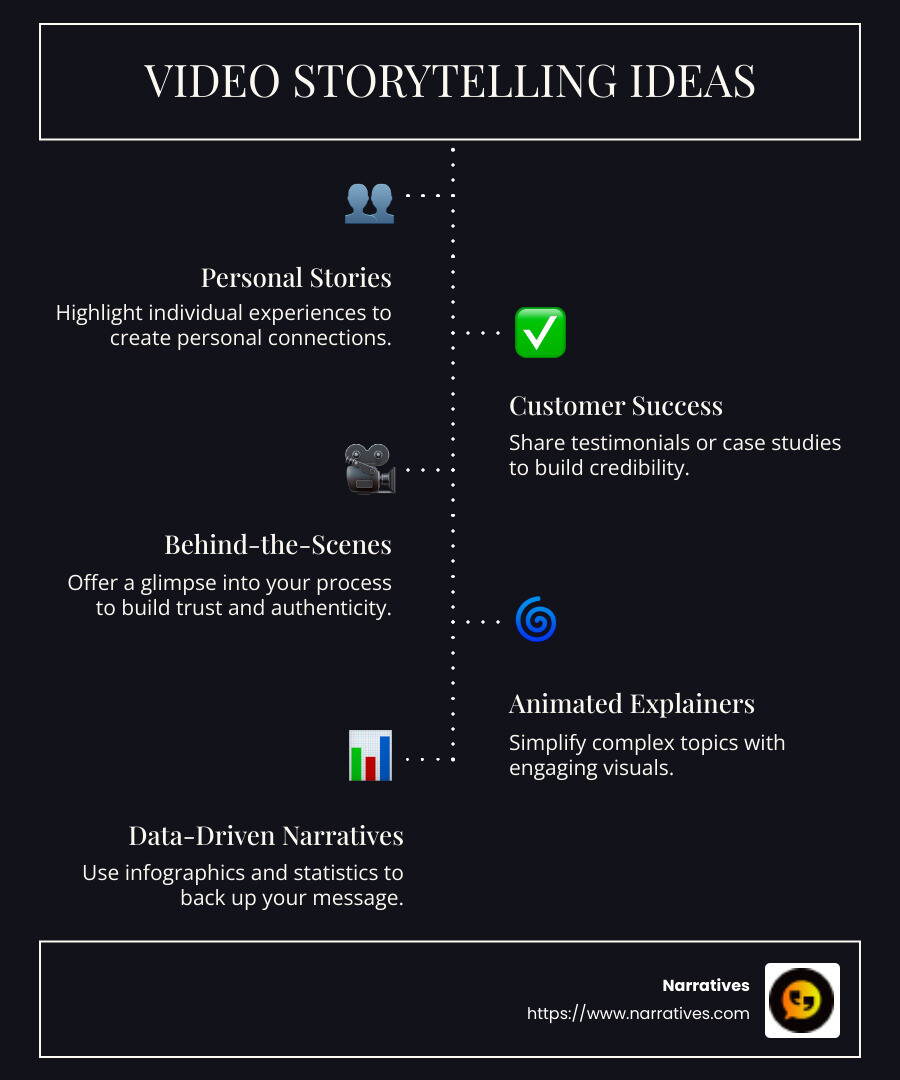
- Personal Stories: Highlight individual experiences to foster personal connections.
- Customer Success: Share testimonials or case studies to build credibility.
- Behind-the-Scenes: Offer a glimpse into your process to build trust and authenticity.
- Animated Explainers: Simplify complex topics with engaging visuals.
- Data-Driven Narratives: Use infographics and statistics to back up your message.
In today’s digital landscape, storytelling is not just about information—it's about emotional engagement. By weaving emotional narratives into your video content, you can forge stronger connections and amplify your message's reach. Whether you're a non-profit aiming to highlight community impact or a brand promoting social justice, compelling stories are your most valuable asset.
In the words of Tim from The Monkeys: “Unique storytelling can amass a stronger following than calculated mediocrity.” When done authentically, video storytelling has the power to captivate the heart and inspire action.
Get started on your storytelling journey, aiming to connect, engage, and inspire.
Video storytelling ideas vocabulary:
Understanding Video Storytelling
Video storytelling is more than just visuals and words—it's about creating an emotional impact that resonates with your audience. When done right, it can transform simple messages into memorable experiences.
Visual Storytelling
Visual storytelling is the art of conveying a narrative through images, videos, and graphics. It's about showing, not just telling. Imagine a photojournalist capturing a powerful image; the visual elements speak volumes without uttering a word. This is the essence of visual storytelling—using design, color, and composition to tell a story that words alone cannot.
A key component of visual storytelling is visual hierarchy. This is about organizing elements so that the audience knows what to focus on first. In a video, this might mean highlighting a central character or a key message using size, color, or placement. The goal is to guide the viewer's eyes and emotions in a way that improves the story.
Emotional Impact
Storytelling is a powerful tool because it taps into our emotions. When we watch a video that tells a compelling story, our brains release chemicals like dopamine and oxytocin. These chemicals help us remember the story and feel connected to it.
For example, a video that shows the life of a protagonist enriched by a product or cause can make viewers wonder, could that be me? This relatability is crucial for creating an emotional impact. When viewers see themselves in the story, they're more likely to engage and remember the message.
Audience Connection
Connecting with your audience means understanding their needs, struggles, and desires. It's about creating content that speaks to them on a personal level. Audience interaction is key here. Videos that invite viewers to engage—whether through comments, shares, or other forms of participation—can create a sense of community and investment in the story.
A well-told story doesn't just inform; it inspires. It encourages viewers to take action, whether that's supporting a cause, buying a product, or simply sharing the video with others. By focusing on emotional narratives and audience connection, your storytelling can transform passive viewers into active participants.
In video storytelling, remember this: The story you tell is just as important as how you tell it. When you align your visuals, emotions, and audience connection, you create a powerful tool for engagement and impact.
Video Storytelling Ideas for Non-Profits
When it comes to video storytelling ideas, non-profits have a unique opportunity to engage audiences by focusing on personal stories, community impact, and emotional narratives. These elements can transform a simple video into a powerful message that resonates deeply.
Personal Stories
Personal stories are the heart of effective storytelling for non-profits. They humanize your mission and make it relatable. Share the journey of someone whose life has been changed by your organization. For example, a video titled "How John Found Hope Through Our Organization" can showcase a real person's change, creating an emotional connection with viewers.
- Example: A non-profit helping homeless individuals might share a story of someone who went from living on the streets to finding stable housing and employment through their programs. This not only highlights the impact of the organization but also puts a face to the cause.
Community Impact
Showcasing community impact is another powerful storytelling technique. Highlight the broader changes your organization has made in the community. This could be through improved facilities, new programs, or increased community engagement.
- Example: "Building a Better Future: The Impact of Our Organization" could be a video showcasing before-and-after images of a community center renovation, featuring interviews with community members who benefited from the improvements.
Emotional Narratives
Emotional narratives are about more than just facts and figures. They tap into the viewer's emotions, making the story memorable and compelling. Use visuals, music, and personal testimonies to evoke feelings of empathy and urgency.
- Example: A video titled "The Faces of Our Cause" could feature a montage of individuals affected by the issue your organization addresses, accompanied by a poignant soundtrack and voiceover sharing their stories and aspirations.

By focusing on these elements, non-profits can create videos that not only inform but inspire action. Whether it's donating, volunteering, or spreading the word, these stories have the power to move viewers and drive real change.
10 Best Video Storytelling Techniques
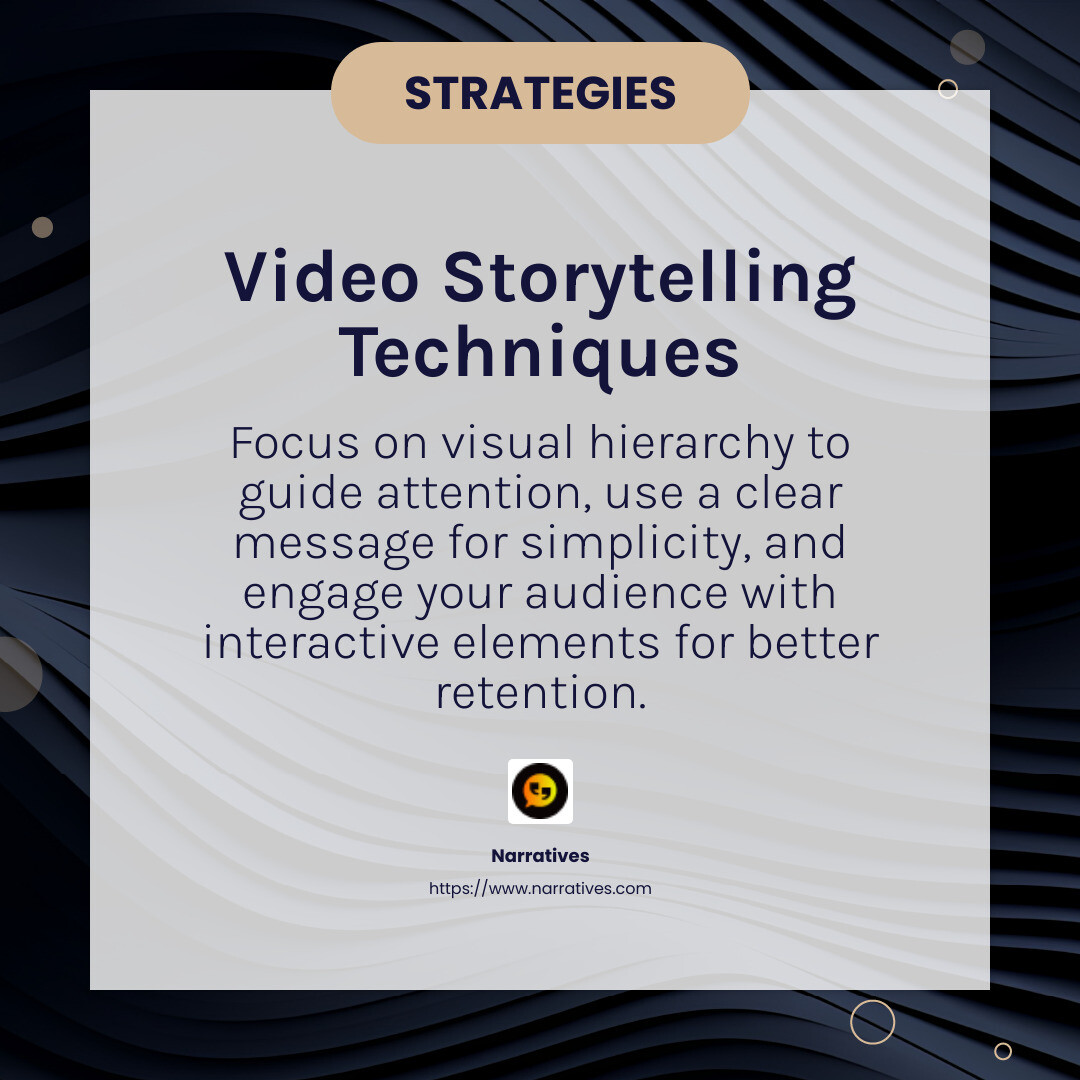
Creating compelling video content is both an art and a science. To make your video storytelling truly impactful, consider these key techniques: visual hierarchy, a clear message, and audience interaction.
Visual Hierarchy
Visual hierarchy is about directing the viewer's attention to the most important elements of your story. This can be achieved through strategic use of size, color, and placement.
Size and Placement: Ensure that the most critical elements of your story are the largest or most centrally placed. For instance, if your video features a key protagonist, make sure they are prominently displayed. This helps viewers immediately understand who or what is central to the narrative.
Color: Use contrasting colors to highlight important elements. A bright color can draw attention to a call-to-action or a pivotal moment in the story.
Clear Message
Your video should convey a clear, concise message. Avoid clutter and focus on the core idea you want to communicate.
Simplicity: Keep your storyline straightforward. Don’t overload your video with too many messages. Stick to a single theme or idea to maintain clarity.
Script: Use a well-crafted script to deliver your message effectively. A good script outlines the beginning, middle, and end of your story, ensuring that the narrative flows logically.
Audience Interaction
Engage your audience by making them part of the story. Interaction can deepen emotional connections and improve viewer retention.
Interactive Elements: Incorporate elements that invite viewers to engage, like polls or questions. This can be done through annotations or end screens that prompt viewers to take action or reflect on the content.
Dynamic Adaptation: Consider using dynamic visuals that change based on viewer interaction. This can make the experience more personalized and engaging.
By mastering these techniques, you'll be able to create videos that not only capture attention but also resonate with your audience on a deeper level. These strategies ensure that your message is not only seen but felt, driving viewers to engage and act.
In the next section, we'll dive into the nuts and bolts of how to create compelling video content, focusing on storyboarding, scriptwriting, and multimedia integration.
How to Create Compelling Video Content
Creating compelling video content begins long before you hit the record button. It's about planning, scripting, and using multimedia elements effectively. Let's break down these essential components.
Storyboarding
Think of storyboarding as your video’s blueprint. It's where you plan each scene, ensuring your story flows smoothly.
Visual Planning: Sketch out each scene with images or simple drawings. This helps visualize the sequence and ensures you don't miss any key elements.
Scene Titles: Assign a title to each scene. This keeps your storyboard organized and helps you track the narrative progression.
Script Integration: Pair each scene with the corresponding script section. This ensures that visuals and dialogue work together seamlessly.
Scriptwriting
A strong script is the backbone of your video. It guides the story and ensures your message is clear.
Outline Main Points: Begin by outlining the main points you want to convey. This helps keep the script focused.
Engaging Dialogue: Write dialogue that is natural and engaging. It should reflect the tone and style of your video, whether it's formal, casual, or somewhere in between.
Narrative Structure: Ensure your script has a beginning, middle, and end. This provides a clear narrative arc, helping viewers follow and connect with the story.
Multimedia Integration
Using a mix of visuals, sounds, and effects can lift your video storytelling.
Visuals: Choose graphics, animations, or live-action footage that support your story. According to research, animations like those in "Animal Agriculture in a Growing World" can leave a lasting impression.
Sound Effects and Music: Incorporate sound effects and music to improve the emotional impact. Music should complement the visuals and help set the mood.
Interactive Elements: Consider adding interactive elements like clickable annotations or end screens. This encourages viewer engagement and can deepen their connection to the content.
By combining these elements, you'll craft video content that not only tells a story but also captivates and inspires your audience. In the next section, we'll address common questions about video storytelling ideas, exploring creative ways to tell a story and why visual storytelling is crucial.
Frequently Asked Questions about Video Storytelling Ideas
What are some creative ways to tell a story?
Spontaneity and personal narratives can transform a simple video into an engaging story. Spontaneity adds authenticity and surprise, keeping viewers on their toes. Consider capturing unscripted moments or integrating unexpected plot twists.
Personal narratives are another powerful tool. They allow viewers to connect on a human level. For example, sharing a real-life story of a community member can create empathy and a deeper understanding of the message.
How do brands tell visual stories?
Brands leverage dynamic visuals to tell their stories. This means using engaging graphics, animations, and live-action shots to convey messages effectively. Visuals should align with the brand's identity, creating a consistent and recognizable look.
Brand identity plays a crucial role in storytelling. It encompasses the colors, fonts, and overall style that make a brand unique. Consistent use of these elements in videos helps reinforce the brand's message and values.
Why is visual storytelling important?
Visual storytelling is vital for building an emotional connection with the audience. It taps into emotions, making the message more memorable. A study by M.I.T. found that humans can process images in as little as 13 milliseconds, highlighting the brain's efficiency in processing visuals.
Additionally, visual storytelling improves audience retention. Visuals are not only processed quickly but are also remembered longer. This helps ensure that the audience retains the message, leading to better engagement and recall.
By understanding these aspects, you can create video storytelling ideas that resonate with your audience and leave a lasting impact.
Conclusion
At Narratives, we believe in the transformative power of storytelling to drive social impact and foster community connections. Our mission is to lift underrepresented voices and create compelling, emotionally resonant content for non-profits and purpose-driven organizations.
Community-driven storytelling is at the heart of what we do. By focusing on real stories from diverse voices, we aim to inspire action and build trust. These stories highlight the challenges and triumphs of communities, bringing their experiences to the forefront. This approach not only raises awareness but also encourages viewers to engage and support meaningful causes.
Our commitment to storytelling goes beyond just creating videos. We partner with non-profits to ensure their stories are told in the most impactful way possible. By doing so, we help these organizations increase their visibility and strengthen their connection with their audience.
We invite you to explore how our video storytelling services can amplify your message and drive change. Find more about how we can partner with you to create impactful content by visiting our media services page.
Together, let's harness the power of storytelling to make a difference.

.avif)