Visual Storytelling Best Practices: A Guide to Engaging Content

Visual storytelling best practices are essential for creating content that not only informs but also connects and inspires. If you're looking for quick actionable tips, here's a brief list:
- Craft a compelling narrative: Focus on stories that resonate with your audience's values and mission.
- Use clear visual hierarchy: Ensure that the most important elements stand out.
- Incorporate a clear subject: Make sure the core message is easily identifiable.
Storytelling has transformed from simple words-on-a-page to a dynamic and immersive experience. The power of visual storytelling lies in its ability to form genuine connections and inspire action. Think about your mission and how you can portray this in a way that touches hearts and spurs community engagement.
For organizations focused on social impact, advocacy, or community growth, creating visually compelling narratives is crucial. When done effectively, these stories not only convey your message but can significantly lift your impact and foster deep-rooted connections with your audience.
The field of visual storytelling offers endless opportunities to engage audiences. By mastering the art of visual hierarchy, defining clear subjects, and crafting inspirational narratives, you can transform your content into a powerful vehicle for change.
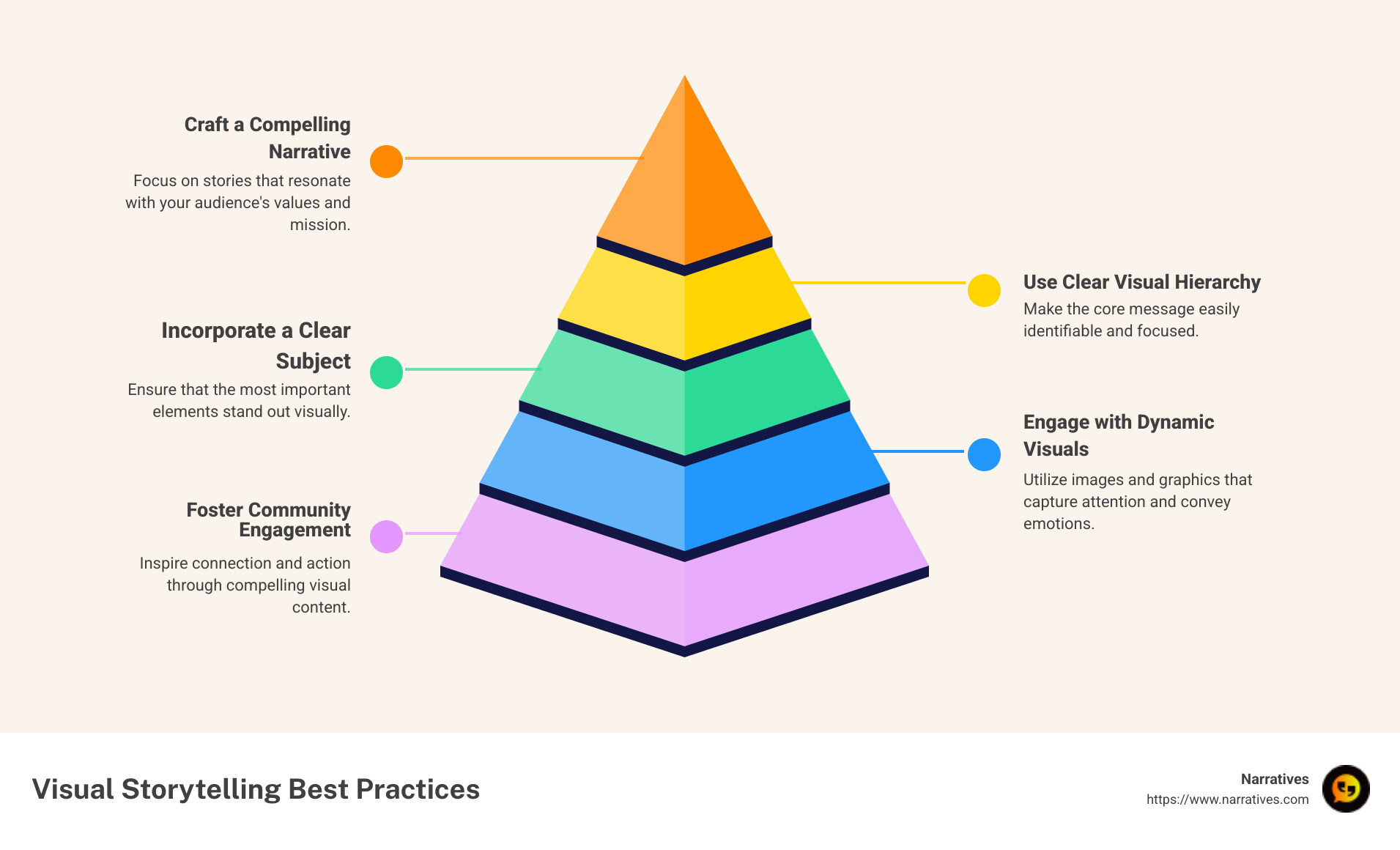
Basic Visual storytelling best practices vocab:
Understanding Visual Storytelling
Visual storytelling is a powerful tool for communication. It uses visual media to convey messages that resonate emotionally with audiences. Whether through graphics, photography, or videos, visual storytelling can make complex ideas easy to understand and remember.
Visual Media: The Heart of Storytelling
Visual media includes anything from images and videos to infographics and animations. Each of these elements serves a purpose in storytelling. They break down barriers of text-heavy communication and allow audiences to engage more deeply with the content.
For example, a well-designed infographic can simplify complex data. It combines text, images, and design to present information clearly and attractively. This helps viewers grasp the main points quickly.

Communication: More Than Words
Visual storytelling is not just about showing pictures. It's about creating a dialogue between the content and the audience. Visuals can convey emotions, set the tone, and guide the viewer's understanding.
For instance, in photojournalism, a single image can tell a whole story. It can capture a moment in time that speaks volumes about the subject's emotions and the context of the situation. This form of communication is immediate and impactful.
Emotional Impact: The Key to Connection
One of the greatest strengths of visual storytelling is its ability to evoke emotions. When people feel something, they are more likely to remember it. This emotional connection can inspire action, foster empathy, and build community.
Consider a charity campaign that uses a short video to tell the story of a person whose life was changed by donations. The visuals, combined with a heartfelt narrative, can create a powerful emotional response. This not only informs but also motivates viewers to contribute to the cause.
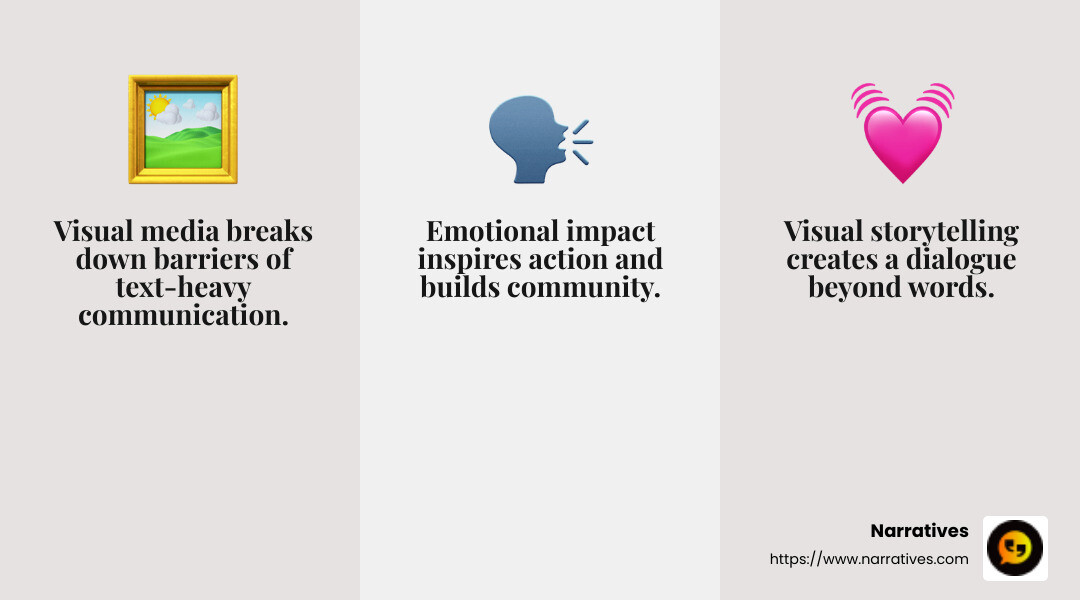
In summary, visual storytelling best practices focus on leveraging visual media to improve communication and create emotional impact. This approach helps to convey messages more effectively, making them memorable and inspiring for the audience. By understanding and applying these principles, storytellers can create content that truly resonates and drives engagement.
Visual Storytelling Best Practices
Visual storytelling is an art and a science. To create captivating stories, focus on audience engagement, a clear message, thoughtful design elements, visual hierarchy, and interaction.
Audience Engagement
Engaging your audience is the first step in visual storytelling. You have about eight seconds to capture their attention. Start with a powerful image or an intriguing visual element that draws them in. Think of it as the hook in a fishing line—the more appealing it is, the more likely you are to reel in your audience.
Example: A charity campaign might begin with a striking photograph of someone who has benefited from donations, instantly connecting viewers to the cause.
Clear Message
A clear message is crucial. Your visuals should support the narrative, not overshadow it. Avoid clutter by focusing on a single, strong message that your audience can easily understand.
Tip: Use visual media that aligns with your story. If your narrative is about hope, choose uplifting images and bright colors. This consistency helps reinforce your message.
Design Elements
Design elements like color, typography, and layout play a big role in storytelling. They should improve, not distract from, your story. Choose colors that evoke the right emotions and typography that is easy to read.
Case Study: In a study on data visualization, clear labels and the use of color helped users understand complex data quickly. Subtle shading made the visuals more engaging without distracting from the core message.
Visual Hierarchy
Visual hierarchy guides the viewer's eye to what's most important. Use size, contrast, and placement to highlight key elements. If everything is emphasized, nothing stands out.
Fact: In graphic design, the most important text or visual element is often the largest. This helps ensure that viewers know where to focus first.
Interaction
Interaction makes your story dynamic and memorable. When users can engage with the content, they feel more connected and invested.
Example: Interactive infographics or videos that allow viewers to click through different parts of the story can improve understanding and retention.
By focusing on these visual storytelling best practices, you can create content that not only captures attention but also communicates a clear message and evokes an emotional response. This combination is key to inspiring and converting your audience.
Next, let's explore the steps to create compelling visual stories.
Steps to Create Compelling Visual Stories
Crafting a compelling visual story involves several key steps. Each step helps ensure your narrative is engaging, clear, and impactful. Here's how to do it:
1. Select an Idea
Start with a strong idea. Think of it as planting a seed—the foundation of your story. This idea should resonate with your audience and be relevant to your goals.
Tip: Consider what your audience cares about. Use relatable themes or current issues to draw them in.
2. Define the Problem
Once you have your idea, define the problem clearly. A well-articulated problem is already half-solved. Make sure your audience understands the issue you're addressing.
Example: In a travel post, the problem could be the feeling of restlessness and the search for fulfillment through travel. By framing this problem, you set the stage for the solution.
3. Create the Visceral Journey
Guide your audience through a visceral journey. This means making them feel the emotions and challenges of the story. Use visuals to evoke emotions and deepen understanding.
Case Study: A story about overcoming adversity might use images of struggle followed by triumph. This creates an emotional arc that resonates with viewers.
4. Simplify the Message
Finally, simplify your message visually. Use clear visuals that support the narrative without overwhelming the viewer. Less is often more.
Tip: Limit your color palette and use simple graphics. This helps keep the focus on the story itself, rather than on flashy visuals.
By following these steps, you can create visual stories that are not only compelling but also memorable. These techniques help ensure your story is well-received and impactful.
Next, we'll dive into different types of visual storytelling.
Types of Visual Storytelling
Visual storytelling is a powerful way to communicate ideas and emotions. Different types of visual storytelling can be used to engage audiences in unique ways. Let's explore some of the most effective types:
Graphics
Graphics combine text, color, and illustrations to convey messages. They make complex concepts easier to understand by presenting them visually. Infographics, charts, and maps are perfect examples. The New York Times uses powerful graphics to explain topics like climate change and virus exposure risk.
Tip: When creating graphics, use a limited color palette to keep the design simple and focused. This helps the audience grasp the key points quickly.
Photography
Photography captures real-life moments and can tell stories in an instant. There are different styles, each serving a unique purpose:
Editorial Photography: Used in magazines to illustrate articles. It follows ethical guidelines and complements the accompanying text.
Commercial Photography: Edited for marketing purposes to create appealing visuals that resonate with consumers.
Travel Photography: Captures the essence of places and cultures, offering visual journeys to faraway lands.
Photojournalism: Uses images to tell news stories, evoking emotions and providing context.
Tip: Choose the type of photography that aligns with your story's goal. For example, use photojournalism to convey powerful news stories.
Videos
Videos bring stories to life with motion and sound. They can engage audiences more deeply than static images. Some popular forms include:
Video Journalism: Tells news stories through moving images, adding depth and context.
Cooking Videography: Demonstrates recipes and techniques, making cooking accessible and fun.
Stock Videography: Provides clips for creative projects, both commercial and editorial.
Tip: Keep videos short and engaging to capture attention quickly. Aim to hook your audience within the first eight seconds.
Infographics
Infographics are a blend of graphics and data. They simplify complex information into an easily digestible format. Infographics are ideal for presenting statistics, processes, or comparisons.
Example: An infographic on cybersecurity can visually depict threats and solutions, making it easier for audiences to understand.
Tip: Use clear labels and a logical flow to guide viewers through the information. This ensures the message is communicated effectively.
By choosing the right type of visual storytelling, you can create content that not only informs but also captivates your audience. Next, we'll address frequently asked questions about visual storytelling.
Frequently Asked Questions about Visual Storytelling
What are some creative ways to tell a story?
Creative storytelling thrives on relatable content and diverse media. By using a mix of photography, videos, graphics, and infographics, storytellers can engage different senses and cater to varied audience preferences. For instance, a brand could use a series of short videos to narrate a customer journey, supported by infographics that highlight key statistics or milestones. This blend keeps the narrative fresh and intriguing.
Tip: Experiment with different formats to see what resonates best with your audience. Mixing it up prevents your content from becoming stale.
How do brands tell visual stories?
Brands tell visual stories by incorporating dynamic visuals that align with their brand identity. This means using colors, fonts, and imagery that reflect the brand's personality and values. A strong visual identity helps audiences immediately recognize and connect with the brand. For example, a tech company might use sleek, modern designs to convey innovation, while an eco-friendly brand might use earthy tones and natural imagery.
Example: Coca-Cola's consistent use of red and its iconic logo in various visual campaigns reinforces its brand identity and ensures instant recognition.
Tip: Ensure your visuals are cohesive and align with your brand's overall message and identity.
Why is visual storytelling important?
Visual storytelling is crucial because it creates an emotional connection and improves information retention. People are more likely to remember information presented visually, as it engages both the visual and emotional parts of the brain. A well-crafted visual story can evoke feelings, make complex information more accessible, and leave a lasting impression.
Fact: According to research, people remember 80% of what they see, compared to just 20% of what they read.
Tip: Focus on creating visuals that not only inform but also resonate emotionally with your audience. This will help ensure your message sticks.
Conclusion
As we wrap up our exploration of visual storytelling best practices, it's clear that narratives hold immense power in shaping perceptions, inspiring action, and fostering connections. Here at Narratives, we believe in the transformative potential of storytelling, especially when it comes to driving social impact and nurturing community-driven initiatives.
Narratives is committed to elevating underrepresented voices and helping non-profits share their stories in a way that truly resonates. By focusing on emotionally engaging and high-quality multimedia content, we aim to build trust and increase visibility for the causes that matter most.
Our approach is centered around community-driven storytelling. We partner with purpose-driven organizations to craft compelling narratives that reflect the real-world challenges and triumphs of the communities they serve. This not only highlights their impact but also encourages public support and involvement.
In a world overflowing with information, visual storytelling stands out as a guide of clarity and empathy. It bridges the gap between data and emotion, making stories more memorable and impactful. By following the best practices we've discussed, organizations can harness this power to create content that not only informs but also inspires.
As you start on your storytelling journey, your stories have the potential to make a difference. They can change minds, spark action, and ultimately contribute to a more understanding and connected world.
Thank you for joining us on this journey. We look forward to seeing the stories you tell and the impact they create.


.png)