Unlock Your Creative Potential: A How-To on Visual Storytelling Workshops

Visual storytelling workshops offer a dynamic approach to releaseing creativity and honing storytelling skills that resonate with audiences on a deep emotional level. If you're keen on using visuals to tell powerful stories, especially in nonprofit and socially driven sectors, these workshops can be your gateway to making a genuine impact. Here’s a quick insight into why these workshops matter:
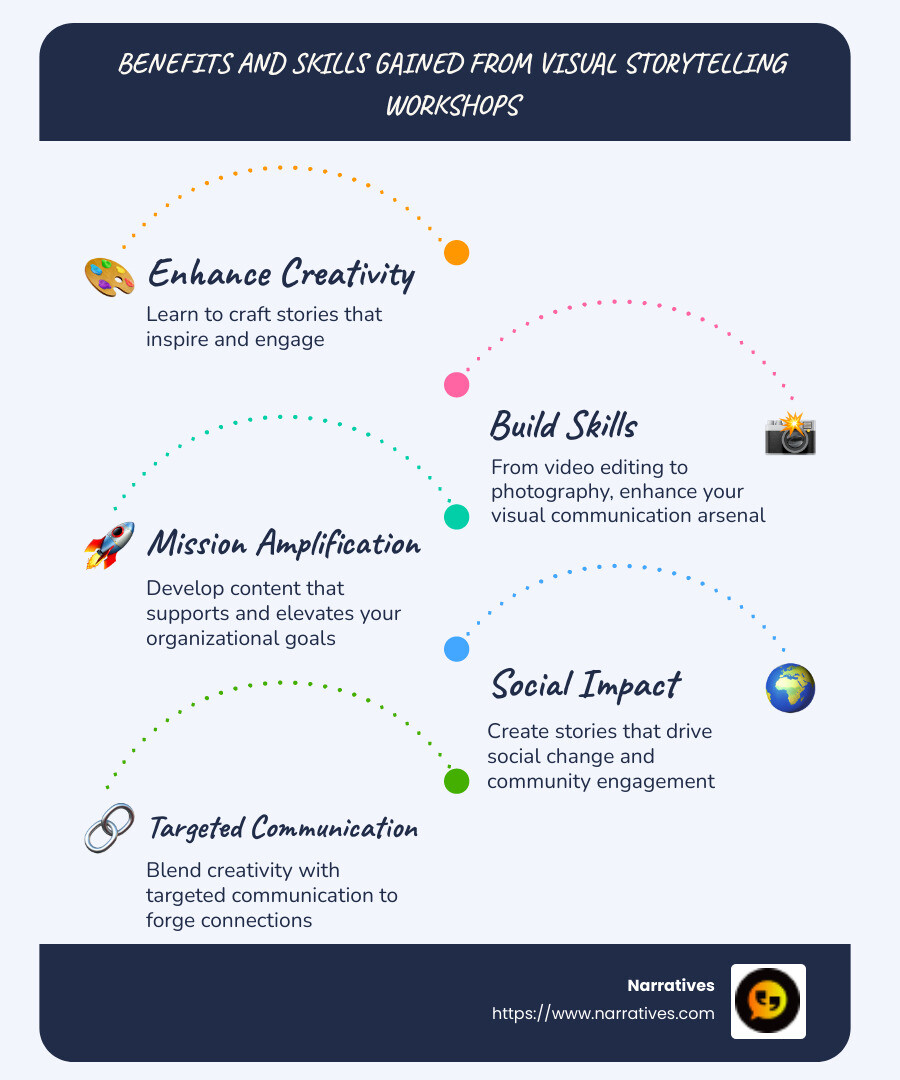
- Improve Creativity: Learn to craft stories that inspire and engage.
- Build Skills: From video editing to photography, improve your visual communication arsenal.
- Mission Amplification: Develop content that supports and lifts your organizational goals.
Storytelling is more than just narrating an event—it's an art that blends creativity with targeted communication. Visual storytelling brings this art to life through captivating images, immersive videos, and compelling narratives. Workshops dedicated to this skill not only refine your storytelling abilities but also help integrate these stories with your organization’s mission, creating narratives that matter.
In today’s world, we are bombarded with information. A powerful story cuts through this noise, forging connections and evoking change. For non-profits, storytelling workshops are pivotal. They transform ideas into stories that not only inform but also inspire action, driving social impact and community engagement.
Visual storytelling workshops word roundup:
Understanding Visual Storytelling
Visual storytelling is the art of using images, videos, and graphics to convey a narrative. It's about making your audience feel something, not just see something. The magic lies in how you combine visuals with narrative techniques to engage emotions and deliver a compelling story.
Narrative Techniques
At the heart of visual storytelling are narrative techniques. These are the tools you use to structure your story, create tension, and ultimately deliver a message that sticks. Think of it like crafting a movie: you need a beginning that hooks, a middle that builds, and an end that satisfies.
Character Development: Just like in a novel, your visuals should have characters that your audience can relate to. This helps in creating an emotional connection.
Conflict and Resolution: Every good story needs a conflict that keeps the audience engaged and a resolution that leaves them feeling fulfilled.
Visual Flow: The sequence of images or frames should guide the viewer through the story seamlessly. This ensures that the narrative is coherent and impactful.
Emotional Engagement
Why do some stories stick with us while others fade away? The answer often lies in emotional engagement. Research shows that stories activate different parts of our brain, making us feel as if we're part of the story. This emotional pull is what makes visual storytelling so powerful.
Empathy: Good stories evoke empathy. They allow the audience to step into someone else's shoes, fostering understanding and connection.
Sensory Details: Using vivid images and descriptions can trigger the audience's senses, making the story more immersive.
Relatability: The more your audience can see themselves in your story, the more engaged they will be.
Visual storytelling workshops equip you with the skills to harness these techniques, helping you craft stories that not only capture attention but also inspire action. Whether you're a photographer, filmmaker, or marketer, understanding how to weave a narrative visually is key to making an impact.
Benefits of Visual Storytelling Workshops
Visual storytelling workshops offer a treasure trove of benefits that can transform how you communicate ideas and connect with your audience. Here’s why these workshops are a game-changer:
Structured Learning
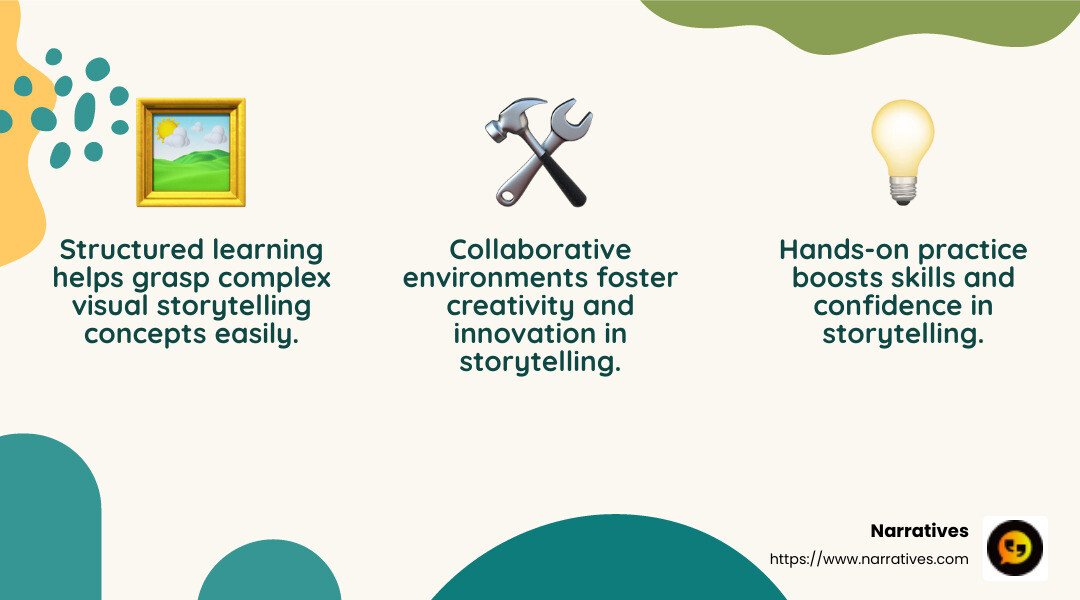
When it comes to learning, having a clear path makes all the difference. Visual storytelling workshops provide a structured environment where you can learn step-by-step. This structured approach helps participants grasp complex concepts more easily.
Guided Curriculum: Workshops often follow a carefully designed curriculum that builds your skills progressively. You start with the basics and gradually tackle more complex storytelling techniques.
Expert Guidance: Learning from seasoned professionals, like those at National Geographic's Explorer-led workshops, ensures you get insights from the best in the field. This mentorship is invaluable for honing your craft.
Skill Development
Participating in a workshop can significantly boost your skill set. Whether you're a beginner or looking to refine your abilities, these workshops cater to various skill levels.
Hands-On Practice: Workshops emphasize practical learning. You get to apply what you learn immediately, which reinforces your skills and boosts confidence.
Feedback and Improvement: Constructive feedback is a cornerstone of these workshops. It helps you identify areas for improvement and refine your storytelling abilities.
Creative Expression
Visual storytelling is not just about conveying information; it's about expressing yourself creatively. Workshops provide a safe space to explore and push the boundaries of your creativity.
Inspiration and Innovation: Exposure to different storytelling styles and techniques can spark new ideas and inspire innovative approaches to your projects.
Collaborative Environment: Engaging with peers and sharing ideas fosters a collaborative spirit. This interaction can lead to creative breakthroughs and new perspectives on storytelling.
In summary, visual storytelling workshops are more than just a learning experience; they are an opportunity to open up your creative potential and improve your storytelling prowess. Whether you're aiming to captivate an audience or convey a message with impact, these workshops equip you with the tools to do so effectively.
How to Choose the Right Workshop
Choosing the right visual storytelling workshop can make a big difference in your photography journey. Here’s how to find the perfect fit for your needs:
Intermediate and Advanced Photographers
If you're comfortable with your camera and have experience using tools like Adobe Lightroom or Photoshop, you're in the right place. These workshops are designed for those who want to lift their skills and learn new storytelling techniques.
Skill Level: Look for workshops that cater to intermediate and advanced photographers. This ensures the content is challenging enough to push your boundaries without being overwhelming.
Portfolio Development: Workshops like the Visual Storytelling Intensive help you develop a personal style and build a strong portfolio. This is crucial for photographers looking to make a mark in the industry.
Online and In-Person Options
Flexibility is key when it comes to learning. Depending on your schedule and preference, you can choose between online and in-person workshops.
Online Workshops: Perfect for those who prefer learning from the comfort of their home. Online options offer flexibility and often allow you to progress at your own pace.
In-Person Workshops: If you thrive in a hands-on learning environment, in-person workshops might be the best choice. They provide an immersive experience and direct interaction with instructors and peers.
Ethical Storytelling
As a storyteller, it's important to be mindful of the impact your work has on subjects and audiences. Ethical storytelling is a crucial component of any workshop.
Responsible Photography: Look for workshops that emphasize ethical practices. Courses should cover topics like building authentic community ties and understanding the social and ethical aspects of documentary photography.
Social Impact: Workshops that focus on ethical storytelling encourage you to use your skills to challenge perceptions and inform audiences responsibly.
By considering these factors, you can select a workshop that not only improves your technical skills but also empowers you to tell meaningful stories with integrity.
Top Visual Storytelling Workshops
When it comes to mastering the art of visual storytelling, choosing the right workshop can make all the difference. Here are some of the top options available, each offering unique experiences and learning opportunities.
Narratives Workshops
Narratives Workshops are designed to open up your creative potential. These workshops are custom to help participants craft stories that resonate emotionally with their audience. With a focus on both individual and collaborative exercises, you'll learn how to weave compelling narratives using visuals.
- Hands-On Experience: Expect immersive sessions where you can practice storytelling techniques in real-time.
- Expert Guidance: Led by experienced storytellers, these workshops provide invaluable insights into the craft.
Visual Storytelling Intensive
For photographers seeking to refine their craft, the Visual Storytelling Intensive is a top choice. This workshop focuses on developing a personal style and building a robust portfolio.
- Portfolio Development: Participants work on creating a cohesive body of work, which is crucial for professional growth.
- Advanced Techniques: The workshop covers advanced storytelling techniques, helping photographers push creative boundaries.
Each of these workshops offers a unique approach to visual storytelling, catering to different needs and skill levels. Whether you're a beginner or an experienced photographer, these workshops can help you improve your storytelling abilities and create impactful narratives.
Frequently Asked Questions about Visual Storytelling Workshops
What are the key elements of a visual story?
Creating a compelling visual story involves several key elements that work together to engage and move your audience. At the heart of any story is conflict resolution, which keeps the audience hooked as they anticipate how the story will unfold. A clear narrative structure is essential, guiding the audience through a beginning, middle, and end, ensuring they stay connected and invested in the outcome.
How can visual storytelling benefit non-profits?
Visual storytelling is a powerful tool for non-profits as it can significantly improve social impact and community engagement. By crafting stories that highlight real-world issues, non-profits can connect emotionally with their audience, encouraging them to take action. Stories can showcase the change being made, rallying support and fostering a sense of community around a cause. This approach not only raises awareness but can also lead to increased donations and volunteer participation.
What skills are needed for visual storytelling?
To excel in visual storytelling, you'll need a mix of technical and creative skills. Photography is crucial, as capturing the right images can make or break your story. You'll also need strong editing skills to refine your visuals and ensure they align with your narrative. Finally, narrative crafting is essential for weaving together the visual and textual elements into a cohesive and compelling story. Mastering these skills can help you create powerful stories that resonate with your audience.
Conclusion
In the dynamic world of digital storytelling, Narratives stands out as a trusted partner for non-profits and purpose-driven organizations. We specialize in crafting high-quality, emotionally resonant video and multimedia content that amplifies underrepresented voices and shares impactful stories. Our focus is on helping non-profits leverage the power of storytelling to inspire action, build trust, and increase visibility.
Through our non-profit partnerships, we create content that not only highlights the challenges faced by communities but also celebrates the triumphs and resilience of those working to make a difference. By showcasing real-world issues and solutions, we help non-profits connect with their audience on a deeper level, fostering a sense of community and shared purpose.
Social impact storytelling is at the heart of what we do. We believe in the transformative power of stories to drive change and engage communities. Our workshops and content creation services are designed to equip organizations with the tools they need to tell their stories effectively, ensuring that their messages resonate and inspire action.
If you're ready to open up your organization's creative potential and make a lasting impact through storytelling, we invite you to explore our media services and find how we can help you share your story with the world.
.avif)