From Clicks to Confidence: How to Build Trust Online

Building online trust is crucial in today’s digital age, and it serves as the foundation for successful consumer relationships and business growth. To quickly address this, follow these essentials:
- Authenticity and transparency in your online presence.
- Responsive customer service to address needs promptly.
- Reliable protection of consumer data for security.
- Consistent brand messaging across digital platforms.
In an changing online landscape, digital trust isn't just a buzzword—it's a necessity. With an increasing number of transactions and interactions happening online, consumers now expect more than just quality products or services; they demand transparency, authenticity, and a strong commitment to their data protection.
Businesses ready to meet these expectations can not only improve customer loyalty but also drive growth. High levels of digital trust correlate with improved consumer retention and an increased likelihood of recommendation, making it an integral component of a company’s success strategy.
For organizations, especially those in social impact and storytelling, building this trust offers a distinct advantage. By engaging with your audience authentically and demonstrating your values through ethical practices, your online narrative can become a powerful tool for both advocacy and business development.
In the following sections, we'll dig deeper into the strategies and importance of building online trust. But first, here's a visual summary to reinforce these quick tips:
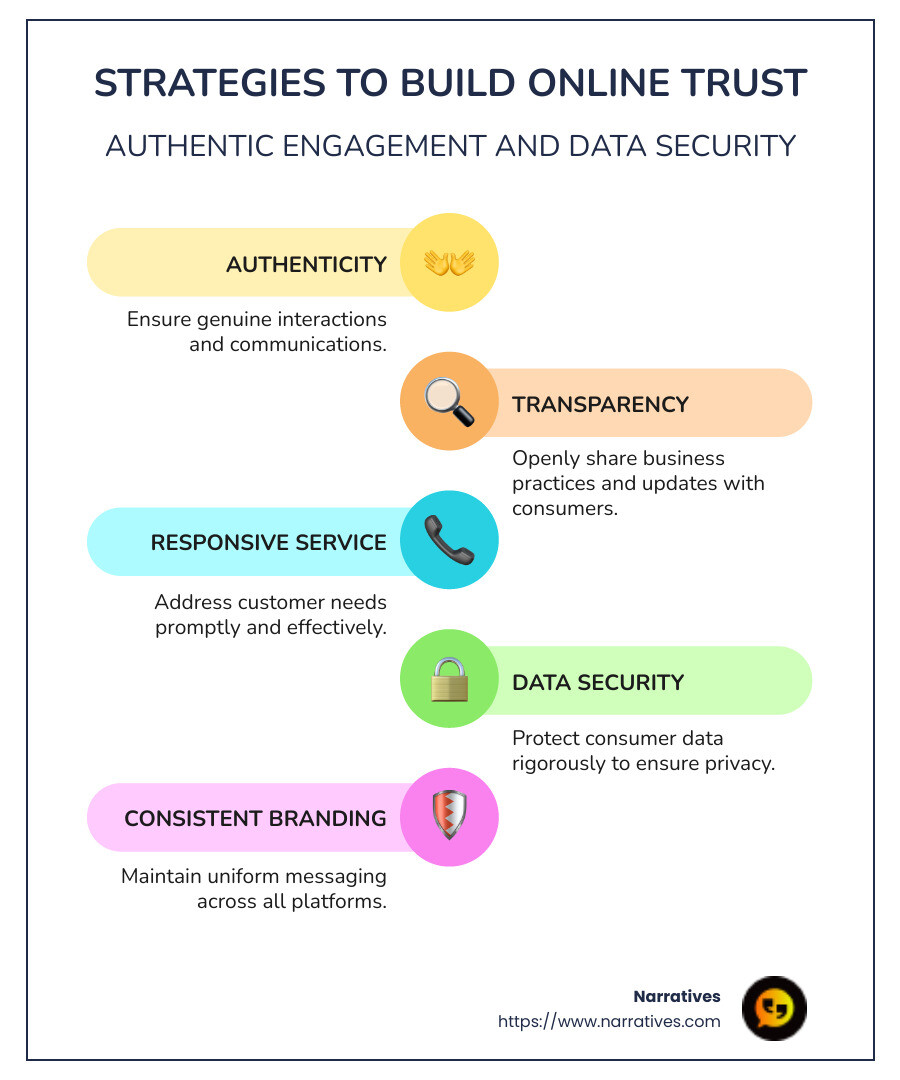
Building online trust vocabulary:
The Importance of Building Online Trust
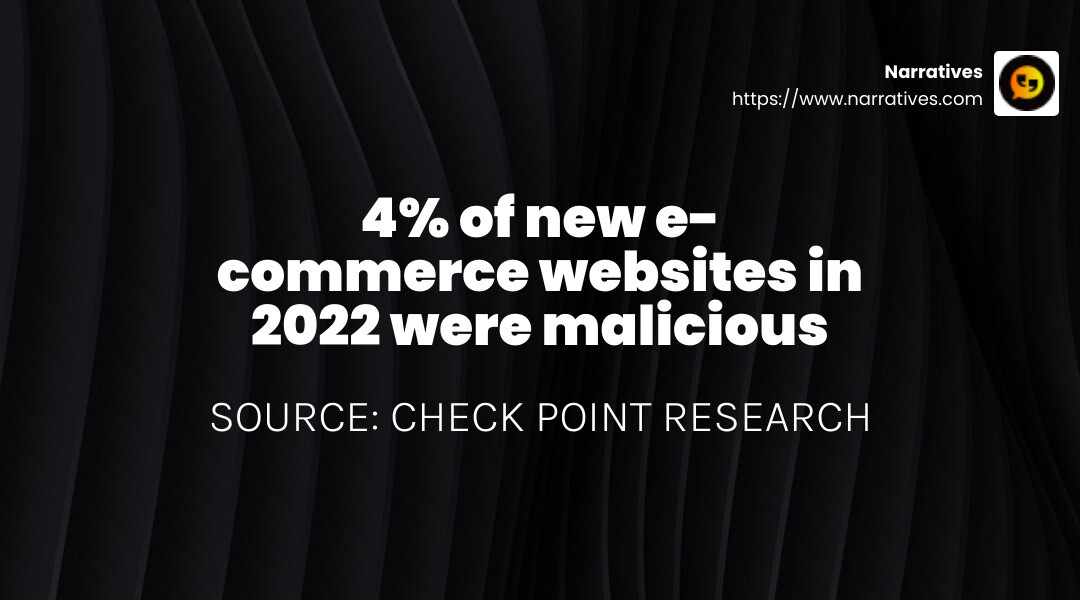
In e-commerce, building online trust is more than just a good idea—it's essential. With the rise of cyber threats, consumers are increasingly wary of where they shop online. In 2022, Check Point Research found that a staggering 4% of all new e-commerce websites were malicious. This alarming statistic highlights the critical need for businesses to prioritize cybersecurity.
Cybersecurity isn't just about protecting data; it's about safeguarding your customers' trust. A secure website is like a warm handshake—it assures your customers that they're in safe hands. When consumers feel safe, they're more likely to make a purchase. In fact, research from Deloitte Digital and Twilio shows that consumers spend, on average, 25% more on trusted brands.
But trust isn't solely built on security. Consumer trust is also about the overall experience. A well-organized site that is easy to steer, coupled with clear and honest communication, can make all the difference. If your website is riddled with spelling errors or broken links, it sends a message that you might not pay attention to details. This can erode trust quickly.
In the fiercely competitive e-commerce space, where thousands of websites offer similar products, trust can be a key differentiator. A consumer who trusts your brand is less likely to abandon their cart and more likely to recommend you to others. A trusted brand commands a price premium, with nine in ten shoppers willing to pay more for a product from a brand they trust, according to Salsify.
E-commerce success is tied to how well you can build and maintain this trust. It's not just about making a sale today; it's about creating a loyal customer for tomorrow.
In the next section, we'll explore the strategies you can use to build and maintain this vital online trust.
Strategies for Building Online Trust
Building online trust is crucial for any business aiming to thrive. Let's explore three key strategies: transparency, authenticity, and ethical practices.
Transparency
Transparency is about being open and honest with your audience. It's like letting them peek behind the curtain. Share your company's story, your mission, and what you stand for. This openness helps build a connection with your audience and makes them feel involved.
For example, Domino's Pizza famously admitted to past failures in a campaign that showcased their commitment to improvement. This kind of honesty can go a long way in building trust. People appreciate when businesses own up to their mistakes and show how they're working to improve.
Authenticity
Authenticity means being true to your brand and values. Consumers can spot a fake from a mile away. Be genuine in your interactions and communications.
Consider using social media to interact with your audience in a real and personal way. As Amy Leneker from Compass Consulting, LLC, suggests, each online interaction is an opportunity to build trust. When you respond directly to comments or feedback, you show that you care about your customers' opinions.
Ethical Practices
Ethical practices are the backbone of trust. This is about doing the right thing, even when no one is watching. It's not just about following laws and regulations—it's about aligning your actions with your values.
Digital-trust leaders set more goals for trust building and focus on value-driving goals, such as strengthening existing customer relationships. They engage in practices that mitigate digital risks, from cybersecurity to data protection. By codifying ethical conduct and incorporating these policies into mission statements, companies not only build trust but also see higher growth rates.
Trust is built over time through consistent and ethical behavior. It’s not just about the big gestures but also the small, everyday actions that reinforce your commitment to your customers.
In the next section, we'll look at how storytelling can be a powerful tool in building online trust.
Building Online Trust through Storytelling
Storytelling is a powerful tool for building online trust. It helps create emotional connections, highlight impactful stories, and foster community-driven narratives. Let's explore how these elements can improve trust.
Emotional Resonance
Stories that resonate emotionally with your audience can significantly boost trust. When you share experiences that align with your customers' feelings and challenges, you create a bond. As Jordan Carroll from The Remote Job Coach suggests, telling stories of failure or personal experiences can make your audience feel understood and valued. This emotional connection encourages trust, as people are more likely to trust those who have been through similar situations.
Impact Stories
Sharing stories that highlight the positive impact of your work can also build trust. These stories demonstrate your company's values and commitment to making a difference. For instance, Pars Equality Center uses storytelling to showcase their initiatives supporting Persian-speaking immigrants. By highlighting their community-driven efforts, they build credibility and trust with their audience.
Community-Driven Storytelling
Community-driven storytelling involves your audience in the narrative. It's about creating a dialogue and allowing them to share their experiences. This approach not only builds trust but also fosters a sense of belonging. When people see themselves reflected in your stories, they feel more connected to your brand.
For example, Narratives, a content agency, focuses on humanizing news by telling stories from underrepresented communities. This approach helps build trust by amplifying voices and creating a sense of community.
By incorporating storytelling into your strategy, you can improve emotional resonance, highlight impactful stories, and foster community-driven narratives. These elements are essential for building and maintaining trust online. In the next section, we'll explore key elements to improve online trust further.
5 Key Elements to Improve Online Trust
In today's digital landscape, trust is everything. To build and maintain it, you need to focus on five key elements: site organization, visual design, website credibility, social proof, and data privacy. Let's break these down.
Site Organization
A well-organized site is user-friendly and helps visitors find what they need quickly. Easy navigation builds confidence in your brand. Use clear labels and logical menus to guide users. For example, a drop-down menu with relevant subcategories can make browsing seamless.
Visual Design
Your site's design is the first impression visitors get. A clean, modern look conveys professionalism and trustworthiness. Visual design trends may vary, but the basics of good design—like a consistent color scheme and readable fonts—are universal. What appeals to one audience might not work for another, so know your audience well.
Website Credibility
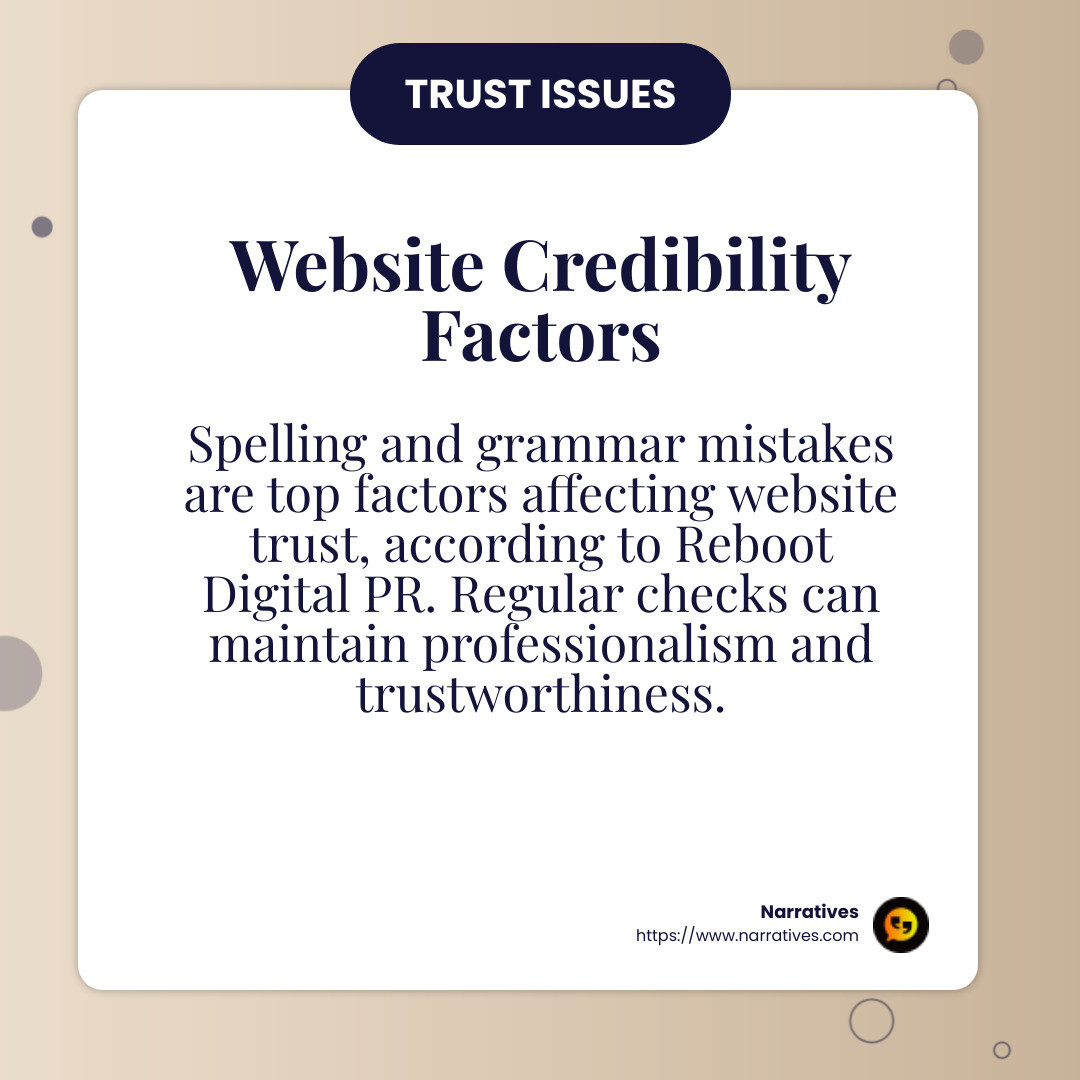
Credibility is about trustworthiness. Typos and broken links can hurt your site's credibility. Regularly check for these issues to ensure a professional appearance. According to Reboot Digital PR, spelling and grammar mistakes are top factors affecting website trust.
Social Proof
People trust what others say about you more than what you say about yourself. Social proof includes reviews, testimonials, and case studies. Encourage satisfied customers to share their experiences. This feedback can significantly boost trust and influence potential buyers.
Data Privacy
In an era of data breaches, protecting customer information is crucial. Clearly communicate your data privacy policies. Assure customers their data is safe with you. This transparency not only builds trust but also aligns with ethical business practices.
By focusing on these five elements, you can significantly improve online trust. Next, we'll tackle some frequently asked questions about building online trust.
Frequently Asked Questions about Building Online Trust
Can you build trust online without an attorney?
Absolutely, you can build online trust without needing an attorney. The key is to be transparent and authentic in your interactions. Start by clearly communicating your terms and conditions, privacy policies, and any other important information. This helps build a foundation of trust.
Additionally, focus on providing excellent customer service. Listening to your customers and being sincere and respectful in your responses can go a long way. As Natalie Doyle Oldfield from Success Through Trust Inc. points out, trust is built on how you communicate and behave online.
How does digital trust impact business growth?
Digital trust is a game-changer for business growth. Companies that excel in digital trust see significant benefits. According to McKinsey, digital-trust leaders are 1.6 times more likely to experience revenue and EBIT growth rates of at least 10% annually.
This growth comes from establishing strong relationships with customers and gaining a competitive edge. When customers trust your brand, they're more likely to buy from you, spend more, and recommend you to others. Trust can lead to higher-value orders and positive word-of-mouth.
What are the best practices for maintaining online trust?
Maintaining online trust involves several best practices:
Transparency and Authenticity: Be open about your business practices and stay true to your brand values. As Shermikia Lemon suggests, providing an authentic experience is crucial.
Amazing Customer Service: Offer support that is simple and customer-centric. Peter Boolkah emphasizes that great customer service builds trust.
Consistent Communication: Engage with your audience regularly through social media and other channels. Amy Leneker highlights that trust is built through small actions over time.
Data Security: Protect customer data and communicate your privacy policies clearly. This not only builds trust but also aligns with ethical practices.
Regular Updates: Keep your website and content fresh and error-free to maintain credibility.
By implementing these strategies, you can foster and maintain a strong foundation of trust with your online audience.
Next, we'll dig into the conclusion, discussing how Narratives leverages digital storytelling and partnerships to build trust.
Conclusion
At Narratives, we believe that building online trust is not just about implementing strategies—it's about telling powerful stories that resonate with people. Our focus is on digital storytelling that lifts underrepresented voices and highlights the impactful work of non-profits and purpose-driven organizations.
Through our partnerships, we help non-profits share their impact stories in a way that inspires action and builds trust. We use high-quality, emotionally resonant video and multimedia content to engage audiences and increase visibility. This approach not only strengthens the connection between organizations and their communities but also improves credibility and trustworthiness.
Digital storytelling is a powerful tool for non-profits looking to make a difference. It allows organizations to connect with their audience on a deeper level, fostering empathy and understanding. By sharing authentic stories of struggle and success, we help organizations build a community of supporters who are invested in their mission.
Our commitment to ethical practices and transparency ensures that the stories we tell are genuine and impactful. We work closely with our partners to create content that reflects their values and goals, ensuring that every piece of content aligns with their mission.
For those interested in learning more about how digital storytelling can improve your organization's impact and build trust, we invite you to learn more about our services. Together, we can create stories that inspire change and build a better future for all.


.avif)