From Content to Confidence: Strategies for Building Brand Trust

Building trust with content is crucial for any brand aiming to create a credible and lasting relationship with its audience. Trust, quite simply, is the belief a customer places in a brand, driven by its reputation, transparency, and the value it offers. Here's a quick roadmap to establish trust through content:
- Be Transparent: Clearly display any terms or conditions. Avoid hidden details.
- Be Authentic: Show honest and genuine interactions. Own up to mistakes.
- Use High-Quality Content: Provide engaging and valuable information consistently.
When business decisions often hinge on personal relationships, trust can be an organization's most valuable asset. Picture this: you're building a bridge to your audience, using stories crafted not just to captivate but to connect on a deeper level. As a brand, your credibility isn't built overnight. It takes ongoing effort and sincerity to earn and maintain trust.
Moreover, when customers trust a brand, they're more likely to recommend it to others, creating a powerful ripple effect of loyalty and advocacy. So, think of your content not just as a tool for communication but as a platform for establishing a genuine connection.
Every story told is an opportunity to reinforce your brand's values and integrity. Despite the challenges, storytelling remains a powerful way to foster trust and credibility.
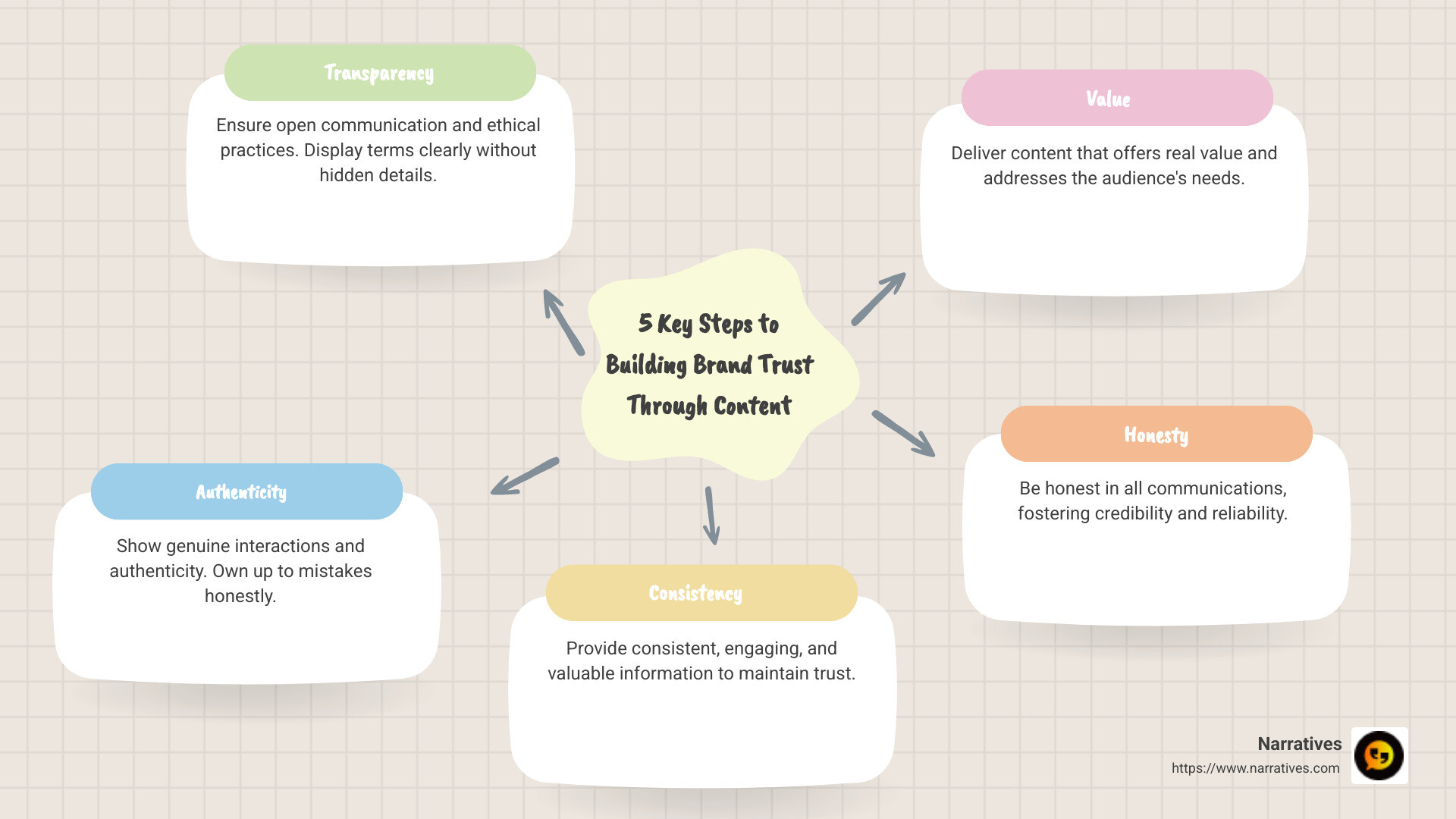
Building trust with content terms made easy:
Understanding Brand Trust
Brand trust is the confidence that customers place in a company and its products or services. This trust is built on a foundation of reputation, transparency, fairness, and the value a brand offers. It's not something that happens overnight; it requires consistent effort and authenticity.
Why is brand trust so important? Because it directly impacts customer behavior. When customers trust a brand, they're more likely to make a purchase, recommend the brand to others, and remain loyal over time. This loyalty is invaluable, as it leads to repeat business and long-term relationships. In fact, a study by Edelman found that only one in three consumers say they trust most of the brands they buy from. This highlights the potential competitive advantage for brands that successfully build and maintain trust.

Customer loyalty is one of the most significant benefits of brand trust. Loyal customers are not only more likely to continue buying from a brand, but they also become brand advocates, spreading positive word-of-mouth and enhancing the brand's reputation. This kind of organic marketing is powerful, as people tend to trust recommendations from friends and family more than traditional advertising.
Where information is abundant and choices are endless, building trust with content is more crucial than ever. Customers have access to a wealth of information and can easily switch to a competitor if a brand fails to meet their expectations. Therefore, brands must focus on creating content that is relevant, high-quality, and aligned with their values to foster trust and loyalty.
By understanding and prioritizing brand trust, businesses can create a solid foundation for enduring customer relationships and sustained success.
Building Trust with Content
Building trust with content is about creating connections through authenticity and value. Content is more than just words or images on a screen; it's a tool to communicate who you are and what you stand for to your audience. Let's explore how you can achieve this through relevant content, high-quality elements, and storytelling.
Relevant Content
Content must be relevant to your audience's needs and interests. This means understanding your target audience and delivering information that resonates with them. Relevant content shows that you understand and care about your audience's concerns, which is the first step in building trust.
Consider using data to back up your claims. For example, if you're discussing a product's effectiveness, include statistics or credible sources that support your statements. This transparency in information can significantly improve your credibility.
High-Quality Content
Quality is non-negotiable in content creation. High-quality content is well-researched, well-written, and visually appealing. It reflects the professionalism and reliability of your brand. Poorly executed content can quickly erode trust, as it suggests a lack of attention to detail and care.
Use high-quality multimedia elements like videos and images to engage your audience emotionally. Videos, in particular, can improve understanding and retention of information, making your message more impactful. However, ensure that these elements are purposeful and add value to your content.
Storytelling
Storytelling is a powerful way to build connections and trust. Humans are naturally drawn to stories because they are relatable and memorable. Sharing your brand's story or customer success stories can humanize your brand and make it more relatable.
For instance, a case study or testimonial can serve as a narrative that illustrates your brand's impact. These stories provide social proof and can reassure potential customers of your brand's credibility and reliability.
Incorporating storytelling into your content strategy helps convey your brand's values and mission in a way that resonates with your audience. It's not just about selling a product or service; it's about sharing a journey and inviting your audience to be part of it.
By focusing on these elements—relevant content, high-quality execution, and storytelling—you can effectively build trust with your audience. This trust is the foundation for lasting relationships and sustained brand loyalty.
Strategies for Building Brand Trust
Building brand trust isn't just about having a good product. It's about how you communicate and connect with your audience. Let's explore three key strategies: authenticity, transparency, and customer feedback.
Authenticity
Authenticity is about being real and genuine in everything you do. It's showing your audience who you really are, not just what you sell. A strong brand voice is crucial for this. Your brand voice should reflect your core values and mission. If what you say doesn't match who you are, people will notice, and trust will erode.
To be authentic, start by defining your brand voice. Highlight what makes your brand unique and ensure this voice is consistent across all content. If you make a mistake, own it. Addressing negative feedback openly shows that you care and are committed to improvement.
"61% of consumers’ buying decisions are directly influenced by custom content."

Transparency
Transparency means being open and honest. Tell your audience about your processes, values, and even your challenges. When you're transparent, it shows you have nothing to hide, which builds trust.
For example, if you use sustainable practices, share this with your audience. It not only builds trust but also shows you're proud of your efforts. Transparency can also involve explaining decisions or changes in your business. When customers understand the "why" behind your actions, they are more likely to support you.
Customer Feedback
Feedback is a goldmine for trust-building. It shows you're listening and willing to improve. Encourage your customers to share their thoughts and experiences. Whether it's positive or negative, feedback provides valuable insights.
Use testimonials and case studies to highlight customer experiences. These stories act as social proof, demonstrating that real people trust and value your brand. Responding to feedback, especially negative ones, in a constructive manner shows that you are committed to providing the best possible experience.
Building trust with content is an ongoing process. Authenticity, transparency, and customer feedback are not just strategies; they're commitments to your audience. By embracing these principles, you lay the groundwork for lasting relationships and brand loyalty.
10 Ways to Build Trust with Content
Building trust with content is crucial for any brand looking to establish a strong connection with its audience. Here are ten effective ways to do just that:
1. Create Relevant Content
Understanding your target audience is key. Deliver content that addresses their needs and interests. Relevant content not only grabs attention but also provides value, fostering trust. According to research, 54% of companies were influenced to make a purchase after engaging with thought leadership content.
2. Use High-Quality Multimedia
Incorporate videos, images, and infographics to make your content more engaging. Video content, in particular, can evoke emotions and create a personal connection. Ensure that multimedia elements are of high quality and add value to the message you're conveying.
3. Share Brand Stories
People connect with stories. Share your brand's journey, including challenges and successes. Brand narrative helps humanize your company, making it relatable. Highlighting impact stories can showcase your brand's values and mission in action.
4. Promote Testimonials and Case Studies
Leverage social proof by featuring testimonials and case studies. These real-life examples show potential customers how others have benefited from your products or services. It builds credibility and reassures them of your brand's reliability.
5. Accept Transparency
Being open about your processes and values builds trust. Practice open communication and share insights into your operations. Ethical practices, like sustainable sourcing, should be highlighted to show integrity.
6. Provide Actionable Tips
Offer practical advice that your audience can apply immediately. This demonstrates your expertise and willingness to help, further establishing trust. Actionable tips show you're invested in their success, not just your own.
7. Keep Content Up-to-Date
Regularly update your content to reflect the latest trends and information. Outdated content can signal neglect, while fresh content shows you're active and engaged. Aim to publish new content consistently to maintain relevance.
8. Engage with Your Audience
Encourage interaction through comments, polls, and social media. Responding to your audience's questions and feedback shows you're listening and care about their opinions. Engagement fosters a two-way relationship, crucial for trust-building.
9. Use Statistics to Back Claims
Support your content with credible data and statistics. This adds weight to your claims and improves credibility. Transparency in data can reassure your audience of the authenticity of your information.
10. Collaborate with Reputable Sources
Partner with industry experts and reputable sources to improve your content's authority. Licensing content from established publications can instantly boost your credibility and show your commitment to providing valuable information.
By implementing these strategies, you can build a solid foundation of trust with your audience. Trust is earned through consistent and genuine efforts. Let's explore some frequently asked questions about building trust with content.
1. Create Relevant Content
Understanding your target audience is crucial when aiming to build trust with content. Knowing who they are, what they care about, and the problems they face allows you to tailor your content to meet their specific needs. This is not just about demographics but also about understanding their values, preferences, and pain points.
Relevant content acts as a bridge between your brand and your audience. It shows that you care about their needs and are invested in providing solutions. A study by Forbes highlights that 61% of consumers are influenced by custom content when making purchasing decisions. This underscores the importance of creating content that resonates with your audience's interests and challenges.
To achieve this, start by conducting thorough research to understand your audience better. Use surveys, social media insights, and customer feedback to gather data. Once you have a clear picture, create content that speaks directly to their concerns and aspirations.
Furthermore, prioritize content value over quantity. It's better to produce fewer pieces of high-quality content that offer real insights or solutions than to flood your audience with superficial or irrelevant information. High-value content not only captures attention but also positions your brand as a trustworthy authority in your field.
Incorporate storytelling techniques to make your content more engaging. Sharing relatable stories or experiences can make complex topics more understandable and memorable. This human touch can significantly improve the perceived value of your content.
Key takeaway: Delivering relevant and valuable content is fundamental to building trust with your audience. It shows that you understand and prioritize their needs, fostering a deeper connection and loyalty to your brand.
2. Use High-Quality Multimedia
High-quality multimedia, especially video content, is a powerful tool for building trust with content. Videos can convey complex messages quickly and effectively, making them an essential part of any content strategy. A well-crafted video can engage your audience emotionally, creating a lasting impression.
Emotional resonance is key when using video content. Videos have the unique ability to evoke emotions and connect with viewers on a personal level. This emotional connection can significantly improve trust. For example, a heartfelt testimonial or a behind-the-scenes look at your brand can make your audience feel more connected to your mission and values.
Research indicates that incorporating video can increase engagement by up to 2.5 times. This increased engagement is crucial for building trust, as it shows that your audience is interested and invested in your content. Forbes suggests that video is one of the most powerful ways to connect with customers and build a strong foundation for your business.
To maximize the impact of your video content, focus on storytelling. Share compelling stories that highlight your brand's journey, values, and the impact you have on your community or industry. This storytelling approach not only makes your content more engaging but also reinforces your brand narrative, further building trust.
Additionally, ensure that your videos are of high quality. Poor-quality videos can harm your brand's credibility. Use professional equipment and editing tools to create visually appealing and clear videos. High-quality visuals show that you are serious about your brand and care about the impression you leave on your audience.
Key takeaway: Use high-quality multimedia, especially video content, to create emotional connections with your audience. This approach not only improves engagement but also builds trust by showcasing your brand's authenticity and commitment to quality.
3. Share Brand Stories
Brand narrative is at the heart of building trust with content. A compelling brand story can transform your brand from a faceless entity into a relatable and trustworthy partner. Sharing stories about your brand's journey, challenges, and triumphs helps your audience connect with you on a personal level.
One effective way to share your brand narrative is through impact stories. These are stories that demonstrate the positive effects your brand has on customers or communities. For instance, Narratives, a content agency, highlights the work of non-profits to showcase the impact they are making. By focusing on real-world outcomes, these stories build credibility and trust.
Consider this: 61% of consumers’ buying decisions are influenced by custom content, according to Forbes. This statistic underscores the power of storytelling in guiding consumer choices. When consumers see genuine stories about how your brand makes a difference, they are more likely to trust you.
To craft impactful stories, focus on the following elements:
Authenticity: Be genuine. Share real stories about real people. Avoid exaggeration or embellishment. Authentic stories resonate more and are more likely to be shared.
Emotional Connection: Aim to evoke emotions. Whether it's joy, empathy, or inspiration, emotional stories are memorable and engage your audience deeply.
Relatability: Ensure your stories are relatable to your target audience. Use language and scenarios that your audience can easily understand and connect with.
Consistency: Share stories consistently across your platforms. Regular storytelling helps reinforce your brand narrative and keeps your audience engaged.
Incorporating these elements into your brand stories will not only make your content more engaging but also reinforce your brand's trustworthiness. Building trust with content is a journey, and sharing powerful stories is a crucial step in that journey.
4. Promote Testimonials and Case Studies
Promoting testimonials and case studies is a powerful way to build trust with content. These elements provide social proof, a concept that highlights how people tend to follow the actions of others. When potential customers see that others have had positive experiences with your brand, they are more likely to trust you.
Customer Experiences are at the heart of testimonials and case studies. They offer a real, tangible look at how your products or services have benefited others. This not only validates your brand's claims but also showcases your credibility.
Here's how you can effectively use testimonials and case studies to build trust:
Gather Real Testimonials: Encourage satisfied customers to share their stories. Authentic feedback from real people can significantly boost your brand's trustworthiness. Make sure these testimonials highlight specific outcomes or benefits your customers experienced.
Create Detailed Case Studies: A case study is a deep dive into a specific customer's journey with your brand. It should detail the problem they faced, how your product or service provided a solution, and the positive results. This format allows potential customers to envision how your brand could help them in a similar situation.
Highlight Social Proof in Your Content: Use customer quotes, success stories, and case studies in your marketing materials, newsletters, and social media posts. This integration reinforces the trustworthiness of your brand across different platforms.
Showcase Diverse Experiences: Ensure that your testimonials and case studies reflect the diversity of your customer base. This inclusivity helps more people see themselves in the stories you share, making them more relatable and trustworthy.
A great example of leveraging social proof is how some companies feature customer reviews prominently on their websites. According to Forbes, integrating social proof points like reviews and testimonials into your content strategy can significantly influence buying decisions.
Incorporating testimonials and case studies into your content strategy not only improves your brand's credibility but also provides a compelling narrative that potential customers can trust. It's a straightforward yet effective way to showcase the real-world impact of your brand.
5. Accept Transparency
Transparency is a cornerstone of building trust with content. It involves open communication and adhering to ethical practices. When a brand is transparent, it shows customers that there is nothing to hide, fostering trust and loyalty.
Open Communication
Being open with your audience means sharing both the positives and the negatives. Customers appreciate honesty and are more likely to trust brands that communicate openly. Here are some ways to practice open communication:
Share Behind-the-Scenes Content: Show the processes that go into making your products or delivering your services. This could be through videos, blog posts, or social media updates. It humanizes your brand and builds a connection with your audience.
Be Honest About Mistakes: If something goes wrong, acknowledge it. Explain what happened and how you plan to fix it. This honesty can turn a negative situation into an opportunity to build trust.
Provide Clear Information: Whether it's about pricing, product details, or company policies, ensure that all information is easy to find and understand. Avoid hidden terms or conditions that could erode trust.
Ethical Practices
Ethical practices are about doing the right thing, even when it's not the easiest option. Here’s how to ensure your brand is seen as ethical:
Sustainable Sourcing and Manufacturing: If you use sustainable practices, let your customers know. This transparency shows that you care about more than just profits.
Respect Customer Privacy: Clearly state how you use customer data. According to Forbes, being upfront about data usage is crucial in maintaining customer trust.
Be Consistent with Your Values: Your brand values should be reflected in every piece of content you create. Consistency in values builds a strong, trustworthy brand image.
Display Guarantees and Disclosures: Make sure any guarantees or satisfaction assurances are prominently displayed. This openness reassures customers that you're committed to their satisfaction.
Transparency, combined with ethical practices, is not just about avoiding negative perceptions. It's about actively building a positive image that customers can trust. By being open and ethical, you lay the groundwork for a relationship based on trust and respect.
Next, we will explore how creating relevant content can further improve trust in your brand.
Frequently Asked Questions about Building Trust with Content
How can content marketing build trust?
Content marketing builds trust by providing valuable, relevant, and consistent information to your audience. When you create content that addresses the needs and interests of your customers, you demonstrate expertise and a genuine interest in helping them. This approach fosters a sense of reliability and credibility. For instance, a study showed that 48% of companies gained business after engaging with thought leadership content, highlighting the power of authoritative content in building trust.
What role does storytelling play in trust-building?
Storytelling is a powerful tool in trust-building. It allows brands to connect with their audience on an emotional level. By sharing real stories about your brand's journey, challenges, and successes, you create a narrative that resonates with customers. This humanizes your brand, making it more relatable and trustworthy. For example, sharing impact stories about how your products or services have positively affected customers can serve as compelling social proof.
How important is transparency in building brand trust?
Transparency is crucial in building brand trust. It involves being open about your business practices, acknowledging mistakes, and communicating honestly with your audience. According to research, customers appreciate brands that are upfront about their processes and policies. Transparency helps eliminate doubts and fosters a strong bond between the brand and its customers. By practicing open communication and ethical practices, you demonstrate integrity, which is a foundation for trust.
By understanding and implementing these strategies, brands can effectively use content to build and maintain trust with their audience. Next, we will explore how creating relevant content can further improve trust in your brand.
Conclusion
Building trust with content is not just a strategy; it's a journey that Narratives is uniquely positioned to lead. By focusing on digital storytelling, we enable non-profits and purpose-driven organizations to lift their voices and share their impact in ways that resonate deeply with their audiences.
Narratives believes in the power of stories to transform perspectives and inspire action. Our approach centers on creating high-quality, emotionally resonant video and multimedia content that highlights the unique stories of underrepresented communities. This not only increases visibility but also strengthens the connection between non-profits and their supporters.
As a digital storytelling partner, we focus on long-term relationships with non-profits. We help them craft narratives that are authentic and transparent, which are key elements in building trust. Our partnership approach ensures that each story we tell is aligned with the values and missions of the organizations we work with, fostering a genuine connection with their audiences.
By leveraging our expertise in storytelling and content creation, we help non-profits not only share their stories but also build lasting trust with their communities. If you're ready to lift your organization's narrative and strengthen your impact, learn more about how Narratives can help. Together, we can create stories that inspire and drive meaningful change.


.avif)