From Stories to Strength: Harnessing Community-Based Storytelling

Community-based storytelling is about using the power of narratives to bring people together and drive change. At its core, it involves everyday people sharing their stories, experiences, and histories to build understanding, trust, and connection within a community. This practice is not just about telling tales; it's about celebrating what communities have, boosting their agency, and focusing on collective strengths rather than deficiencies.
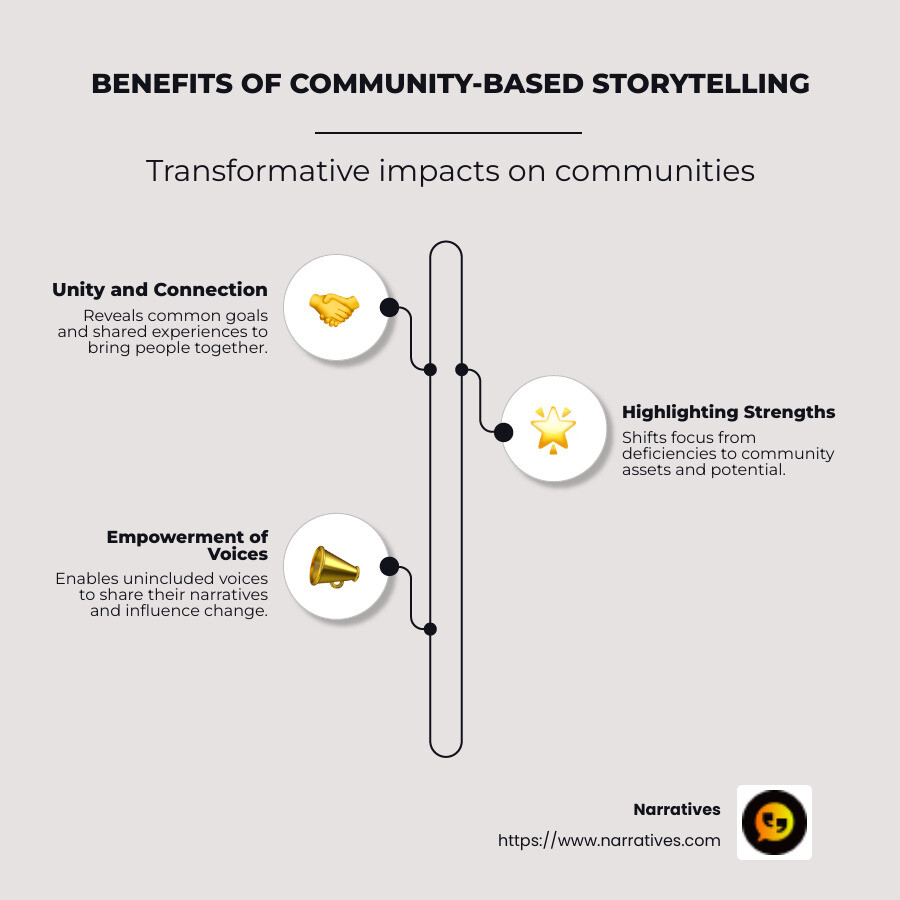
- Brings people together by revealing common goals and shared experiences.
- Highlights community strengths, shifting focus from what is lacking to what is available and possible.
- Empowers community voices, enabling those often unheard to shape their narrative and drive change.
When communities engage in storytelling, they tap into a reservoir of knowledge and emotional depth that fosters solidarity. As Emly Kombe explains, "It can be an equalizing process that empowers voices traditionally excluded from development conversations." Stories carry the power to transform perceptions and propel communities towards tangible actions and improvements.
In an age where digital media floods our senses, the personal touch and emotional weight of a community story become invaluable. By understanding and embracing these narratives, non-profits and organizations can communicate their mission effectively, fostering deeper connections and inspiring action.
Community-based storytelling vocab to learn:
The Power of Community-Based Storytelling
Community-based storytelling is a powerful tool for fostering connections and driving change within communities. By focusing on local stories, it highlights shared experiences and strengthens bonds among community members.
Community Storytelling
Community storytelling is about more than just sharing tales. It's a way to bring people together around common goals and experiences. For instance, in one community, storytelling sessions helped bridge racial and ethnic divides. Neighbors who once blamed each other for local issues found common ground through shared stories, such as their mutual desire for safe play areas for their children.
Local Storytelling
Local storytelling is essential for shifting the narrative from what a community lacks to what it possesses. Instead of focusing on deficiencies like lack of parking or clean apartments, storytelling highlights community assets. Stories about a shared love for soccer or exchanging recipes can change the dominant discourse, leading to community-driven solutions.
Participatory Storytelling
Participatory storytelling empowers individuals by giving them a voice. It allows those who are often excluded from development conversations to take part and share their perspectives. Emly Kombe notes that storytelling "can be an equalizing process that empowers voices traditionally excluded from development conversations."
By engaging in participatory storytelling, communities can harness their collective agency to envision and create a better future. This approach not only builds trust and understanding but also inspires action and change.

The personal touch of community storytelling is invaluable. It helps non-profits and organizations communicate their mission effectively, fostering deeper connections and inspiring meaningful action.
Now that we've explored the power of community-based storytelling, let's dig into how it drives social impact.
How Community-Based Storytelling Drives Social Impact
Community-based storytelling is not just a tool for connection—it's a catalyst for social change. By empowering communities to share their own stories, this approach drives meaningful social impact, fosters community-led development, and empowers individuals to take action.
Social Impact Through Storytelling
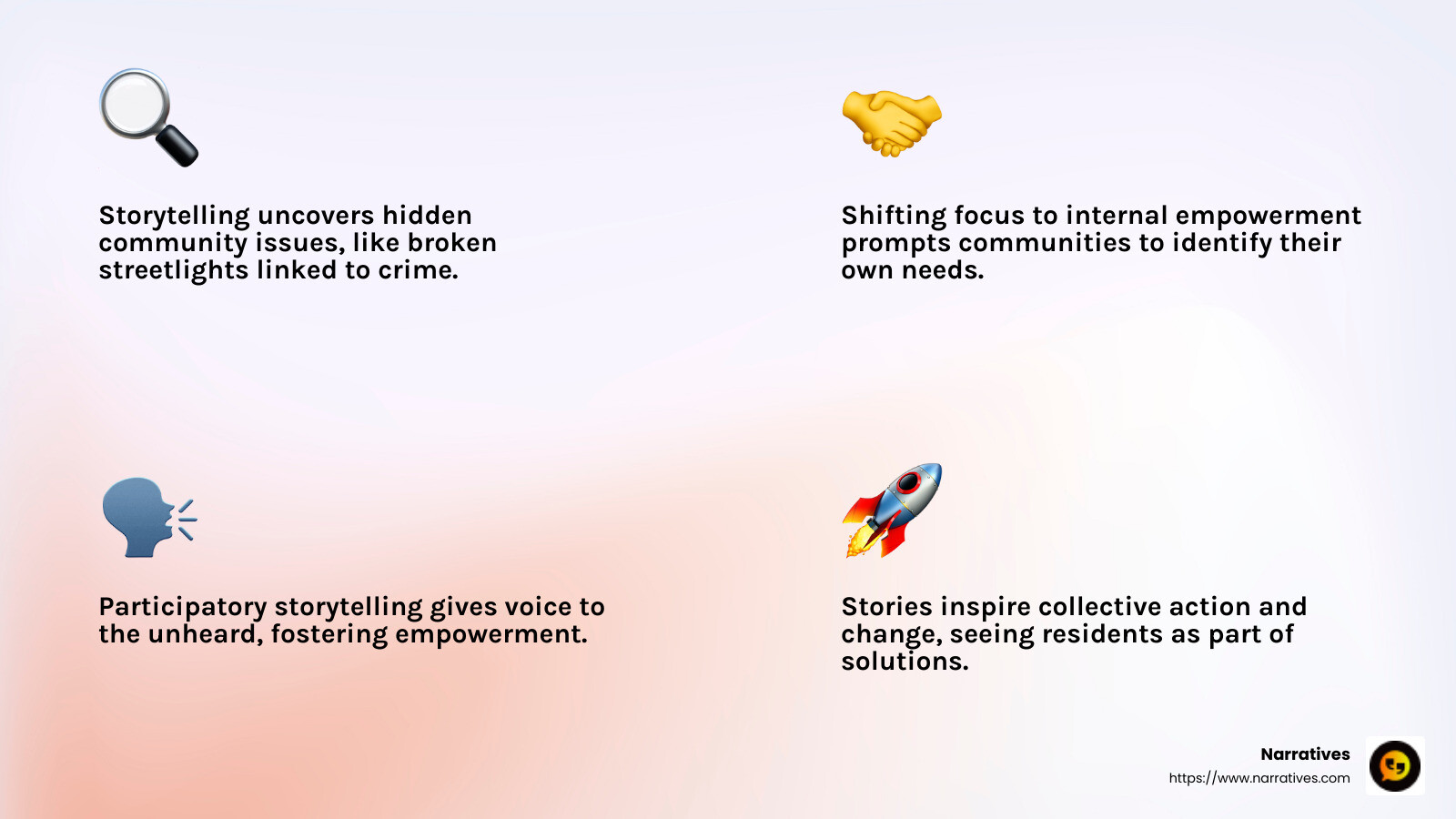
Stories have a unique ability to capture the nuances of community challenges and triumphs, providing insights that data alone cannot. In a neighborhood of West African and South American immigrants, storytelling revealed that the rise in crime was linked to broken streetlights, a detail missing from crime statistics. These stories highlighted the need for community-driven solutions, encouraging residents to advocate for better infrastructure and safety measures.
Community-Led Development
Community-based storytelling shifts the focus from external solutions to internal empowerment. By centering the narratives of those directly affected, storytelling encourages communities to identify their own needs and resources. In one case, community members envisioned a safer neighborhood with a reopened YMCA and improved transportation. Through storytelling, they recognized their role in making these dreams a reality, sparking initiatives to bring about these changes.
Empowerment Through Participation
Participatory storytelling gives a voice to those often unheard, fostering empowerment and inclusion. When community members share their stories, they become active participants in their development journey. This was evident when neighbors, who were initially hesitant to attend meetings, found confidence in sharing their visions for the community through stories. This engagement inspired collective action, as people saw themselves as part of the solution.
Inspiring Action and Change
The emotional resonance of stories can inspire action in ways that statistics cannot. A mother recounting her fear during a gunshot incident, saying she felt her heart "falling comme ça" (like that), evokes empathy and urgency for change. Such stories mobilize communities and stakeholders to address pressing issues with a deeper understanding and commitment.
By using the power of storytelling, communities can drive social impact, lead their own development, and empower individuals to transform their environments. Let's now explore the key elements that make community-based storytelling effective.
Key Elements of Effective Community-Based Storytelling
To make community-based storytelling truly impactful, focus on three key elements: narrative, authenticity, and emotional resonance. These elements help stories connect deeply with audiences and drive meaningful change.
Narrative: Crafting Compelling Stories
A strong narrative structure is the backbone of effective storytelling. It involves creating a clear beginning, middle, and end, with a point of tension that draws the audience in. As Jennifer Aaker explains, a good story isn't just a sequence of events but a journey that engages the audience emotionally. For example, the story of charity: water founder Scott Harrison uses themes of redemption and hope to captivate and inspire action.
Authenticity: Building Trust and Connection
Authenticity is crucial in storytelling. It fosters trust and helps audiences relate to the story. When stories are genuine and transparent, like those shared by charity: water, they resonate more deeply. This authenticity allows communities to see themselves in the stories, encouraging them to engage and participate actively.
Emotional Resonance: Evoking Empathy and Action
Emotional resonance is what makes stories memorable and impactful. Stories that evoke strong emotions can inspire empathy and motivate action. For instance, a mother's heartfelt account of fear during a gunshot incident can mobilize communities to address safety issues. Emotional stories create a sense of urgency and commitment, driving stakeholders to work towards solutions.
By focusing on narrative, authenticity, and emotional resonance, community-based storytelling can effectively engage audiences, foster trust, and inspire action. These elements are essential for crafting stories that not only inform but also transform communities.
Now, let's look at how these elements come to life in real-world examples through case studies and participatory journalism.
Community-Based Storytelling in Practice
Community-based storytelling isn't just a concept—it's a powerful tool that transforms communities through real-world application. Let's explore how this unfolds through case studies, community assets, and participatory journalism.
Case Studies: Real Stories, Real Change
In one racially and ethnically divided community, storytelling sessions helped bridge gaps and build trust. Neighbors who once blamed each other for community issues began to see common goals, like creating safe play areas for children. This shift in perspective led to collaborative efforts and a newfound sense of unity. As Emly Kombe observed, "Stories revealed their mutual desire for a safe place for their kids to play and created connections across cultural divides."
Another example comes from a community redefined by its assets rather than its deficiencies. Outsiders often labeled this area as lacking in safety and amenities. However, storytelling brought to light its rich history of soccer and shared cultural recipes, highlighting the community's strengths and potential. Meetings that began with complaints turned into sessions filled with hope and eagerness to organize for change.
Community Assets: Hidden Strengths Uncovered
Storytelling can uncover intangible community assets that are often overlooked. These assets, such as shared history and cultural ties, are crucial for development efforts. By focusing on what a community has rather than what it lacks, storytelling fosters a mindset of empowerment and possibility. This approach aligns with asset-based community development principles, which emphasize leveraging existing strengths to achieve desired outcomes.
Participatory Journalism: A Collaborative Approach
Participatory journalism plays a vital role in community-based storytelling. It involves community members in the storytelling process, ensuring diverse voices are heard and valued. This approach democratizes information and allows communities to take ownership of their narratives.
For instance, through participatory journalism, communities can document their own stories of progress and challenge mainstream narratives. This method not only empowers individuals but also builds social capital by fostering cooperation and trust among community members.
Incorporating these elements into community-based storytelling not only highlights the unique attributes of a community but also encourages active participation and collaboration. By focusing on real stories, hidden strengths, and inclusive journalism, communities can drive meaningful social impact.
Next, we'll address some common questions about community-based storytelling and its role in building community trust and development.
Frequently Asked Questions about Community-Based Storytelling
What is community-based storytelling?
Community-based storytelling is the practice of using narratives to capture and share the experiences, history, and aspirations of a community. Unlike traditional storytelling, which often involves an outsider telling stories about a community, this approach empowers community members to tell their own stories. This method not only preserves cultural heritage but also fosters a sense of ownership and pride within the community. By focusing on local voices and experiences, community-based storytelling helps highlight the unique characteristics and strengths of a community.
How does storytelling build community trust?
Storytelling builds community trust by creating a shared space for dialogue and understanding. When community members share their personal stories, they reveal common experiences and values, fostering empathy and connection. This was evident in the Maryland community of West African and South American immigrants, where storytelling sessions helped bridge cultural divides. As people listened to each other's stories, they began to see their neighbors not as strangers, but as allies with shared goals. This mutual understanding lays the foundation for trust, which is essential for community-led development and collaborative action.
Why are stories important for community development?
Stories are crucial for community development because they provide a deeper understanding of the community's needs, strengths, and aspirations. Quantitative data often fails to capture the full context of a community's situation. Stories, however, offer rich, nuanced insights that can guide development efforts. For example, in Maryland, storytelling revealed that crime was linked to broken streetlights, a detail that statistics alone could not capture. By incorporating these insights, communities can develop more effective, targeted solutions.
Moreover, storytelling engages those who might not usually participate in development discussions, such as children or those with language barriers. By inviting everyone to share their stories, communities can ensure that diverse perspectives are included in the development process. This inclusivity not only enriches the development efforts but also empowers community members to become active participants in shaping their future.
Next, we'll explore how community-based storytelling can be effectively integrated into initiatives for digital storytelling and non-profit work.
Conclusion
Narratives play a powerful role in shaping communities and driving social change. By focusing on community-based storytelling, we can amplify the voices that are often unheard, fostering a deeper understanding and connection among community members. This approach not only preserves cultural heritage but also strengthens the community's fabric by encouraging participation and collaboration.
Digital storytelling has become an essential tool for non-profits and purpose-driven organizations. By leveraging multimedia content, such as videos and interactive platforms, these organizations can share impactful stories that resonate emotionally with audiences. This not only builds trust but also inspires action, helping to increase visibility and support for their causes.
For non-profits, integrating community-based storytelling into their strategies can lead to more effective outreach and engagement. By allowing community members to tell their own stories, non-profits can highlight the unique strengths and challenges of the communities they serve. This empowers individuals and fosters a sense of ownership and pride, which is crucial for sustainable development and long-term impact.
At Narratives, we are committed to being the go-to partner for non-profits looking to harness the power of storytelling. Our mission is to lift underrepresented voices through high-quality, emotionally resonant content. By doing so, we help non-profits share their impact stories in a way that not only informs but also inspires.
To learn more about how Narratives can support your storytelling initiatives, visit our service page. Together, we can create stories that not only inform but also transform communities.


.avif)