The Power of Content: Catalyzing Social Change

Content for social change harnesses the transformative power of storytelling to drive empathy and create meaningful social impact. Here's a quick overview of how it works:
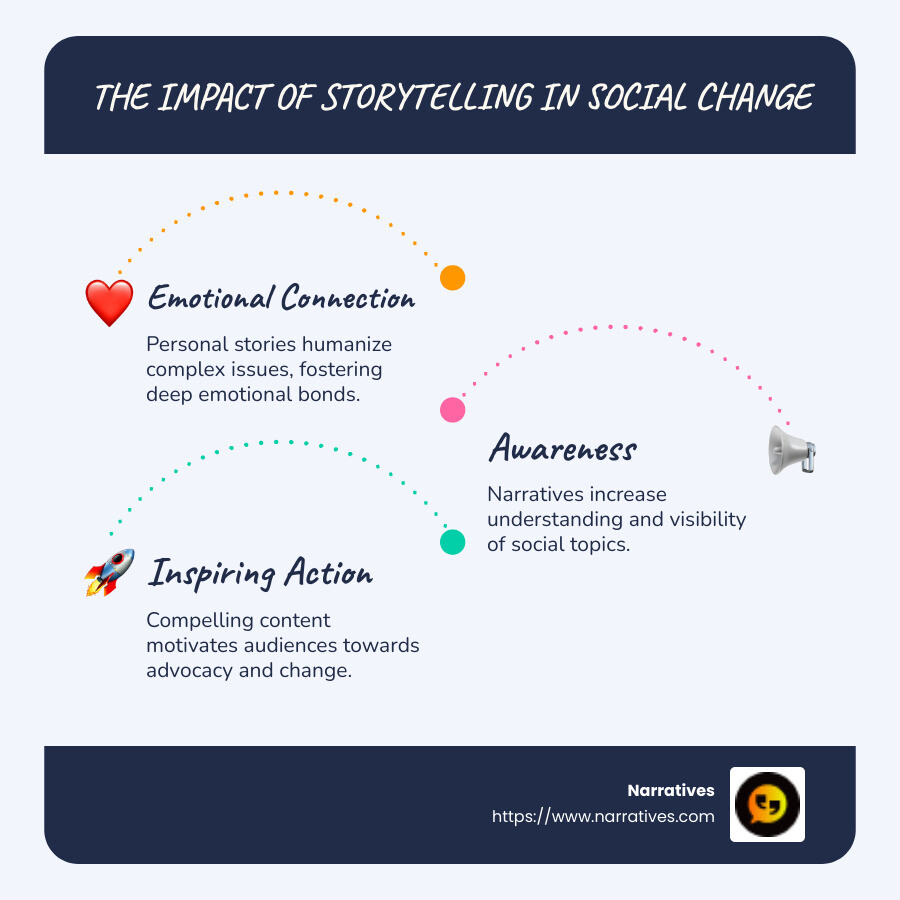
Storytelling Builds Empathy: Personal stories humanize complex issues and encourage emotional connections.
Fosters Awareness: Narratives can increase understanding of important social topics.
Inspires Action: Well-crafted content mobilizes people toward advocacy and change.
In today's world, storytelling is not just about entertaining or informing—it's about making a difference. Through the strategic use of content, individuals and organizations can amplify their mission and catalyze social change.
Organizations often grapple with delivering these impactful stories, their limited resources standing in the way. Yet, telling a compelling story that resonates is crucial for non-profits, social impact organizations, and driven brands committed to advocacy and justice. With storytelling, we can break through barriers, foster empathy, and inspire concrete social change.
Glossary for Content for social change:
The Role of Storytelling in Social Change
Storytelling is a powerful tool for driving social change. It connects people emotionally and builds empathy, which are essential for understanding and addressing complex social issues.
Emotional Connection
Humans are naturally drawn to stories. When we hear a story that moves us, we feel a bond with the characters and their experiences. This emotional connection can be a catalyst for change. When people feel connected to a cause, they are more likely to take action.
For example, the story of Mohamed Bouazizi, a Tunisian fruit vendor, sparked a revolution. His tragic act of self-immolation was not just a personal story but a symbol of widespread frustration and injustice. Social media amplified his story, creating a massive emotional response that fueled the Arab Spring.

Personal Stories
Personal stories humanize social issues. They put faces to statistics and make abstract problems feel real and urgent. These stories can reveal systemic injustices and lift the voices of marginalized communities.
Consider the impact of the civil rights movement in the U.S. Personal stories of struggle and triumph were shared through speeches, writings, and media, creating a powerful narrative that mobilized millions. These stories didn't just highlight injustice; they inspired a collective desire for change.
Building Empathy
Empathy is crucial for social change. When people empathize with others, they are more likely to support causes that address social issues. Storytelling fosters this empathy by allowing people to see the world from different perspectives.
Narratives, a content agency, focuses on creating stories that humanize news and connect communities. By highlighting the experiences of underrepresented groups, they build bridges of understanding and compassion.
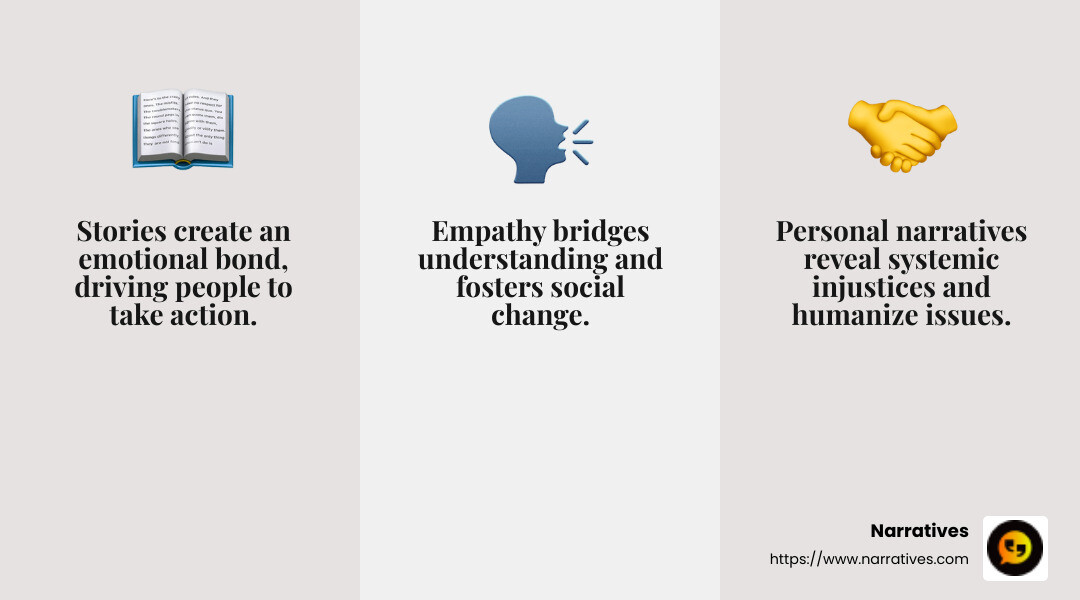
In summary, storytelling is more than just a method of communication. It's a way to connect emotionally, share personal experiences, and foster empathy. These elements are key to driving social change and creating a more inclusive society. Now, let's explore how different platforms and strategies can amplify these stories to reach wider audiences.
Content for Social Change: Strategies and Platforms
Social Media Power
Social media is a game-changer for driving social change. Platforms like Facebook, Twitter, and Instagram can reach millions with just a click. They are essential for spreading awareness and mobilizing action.
Take the #LikeAGirl campaign by Always. It used social media to challenge stereotypes and empower young girls. The campaign went viral, reaching millions and sparking important conversations about gender equality.
To succeed on social media, timing is crucial. Posting when your audience is most active increases engagement. For example, launching a campaign at 8:30 PM CST helped a Lyme Disease petition gain traction, as people were online and ready to share.
Multimedia Content
Multimedia content—like videos, images, and interactive media—grabs attention and creates an emotional connection. It's more memorable and shareable than text alone.
The UNICEF "Poo2Loo" campaign used videos to highlight sanitation issues in India. By combining visuals with compelling narratives, they engaged audiences and drove action toward improving sanitation.
Using a mix of colors, shapes, and motion can make your message stand out. Visual content is more likely to be shared, increasing your reach and impact.
Audience Engagement
Engaging your audience is key to successful content for social change. Personal stories and authentic narratives resonate more deeply, making people feel connected and motivated to act.
User-generated content can boost engagement. It adds authenticity and encourages participation. When people contribute their own stories or ideas, they become part of the movement.
Building partnerships with influencers and organizations can also improve engagement. Collaborating with trusted voices can expand your reach and lend credibility to your cause.
In summary, leveraging social media, creating impactful multimedia content, and fostering audience engagement are vital strategies for amplifying stories of social change. These elements help connect with wider audiences and inspire meaningful action. Now, let's dig into the ethical considerations in content creation.
Ethical Considerations in Content Creation
Creating content for social change comes with important ethical responsibilities. It's not just about telling a story but doing so with authenticity, respect, and privacy in mind.
Authenticity
Being authentic means presenting the truth. Your audience can tell if content feels fake or forced, and this can erode trust. When you share stories, make sure they are genuine and backed by facts. This is especially crucial when discussing sensitive topics like humanitarian crises or climate change. Using credible sources and thorough research is key to maintaining authenticity.
Respect
Respect is crucial when representing individuals and communities. Avoid stereotypes and prejudices. It's important to depict people as they are, not as clichés. For example, when sharing personal stories, always seek permission and ensure that the portrayal is fair and accurate. This approach not only builds trust but also fosters a respectful dialogue.
Privacy
Respecting privacy is non-negotiable, especially when dealing with sensitive subjects. Always get consent before sharing personal stories or images. Think about how sharing this content might impact the individuals involved. Privacy isn't just a legal issue—it's about treating people with dignity.
In content creation, ethical considerations are not just guidelines—they are essential practices that build trust and credibility. By focusing on authenticity, respect, and privacy, content creators can ensure that their work contributes positively to social change. Next, we'll explore how to measure the impact of content for social change.
Measuring the Impact of Content for Social Change
When creating content for social change, it's crucial to know if your efforts are making a difference. This is where Key Performance Indicators (KPIs) come into play. KPIs are measurable values that help you understand how well your content is achieving its goals.
Key Performance Indicators (KPIs)
KPIs can vary depending on the specific goals of your campaign. However, some common KPIs for social change content include:
Audience Growth: Are more people following or subscribing to your channels? A growing audience can indicate that your message is resonating.
Engagement Rates: Look at likes, shares, comments, and other interactions. High engagement means your content is sparking conversations and resonating with viewers.
Reach: How many people have seen your content? A wider reach can amplify your message and increase its potential impact.
Conversions: This could be signing a petition, donating to a cause, or volunteering. It's about turning awareness into action.
Audience Growth
Audience growth is a clear sign that your content is reaching more people. It's essential to track not just the numbers, but also who is joining your community. Are you attracting the right audience? Tools like Google Analytics or social media insights can help you understand your audience demographics and behaviors.
Engagement
Engagement goes beyond just numbers. It's about the quality of interactions. Are people commenting thoughtfully or sharing your content with personal notes? These interactions show that your audience is not just passive but actively involved.
To foster engagement, encourage conversations and ask for feedback. Listening to your audience can also provide valuable insights into how your message is being received and what might need adjustment.
Case Study: Pars Equality Center
A great example of measuring impact is the Pars Equality Center. They focus on building community among Persian-speaking immigrants. By tracking KPIs like community participation and service usage, they can see the real-world effects of their efforts. This data helps them understand their impact and refine their strategies to better serve their community.
By focusing on these metrics, you can gauge the effectiveness of your content for social change and make informed decisions. Next, we'll address some frequently asked questions about content for social change.
Frequently Asked Questions about Content for Social Change
What are the 4 types of social change?
Social change can take many forms, but it's often categorized into four main types:
Revolutionary Change: This is a rapid and fundamental change of society, often through social movements or revolutions. Think of the civil rights movement or the push for LGBTQIA+ rights, which led to significant shifts in societal norms and laws.
Evolutionary Change: This occurs gradually over time, like the slow but steady progress in gender equality. These changes might not be as dramatic but are equally impactful in the long run.
Reformative Change: This involves making changes within existing structures. For example, policy reforms that improve workers' rights fall under this category.
Transformative Change: This aims to completely change the way society functions, such as movements for environmental sustainability that seek to alter how we live and consume resources.
How can storytelling drive social change?
Storytelling is a powerful catalyst for social change because it humanizes complex issues. Here’s how it works:
Emotional Connection: Stories create empathy by connecting emotionally with the audience. When people relate to personal stories, they are more likely to care and take action.
Raising Awareness: By sharing personal experiences, storytelling can shine a light on systemic injustices and lift the voices of marginalized communities.
Inspiring Action: Stories can mobilize people to join movements, sign petitions, or advocate for change. They transform passive listeners into active participants.
A compelling example is the Always #LikeAGirl campaign, which used storytelling to challenge gender stereotypes and empower young girls.
What platforms are best for social change content?
Choosing the right platform is crucial for amplifying your message. Here are some effective options:
Social Media: Platforms like Facebook, Instagram, and Twitter are ideal for reaching a broad audience quickly. They allow for real-time interaction and sharing, making them perfect for viral campaigns.
Multimedia Content: Videos and podcasts can convey powerful stories that resonate emotionally. Platforms like YouTube and Spotify are great for reaching diverse audiences.
Blogs and Websites: These are excellent for in-depth storytelling and providing comprehensive information. They allow for detailed narratives and can link to additional resources.
Online Communities: Platforms like Reddit or specialized forums can help engage niche audiences interested in specific social issues.
By strategically using these platforms, you can effectively spread your message and drive content for social change. Next, we'll explore the ethical considerations in content creation for social good.
Conclusion
In the journey of driving content for social change, Narratives stands as a guide of impactful storytelling. We partner with non-profits and purpose-driven organizations to lift underrepresented voices. Our focus is on creating high-quality, emotionally resonant video and multimedia content that not only tells a story but inspires action, builds trust, and improves visibility.
Non-profit partnerships are at the heart of our mission. By collaborating with organizations that are making a difference, we amplify their stories and help them reach a wider audience. This partnership approach is crucial for ensuring that the voices of those who are often unheard are brought to the forefront.
Through community-driven storytelling, we aim to create a more empathetic and connected world. By sharing personal stories and experiences, we foster a sense of community and shared purpose. This approach not only highlights the struggles and triumphs of individuals but also encourages others to join the cause and contribute to meaningful change.
As we continue to steer the digital landscape, our commitment to ethical storytelling remains unwavering. We believe that every story has the power to make a difference, and with the right platform and strategy, we can catalyze social change.
For more insights into our approach and how we can help your organization tell its story, learn more about our services. Together, we can create content that not only informs but transforms.


.avif)