Charity Begins with Content: Marketing Strategies for Nonprofits

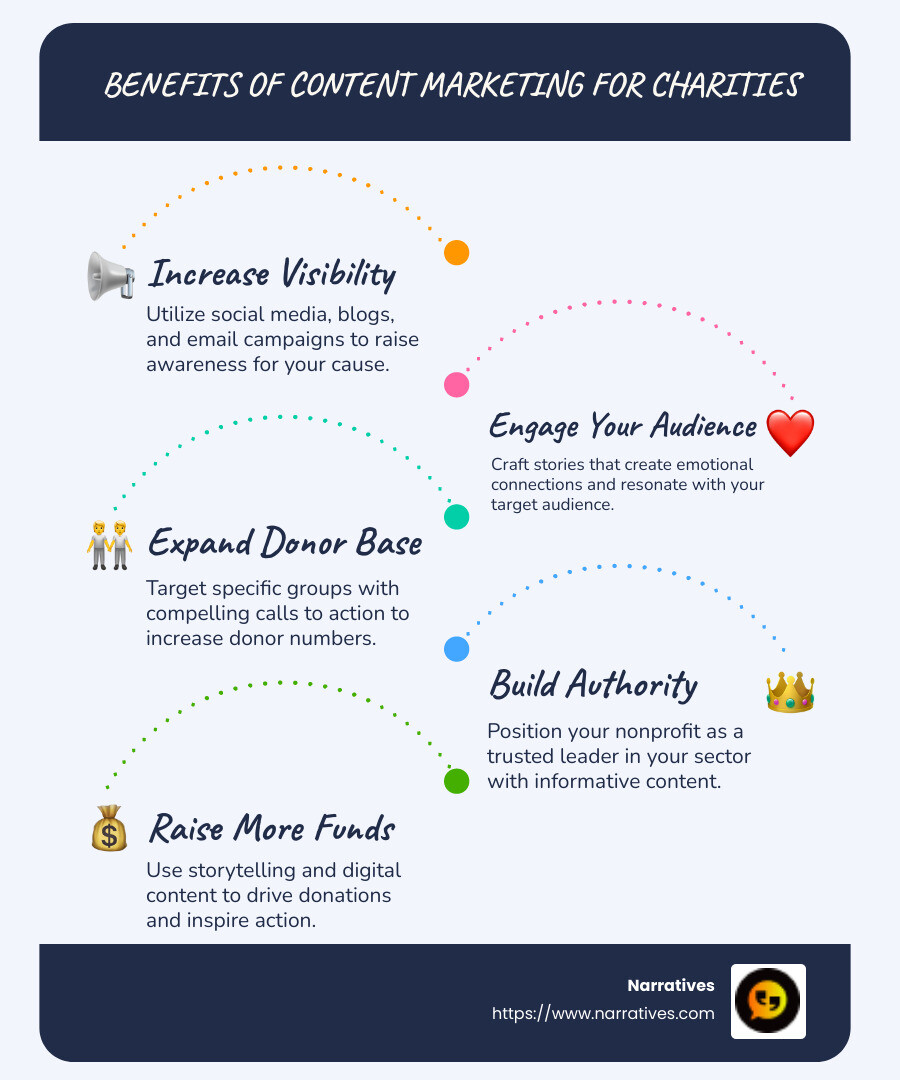
Content marketing for charities is a powerful way to amplify your mission and make a greater impact. By using strategic storytelling and digital content, nonprofits can connect with donors, volunteers, and communities in meaningful and lasting ways. This guide provides a quick overview for those looking to improve their nonprofit's reach and effectiveness through content marketing:
- Boost Visibility: Use social media, blogs, and email to increase awareness.
- Engage Your Audience: Tell stories that resonate and create emotional connections.
- Expand Donor Base: Target specific groups with compelling calls to action.
- Build Authority: Establish your nonprofit as a trusted voice in your sector.
- Raise More Funds: Use storytelling to drive donations and inspire action.
Nonprofits face several challenges, such as scaling concerns, limited budgets, and donor hesitance to cover operational costs. Despite these problems, with the right content strategy, your organization can attract support and drive change.
In the sections to come, we’ll dive into strategies, content types, and channels that are most effective for nonprofit success in the digital landscape. But for now, just remember: it's more than sharing stories—it's about building a community.
Common content marketing for charities vocab:
Understanding Content Marketing for Charities
Content marketing for charities is about more than just sharing your mission. It's about telling your story in a way that resonates and inspires action. In this section, we'll explore the key elements that make content marketing an essential tool for nonprofits.
Nonprofit Marketing
Nonprofit marketing is all about spreading the word about your cause. It's not just about asking for donations. It's about creating awareness and building relationships with your audience. This can include everything from creating logos and slogans to developing media campaigns that highlight your mission.
Nonprofits often have smaller budgets than for-profit companies, but they have a powerful asset: a clear mission. This mission can be a compelling story that draws people in and makes them want to help.
Storytelling
Storytelling is at the heart of effective content marketing for charities. A good story can create an emotional connection with your audience. It's not just about what you do, but why you do it.
For example, charity: water uses storytelling to make people feel the urgency of the water crisis in developing countries. Instead of only using statistics, they share personal stories and images that help people understand the real impact of their work.
"Stories are much more memorable than statistics or simple anecdotes." - Jennifer Aaker, McKinsey
Digital Marketing
Digital marketing is a powerful tool for nonprofits. It allows you to reach a wider audience and engage with them in a more personal way. This includes using social media, email, and websites to share your stories and connect with supporters.
With digital marketing, you can create targeted campaigns that speak directly to your audience's interests and needs. This can help you build a community of supporters who are passionate about your cause.

By combining nonprofit marketing, storytelling, and digital marketing, charities can create powerful campaigns that drive change and make a real impact. In the next section, we'll dive into key strategies for effective content marketing that can help your nonprofit succeed.
Key Strategies for Effective Content Marketing
Creating an effective content marketing strategy for charities involves careful planning and execution. Let's explore essential strategies that can help your nonprofit succeed: building an editorial calendar, increasing brand awareness, and fostering engagement.
Editorial Calendar
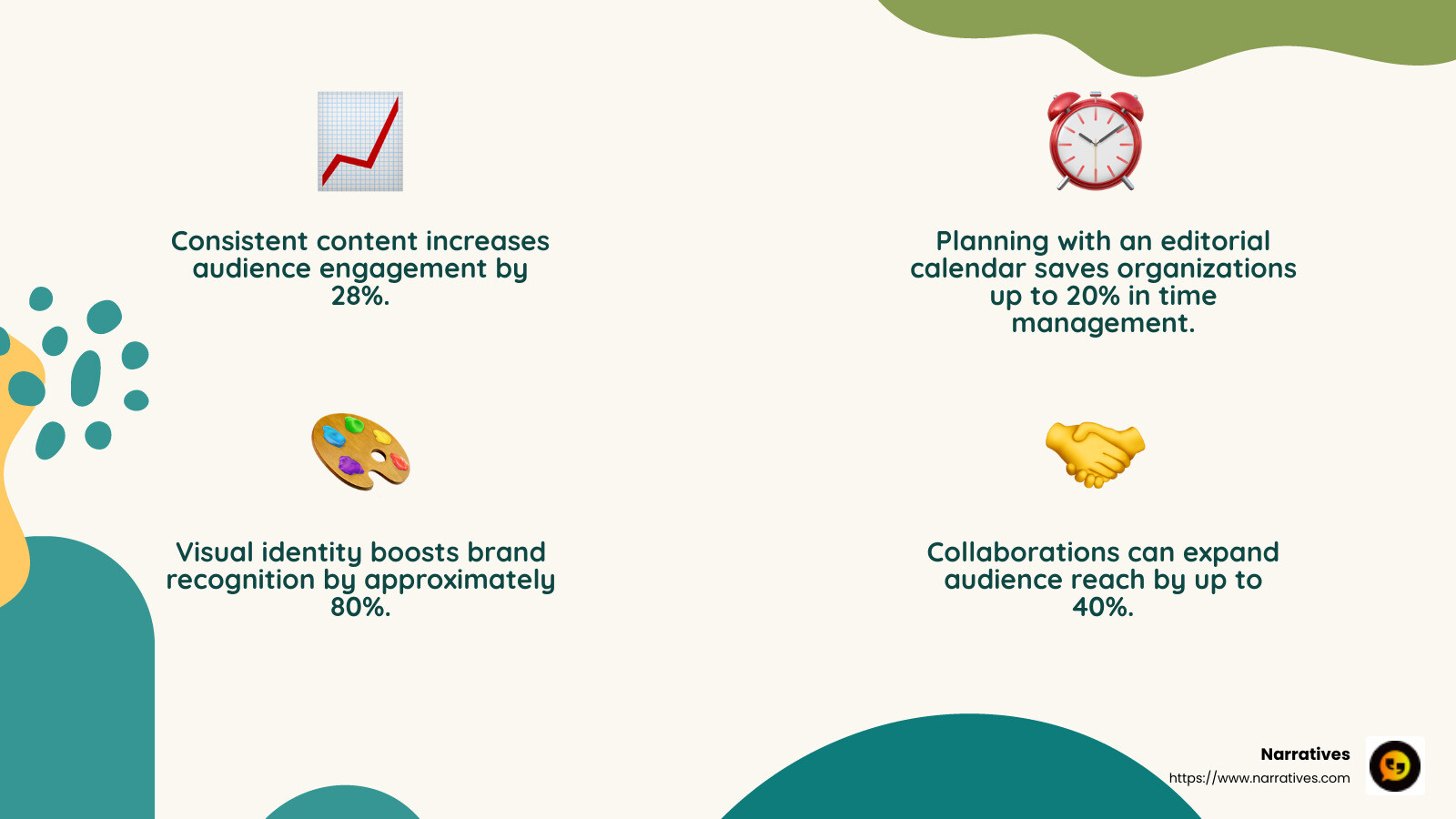
An editorial calendar is a roadmap for your content marketing efforts. It helps you plan, organize, and schedule your content in advance, ensuring a consistent flow of communication. Think of it as your content's game plan.
Why is it important?
- Consistency: Regular content keeps your audience engaged and informed.
- Efficiency: Planning ahead saves time and resources.
- Flexibility: Allows for timely adjustments based on current events or new opportunities.
Creating an editorial calendar might seem daunting at first, but it can be as simple as a spreadsheet or a more sophisticated tool like Trello or Asana. The key is to outline your content topics, formats, publication dates, and responsible team members.
Brand Awareness
Building brand awareness is crucial for any nonprofit. It's about making your cause known and recognizable. Effective content marketing for charities can significantly boost your visibility.
How to increase brand awareness?
- Consistent Messaging: Use your nonprofit's mission and values in every piece of content.
- Visual Identity: Develop a recognizable logo and color scheme.
- Partnerships: Collaborate with other organizations or influencers to reach new audiences.
A strong brand presence can help your nonprofit stand out in a crowded field. Your brand is more than a logo—it's the story you tell and the emotions you evoke.
Engagement
Engagement is about creating meaningful interactions with your audience. It's not just about views or clicks; it's about building relationships.
Strategies to boost engagement:
- Interactive Content: Use polls, quizzes, or live Q&A sessions to involve your audience.
- Storytelling: Share compelling stories that resonate with your supporters.
- Feedback: Encourage comments and respond to them. Show that you value your audience's input.
Engagement is a two-way street. By actively participating in conversations and showing appreciation, you foster a sense of community around your cause.
Incorporating these strategies into your content marketing plan will help your nonprofit not just reach, but truly connect with its audience. Next, we'll explore the top content types that can further improve your nonprofit's engagement.
Top Content Types for Charities
When it comes to content marketing for charities, selecting the right content types is key to reaching and engaging your audience. Let's explore some of the most effective content types that can lift your nonprofit's message.
SEO Content
SEO content is about crafting web pages and blog posts that rank well on search engines. This increases your visibility to people searching for topics related to your cause.
Key points to consider:
- Keyword Research: Identify niche keywords with significant traffic but less competition.
- Quality Content: Create informative and engaging articles that answer common questions.
- On-page SEO: Use headings, meta descriptions, and alt text for images to optimize your pages.
A well-executed SEO strategy can attract potential donors and volunteers who are actively seeking information about your cause.
Social Media
Social media platforms offer a dynamic way to connect with your audience. They are places where you can share updates, stories, and engage directly with supporters.
Tips for social media success:
- Regular Posting: Keep content fresh and relevant by posting consistently.
- Engagement: Respond to comments and messages to build relationships.
- Visuals: Use images and videos to capture attention quickly.
Platforms like Facebook, Twitter, and Instagram are great for building a community around your mission and spreading the word about your nonprofit.
Video Content
Video content is a powerful tool for storytelling. It brings your nonprofit's work to life and can evoke strong emotions.
Ways to use video effectively:
- Impact Stories: Showcase the real-life impact of your work through personal stories.
- Behind-the-Scenes: Give a glimpse into your operations and introduce your team.
- Thank You Messages: Create heartfelt videos to thank donors and volunteers.
Videos can be shared across social media, embedded in emails, or featured on your website.
Podcasts
Podcasts offer an engaging way to dive deeper into topics related to your cause. They allow listeners to connect with your mission on a more personal level.
Podcasting tips:
- Guest Speakers: Invite experts or beneficiaries to share their insights and experiences.
- Regular Episodes: Keep a consistent schedule to maintain listener interest.
- Engaging Content: Focus on storytelling and discussions that resonate with your audience.
Podcasts can reach new audiences and provide valuable content to your existing supporters.
Email Marketing
Email marketing is a direct way to communicate with your supporters. It allows for personalized messages and targeted campaigns.
Effective email strategies:
- Segmentation: Tailor content based on subscriber interests and past interactions.
- Compelling Subject Lines: Capture attention with intriguing and relevant subject lines.
- Call-to-Action: Encourage donations, event sign-ups, or volunteer participation.
Emails keep your audience informed and engaged, driving action and support for your cause.
By leveraging these content types, your nonprofit can create a well-rounded and impactful content marketing strategy. Next, we'll explore how to amplify your reach through digital channels.
Leveraging Digital Channels for Maximum Impact
Effectively using various online channels is crucial for nonprofits to maximize their impact. Let's explore how social media platforms, email, and website content can be harnessed to boost your charity's visibility and engagement.
Social Media Platforms
Social media is a powerful tool for content marketing for charities. It allows you to connect with a wide audience and share your story in a compelling way.
Key strategies for social media success:
Choose the Right Platforms: Focus on platforms where your audience is most active. For example, Instagram and TikTok are popular among younger demographics, while Facebook and LinkedIn might reach an older audience.
Engage with Followers: Respond to comments and messages promptly. Engagement builds trust and fosters a sense of community.
Use Visuals: Share high-quality images and videos. Visual content is more likely to capture attention and encourage shares.
Leverage Paid Advertising: Consider allocating a budget for social media ads. This can significantly increase your reach and engagement beyond organic posts.
Email Marketing
Email remains a highly effective channel for direct communication with your supporters. It allows for personalized messaging and can drive significant action.
Effective email marketing tips:
Segment Your Audience: Group subscribers based on their interests and past interactions. This ensures that your content is relevant and engaging for each recipient.
Craft Compelling Subject Lines: A strong subject line increases open rates. Make it intriguing and relevant to your audience's interests.
Include Clear Calls-to-Action: Encourage readers to take specific actions, such as donating, signing up for events, or volunteering.
Emails provide a direct line to your supporters, keeping them informed and engaged with your cause.
Website Content
Your website is the central hub for your nonprofit's online presence. It's where potential donors and volunteers go to learn more about your mission.
Optimizing website content:
Ensure Easy Navigation: Make it simple for visitors to find information about your programs, how to donate, and ways to get involved.
Highlight Impact Stories: Showcase the real-world impact of your work through stories and testimonials. This can inspire visitors to support your cause.
Use SEO Best Practices: Implement SEO strategies to improve your site's visibility in search engine results, drawing more traffic to your site.
By effectively using these digital channels, your nonprofit can amplify its message and drive meaningful engagement. In the next section, we'll look at how to measure the success of your content marketing efforts.
Measuring Success in Content Marketing
To ensure your nonprofit's content marketing efforts are effective, measure success through Key Performance Indicators (KPIs), donor retention, and engagement metrics. These metrics will help you understand what's working and where improvements are needed.
Key Performance Indicators (KPIs)
KPIs are specific, measurable values that show how effectively your charity is achieving its objectives. Here are some crucial KPIs for content marketing:
Donation Revenue: Track the amount of money raised over a specific period. This helps assess the financial impact of your campaigns.
Social Media Engagement: Measure likes, shares, comments, and followers. High engagement indicates that your content resonates with your audience.
Website Traffic: Monitor the number of visitors to your website. Increased traffic can signal successful content marketing strategies.
Email Open and Click Rates: Keep an eye on how many recipients open your emails and click on links. This shows how engaging your email content is.
Donor Retention
Donor retention is a critical metric for long-term success. It indicates how well you're maintaining relationships with existing donors.
Retention Rate: Calculate the percentage of donors who continue to give over time. A high retention rate means you're effectively nurturing donor relationships.
Feedback and Surveys: Use surveys to gather feedback from donors about their experience. This can provide insights into what keeps them engaged and supportive.
Engagement Metrics
Engagement metrics help you understand how your audience interacts with your content across different platforms.
Event Attendance and Participation: Track the number of attendees at your events. High participation rates often reflect successful promotion and engaging content.
Volunteer Engagement: Measure the number of volunteers and their level of involvement. Engaged volunteers are more likely to become advocates for your cause.
Content Shares: Monitor how often your content is shared on social media. Sharing indicates that your audience finds your content valuable and worth spreading.
By focusing on these metrics, your nonprofit can make data-driven decisions to optimize content marketing strategies. This not only boosts effectiveness but also strengthens connections with your audience, driving support for your mission. In the next section, we'll address common questions about content marketing for charities.
Frequently Asked Questions about Content Marketing for Charities
What is content marketing for charities?
Content marketing for charities involves creating and sharing valuable content to attract, engage, and retain supporters. Unlike traditional marketing, it focuses on storytelling and building relationships rather than direct sales. The goal is to communicate your mission, inspire action, and build a community around your cause.
Charities use various content types, such as blog posts, videos, and social media updates, to share their stories and impact. By doing so, they can reach a wider audience and encourage more people to support their mission.
How can charities increase brand awareness through content?
Increasing brand awareness is crucial for charities to gain support and recognition. Here's how content marketing can help:
Storytelling: Share compelling stories about the people or causes you support. This helps create an emotional connection with your audience.
Consistent Messaging: Ensure that your content consistently reflects your mission and values. This strengthens your brand identity and makes it easier for people to remember and recognize your charity.
Visual Content: Use images and videos to capture attention and convey your message quickly. Visual content is more likely to be shared, increasing your reach.
Social Media: Leverage platforms like Facebook, Instagram, and Twitter to reach a larger audience. Engage with your followers by responding to comments and sharing user-generated content.
By focusing on these strategies, charities can effectively increase their brand awareness and attract more supporters.
What are the best content types for nonprofit engagement?
Different content types can help nonprofits engage with their audience in various ways. Here are some of the most effective ones:
SEO Content: Optimize your website and blog posts for search engines to increase visibility. Use keywords related to your cause to attract the right audience.
Social Media: Short, engaging posts can keep your followers updated and encourage interaction. Use platforms like Instagram and Twitter to share quick updates and visuals.
Video Content: Videos can tell powerful stories and showcase your impact in a way that resonates with viewers. Consider creating short documentaries or testimonials from those you've helped.
Email Marketing: Regular newsletters can keep your supporters informed and engaged. Share updates, success stories, and upcoming events to maintain interest.
By using a mix of these content types, nonprofits can effectively engage their audience and encourage ongoing support for their mission.
Conclusion
In content marketing for charities, Narratives stands out as a guide for those who wish to tell their stories in a way that truly resonates. Our focus on digital storytelling helps nonprofits amplify their voices, ensuring their messages reach far and wide.
By leveraging community-driven storytelling, we help organizations create content that not only informs but also inspires. This approach builds trust and fosters a community around the cause, which is essential for long-term engagement and impact.
At Narratives, we believe in the power of stories to change the world. Our commitment to elevating underrepresented voices through high-quality video and multimedia content sets us apart. We don't just tell stories; we create connections that inspire action and drive change.
Explore how we can partner with your organization to make your stories heard. Find more about our digital storytelling services and how we can help you engage your community effectively.
In conclusion, content marketing is not just a tool for charities; it's a powerful strategy to build relationships, increase visibility, and make a lasting impact. By embracing storytelling and community engagement, nonprofits can achieve their goals and create a better world.


.avif)