From Concept to Creation: Top Creative Storytelling Prompts

Creative storytelling ideas are the heartbeat of effective communication, especially for non-profit marketing leaders and story-driven brands committed to advocacy, DEI, or social justice. These ideas help transform important messages into narratives that resonate with diverse audiences, creating emotional connections and inspiring action.
Here are some quick ideas to consider:
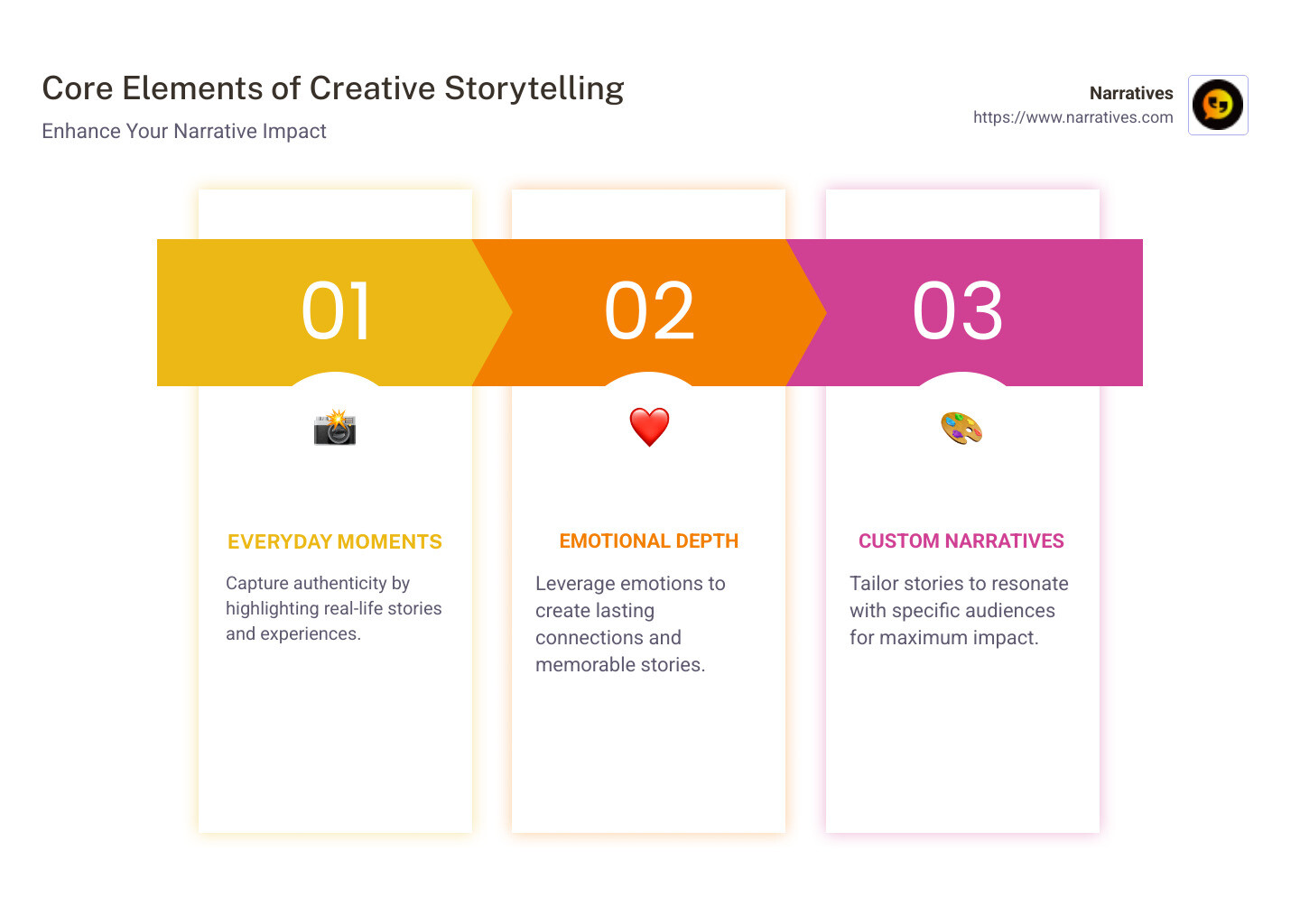
- Everyday Moments: Capture authenticity in daily life.
- Emotional Depth: Leverage emotions to anchor stories.
- Custom Narratives: Customize stories for different audience groups.
Storytelling is more than just sharing facts. It's about crafting messages that genuinely engage hearts and minds. Whether you're weaving narratives for community-focused stories or global causes, the right storytelling ideas can amplify your mission and improve your impact.
We'll explore various storytelling techniques, the art of capturing everyday moments, and delving deep into the power of emotion in narratives. This will empower you with the tools needed to craft compelling stories that truly connect with your audience.
Quick Creative storytelling ideas terms:
Capturing Everyday Moments
Capturing everyday moments is a powerful way to generate creative storytelling ideas. It’s about finding the extraordinary in the ordinary. Matthew Dicks, a celebrated storyteller, offers a simple yet effective method to do this with his concept called "Homework For Life."
Homework For Life
Matthew Dicks suggests that every day holds a story worth telling. His method, Homework For Life, involves writing down one "story-worthy" moment from each day. The challenge is to do this consistently, capturing the essence of daily experiences.
- Keep it Short: Limit yourself to 3 minutes and 3 sentences. This forces you to focus on the core of the story.
- Consistency is Key: By making this a daily habit, you’ll start to see patterns and themes emerge over time.
This practice turns everyday observations into a treasure trove of story ideas. Over a year, you could have hundreds of stories to draw from, each with its own unique angle.
Daily Stories
Everyday moments often go unnoticed, but they are rich with storytelling potential. Whether it's a conversation overheard on a bus or a simple act of kindness, these moments can become the foundation of compelling narratives.
By documenting these daily stories, you not only preserve memories but also create a repository of ideas to draw from. This approach is particularly useful for non-profits and brands that thrive on authentic storytelling.

Why It Works
The power of this method lies in its simplicity and accessibility. Anyone can do it. You don’t need a dramatic event to tell a great story. Sometimes, the smallest moments hold the most universal truths.
Incorporating this habit into your routine can transform the way you perceive the world around you. It encourages mindfulness and a deeper appreciation for the nuances of daily life. Plus, it provides a steady stream of fresh content ideas for storytellers in any field.
By embracing the Homework For Life approach, you open up a continuous flow of creative storytelling ideas that can enrich your narratives and engage your audience in meaningful ways.
The Power of Emotion in Storytelling
Emotion is the secret ingredient that transforms ordinary stories into unforgettable ones. Kendrick Lamar, a masterful storyteller in the music world, knows this well. His approach shows how powerful emotions can be in crafting compelling narratives.
Kendrick Lamar's Approach
Kendrick Lamar finds his best ideas not in grandiose events, but in everyday life—traveling, talking to a child, or walking in his neighborhood. What sets him apart is his ability to tie each story back to a single emotion. This emotional connection acts as a powerful memory trigger, allowing him to recall and recreate the feelings that inspired his stories.
The Science Behind Emotion and Memory
Emotions do more than just improve a story; they also improve our memory of it. According to a Johns Hopkins study, emotional arousal releases a hormone that primes nerve cells to remember events by increasing their chemical sensitivity. This means that when you experience a strong emotion, your brain is more likely to remember the event vividly.
How to Use Emotion in Your Storytelling
Identify the Emotion: When capturing a story idea, think about the emotion you felt in that moment. Was it joy, anger, empathy? Write it down alongside the event.
Relive the Moment: When you revisit your notes, focus on the emotion. This will help you transport yourself back to that moment, making your storytelling more authentic and engaging.
Connect with Your Audience: Emotions are universal. By tapping into them, your stories can resonate on a deeper level with your audience, creating a lasting impact.
Why It Works
Emotions add depth and relatability to stories. They bridge the gap between the storyteller and the audience, creating a shared experience. By incorporating emotion into your storytelling, you not only improve memory but also forge a stronger connection with your audience.
This method is not limited to music or spoken word; it can be applied to any form of storytelling, including writing, film, and even marketing. By focusing on the emotional core of your stories, you can create narratives that are both memorable and impactful.
Incorporating emotion into your storytelling process, as Kendrick Lamar does, can transform how you engage with your audience. It’s about more than just telling a story; it's about making your audience feel it.
Creative Storytelling Ideas for Different Audiences
Crafting stories that captivate different audiences requires understanding their unique interests and needs. Whether you're engaging students, kids, high schoolers, adults, or teachers, tailoring your creative storytelling ideas can make all the difference.
Students
For students, storytelling can be a powerful educational tool. It not only makes learning fun but also fosters creativity and critical thinking. Here are some ideas:
Story Cubes: Use dice with images to prompt students to create impromptu stories. This encourages spontaneous creativity and quick thinking.
Historical Diaries: Have students write diary entries from the perspective of historical figures. This combines storytelling with history lessons.
Science Fiction Challenges: Encourage students to imagine the future of technology or environment and write stories around these themes. This fosters both creativity and interest in STEM subjects.
Kids
When it comes to kids, stories need to be lively and engaging to capture their short attention spans. Here are a few approaches:
Interactive Storytelling: Use props or puppets to make stories come alive. Kids love to be part of the action, and interactive elements can keep them engaged.
Picture Stories: Encourage kids to draw their stories. This not only taps into their creativity but also helps them express ideas visually.
Trip Quests: Frame stories as quests where kids can choose the direction of the story. This makes them active participants in the narrative.
High School
High school students often enjoy stories that challenge their perspectives and encourage deeper thinking. Consider these ideas:
Debate through Stories: Present controversial topics through narratives and have students argue different sides. This helps develop critical thinking and empathy.
Modern Mythology: Encourage students to write modern versions of classic myths. This allows them to explore timeless themes in a contemporary context.
Personal Narratives: Have students write about pivotal moments in their lives. This form of storytelling can be therapeutic and enlightening.
Adults
For adults, stories can be a means of reflection or escape. Here are some ideas to consider:
Memoir Writing: Encourage adults to write about their life experiences. This can be a reflective practice that helps them see their lives from a new perspective.
Genre Exploration: Push adults to try writing in different genres—mystery, romance, sci-fi. This can expand their creative horizons.
Book Clubs with a Twist: Form book clubs where members are encouraged to write alternative endings or character backstories. This can deepen their engagement with the material.
Teachers
Teachers can use storytelling to improve their teaching methods and connect with students:
Storytelling as a Teaching Tool: Use stories to explain complex concepts. Narratives can make abstract ideas more relatable and easier to understand.
Collaborative Story Projects: Have students work together to create stories. This encourages teamwork and communication skills.
Cultural Stories: Introduce stories from different cultures to broaden students' worldviews and promote inclusivity.
By tailoring your creative storytelling ideas to the specific audience, you can create engaging and meaningful experiences that resonate on a personal level. Whether you're in a classroom or a community center, the right story can inspire and connect.
10 Best Creative Storytelling Prompts
Great stories often start with a simple idea. Here are 10 creative storytelling ideas to spark your imagination across various formats:
Short Story Ideas
A Small Community Resists Change: Imagine a tiny town uniting to fend off a corporation's plans. It's a story of unity and resistance.
Haunted Lake House Investigation: A group of friends uncovers eerie secrets at a lake house. Perfect for mystery lovers.
Lost Voice, Found Purpose: A character loses their voice and starts on a journey to refind it. A tale of personal growth.
Novel Ideas
Circus Runaway: A girl escapes to join the circus just before graduating high school. This novel explores themes of freedom and self-findy.
Dragon's Abandoned Eggs: A village's life changes when a dragon leaves its eggs nearby. A fantasy tale with a twist.
Cursed Home Revelation: An elderly man moves into a home cursed by its previous inhabitants. A gripping supernatural mystery.
Screenplay Ideas
Protest Gone Wrong: A character is captured while protesting a cause. This screenplay digs into themes of activism and consequence.
Escape from an Action Movie: A character realizes they're in an action movie and tries to escape. A meta-comedy with thrills.
TV Show Ideas
Mockumentary in a Fantasy World: Werewolves and witches in a fantasy world are fed up with their lives. A humorous take on mythical creatures.
Hospital on Mars: A science fiction drama set in a Martian hospital. Explore futuristic medicine and human struggles.
Video Game Ideas
Botanist's Greenhouse Escape: Players steer a labyrinthine greenhouse to escape. A puzzle game with survival elements.
Engineer’s Redemption: Fix a life-threatening error in a structure you designed. A game of strategy and quick thinking.
These prompts are just the beginning. Whether you're crafting a short story, novel, screenplay, TV show, or video game, these ideas can help you create compelling narratives that captivate your audience.
Frequently Asked Questions about Creative Storytelling Ideas
What are some creative storytelling ideas for students?
Students can explore storytelling through a variety of engaging and imaginative ideas. Here are a few suggestions:
Personal Journals: Encourage students to write daily journal entries about their lives. This practice, inspired by Matthew Dicks' "Homework for Life," helps them find stories in everyday moments.
Cultural Celebrations: Have students share stories about their cultural backgrounds and holiday traditions. This fosters understanding and appreciation of diversity among classmates.
Change Tales: Ask students to write before-and-after stories about personal growth or overcoming challenges. This helps them reflect on their experiences and learn from them.
How can teachers use storytelling in the classroom?
Storytelling in the classroom can be a powerful tool for learning and engagement. Here’s how teachers can incorporate it:
Story Circles: Organize story circles where students share personal stories on a given theme. This promotes listening skills and empathy.
Creative Contributions: Highlight students' artistic or creative works by having them present stories behind their projects. This encourages creativity and confidence.
Cross-Generational Dialogues: Invite older community members to share stories with students, fostering connections and learning across generations.
What are some examples of storytelling activities?
There are numerous activities that can make storytelling fun and interactive:
Story Spoons: Use simple props like story spoons or stick puppets to help young kids create and tell stories. This activity improves their imagination and storytelling skills.
Environmental Initiatives: Create stories around environmental projects students are involved in, emphasizing the importance of sustainability and social responsibility.
'A Day of Service' Stories: Have students participate in community service and then share stories about their experiences. This promotes civic engagement and reflection.
These activities not only make storytelling enjoyable but also help develop essential skills like creativity, communication, and critical thinking.
Conclusion
At Narratives, we believe storytelling is a powerful tool for change. Our mission is to lift underrepresented voices and amplify the impact of non-profits through compelling stories. By focusing on non-profit storytelling, we help organizations connect with their audiences on a deeper level, inspiring action and fostering empathy.
Social impact storytelling is not just about sharing facts; it's about creating emotional connections that drive change. Stories have the power to humanize issues, making them relatable and urgent. This is why we partner with purpose-driven organizations to craft video and multimedia content that resonates emotionally, builds trust, and increases visibility.
By focusing on these impactful narratives, we aim to create a ripple effect of positive change. We help non-profits not only tell their stories but also engage hearts and minds. This approach is essential for building strong communities and promoting social justice.
To learn more about how we can help your organization harness the power of storytelling, visit our service page and find how our expertise can lift your mission. Together, we can inspire action and make a lasting impact.


.avif)