The Power of Collaboration: Creative Storytelling Partnerships Explained

Creative storytelling partnerships are a blend of imagination and collaboration, bringing together diverse talents to craft compelling narratives that drive meaningful change. These partnerships are crucial for organizations looking to amplify their mission and connect deeply with their audience. Here's a quick look at why they matter:
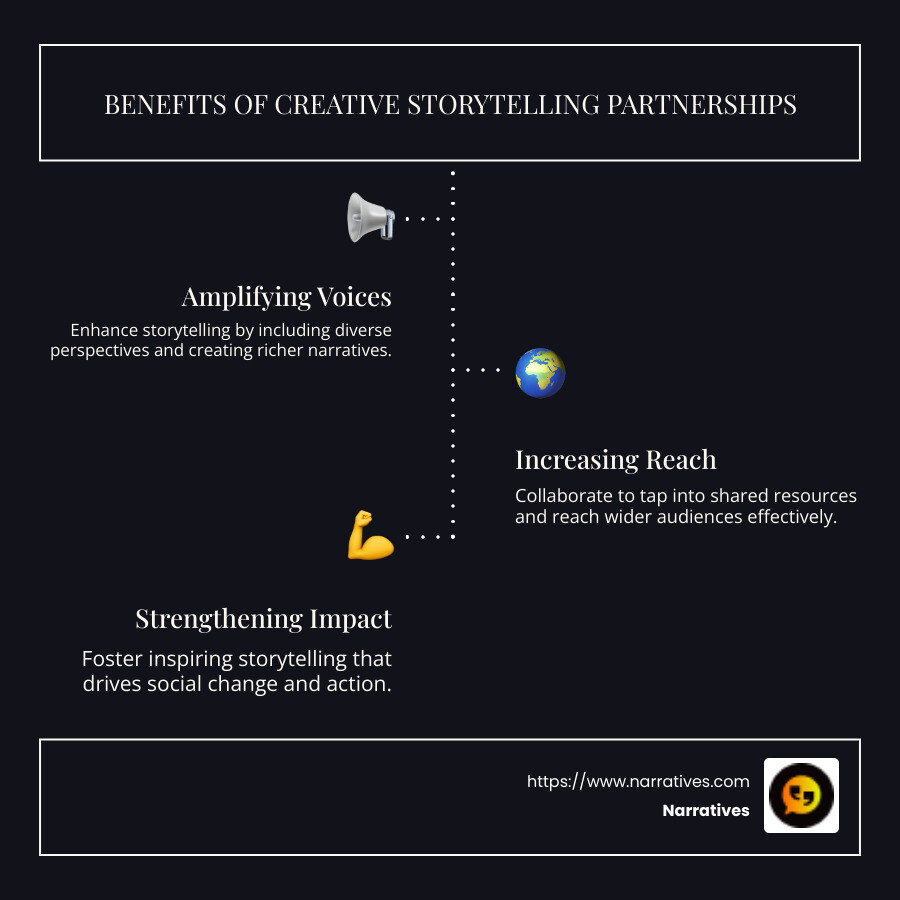
- Amplify Voices: Partnerships improve storytelling by including diverse perspectives, giving a fuller, richer narrative.
- Increase Reach: By collaborating, organizations can reach wider audiences through shared resources.
- Strengthen Impact: Effective partnerships can lead to storytelling that not only informs but also inspires action and drives social change.
Creative storytelling partnerships offer a dynamic way for non-profits and social enterprises to communicate their stories in a way that's both engaging and impactful. By joining forces, they can leverage each other's strengths, whether it's creative expertise, technical know-how, or a deep understanding of social issues.
Consider innovative collaborations like those between Cincinnati to the World and the Civic Imagination Incubator. These partnerships help redefine cultural narratives, such as those about Appalachia, by integrating various forms of media to challenge stereotypes and share authentic voices.
“One cannot change the world unless one can imagine what a better world might look like,” highlights the ethos behind creative storytelling partnerships (Elon Justice, Civic Imagination Incubator).
Through strategic alliances, organizations not only improve their storytelling but also amplify their impact in advocating for social justice, diversity, equity, and inclusion.
Quick Creative storytelling partnerships definitions:
Uniting Creativity and Strategy
Bringing creativity and strategy together is like mixing two powerful ingredients to create something extraordinary. When organizations successfully unite these elements, they can open up new levels of innovation and achieve their strategic goals more effectively.
1. Creativity Meets Business Strategy
In creative storytelling partnerships, it's not just about having great ideas. It's about aligning those ideas with a solid business strategy. This means understanding how creative efforts can support broader organizational goals.
For example, companies like NBCU's Creative Partnerships team excel in crafting custom creative solutions that meet clients' needs. They don't just create engaging content; they ensure that this content aligns with the client's strategic objectives, driving both engagement and results.
2. Innovation Through Collaboration
When creativity and strategy are combined, innovation flourishes. Think of the partnerships between organizations like the Center for Story-based Strategy and grassroots groups on the frontlines. These collaborations foster radical imagination, leading to new ways of thinking and acting.
By working together, these partners can develop strategic interventions that challenge systemic assumptions and inspire change. They create practice spaces where strategic insights and prototypes can emerge, pushing the boundaries of what's possible.
3. Strategic Goals with a Creative Twist
Creative storytelling partnerships are not just about telling stories; they are about achieving strategic goals with a creative twist. This involves crafting narratives that resonate with audiences on a personal level while also advancing organizational objectives.
Consider the example of LEGO's collaboration with Star Wars. This partnership not only produced entertaining content but also reinforced LEGO's brand as a tool for creativity and imagination. By aligning their creative efforts with strategic goals, LEGO successfully engaged a broad audience and strengthened their market presence.

4. The Power of Strategic Storytelling
In today's competitive landscape, storytelling is a powerful tool for achieving strategic goals. Brands like Google and Disney have mastered the art of using narratives to connect with consumers on a personal level, building loyalty that extends beyond mere transactions.
By crafting stories that reflect values and evoke emotions, these brands create deeper connections with their audiences. This approach helps build trust, strengthen brand loyalty, and humanize the brand, making it more relatable and memorable.
In conclusion, uniting creativity and strategy is essential for organizations looking to make a lasting impact. By combining these elements, they can achieve their strategic goals while also inspiring and engaging their audiences in meaningful ways.
Next, we'll explore the role of creative storytelling partnerships in building capacity for social change.
Creative Storytelling Partnerships
Creative storytelling partnerships bring together diverse talents and perspectives to create compelling narratives. These partnerships are about more than just telling stories; they're about crafting experiences that resonate with audiences and drive meaningful engagement.
Successful Collaborations:
One standout example of a successful creative storytelling partnership is the collaboration between LEGO and Star Wars. By merging LEGO's creativity with Star Wars' iconic storytelling, they created a series of short films, games, and product lines that captivated fans of both brands. This partnership not only entertained audiences but also reinforced LEGO's identity as a tool for creativity and imagination.
Another example is NBCU's Creative Partnerships team, which develops custom creative solutions for brands. They align creative content with clients' strategic objectives, ensuring that the stories they tell are not only engaging but also effective in achieving business goals.
Innovative Projects:
Innovative projects often arise when creative minds collaborate. The Civic Imagination Incubator, for instance, brings together creatives from various fields to develop impactful story worlds and media projects. These projects engage audiences through transmedia storytelling, which spans multiple and diverse media formats.
The Incubator's approach allows participants to experiment with new ideas and strategies, fostering innovation and collaboration. By providing a supportive environment, the Incubator helps creatives overcome obstacles and develop sustainable projects that push the boundaries of storytelling.
Industry Examples:
In the digital marketing landscape, brands like Airbnb have effectively used storytelling to build community and trust. Airbnb's "stories" webpage showcases travel experiences from around the world, highlighting the connections that guests and hosts make through the platform. This approach transforms Airbnb from a mere accommodation service into a community-driven experience, resonating deeply with its audience.
Charmin, a toilet-paper brand, uses humor in its storytelling to normalize a taboo subject. Through campaigns like #EnjoytheGo, Charmin makes the bathroom experience relatable and even enjoyable, showcasing the power of storytelling to change perceptions and engage audiences.
Creative storytelling partnerships are a powerful way to bring stories to life. By combining creativity with strategic goals, these partnerships create narratives that captivate audiences and drive meaningful impact.
Next, we'll explore how these partnerships build capacity for social change.
Building Capacity for Social Change
Creative storytelling partnerships are not just about crafting narratives; they are also powerful tools for driving social change. Organizations like the Center for Story-based Strategy (CSS) exemplify how storytelling can empower grassroots movements and build narrative power.
Center for Story-based Strategy:
At CSS, the focus is on integrating story and lived experience into social change strategies. They believe that change happens at the "speed of trust," and therefore, they work closely with their partners to foster trust and collaboration. CSS offers methodologies and processes that help organizations build skills and instincts for developing strategic interventions. These interventions combine words and actions to move narratives forward.
One of the key aspects of CSS's work is their participatory process, which helps groups assess their work in the context of the current narrative landscape. This process leads to a deeper understanding of how stories shape perceptions and actions. By engaging in both project-based and strategic partnerships, CSS supports organizations in crafting narratives that challenge systemic assumptions and inspire radical imagination.
Grassroots Vision:
Grassroots movements often face challenges in amplifying their voices. Through creative storytelling partnerships, these movements can harness the power of narrative to articulate their vision and mobilize support. CSS helps grassroots organizations cultivate a radical imagination that breaks through systemic barriers. By matching the scale of their narrative to their organizing strategy, these movements can create stories that resonate with a broader audience.
For example, the Civic Imagination Incubator, a program co-directed by Sam Ford and Dr. Sangita Shresthova, brings together creatives to explore how fictional worlds can address social and civic issues. This initiative exemplifies how storytelling can empower individuals to reimagine their communities and drive change.
Narrative Power:
Building narrative power is crucial for social change. By integrating story-based strategies into their work, organizations can connect personal stories to broader movement narratives. This integration fosters a culture of ongoing strategic narrative thinking, enabling organizations to develop prototypes and ideas for narrative interventions.
CSS's approach emphasizes the inclusion of cultural producers from the community or their network. This collaboration not only enriches the storytelling process but also ensures that the narratives are authentic and grounded in lived experiences.
Creative storytelling partnerships, like those facilitated by CSS, offer a way to build capacity for social change. By aligning narratives with grassroots vision and leveraging the power of story, these partnerships create a foundation for meaningful and lasting impact.
Next, we'll dig into the role of technology in storytelling and how it improves these partnerships.
The Role of Technology in Storytelling
Technology is reshaping how stories are told. It's not just about words and pictures anymore. Digital content, multimedia, and virtual reality are opening up new ways to connect with audiences.
Digital Content:
Digital content is everywhere. It's in your pocket, on your screen, and in your ear. Whether it's a blog post, a podcast, or a tweet, digital content makes storytelling more accessible and immediate. Platforms like social media allow stories to spread quickly and reach people worldwide. For example, Airbnb uses its "stories" webpage to share travel experiences, making connections across the globe.
Multimedia:
Multimedia combines text, images, video, and sound to create richer narratives. This approach engages multiple senses, making stories more immersive and memorable. Take Charmin's #EnjoytheGo campaign. It uses humor and visual elements to make a taboo topic relatable and fun. By blending different media formats, brands can craft stories that resonate on a deeper level.
Virtual Reality (VR):
Virtual reality is taking storytelling to new dimensions. VR creates immersive experiences that let audiences step inside a story. Imagine walking through a historical event or exploring a distant planet. This technology can transform how we experience narratives, making them more interactive and impactful. For instance, the Civic Imagination Incubator explores how fictional worlds can address real-world issues, using VR to inspire change.
Why It Matters:
Incorporating technology into storytelling offers new opportunities for creative storytelling partnerships. These innovations make stories more engaging and help reach wider audiences. By leveraging digital content, multimedia, and VR, storytellers can craft narratives that are not only heard but felt.
Next, we'll explore frequently asked questions about creative storytelling partnerships and how they benefit various sectors.
Frequently Asked Questions about Creative Storytelling Partnerships
What are creative storytelling partnerships?
Creative storytelling partnerships are collaborations where organizations, brands, or individuals come together to tell compelling stories. These partnerships leverage the unique strengths of each participant to create narratives that engage audiences, build emotional connections, and drive strategic goals.
For instance, LEGO's partnership with Star Wars is a classic example. By merging LEGO's creativity with Star Wars' iconic storytelling, they crafted engaging short films, games, and product lines. This collaboration showcases how storytelling partnerships can create exciting new experiences that captivate audiences.
How do creative storytelling partnerships benefit non-profits?
Non-profits often rely on storytelling to highlight their missions and impact. Creative storytelling partnerships can amplify these efforts by bringing in fresh perspectives, skills, and resources.
One notable example is the Center for Story-based Strategy (CSS). CSS partners with grassroots organizations to build capacity for social change through storytelling. These partnerships prioritize trust and shared values, co-creating strategies that integrate story and lived experience. By doing so, non-profits can craft narratives that resonate deeply, inspire action, and build narrative power within their communities.
What role does technology play in creative storytelling partnerships?
Technology is a game-changer in creative storytelling partnerships. It provides new tools and platforms for crafting and sharing stories in innovative ways.
Digital Content: Platforms like social media enable stories to reach global audiences instantly. For example, Airbnb's "stories" webpage curates travel experiences, connecting people worldwide through shared narratives.
Multimedia: Combining text, visuals, and audio creates richer, more engaging stories. Charmin's #EnjoytheGo campaign is a prime example, using humor and multimedia to make a relatable narrative.
Virtual Reality (VR): VR offers immersive storytelling experiences, allowing audiences to step into stories. Projects like the Civic Imagination Incubator use VR to address real-world issues through fictional worlds, inspiring change and engagement.
By leveraging these technologies, storytelling partnerships can create more dynamic and impactful narratives, reaching audiences in ways that were previously unimaginable.
Conclusion
Narratives are more than just stories; they're a powerful tool for driving social impact and fostering community-driven storytelling. At Narratives, we believe in elevating underrepresented voices through high-quality, emotionally resonant multimedia content. Our goal is to help non-profits and purpose-driven organizations share their impact stories in a way that inspires action, builds trust, and increases visibility.
Community-driven storytelling is about more than sharing facts. It's about connecting with people on an emotional level and motivating them to become part of the change. When communities tell their own stories, they build a sense of ownership and empowerment. This approach not only highlights the issues at hand but also showcases the resilience and creativity within these communities.
Social impact is at the heart of what we do. By partnering with non-profits, we aim to amplify their missions and help them reach wider audiences. Our partnerships focus on creating narratives that resonate deeply with the public, sparking conversations and driving meaningful change. For instance, through our work, we highlight the communities served by non-profits, their challenges, and what the public can do to support them.
By combining storytelling with strategic partnerships, we can create a ripple effect of positive change. Our commitment to community-driven storytelling ensures that the voices of those on the ground are heard, and their stories are told with authenticity and respect.
To learn more about how we can support your organization's storytelling efforts, visit our service page and find how we can lift your narrative to inspire action and make a lasting impact.


.avif)