Digital Marketing for Nonprofits: Strategies to Amplify Your Cause

Digital Marketing for Nonprofits: Amplify Your Cause
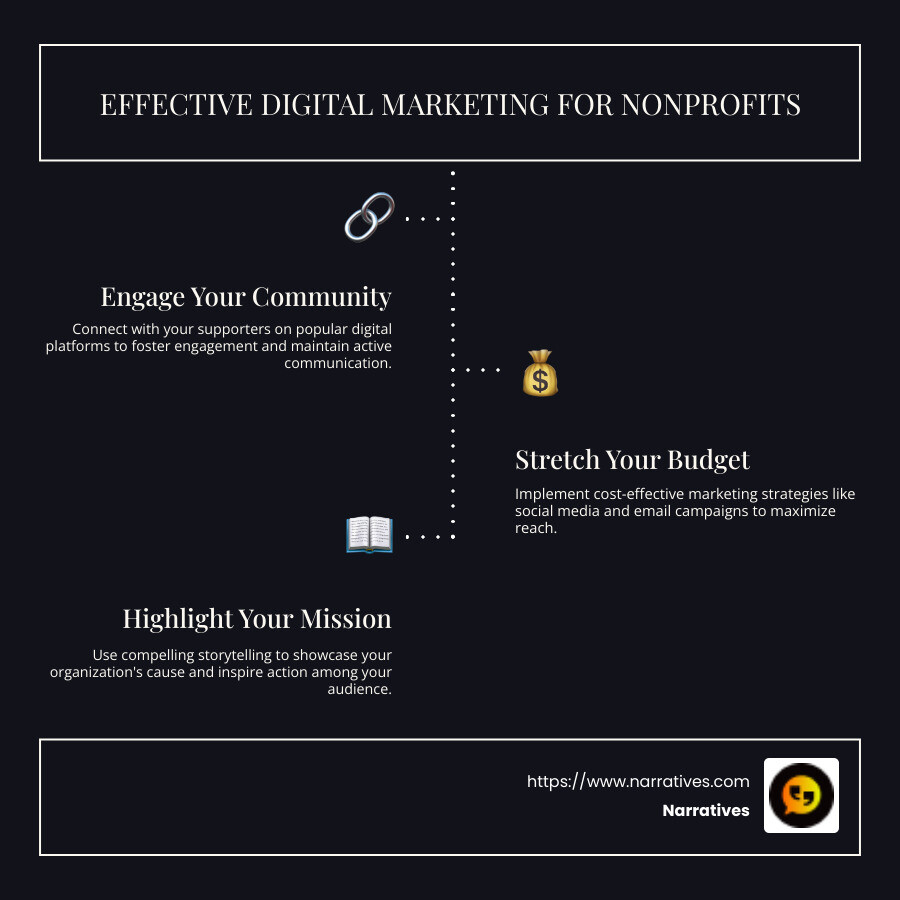
Digital marketing for nonprofits is crucial for any organization looking to boost its impact. Whether it's raising awareness, recruiting volunteers, or driving donations, a solid digital marketing strategy can significantly lift your nonprofit’s mission. Here's the essence at a glance:
- Engage Your Community: Stay connected with supporters where they are most active—online.
- Stretch Your Budget: Use cost-effective marketing methods to reach more people.
- Highlight Your Mission: Showcase your organization’s cause with compelling storytelling.
Nonprofits often face the challenge of doing more with less. Smaller budgets demand creative approaches to marketing. Yet, unlike for-profit businesses, nonprofits can leverage the power of authentic narratives and missions, resonating with supporters on emotional levels. With thoughtful outreach, your nonprofit can not only survive but thrive in the digital age.
Digital marketing strategies for nonprofits are about more than just getting a message out there. They are about crafting compelling stories that move people to action.
Must-know digital marketing for nonprofits terms:
Why Digital Marketing is Essential for Nonprofits
In today's digital world, nonprofits need to harness the power of digital marketing to thrive. Why? Because it offers a unique blend of benefits that can amplify your cause and make a real difference.
Brand Awareness
First and foremost, digital marketing boosts your brand awareness. By using platforms like social media and email, you can share your mission with a broader audience. This visibility is vital for building trust and credibility. When people recognize your brand, they're more likely to support your cause.
Global Reach
Digital marketing breaks geographical barriers. Whether you're a local charity or a global organization, you can reach supporters across the globe in seconds. Imagine a small nonprofit in Georgia connecting with animal lovers worldwide through a simple social media post. This global reach means more potential donors, volunteers, and advocates for your cause.

Cost-Effective
Nonprofits often operate on tight budgets. Unlike traditional marketing, digital marketing offers cost-effective solutions. For example, the Google Ad Grant Program provides nonprofits with $10,000 per month to run text-based ads on Google. This allows you to reach a broader audience without straining your budget.
Engagement
Digital marketing fosters engagement. It's not just about broadcasting your message; it's about creating a conversation. Platforms like social media allow you to interact directly with your audience, building relationships and community. When supporters feel connected, they're more likely to stay involved and contribute to your mission.
In summary, digital marketing for nonprofits is not just a trend—it's a necessity. By increasing brand awareness, expanding your reach, and fostering engagement, digital marketing can help your nonprofit achieve its goals more effectively and efficiently.
Next, we'll dive into how to craft a successful digital marketing strategy custom for nonprofits.
Crafting a Digital Marketing Strategy for Nonprofits
Creating a successful digital marketing strategy for nonprofits starts with a solid foundation: setting clear goals, understanding your audience, and using the SMART framework to guide your efforts.
Goal Setting
Before diving into any marketing activity, ask yourself: What do we want to achieve? Clear goals give direction and help measure success. Maybe you want to increase donations, grow your email list, or boost event attendance. Whatever it is, defining your goals from the beginning is crucial.
For example, instead of saying, “We want more volunteers,” aim for something like, “We want to recruit 100 new volunteers by the end of the year.” This specificity will guide your strategy and make it easier to track progress.
Audience Segmentation
Knowing your audience is key to effective digital marketing. But not all supporters are the same. Segmenting your audience allows you to tailor your message to different groups, making your outreach more personal and effective.
Consider segmenting your audience based on factors like:
- Engagement Level: Are they first-time visitors or long-time supporters?
- Interests: What causes or programs do they care about most?
- Demographics: Age, location, and other factors can influence how you communicate.
For instance, if you run an animal shelter, you might segment your audience into pet adopters, donors, and volunteers. Each group will receive messages that resonate with their interests and motivations.
SMART Goals
Using SMART goals ensures your objectives are clear and achievable. SMART stands for:
- Specific: Clearly define what you want to achieve.
- Measurable: Set metrics to track progress.
- Attainable: Ensure the goal is realistic.
- Relevant: Align goals with your mission.
- Time-based: Set a deadline for achieving the goal.
Let's say your nonprofit wants to increase its Instagram followers. A SMART goal would be: “Increase our Instagram followers from 500 to 2,000 by the end of six months.” This goal is specific, measurable, attainable, relevant, and time-bound.

By setting SMART goals and segmenting your audience, you lay the groundwork for a digital marketing strategy that resonates with your supporters and drives results.
Next, we’ll explore the key digital marketing channels that can help amplify your nonprofit’s message.
Key Digital Marketing Channels for Nonprofits
In the digital world, nonprofits have a treasure trove of channels to amplify their message. Let’s dive into the most effective ones, and how they can help your cause.
Social Media
Social media platforms like Facebook, Instagram, and Twitter are powerful tools for nonprofits. They let you connect with supporters, share stories, and spread awareness quickly.
Why it works:
- Reach: Social media can connect you with people worldwide in seconds.
- Engagement: It's interactive. You can start conversations, respond to comments, and build a community.
- Fundraising: Platforms like Facebook offer fundraising tools that make it easy to collect donations.
For example, a nonprofit focused on animal rescue might use Instagram to share heartwarming stories of animals finding new homes. This not only raises awareness but also encourages donations and adoptions.
Email Marketing
Email remains one of the most effective channels for nonprofits. With a good email strategy, you can keep supporters informed and engaged.
Why it works:
- Direct Communication: Reach your audience directly in their inbox.
- Cost-Effective: Sending emails is cheap, especially when compared to traditional mail.
- Personalization: Segment your audience to send custom messages. This makes your communication more relevant and impactful.
Consider sending a monthly newsletter with updates, success stories, and upcoming events. This keeps your audience engaged and informed about your cause.
SEO (Search Engine Optimization)
SEO is about making your website easy to find on search engines like Google. This can increase your visibility and attract new supporters.
Why it works:
- Organic Traffic: Get visitors to your site without paying for ads.
- Credibility: High search rankings can boost your organization's credibility.
- Awareness: More visibility means more people learn about your cause.
For instance, if you run a food bank, optimizing your website for keywords like "local food bank donations" can attract more donors and volunteers.
Search Ads
Search ads, like those from Google Ads, can boost your visibility on search engines. They’re especially useful when you need quick results.
Why it works:
- Immediate Visibility: Your ads appear at the top of search results.
- Targeted Reach: You can target specific keywords related to your cause.
- Google Ad Grants: Eligible nonprofits can receive $10,000 per month in free search ads from Google, making it a cost-effective option.
Imagine you're promoting a fundraising event. Using search ads, you can ensure that when someone searches for "charity events near me," your event is prominently displayed.
Video Marketing
Video is a compelling way to tell your nonprofit's story. Platforms like YouTube or even short clips on social media can capture attention and inspire action.
Why it works:
- Engagement: Videos are engaging and memorable.
- Storytelling: They allow you to tell powerful stories that resonate with viewers.
- Shareability: Videos are often shared, increasing your reach.
For example, a nonprofit working on environmental conservation can create a video showing the impact of their work. This visual storytelling can inspire viewers to support their mission.
By leveraging these channels, you can create a well-rounded digital marketing strategy that maximizes your nonprofit's impact.
Next, we’ll dive into best practices to ensure your digital marketing efforts are as effective as possible.
Digital Marketing for Nonprofits: Best Practices
When it comes to digital marketing for nonprofits, adopting best practices can significantly improve your impact. Let's explore key strategies like storytelling, personalization, automation, and influencer partnerships that can lift your nonprofit's digital presence.
Storytelling
Storytelling is at the heart of effective nonprofit marketing. Sharing compelling stories about your mission and the people you help can create an emotional connection with your audience. For instance, imagine a nonprofit dedicated to providing clean water. They could share a story about a community transformed by a new well, complete with photos and quotes from grateful villagers. This not only highlights the impact but also motivates others to contribute.
Why storytelling works:
- Emotional Connection: Stories evoke emotions and make your cause relatable.
- Memorability: People remember stories better than facts alone.
- Engagement: Engaging narratives can encourage shares and discussions on social media.
Personalization
Personalization means tailoring your message to fit the needs and interests of different audience segments. This approach can make your communication more meaningful. For example, a donor who recently contributed might appreciate a thank-you email with updates on how their donation is making a difference.
Why personalization works:
- Relevance: Personalized messages resonate more with recipients.
- Trust: Shows supporters that you value and recognize their contributions.
- Improved Response Rates: Personalized emails have higher open and click-through rates.
Automation
Automation can streamline your communication processes, ensuring timely and consistent interactions with your audience. Setting up automated welcome emails for new subscribers or thank-you messages for donors can save time and maintain engagement.
Why automation works:
- Efficiency: Reduces manual workload, allowing you to focus on other tasks.
- Consistency: Ensures no supporter is overlooked.
- Timeliness: Sends messages at the right time, enhancing the supporter experience.
Influencer Partnerships
Collaborating with influencers can expand your reach and credibility. Influencers in your field can share your mission with their followers, bringing new attention to your cause. For instance, a nonprofit focused on education might partner with a well-known educator to promote their initiatives.
Why influencer partnerships work:
- Extended Reach: Access to new audiences through the influencer's network.
- Credibility: Endorsements from trusted figures can boost your organization's reputation.
- Engagement: Influencers can generate buzz and encourage their followers to take action.
By integrating these best practices into your digital marketing strategy, your nonprofit can connect more effectively with supporters and amplify your mission.
Next, we'll explore how to evaluate and optimize your digital marketing efforts to ensure ongoing success.
Evaluating and Optimizing Your Digital Marketing Efforts
Once you've implemented your digital marketing for nonprofits strategy, it's crucial to evaluate and optimize your efforts to ensure they are effective. This involves understanding key metrics, performing detailed performance analysis, and committing to continuous improvement.
Key Metrics to Track
Monitoring the right metrics helps you understand how well your campaigns are performing. Here are some essential metrics to focus on:
Email Open and Click-Through Rates: These indicate how engaging your email content is. Higher rates suggest that your subject lines and email content resonate with your audience.
Campaign Conversion Rate: Measures the percentage of people who take a desired action, like donating or signing up for a newsletter, after engaging with your campaign.
Supporter Acquisition Cost: This shows how much it costs to gain a new supporter. Lower costs are better, indicating efficient use of resources.
Donor Retention Rate: Reflects the percentage of donors who continue to support your nonprofit over time. A high retention rate is a sign of strong relationships with your supporters.
Performance Analysis
Analyzing performance helps you understand what works and what doesn't. Use tools like Google Analytics or your social media insights to gather data. Here's how to approach performance analysis:
Compare Against Goals: Evaluate your metrics against your SMART goals. Are you meeting your objectives? If not, identify areas for improvement.
Identify Trends: Look for patterns in your data. For example, if email open rates are declining, it might be time to experiment with new subject lines or sending times.
Segment Your Data: Break down your data by audience segment to see which groups are most engaged. This can help tailor future campaigns to specific audiences.
Continuous Improvement
Digital marketing is an ongoing process. Here's how you can continuously improve:
Test and Learn: Regularly test different strategies, such as A/B testing your emails or trying new social media platforms. Learn from the results to refine your approach.
Stay Updated: Digital marketing trends evolve quickly. Keep up with the latest strategies and technologies to stay ahead.
Gather Feedback: Engage with your supporters to gather feedback on your campaigns. This can provide valuable insights into how to improve your messaging and approach.
By focusing on these areas, you can ensure your digital marketing for nonprofits efforts are as effective as possible, allowing you to amplify your cause and reach more supporters.
Next, we'll address some frequently asked questions about digital marketing for nonprofits to further your understanding.
Frequently Asked Questions about Digital Marketing for Nonprofits
How can nonprofits benefit from digital marketing?
Digital marketing for nonprofits offers numerous benefits that can significantly amplify your cause. Here's how:
Wider Reach: With digital marketing, you can connect with supporters globally in seconds. This is crucial for spreading mission awareness and attracting donors from all over the world.
Cost-Effective Solutions: Unlike traditional marketing, digital platforms often provide low-cost options. Social media, email marketing, and SEO can be highly effective without breaking the bank.
Engagement and Interaction: Digital channels allow for real-time interaction with your audience. This helps build relationships and fosters a community around your cause.
Data-Driven Decisions: Digital marketing provides access to valuable data, allowing nonprofits to track campaign performance and make informed decisions. Metrics like email open rates and conversion rates provide insights into what works and what needs improvement.
What are the most effective digital marketing channels for nonprofits?
When it comes to digital marketing for nonprofits, some channels stand out for their effectiveness:
Social Media: Platforms like Facebook, Instagram, and Twitter are excellent for building community and engaging with supporters. They allow for creative storytelling and can boost brand awareness.
Email Marketing: This remains a powerful tool for nonprofits. Personalized emails can nurture relationships with donors and keep them informed about your mission and events.
SEO (Search Engine Optimization): By optimizing your website's content for search engines, you can increase visibility and attract more visitors looking for services like yours.
Search Ads: Programs like Google Ad Grants provide nonprofits with advertising credits to reach a broader audience. This is a great way to ensure your message appears at the top of search results.
Video Marketing: Videos are an engaging way to tell your story. Platforms like YouTube and Facebook allow you to share compelling visual content that can drive donations and support.
How do you measure the success of a nonprofit digital marketing campaign?
Measuring success is crucial to understanding the impact of your digital marketing efforts. Here are some ways to evaluate your campaigns:
Set Clear Goals: Use SMART goals (Specific, Measurable, Achievable, Relevant, Time-bound) to define what success looks like for your campaign.
Track Key Metrics: Focus on metrics such as email open rates, click-through rates, conversion rates, and donor retention rates. These indicators provide insights into how well your campaigns are performing.
Use Analytics Tools: Tools like Google Analytics and social media insights can help track and analyze campaign performance. They allow you to see where your traffic is coming from and how users are interacting with your content.
Compare Against Benchmarks: Evaluate your metrics against industry benchmarks or past campaigns to assess performance. This helps identify areas for improvement.
Gather Feedback: Engage with your audience to get feedback on your campaigns. This can offer valuable insights into how your message is received and how you can improve.
By leveraging these strategies, nonprofits can effectively measure and improve their digital marketing efforts, ensuring they make the most impact with their resources.
Conclusion
At Narratives, we believe that digital marketing for nonprofits is more than just a strategy—it's a pathway to meaningful human connection. By partnering with us, nonprofits can harness the power of storytelling to amplify their cause and lift their impact.
Our approach centers on community-driven storytelling, where we focus on elevating underrepresented voices through high-quality, emotionally resonant multimedia content. This not only builds trust with your audience but also inspires action and increases visibility. Through authentic stories, we help nonprofits connect with supporters on a deeper level, fostering long-lasting relationships that go beyond mere transactions.
Why Choose Narratives?
Expert Storytelling Partner: We specialize in crafting narratives that highlight the unique impact of your mission. Our team works closely with you to ensure your story resonates with your audience, driving engagement and support.
Elevating Voices: By focusing on underrepresented communities, we ensure that your digital marketing efforts are inclusive and diverse, reflecting the true spirit of your organization.
Building Trust and Visibility: Through strategic storytelling, we help build a strong brand presence that stands out in the digital landscape, attracting more supporters and resources.
Data-Driven Insights: We use analytics to refine your storytelling strategy continuously, ensuring that your message reaches the right audience at the right time.
Partner with us to transform your digital marketing strategy and become part of a community that values ethical storytelling and impactful change. Learn more about how Narratives can help your nonprofit succeed.
By focusing on authentic storytelling and community engagement, nonprofits can not only amplify their cause but also create a lasting legacy of positive impact. Let Narratives be your guide in this journey, turning your mission into a story that inspires and moves the world.


.avif)